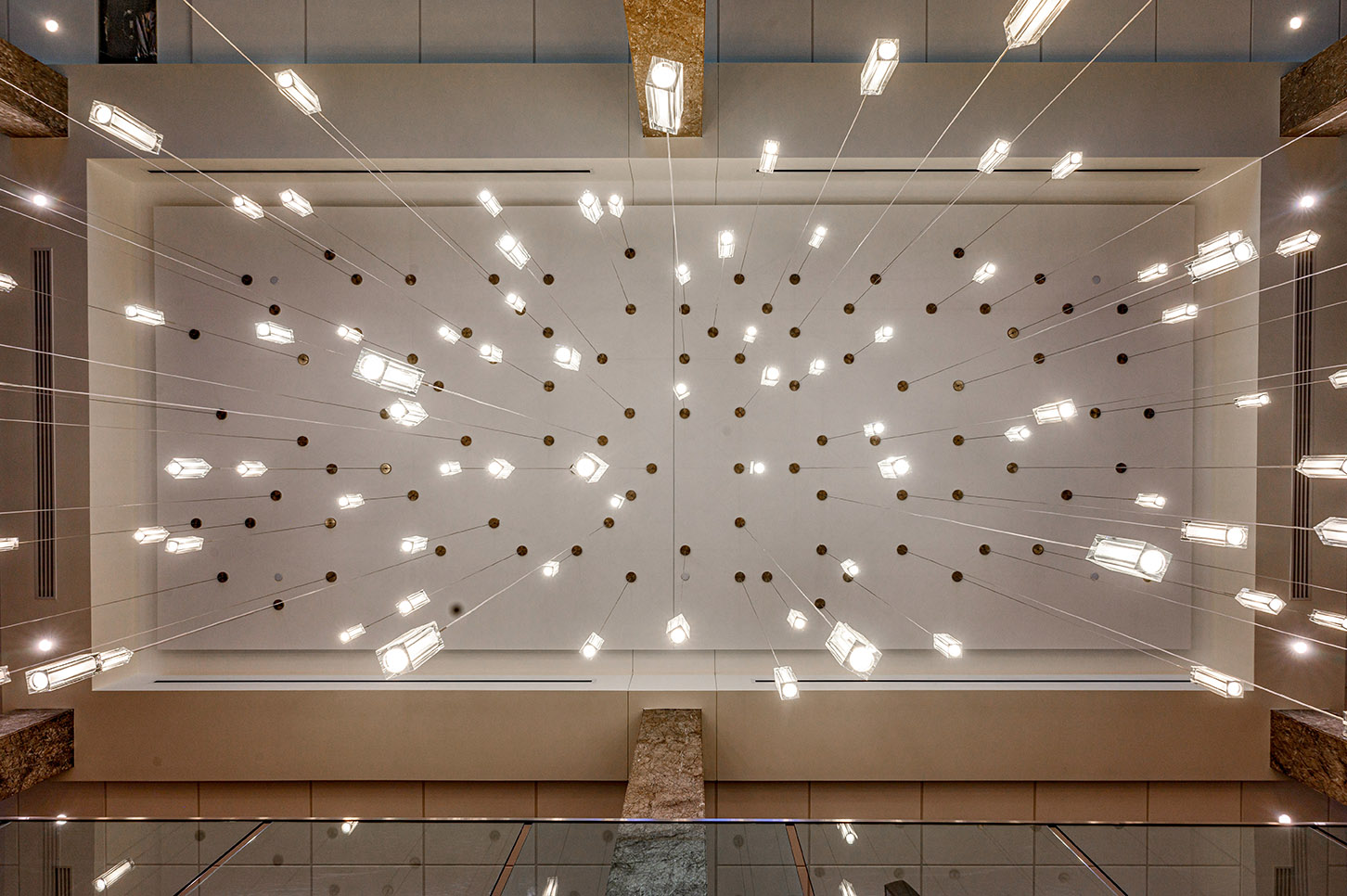
Renovated 10th floor of the Hesburgh Library, a popular study space. (Photo by Becky Malewitz/University of Notre Dame)
By Julia Schneider, Scholarly Resources & Assessment Librarian-Arts, Humanities, & Architecture | Medieval Studies Subject Librarian | Germanic Studies Subject Liaison
Purchasing materials for the Libraries is not a matter of chance. At Hesburgh Libraries, we have an approach to collections that has several practical components and many points at which decisions are made. In the past decade, the Libraries have adopted an e-preferred collection strategy in relevant disciplines, which allows us to maximize both our budget and the content we provide by investing in digital products that will allow Hesburgh Libraries to best support the research of our current students and faculty.
How does this collection strategy work? Before we get into the details of current acquisitions methods, a dip into the recent history of acquiring materials in academic libraries might be helpful.
Continue reading “Collection Strategy at Hesburgh Libraries”