Collection highlights, acquisition news, events, exhibits, and behind-the-scenes looks at the work and services of Rare Books & Special Collections (RBSC) at Notre Dame.
“Life springs from death, and from the graves of patriot men and women spring living nations.” — P.H. Pearse, August 1915
In 1803, Robert Emmet led a failed rebellion to overthrow British rule in Ireland. In 1848, a group called Young Ireland staged a brief revolt that was hastily crushed. The Fenian Brotherhood invaded British North America in 1866, and the Irish Republican Brotherhood organized a series of unsuccessful raids in Ireland the following year. On Easter Monday, 1916, a small group of Irish insurgents launched a rebellion in Dublin that was quashed in under a week. While these four attempts to create an independent Ireland may have failed, they each gave rise to a powerful romantic narrative that captivated the spirits of the Irish at home and abroad. Out of sacrifice and tragedy sprang patriotic verse, defiant journalism, cultural revival, and eventually, Irish freedom from British rule.
This exhibit features items from Rare Books and Special Collections and the University Archives that document the heroes, martyrs, and idealistic men and women who forged modern Ireland.
This and other exhibits within the Hesburgh Libraries are generously supported by the McBrien Special Collections Endowment.
All exhibits are free and open to the public during business hours.
RBSC will be open regular hours during the University of Notre Dame Fall Break, October 17 – 25.
In 1803, Robert Emmet led a failed rebellion to overthrow British rule in Ireland. In 1848, a group called Young Ireland staged a brief revolt that was hastily crushed. The Fenian Brotherhood invaded British North America in 1866, and the IRB organized a series of unsuccessful raids in Ireland the following year. On Easter Monday, 1916, a small group of Irish insurgents launched a rebellion in Dublin that was quashed in under a week. While these four attempts to create an independent Ireland may have failed, they each gave rise to a powerful romantic narrative that captivated the spirits of the Irish at home and abroad. Out of sacrifice and tragedy sprang patriotic verse, defiant journalism, cultural revival, and eventually, Irish freedom from British rule.
This exhibit features items from Rare Books and Special Collections and the University Archives that document the heroes, martyrs, and idealistic men and women who forged modern Ireland.
The exhibit is curated by Matthew Knight (Irish Studies Librarian and Curator).
Related Events
September 24-7, 2026 | The ACIS Midwest + South Regional Conference will be hosted by the Keough-Naughton Institute for Irish Studies and held on the University of Notre Dame campus. The theme of the meeting will be “Irish Studies On The Ground: Place, Presence and Community.” Please visit the conference website to view details.
October 2026 | Special Collections will host a lecture by curator Matt Knight, exact date and time TBD. Check back for more information.
Tours of the exhibit may be arranged for classes and other groups by contacting rarebook@nd.edu.
All exhibits are free and open to the public during business hours.This and other exhibits within the library are generously supported by the McBrien Special Collections Endowment.
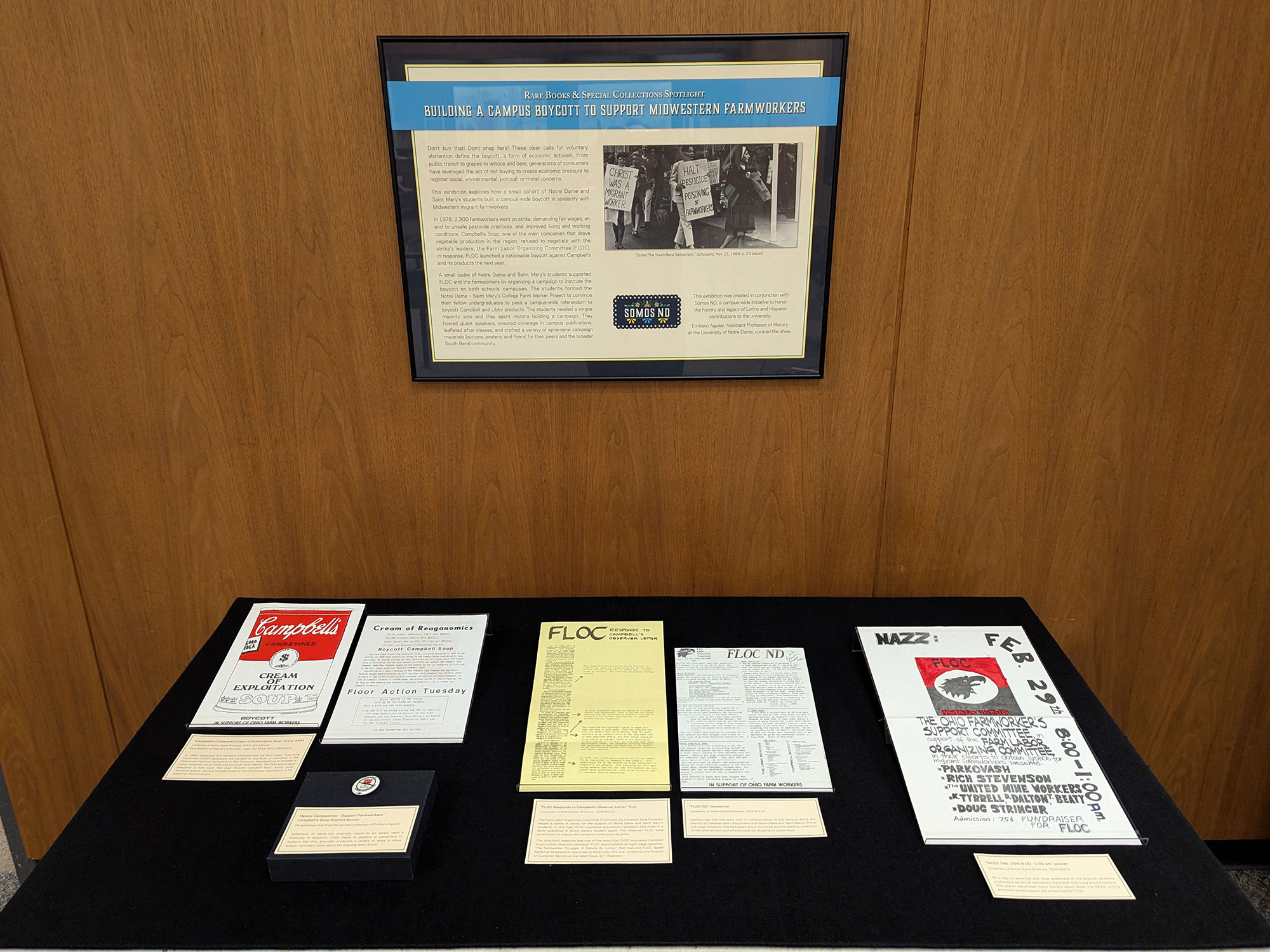
This spotlight exhibit and blog post were created in conjunction with Somos ND, a campus-wide initiative to honor the history and legacy of Latino and Hispanic contributions to the University.
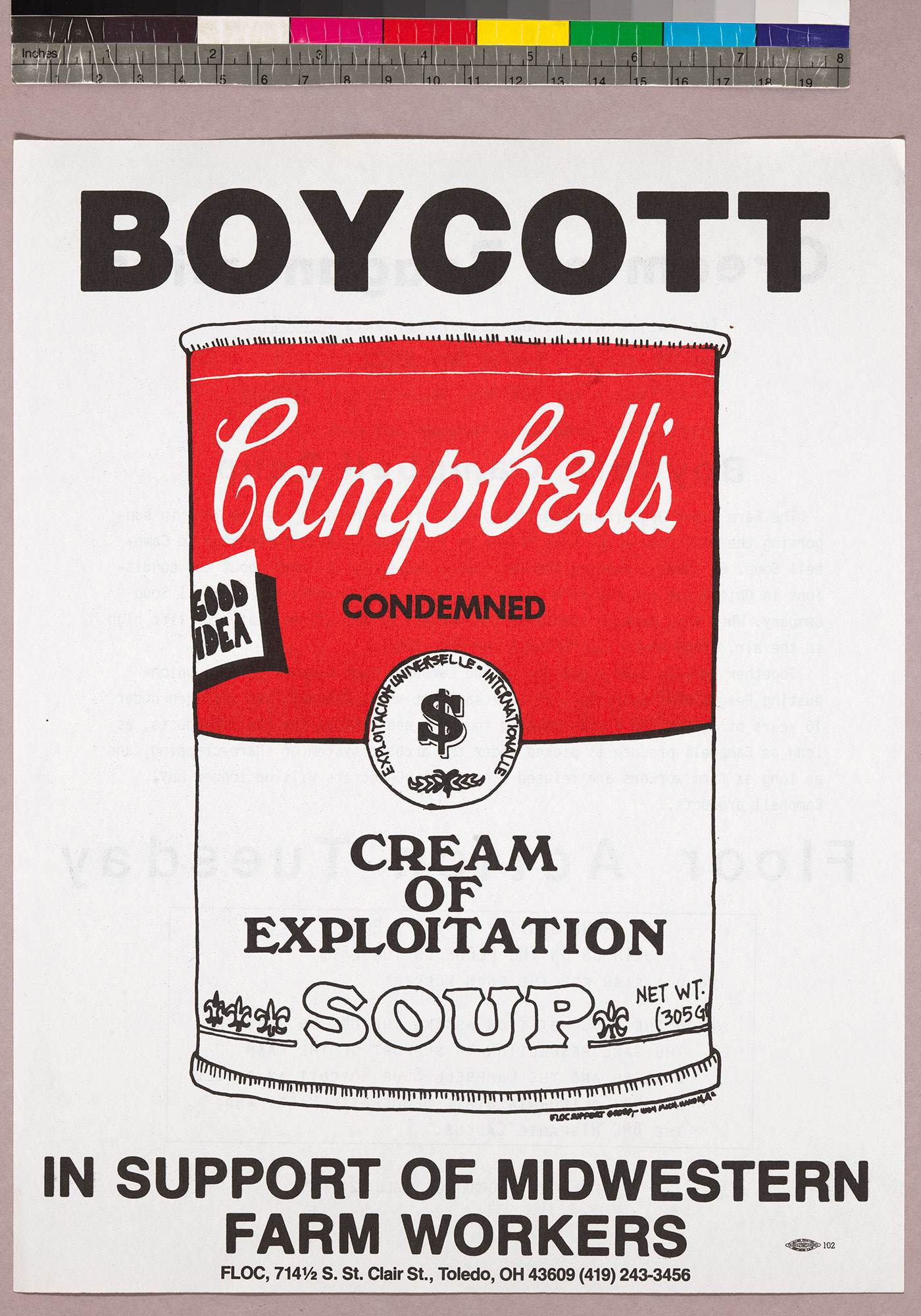
In 1979, a small cadre of University of Notre Dame and Saint Mary’s College students organized to push a boycott of Campbell Soup and Libby Manufacturing goods on their campuses. The group formed the Notre Dame–Saint Mary’s College Farm Worker Project in February to support the Farm Labor Organizing Committee (FLOC), a Midwest-based labor union and advocacy group that supported the rights of migrant farm workers. FLOC had initiated a nation-wide boycott campaign earlier that year to convince these major food manufacturers to pressure their suppliers to negotiate with FLOC to improve migrant farm workers’ salaries and labor conditions.
The immediate goal of the Notre Dame–Saint Mary’s College Farm Worker Project was to convince the undergraduate student bodies to pass a campus-wide referendum to join the boycott of both Campbell and Libby on their campuses. To do so, the organizers needed to convince most students to not only vote in favor of the boycott but to also participate in the election at all. While the vote favored the boycott, not enough students chose to vote—bringing the ballot initiative short of the university’s guidelines.
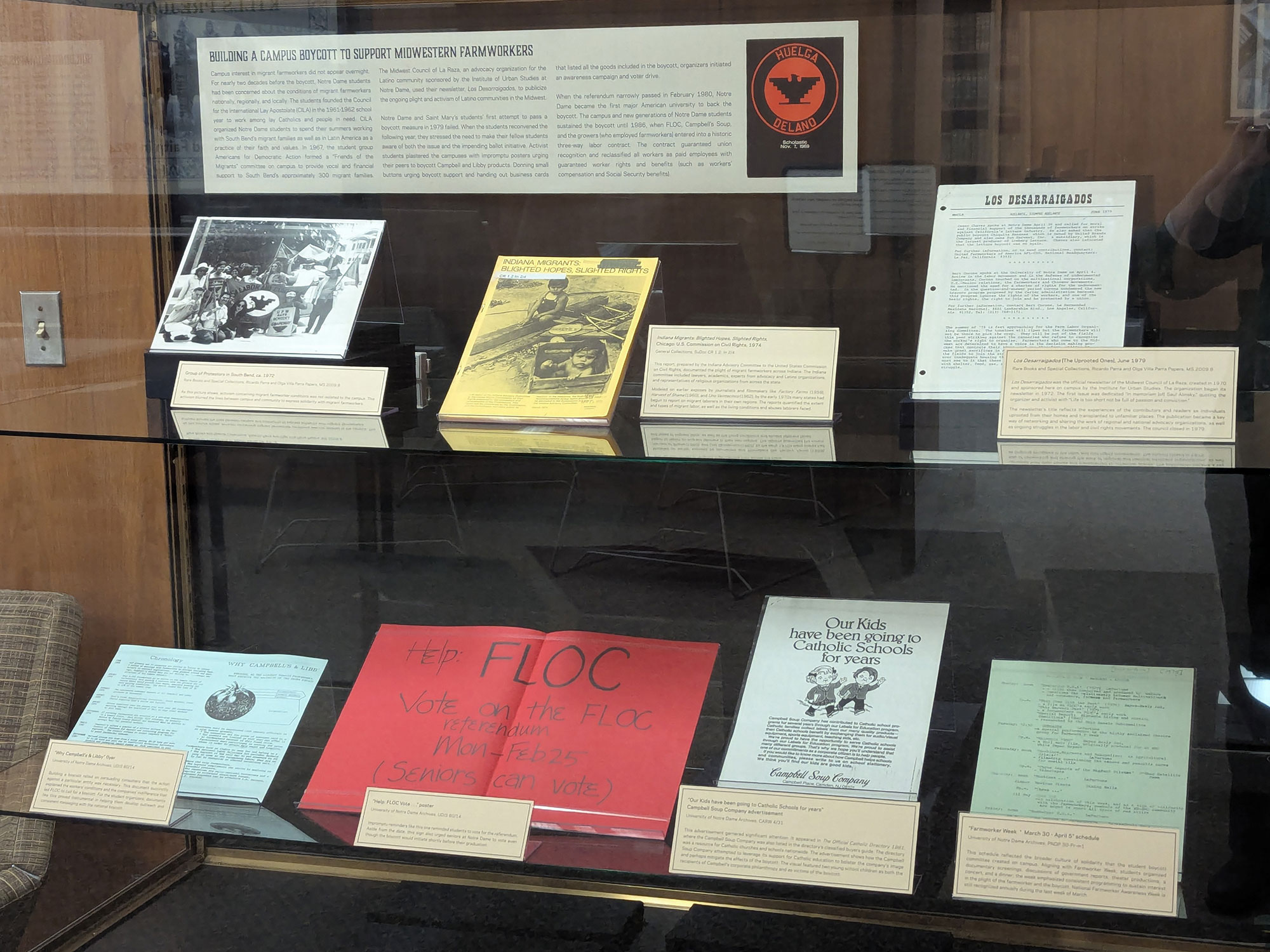
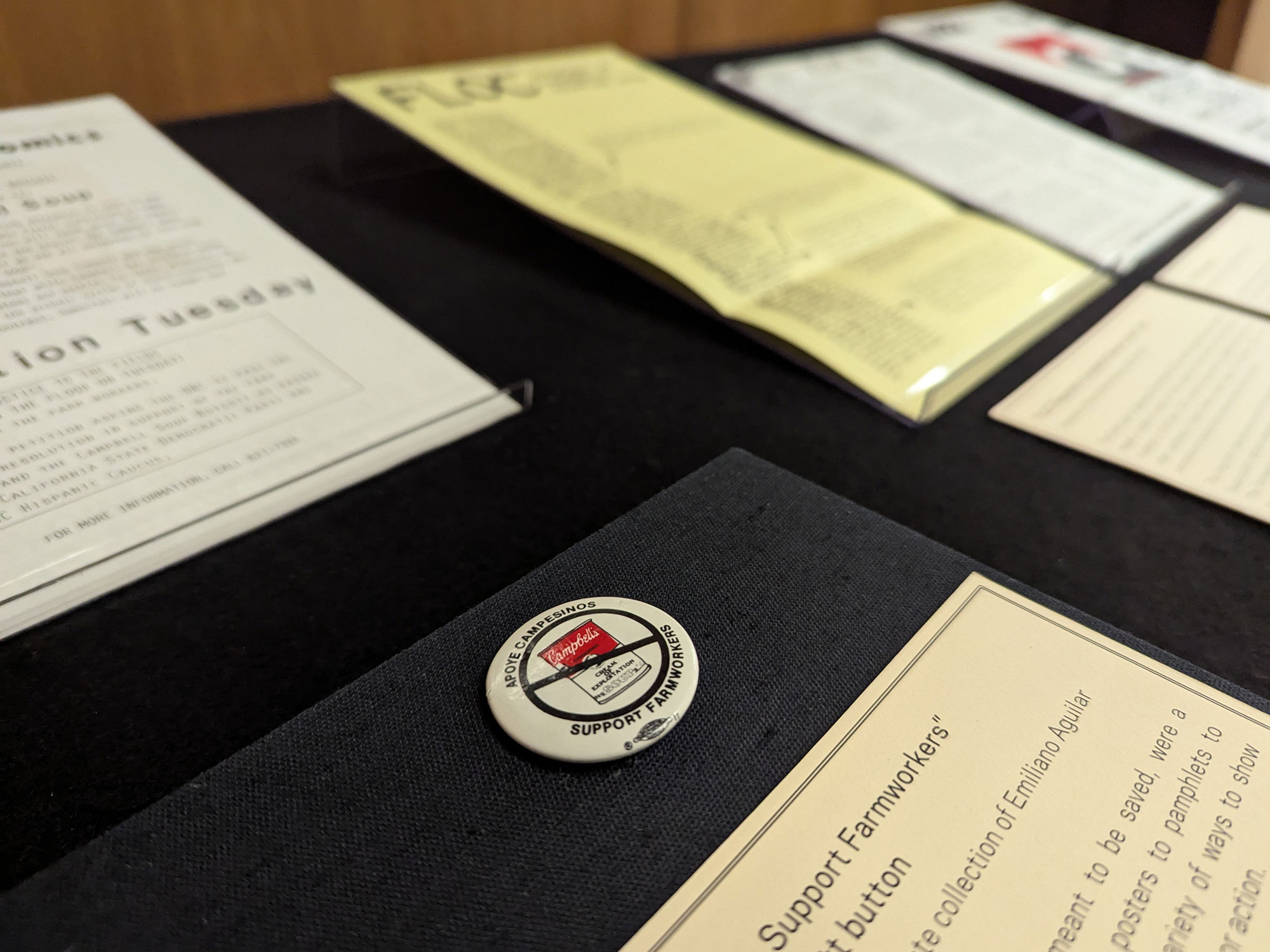
However, the organizers were not dismayed. When the students reconvened for a new semester, they stressed the need to make their classmates aware of both the issue and the impending ballot initiative. Members of the committee plastered the campus with impromptu posters urging their peers to boycott Campbell and Libby products. Donning small buttons urging a boycott of the companies and handing out business cards that listed all the goods included in the boycott, organizers initiated an awareness campaign and voter drive.
The calls for a boycott placed the university at the center of a moral battle between the company and Midwestern farmworkers. With a successful vote, Notre Dame would become the first major university to boycott Campbell and Libby goods in solidarity with FLOC. This potential shift would lead the company to engage in an extensive public relations campaign, including publishing editorials and letters in the campus newspaper, The Observer.
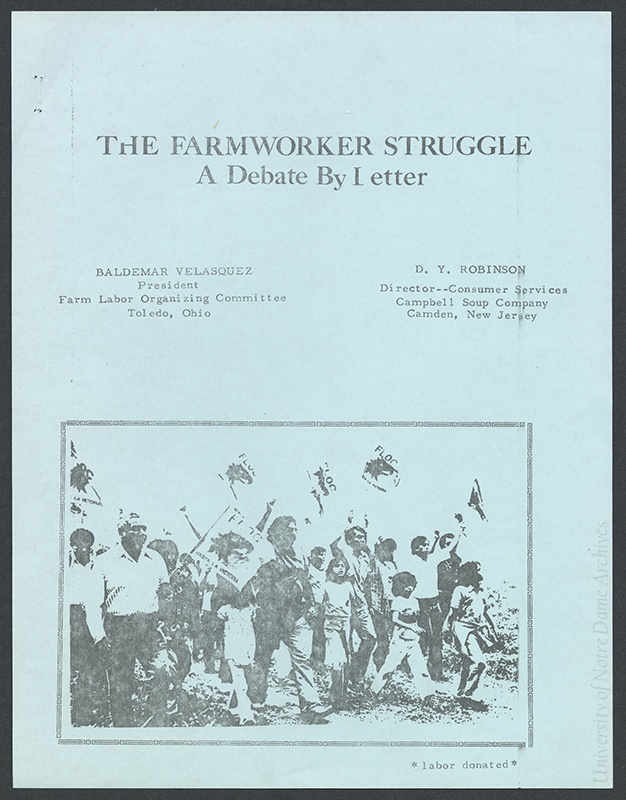
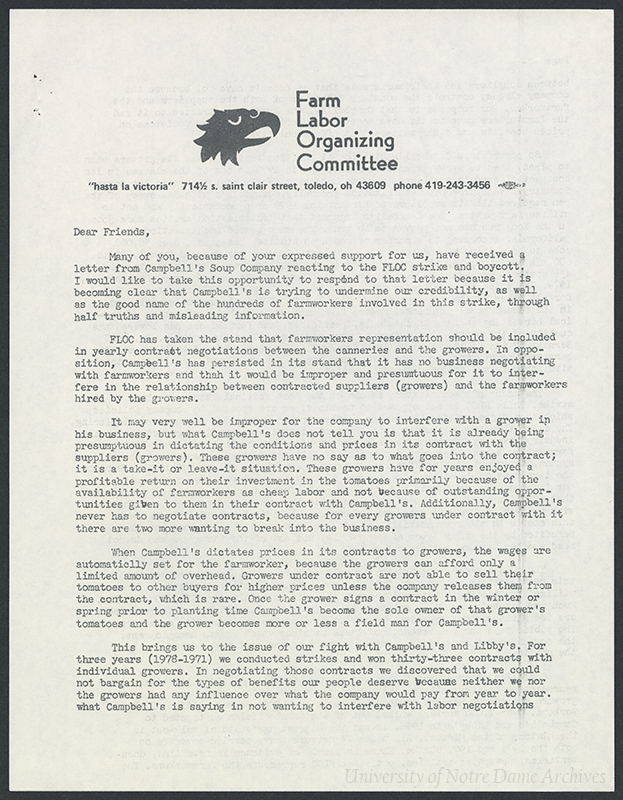
A chief piece of ephemera passed around by campus protesters was “The Farmworker Struggle: A Debate By Letter.” This eight-page pamphlet featured FLOC leader Baldemar Velasquez’s response to letters written by the Director of Customer Service at Campbell Soup, D.Y. Robinson. Within his letter, Robinson stressed that the company did not directly employ farmworkers and was not responsible for the demands leveled by FLOC. Robinson asserted Campbell’s policy that the company “should not and will not inject itself into the labor negotiations between our suppliers and organizations representing the employees of their suppliers.”
While Robinson argued that it would be “impractical” for the company to get involved, Velasquez’s response noted that the company was directly responsible for creating the conditions the migrants labored in – whether it was the field or a canning facility. Velasquez retorted that when the company dictated prices, that “the wages were automatically set for the farmworker, because the growers can afford only a limited amount of overheard.”
As a tool to educate and mobilize, the pamphlet offered not only multiple perspectives in direct conversation with each other but a partial list of supporters and a reprinted card, listing the goods included in the boycott. This pamphlet became one of many entry-ways for campus organizers to educate their peers and the broader community.
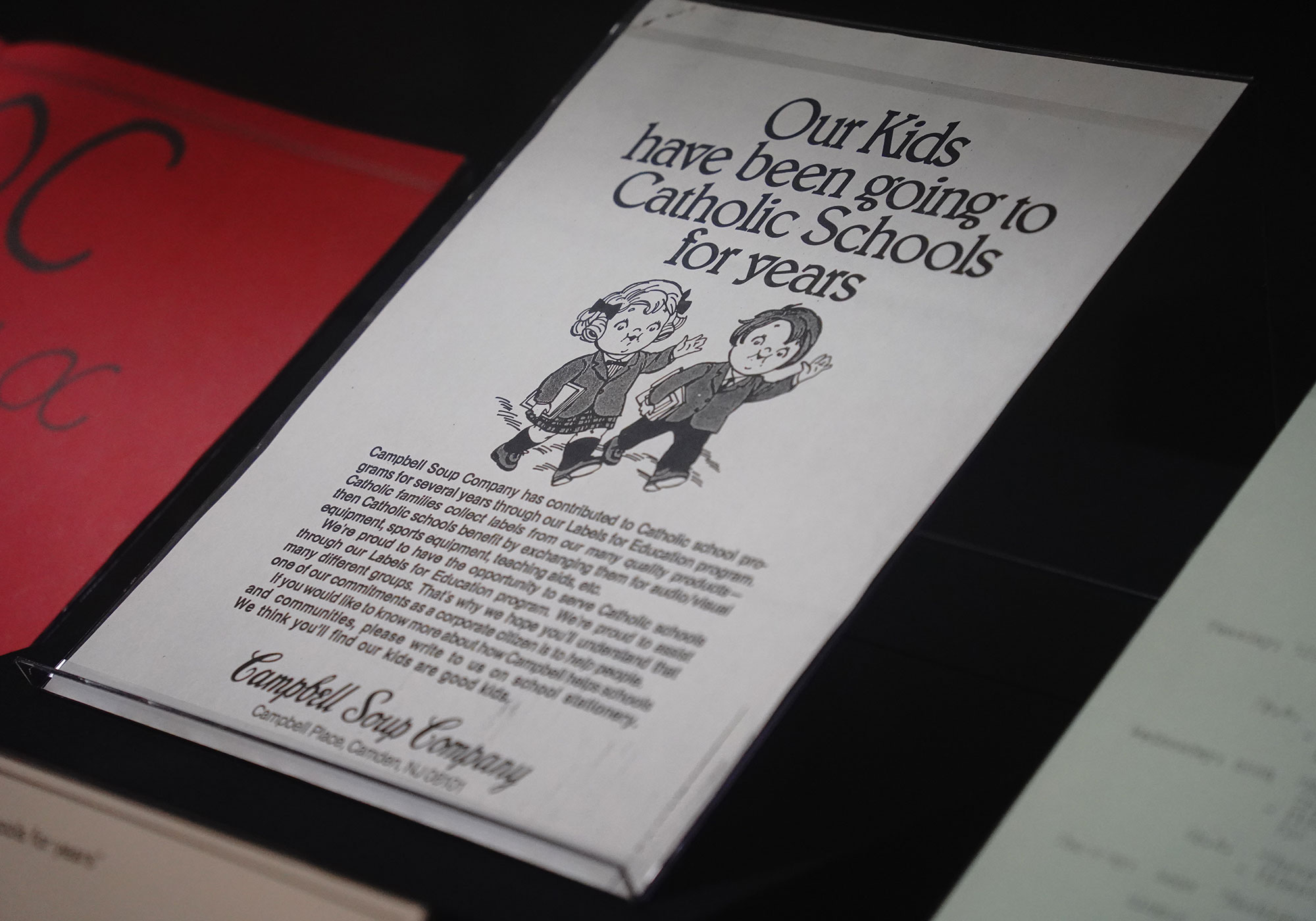
Campbell Soup also crafted materials to dissuade the boycott. A contemporary advertisement, for example, invoked the company’s popular “Labels for Education” school fundraising promotional program—as well as its support for Catholic education across the United States—to leverage Campbell’s Catholic identity against FLOC and the increasing support the farmworkers found within the Church. Featuring two young children, the ad hoped to emphasize that the pictured students were both the recipients of the company’s corporate philanthropy and victims of the boycott.
On Monday, February 25, 1980, the Notre Dame–Saint Mary’s referendum passed by a close margin, with exactly half of the campus voting. With 2,012 students in support and 1,321 opposed, Notre Dame began a boycott of Campbell and Libby. As one student organizer proclaimed, “We are not stopping. We are moving into South Bend and across the nation through the Catholic Church and the universities” (“FLOC Referendum Takes Voter Majority,” The Observer Feb. 26, 1980, pp 1, 6). Despite students graduating, the campus maintained the boycott for six years.
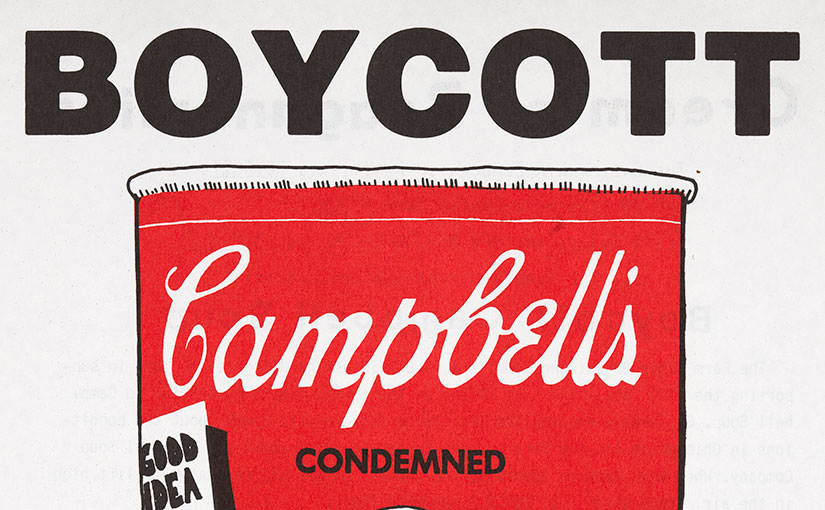
The Farm Labor Organizing Committee and its boycott against Campbell Soup, a quintessentially American company, even led to a line in Jesse Jackson’s famous speech to the Democratic National Convention in 1984, “The Rainbow Coalition.” FLOC organizers and activists were on hand with fliers that invoked the company’s iconic can image, relabeling the soup as “Cream of Exploitation.” The reverse side implored delegates to partake in a floor action during Jackson’s speech, holding signs in support for the nearly 2,000 farmworkers on strike in Campbell’s tomato fields.
On February 19, 1986, after seven years of protest, FLOC, the Campbell Soup Company, and their growers, entered into a historic three-way labor contract in Ohio and Michigan—recognizing the union, establishing farmworkers as paid employees, and guaranteeing minimum earnings and benefits.
The exhibition Notre Dame Football Kills Prejudice: Citizenship and Faith in 1924 is now open and will run through the end of January 2025.
Tours of the exhibit may be arranged for classes and other groups by contacting Greg Bond at gbond2@nd.edu.
The current spotlight exhibits are Wollstonecraft: Revolution & Textual Evidence (September–December 2024) and A Fourteenth-Century Chanson de Geste Fragment (September–December 2024).
RBSC will be closed during the University of Notre Dame’s Christmas and New Year’s Celebrations, December 21, 2024 – January 1, 2025.
The exhibition Notre Dame Football Kills Prejudice: Citizenship and Faith in 1924 is now open and will run through the end of January 2025.
Curators Gregory Bond and Elizabeth Hogan will host exhibit open houses on select Friday afternoons before Notre Dame home football games, including on November 8 and November 15. The drop-in open houses will run from 3:00–4:30pm and will feature brief remarks by the curators at 3:15pm.
Tours of the exhibit may be arranged for classes and other groups by contacting Greg Bond at gbond2@nd.edu.
The current spotlight exhibits are Wollstonecraft: Revolution & Textual Evidence (September – December 2024) and A Fourteenth-Century Chanson de Geste Fragment (September – November 2024).
RBSC will be closed during the University of Notre Dame’s Thanksgiving Break, November 28 – 29.
The exhibition Notre Dame Football Kills Prejudice: Citizenship and Faith in 1924 is now open and will run through the end of January 2025.
Curators Gregory Bond and Elizabeth Hogan will host exhibit open houses on select Friday afternoons before Notre Dame home football games, including on October 11, November 8, and November 15. The drop-in open houses will run from 3:00–4:30pm and will feature brief remarks by the curators at 3:30pm in October and 3:15pm in November.
Tours of the exhibit may be arranged for classes and other groups by contacting Greg Bond at gbond2@nd.edu.
The October spotlight exhibits are Wollstonecraft: Revolution & Textual Evidence (September–December 2024) and A Fourteenth-Century Chanson de Geste Fragment (September–November 2024).
RBSC will be open regular hours (9:30am–4:30pm) during the University of Notre Dame’s Fall Break, October 19 – 27.
Rare Books and Special Collections welcomes students, faculty, staff, researchers, and visitors back to campus for Fall ’24! We want to let you know about a variety of things to watch for in the coming semester.
Fall 2024 Exhibition: Notre Dame Football Kills Prejudice: Citizenship and Faith in 1924
“Notre Dame football is a new crusade: it kills prejudice and stimulates faith.” — Rev. John F. O’Hara, C.S.C., Prefect of Religion, Religious Bulletin, November 17, 1924
In the fall of 1924, the University of Notre Dame found great success on the football field and confronted a dangerous and divisive political moment. The undefeated Fighting Irish football team, cemented forever in national memory by Grantland Rice’s legendary “Four Horsemen” column, beat the best opponents from all regions of the country and won the Rose Bowl to claim a consensus national championship. Off the field, Notre Dame battled a reactionary nativist political environment that, in its most extreme manifestation, birthed the second version of the Ku Klux Klan. Sympathizers of this “100% Americanism” movement celebrated white, male, Protestant citizenship and attacked other groups—including Catholics and immigrants—who challenged this restrictive understanding of American identity.
In the national spotlight, Notre Dame leaders unabashedly embraced their Catholic identity. They consciously leveraged the unprecedented visibility and acclaim of the football team to promote—within the very real political constraints of the era—a more inclusive and welcoming standard of citizenship. Attracting a broad and diverse fan base, the 1924 national champion Fighting Irish discredited nativist politics and helped stake the claim of Notre Dame—and Catholics and immigrants—to full citizenship and undisputed Americanness.
Curators will host exhibit open houses on select Friday afternoons before Notre Dame home football games, including on September 6, September 27, and October 11. The drop-in open houses will run from 3:00–4:30 and will feature brief remarks by the curators at 3:30.
Other curator-led tours open to the public will be announced soon. Tours of the exhibit may be arranged for classes and other groups by contacting Greg Bond at gbond2@nd.edu.
This exhibition is curated by Gregory Bond (Curator of the Joyce Sports Research Collection, Rare Books and Special Collections) and Elizabeth Hogan (Senior Archivist for Photographs and Graphic Materials, University Archives).
Stop in regularly to see our Collections Spotlights
Currently on Display: Making Books Count: Early Modern Books in the History of Mathematics
Discover how books shaped science and our understanding of nature. The history of mathematics guides our understanding of astronomy, as revealed in works by Galileo, Copernicus, and others. Through ancient texts tracing the evolution of mathematical thought, visitors can explore the dialogue between mathematics and nature.
The last public spotlight tour is scheduled for August 28 at 1:30 pm.
This dual case spotlight is curated by Caterina Agostini (Indiana University Bloomington, Department of History and Philosophy of Science and Medicine). She previously served as a Postdoctoral Research Associate with the Reilly Center for Science, Technology, and Values and the Navari Family Center for Digital Scholarship. She is Co-PI in the Harriot Papers project.
Opening Soon: September Spotlights
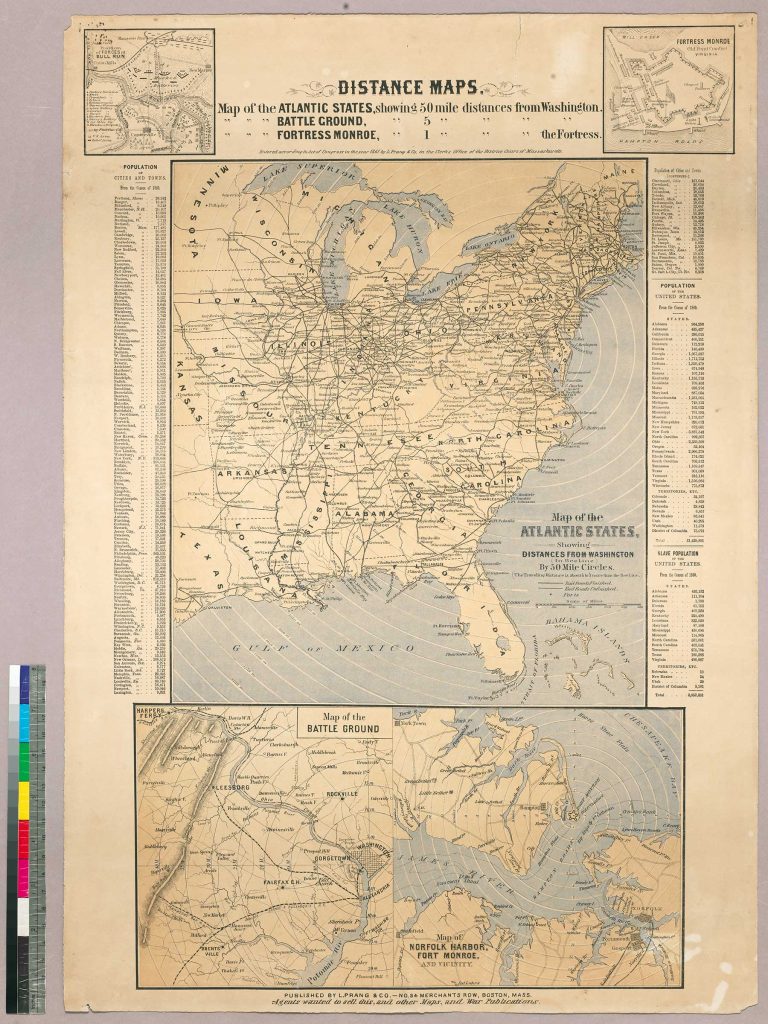
RBSC spotlight exhibits will switch over for the fall during September. Two new exhibits will feature recently acquired editions of books by Mary Wollstonecraft and two manuscript fragments of French poetry. Stay tuned for more information!
These and other exhibits within the Hesburgh Libraries are generously supported by the McBrien Special Collections Endowment.
All exhibits are free and open to the public during business hours.
Special Collections’ Classes & Workshops
Throughout the semester, curators will lead instructional sessions related to our holdings to undergraduate and graduate students from Notre Dame, Saint Mary’s College, and Holy Cross College. Curators may also be available to show special collections materials to visiting classes, from preschool through adults. If you would like to arrange a group visit and class with a curator, please contact Special Collections.
Events
These programs are free and open to the public.
Thursday, October 3 at 5:00pm | The Fall 2024 Italian Research Seminar and Lectures will begin with a lecture by Giovanna Corazza (Università Ca’ Foscari), “Dante’s Chorographies: From the Territory to the Comedy.”
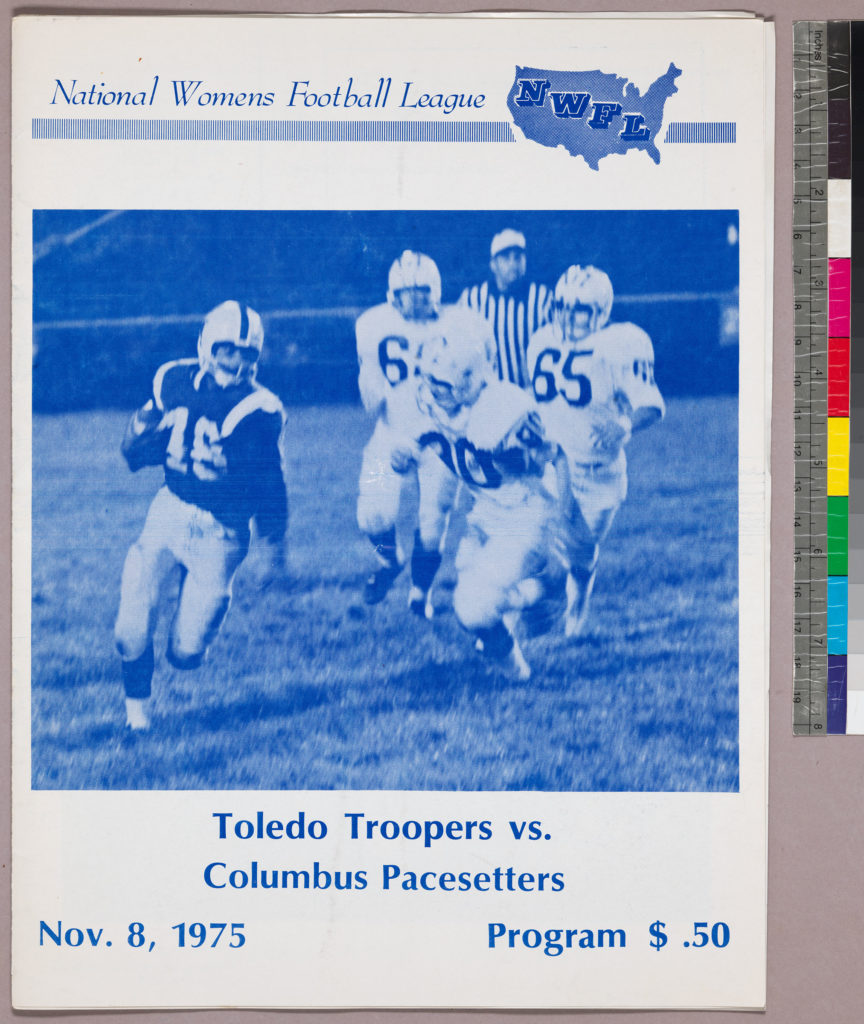
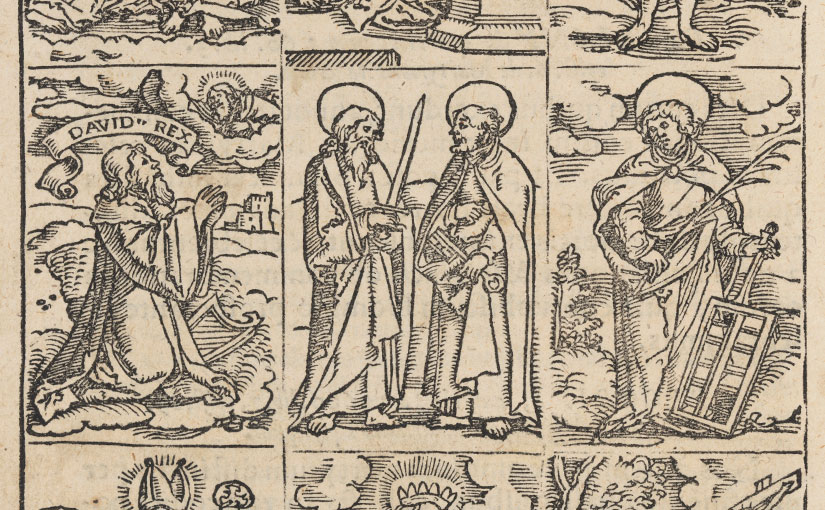
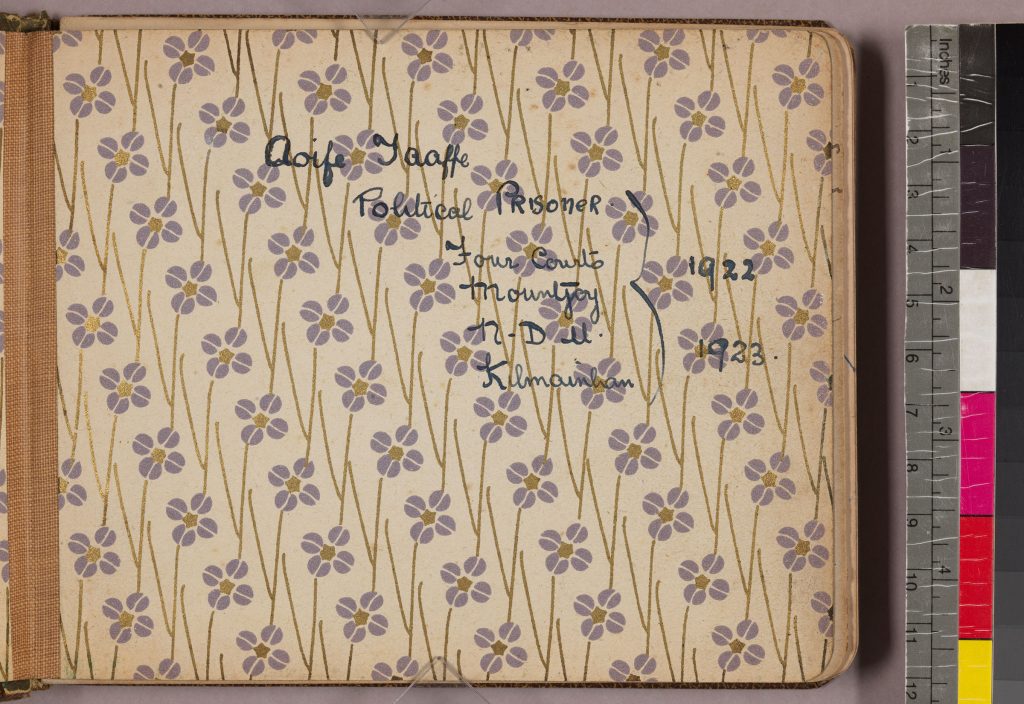
National Women’s Football League CollectionA Revised Martyrology for 16th Century German CatholicsWomen in Irish Prisons: Autographs of Prisoners in 1923Influencing Opinion by Mapping the Early American Civil WarSome of the recent acquisitions highlighted on the blog in the past year.
Anticipated Closures
Rare Books and Special Collections is regularly open 9:30am to 4:30pm, Monday through Friday. The department will be closed for the following holidays and events:
September 2, for Labor Day (Monday) September 13, for Rev. Robert A. Dowd, C.S.C., Presidential Inauguration Events (Friday, afternoon only) November 28-29, for Thanksgiving (Thursday and Friday)
Our last day open before the campus closure for Christmas Celebration will be December 20 (the Friday of final exams week).
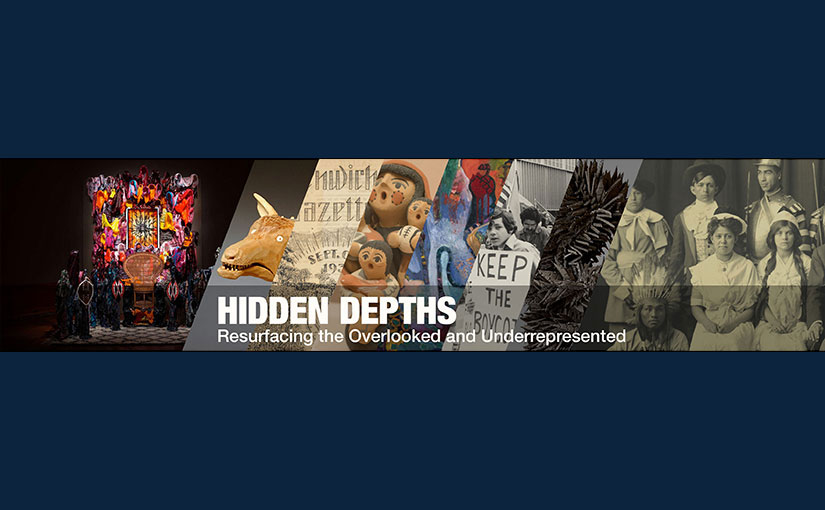
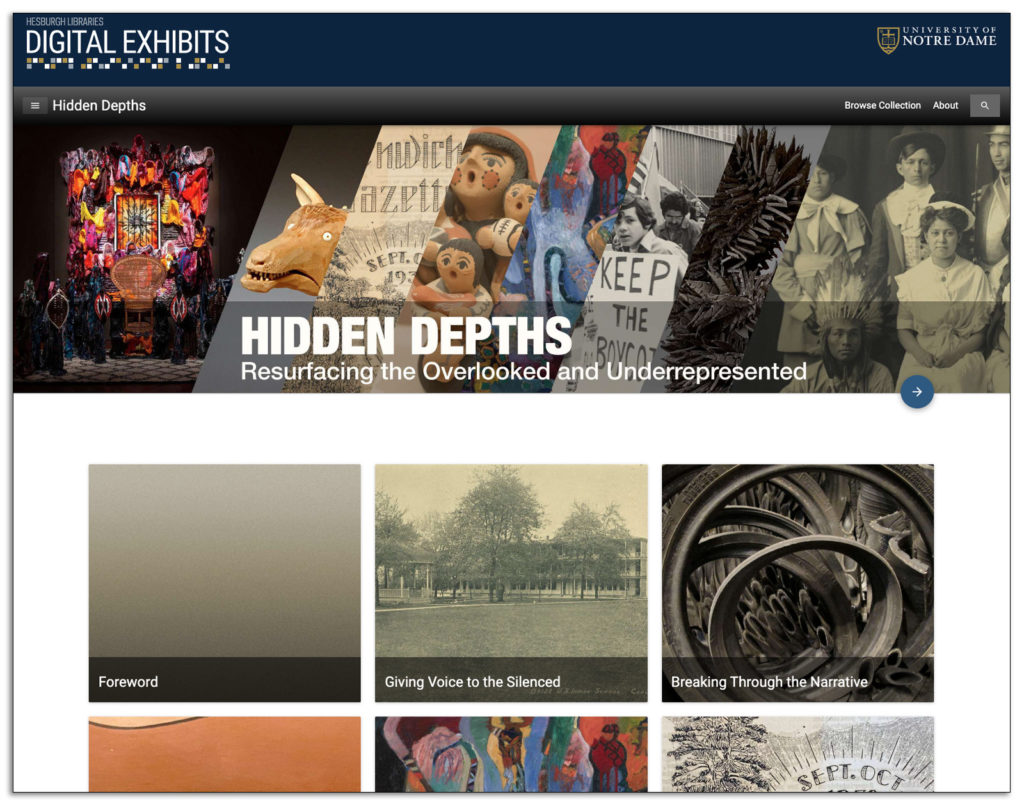
This week Special Collections highlights an online exhibition created by Notre Dame students in their fall 2022 class, Stories of Power and Diversity: Inside Museums, Archives and Collecting. The exhibition, Hidden Depths: Resurfacing the Overlooked and Underrepresented, brings together materials from the University of Notre Dame’s campus repositories–Rare Books and Special Collections, the Snite Museum of Art, and University Archives–selected and interpreted by the students.
The items displayed here vary in format, time period, medium, style, and content–abstract painting, sculpture, installation art, photographs, and collections of historic documents–and are created by people of diverse backgrounds and experiences. Their selection reflects the themes of the class, which were to explore the history of collecting in Europe and North America and some of the field’s major questions, including, what has been left out? Where are there gaps and silences in collections and archives?
Eight students applied a curatorial gaze to these materials, to examine how they do and do not intersect with themes of diversity. While these curators recognize the diverse identities of the creators of these objects, the showcases comprising this exhibition point viewers to hidden depths. They ask that we consider how identities are nuanced through regional conditions, educational background, economic forces, and personal trauma. And just as importantly, the curators of the show consider how identity and diversity are not always directly linked in one’s art or expression. They also demand that consumers of these pieces of art and historical sources work to apprehend the complexities behind their creation. By extension, they suggest that we take a careful second look in other contexts, beyond the online gallery or the museum.
This exhibition offers interpretation, but it also asks questions, and challenges viewers even as it invites them to connect with holdings in the University of Notre Dame’s campus repositories. Information about the student curators and their experiences in this course can be found in the personal statements at the end of each showcase.
Hidden Depths showcases ways in which students engaged with special collections materials over a semester-long project. The result is a display that uncovers, refocuses and takes an imperative second look.
Please note that the corridor outside RBSC is temporarily narrowed to a pedestrian tunnel due to ongoing library renovations, but we generally remain open during our regular hours.
Please join us for the following public event being hosted in Rare Books and Special Collections:
Daughters of Our Lady: Finding a Place at Notre Dame, an exhibition of materials from the University of Notre Dame Archives curated by Elizabeth Hogan and reflecting on the 50th anniversary of coeducation at Notre Dame, will run through December 16th.
The current spotlight exhibits are Hesburgh Library Special Collections: A Focus on W. B. Yeats (October – December 2022) and The Ladies Flower-Garden of Ornamental Annuals (December 2022 – January 2023).
Due to OIT infrastructure work being done in the Hesburgh Library, Special Collections will be closed on Monday, December 19, 2022.
Rare Books and Special Collections will be closed for Notre Dame’s Christmas and New Year’s Break (December 23, 2022, through January 2, 2023).
We otherwise remain open for our regular hours during Reading Days and Exams, and welcome those looking for a quiet place to study.
Please note that the corridor outside RBSC is temporarily narrowed to a pedestrian tunnel due to ongoing library renovations, but we remain open during regular hours.
Please join us for the following public event being hosted in Rare Books and Special Collections:
Daughters of Our Lady: Finding a Place at Notre Dame, an exhibition of materials from the University of Notre Dame Archives curated by Elizabeth Hogan and reflecting on the 50th anniversary of coeducation at Notre Dame, will run through the end of the fall semester.
The current spotlight exhibits are Hesburgh Library Special Collections: A Focus on W. B. Yeats (October – December 2022) and “Rosie the Riveters with a Vengeance” and Other Wartime Contributions by American Women (October – November 2022).
RBSC will be closed for the Thanksgiving Holiday, November 24 – 25.