My Opinion
READ THIS BOOK!
Overall, I thoroughly enjoyed this book. Since I have an interest in the human anatomy, the concept of the human body adapting to harsher climates immediately caught my eye. Ashcroft lived up to the book’s title, diving into the ways humans and other animals attempt to change their homeostasis in response to dangerous conditions not only on earth but beyond. With a background in science, I enjoyed her reference to certain metabolic properties and cellular mechanisms that while microscopic, can initiate larger changes in organs, muscles, and the brain. Even without this background, however, I believe I would have loved to read about my own anatomy and how it would react in all of the presented conditions.
What I Learned
Ashcroft played the delicate balance of presenting interesting concepts without overcomplicating cellular mechanisms that induce major physiological change. This book taught me how certain conditions, like mountain sickness and frostbite, arise from the given environment. As a result, I finished the book with an enriched understanding of the human body and how it reacts in response to differing temperatures, heights, and forces of nature.
Not only did I learn about the human anatomy, but I also realized that other animals have their own adaptations to successfully survive and thrive in their given habitats. Ashcroft’s decision to sprinkle in these tidbits of information disrupted the book’s rhythm in a way to provide a broader context and give the reader a better perspective of each extreme.
Lastly, I learned that my body is stronger than I think it is. On a level outside just digesting the given information, I plan to expose my body to harder challenges and test my personal willpower to engage in critical exercise. With aspirations to travel, I hope to visit some the described places and observe the climates, animals, and other physiological conditions that come with it.
Lasting Questions
Some questions I have left for the author include the following:
Why hasn’t the body learned how to respond and eliminate the negative conditions associated with extreme weather?
With knowledge of how the body works, can we develop drugs that alter or enhance human performance in these erratic climates?
Considering climate change, how will these extreme conditions develop over time?
 Ashcroft masterfully covered the major forms of extreme weather on earth and outside it, giving the reader a diverse array of topics to browse from. Due to the organization, you do not have to read the book in any particular order, but instead bounce around and choose which sections to spend time on and which to skip without interrupting the flow of the book.
 While I believe Ashcroft’s book possesses many strengths, there are some weaknesses that detract from the book’s luster. Although impeccably detailed, I believe that the overabundance of examples and scientific asides may have left the reader muddled in the specifics. With sometimes dense references to math, physics, and science, the technicalities of the mechanisms felt somewhat overelaborated and may have lost touch with the reader, especially if science is not their background. Moreover, she included many different animal adaptations, which took away from the main focus of the human anatomy. In addition to these examples, I believe she also spent too much time on the history of certain events, which on the whole does not serve the book’s purpose in describing life in extreme conditions.
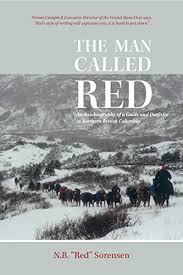 The Man Called Red: An Autobiography of a Guide and Outfitter in Northern British Columbia by N.B “Red” Sorenson recounts the life of an adventurous explorer enamored by the freedom of the outdoors. Through the pages, one becomes acquainted with Red’s character, honesty, and integrity. Red describes his wilderness quests and incessant run-in with death. These precarious instances occur with mountainous predators, natural disasters, or man-made mishaps.
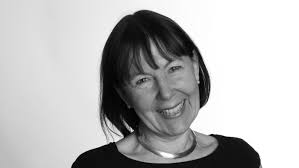 Dame Frances Ashcroft DBE, FRS, FMedSci, is the Royal Society GlaxoSmithKline Research Professor at the University Laboratory of Physiology, Oxford and a Fellow of Trinity College, Oxford.