Testing strategies differ depending on whether your software is a vendor-managed SaaS (Software as a Service) product or a custom-built system. Understanding the differences helps ensure proper coverage, reduce risks, and optimize resources.
The table below provides a high-level overview:
| Aspect | SaaS (Customer Perspective) | Custom Development |
|---|---|---|
| Ownership | Vendor owns code | Customer owns code |
| Focus | Configuration, integrations, key business workflows | Functional correctness, end-to-end quality |
| Risk | Vendor updates may disrupt operations | Defects in new or modified software code |
| Timing | During implementation and after vendor updates | Throughout SDLC (Software Development Lifecycle) until go-live |
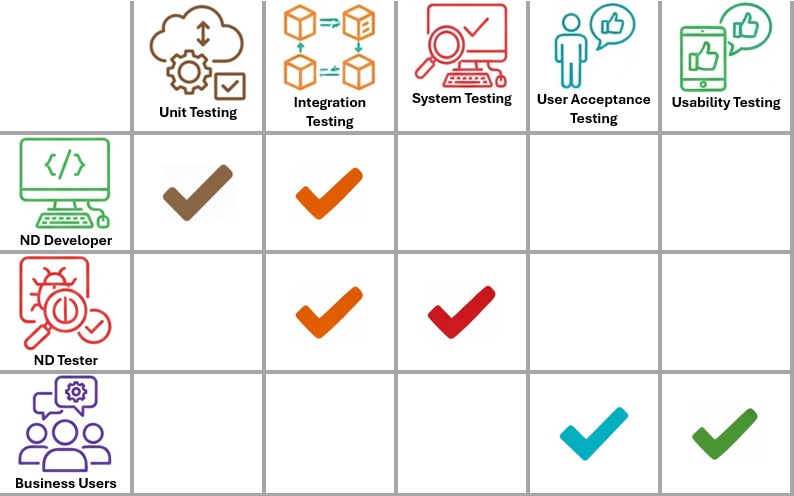
The tables below depict the typical product types along with the applicable types of testing and who is responsible each:
New SaaS Product

- Unit Testing: Applicable only if modifications will be made to accommodate customer-specific needs
- Performance Testing: Vendor should provide a SLA (Service Level Agreement) for product performance
- If the system will handle heavy load/peak processing (e.g., Class Registration), the ND customer group should consider performing their own load testing for the applicable business function(s)
- Security Testing: Typically involves Information Security (and possibly Identity Access Management) in conjunction with the Vendor
New Custom Developed Product
Product Upgrade (SaaS or Custom Developed)
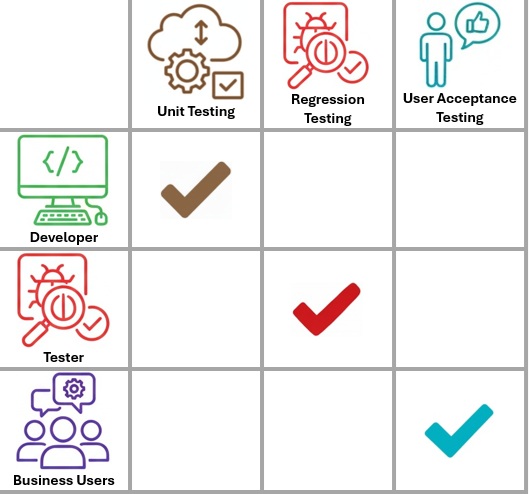
- Unit Testing: Applicable only if code modifications are made
- Regression Testing: This includes testing of any new functionality or features and update of existing regression test cases