Testing strategies differ depending on whether your software is a vendor-managed SaaS (Software as a Service) product or a custom-built system. Understanding the differences helps ensure proper coverage, reduce risks, and optimize resources.
The table below provides a high-level overview:
| Aspect | SaaS (Customer Perspective) | Custom Development |
|---|---|---|
| Ownership | Vendor owns code | Customer owns code |
| Focus | Configuration, integrations, key business workflows | Functional correctness, end-to-end quality |
| Risk | Vendor updates may disrupt operations | Defects in new or modified software code |
| Timing | During implementation and after vendor updates | Throughout SDLC (Software Development Lifecycle) until go-live |
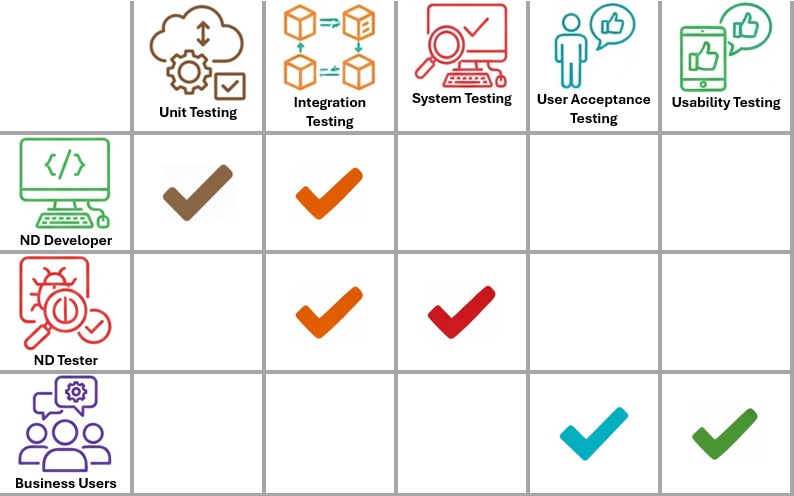
The tables below depict the typical product types along with the applicable types of testing and who is responsible each:
New SaaS Product
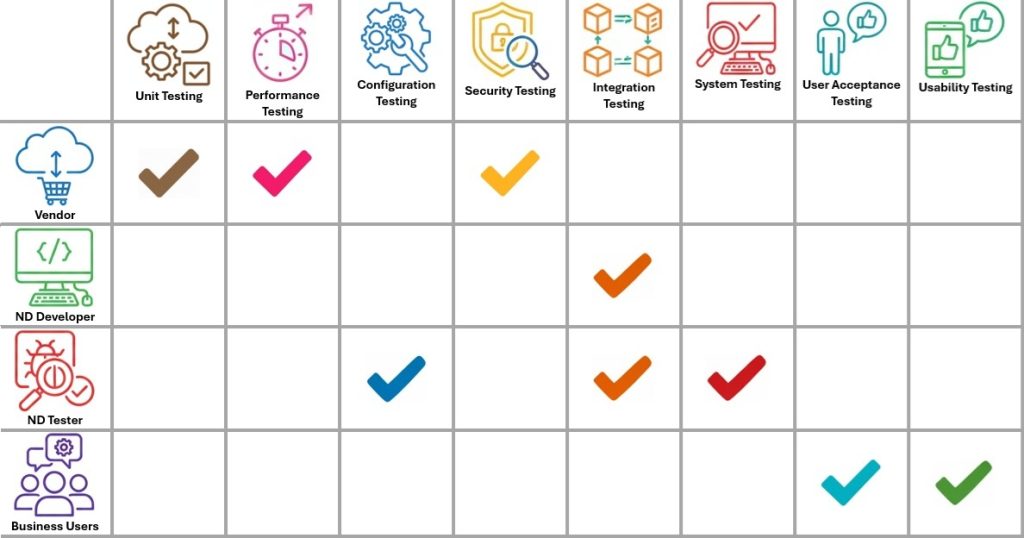
- Unit Testing: Applicable only if modifications will be made to accommodate customer-specific needs
- Performance Testing: Vendor should provide a SLA (Service Level Agreement) for product performance
- If the system will handle heavy load/peak processing (e.g., Class Registration), the ND customer group should consider performing their own load testing for the applicable business function(s)
- Security Testing: Typically involves the assigned ND Developer or Technical Lead (and possibly Identity Access Management or Information Security for consultation) in conjunction with the Vendor
New Custom Developed Product
Product Upgrade (SaaS or Custom Developed)
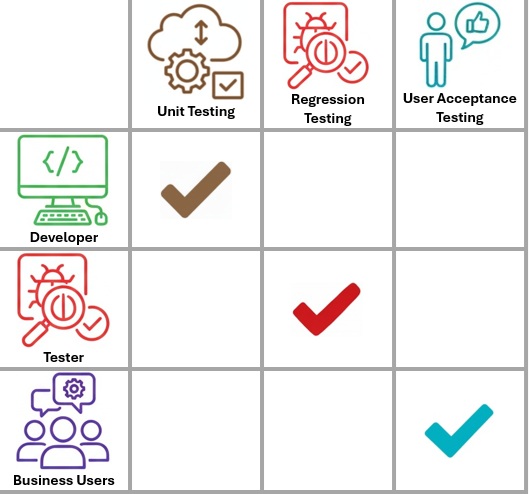
- Unit Testing: Applicable only if code modifications are made
- Regression Testing: This includes testing of any new functionality or features and update of existing regression test cases