Testing is a structured process that ensures software meets its functional, non-functional, and business requirements. The process typically follows several key stages:
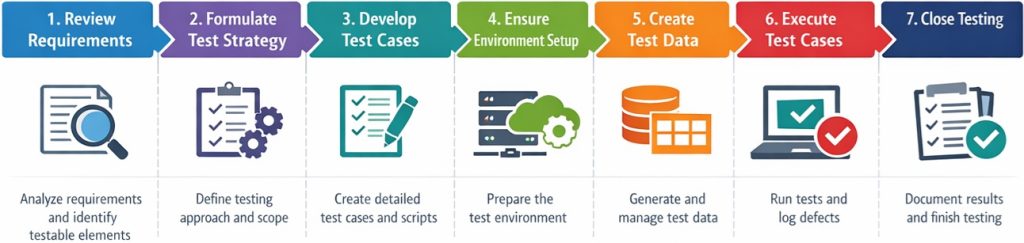
1. Review Requirements
- Purpose: Understand what the software is supposed to do, including functional, non-functional, and business requirements.
- Activities:
- Analyze requirement documents, user stories, and acceptance criteria
- Identify testable elements
- Highlight ambiguous or missing requirements
- Key Outcome: A clear understanding of what needs to be validated.
2. Formulate Test Strategy
- Purpose: Define the overall approach for testing, including scope, objectives, types of testing, resources, tools, and schedule.
- Activities:
- Determine testing techniques to be employed
- Allocate roles and responsibilities
- Define testing metrics to be created
- Key Outcome: A clear plan for testing activities.
3. Develop Test Cases
- Purpose: Design detailed, executable steps to verify each requirement.
- Activities:
- Create test cases or scripts with inputs, expected results, and success criteria
- Map test cases to requirements
- Prioritize test cases based on risk and criticality
- Key Outcome: A comprehensive set of test cases ready for execution.
4. Ensure Environment Setup
- Purpose: Prepare the technical environment where testing will occur.
- Activities:
- Ensure that any needed servers, databases, and software products exist and have been configured in the Test environment
- Confirm access and permissions for testers
- Ensure tools for test management and defect tracking are operational
- Key Outcome: A stable and production-like environment ready for testing.
5. Create Test Data
- Purpose: Provide realistic and comprehensive data for testing scenarios.
- Activities:
- Generate sample or anonymized production data
- Include normal, boundary, and invalid inputs
- Ensure data covers all business workflows
- Key Outcome: Test data that allows thorough verification of all scenarios.
6. Execute Test Cases
- Purpose: Run test cases to validate system behavior and detect defects.
- Activities:
- Execute planned tests cases
- Record actual results and compare with expected outcomes
- Log defects and communicate issues to development teams
- Re-test fixed defects (regression testing)
- Communicate test metrics (coverage, pass/fail rates)
- Key Outcome: A validated system with identified and addressed defects.
7. Close Testing
- Purpose: Formally conclude testing activities and document results.
- Activities:
- Verify all planned tests are executed
- Ensure all defects are resolved or accepted
- Provide input to the Project Summary
- Archive test artifacts for compliance or future reference
- Key Outcome: A formally tested system and documented evidence supporting release decisions.