What Is Integration Testing?
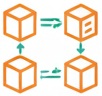
Integration testing verifies that separately developed components, services, or systems work together correctly once they are combined. While individual units may function correctly on their own, integration testing ensures that data flows, interfaces, and interactions behave as expected across boundaries.
This testing focuses on connections rather than isolated logic and ensures that independently built components communicate, exchange data, and fail gracefully when combined.
| Why It Matters | Who Performs It | When It Occurs |
|---|---|---|
| Often a shared responsibility with overlapping coverage
|
|
Typical Integration Testing Techniques
- Top-Down Integration Testing
- Testing begins with high-level modules and gradually integrates lower-level components
- Used by: Developers
- Purpose: Verify control flow and early validation of major system paths.
- Bottom-Up Integration Testing
- Lower-level components are tested first, then integrated upward.
- Used by: Developers
- Purpose: Verify foundational services before exposing them to higher layers.
- Incremental Integration Testing
- Components are integrated and tested in small, logical steps.
- Used by: Developers
- Purpose: Isolate integration issues more easily and reduce debugging complexity.
- Interface Testing
- Validates APIs, message formats, data schemas, and communication protocols.
- Used by: Developers
- Purpose: Ensure systems agree on how to communicate.
- Examples:
- API request/response verification
- Field-level data mapping checks
- Error and timeout handling
- Mocking & Stubbing
- Simulated services replace unavailable or unstable dependencies.
- Used by: Developers
- Purpose: Enable early and isolated integration testing.
- Data Flow Testing
- Verifies data creation, transformation, transmission, and persistence across systems.
- Used by: Developers and Testers
- Purpose: Ensure accuracy, completeness, and consistency of data.
Key Takeaways
- Integration testing focuses on how components work together, not how they work alone
- It is a shared responsibility between developers and testers
- Most integration defects stem from assumptions about data or interfaces
- Strong integration testing prevents costly downstream failures