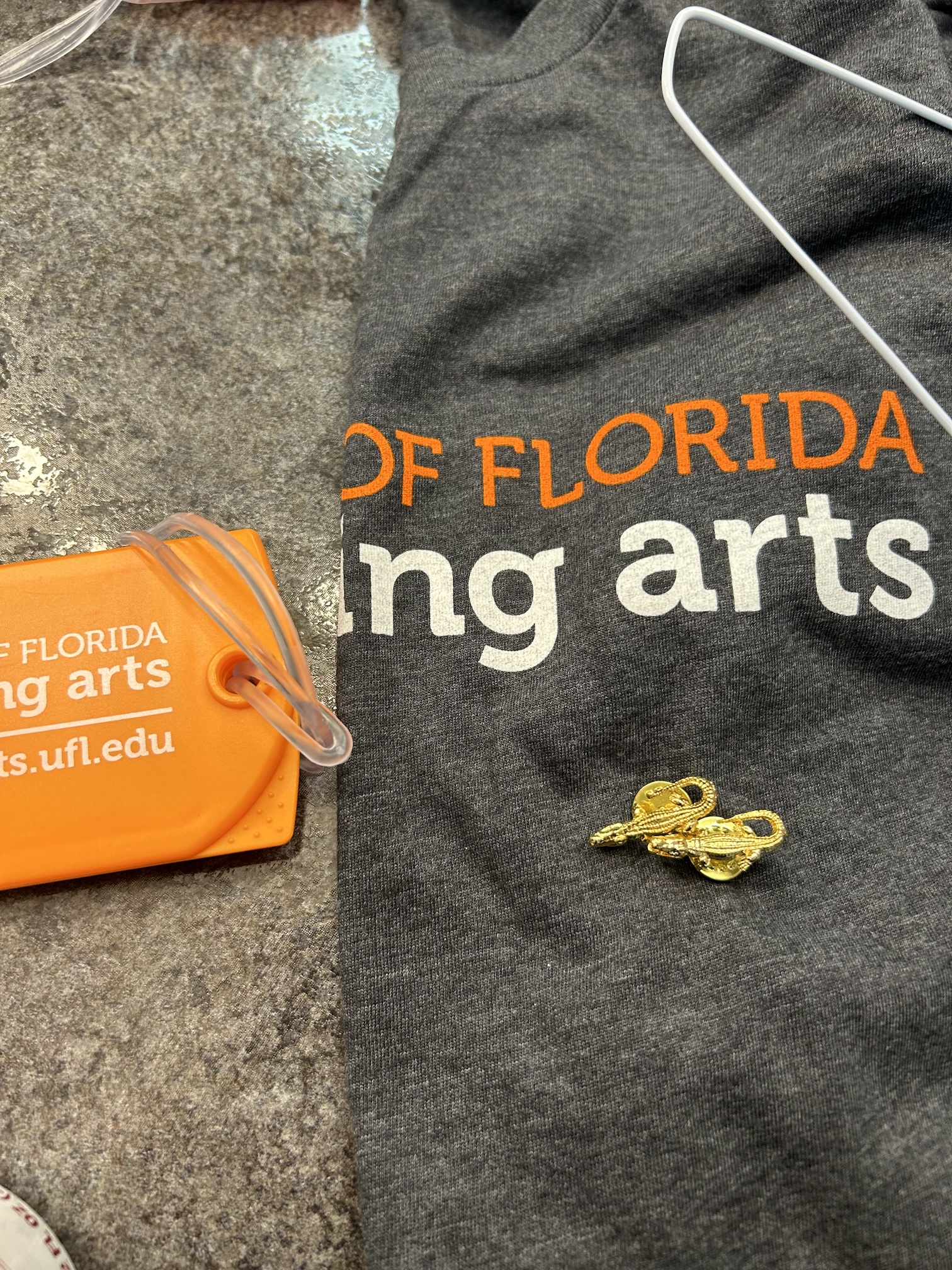
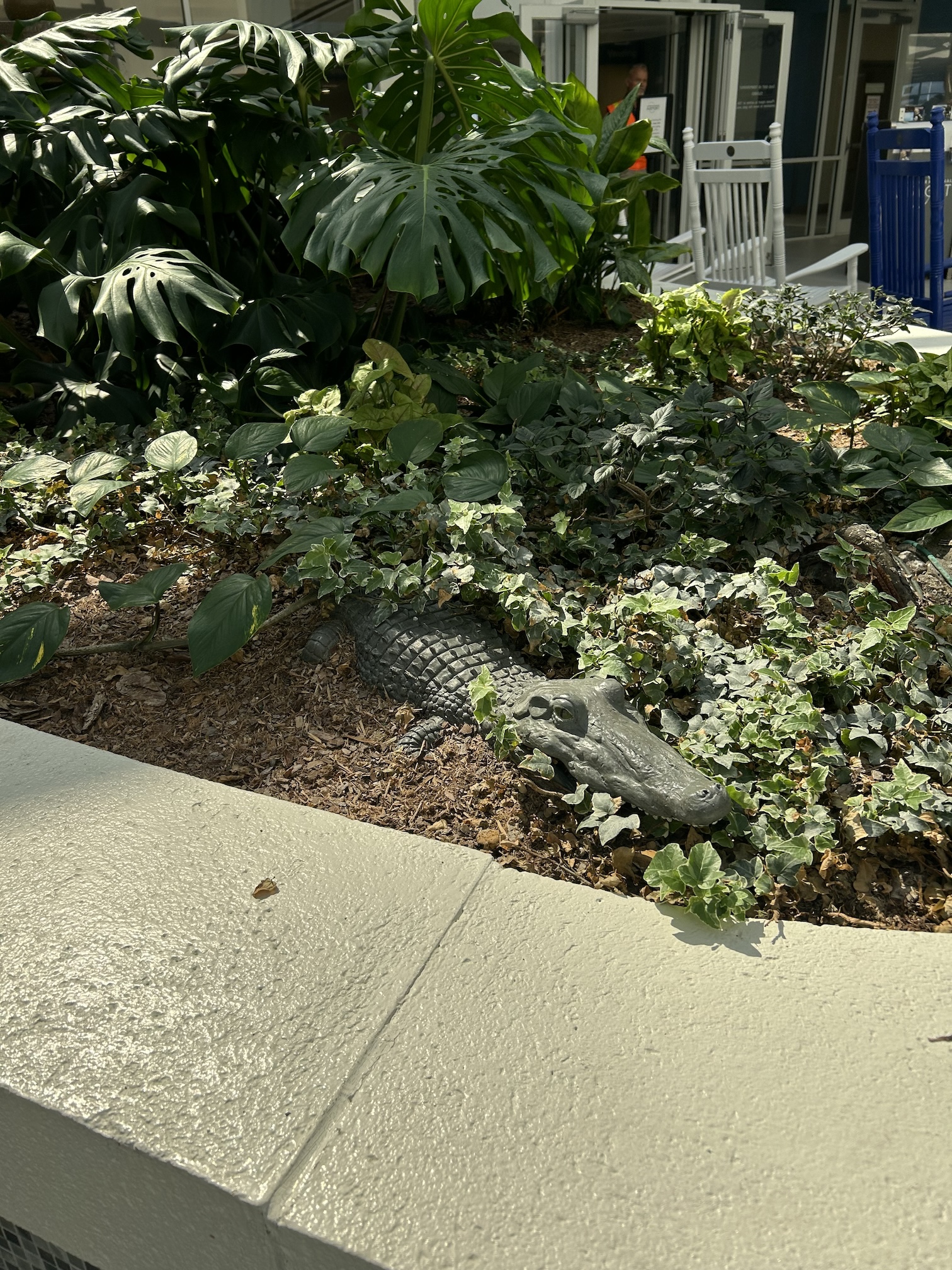
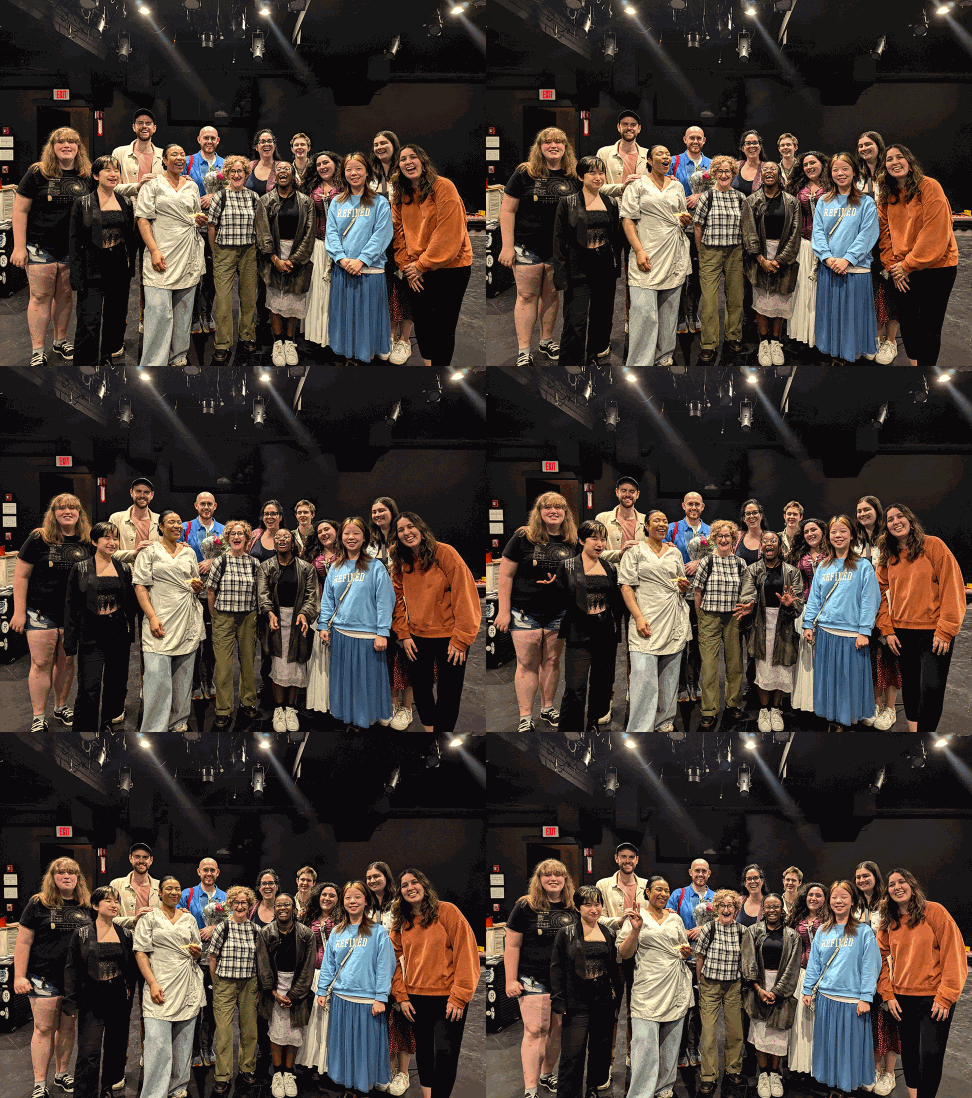
Gator fans decked out in fiery oranges and dazzling blues would give Malvolio and his yellow stockings a run for his money this week. As the roads, and more importantly, the parking lots, flood with tailgaters this Gainesville homecoming. Homecoming is a tradition, especially in the US, that typically takes place in the autumn. It welcomes former students, alumni, or community members to their school or hometown and Gainesville was buzzing with people and their cars! For us Brits the equivalent would be a knees up in a pub with squelching sticky carpet followed by grumpy walkouts if there was even a sniff of losing the game.
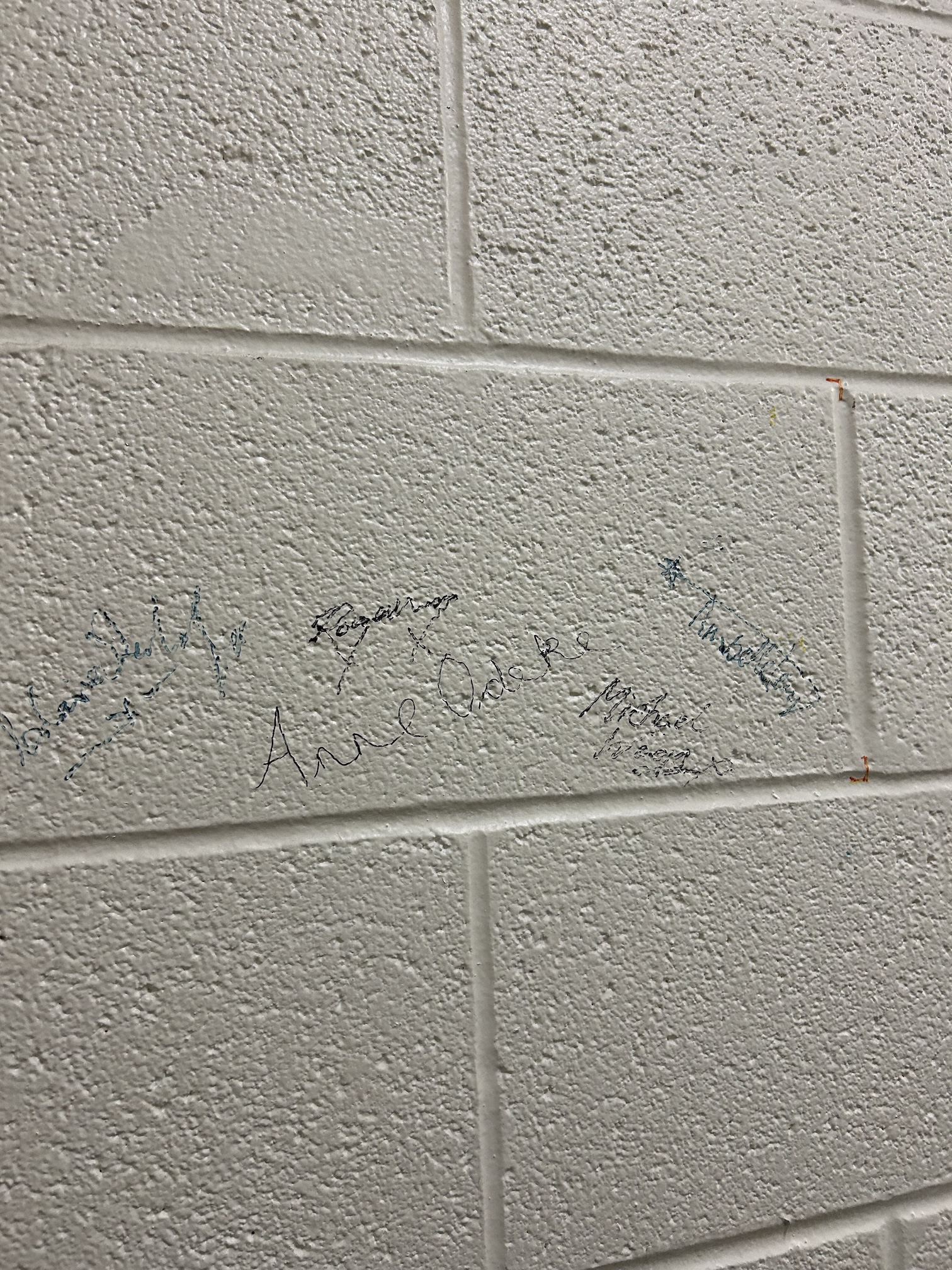
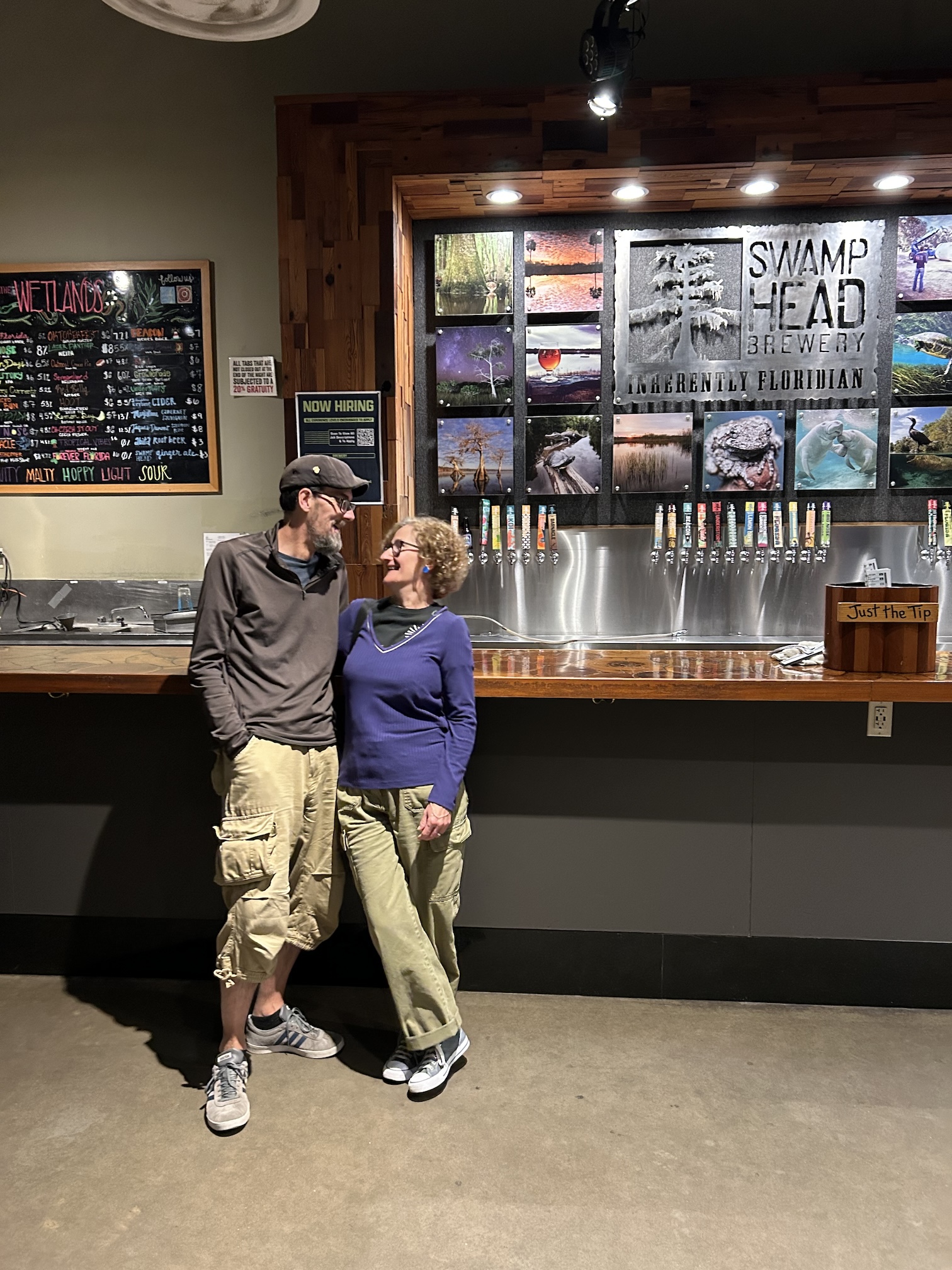
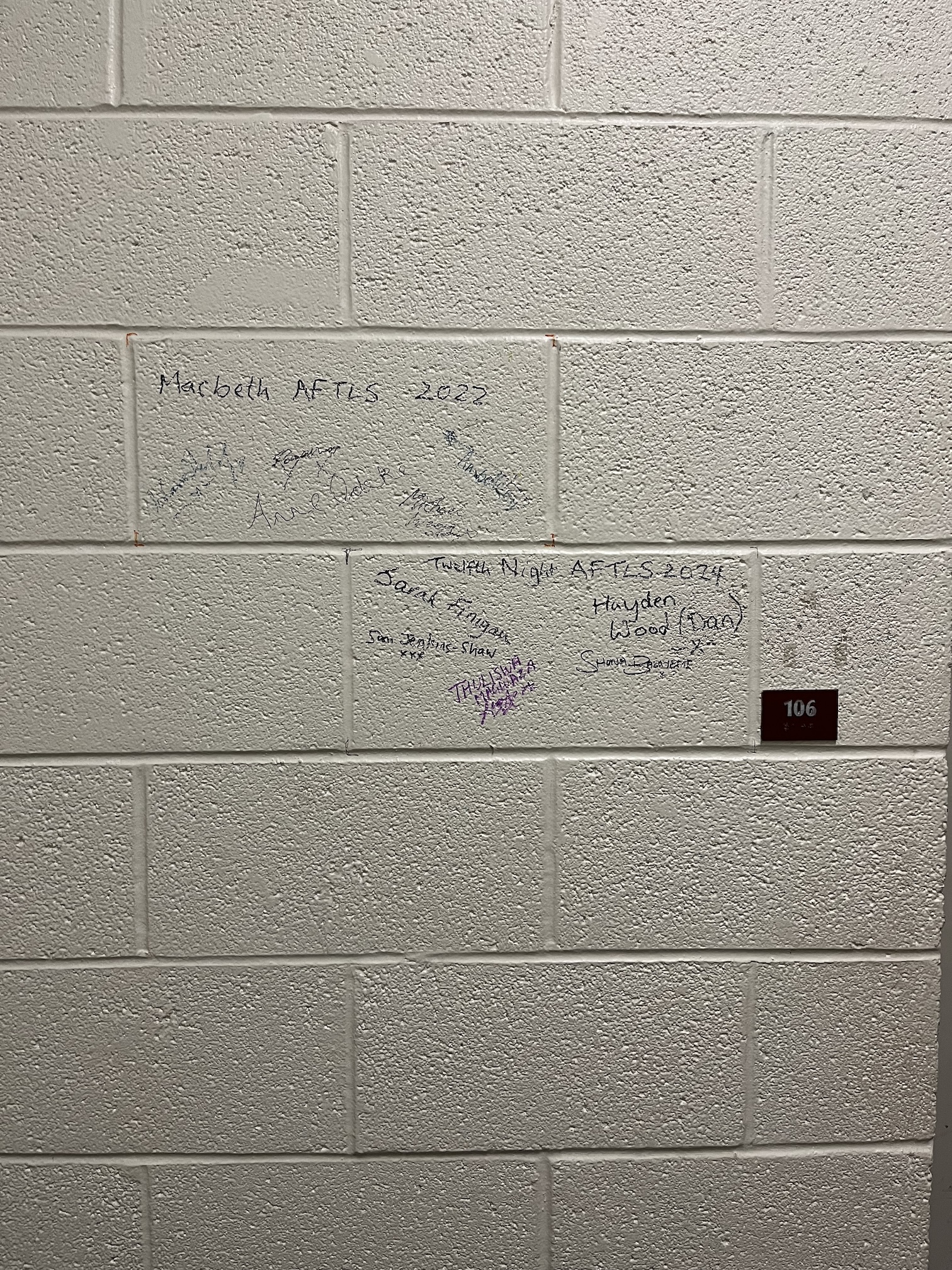
AFTLS had our own homecoming of sorts this week with alumni Waggy, Michael Wagg – last starring in AFTLS’ Macbeth (spring 2024) and joining his Mrs., our very own and very brilliant Sarah Finigan. Waggy brought a grounding comfort and keen eye to our rehearsal room back in Brixton, London and it was nice to be reminded of that here in Florida. We dragged ourselves to the Swamp Head Brewery to delight in Banana Bread IPAs and Key Lime Pie Cider for a well-needed catch-up. Thanks for sharing him with us, Sarah!
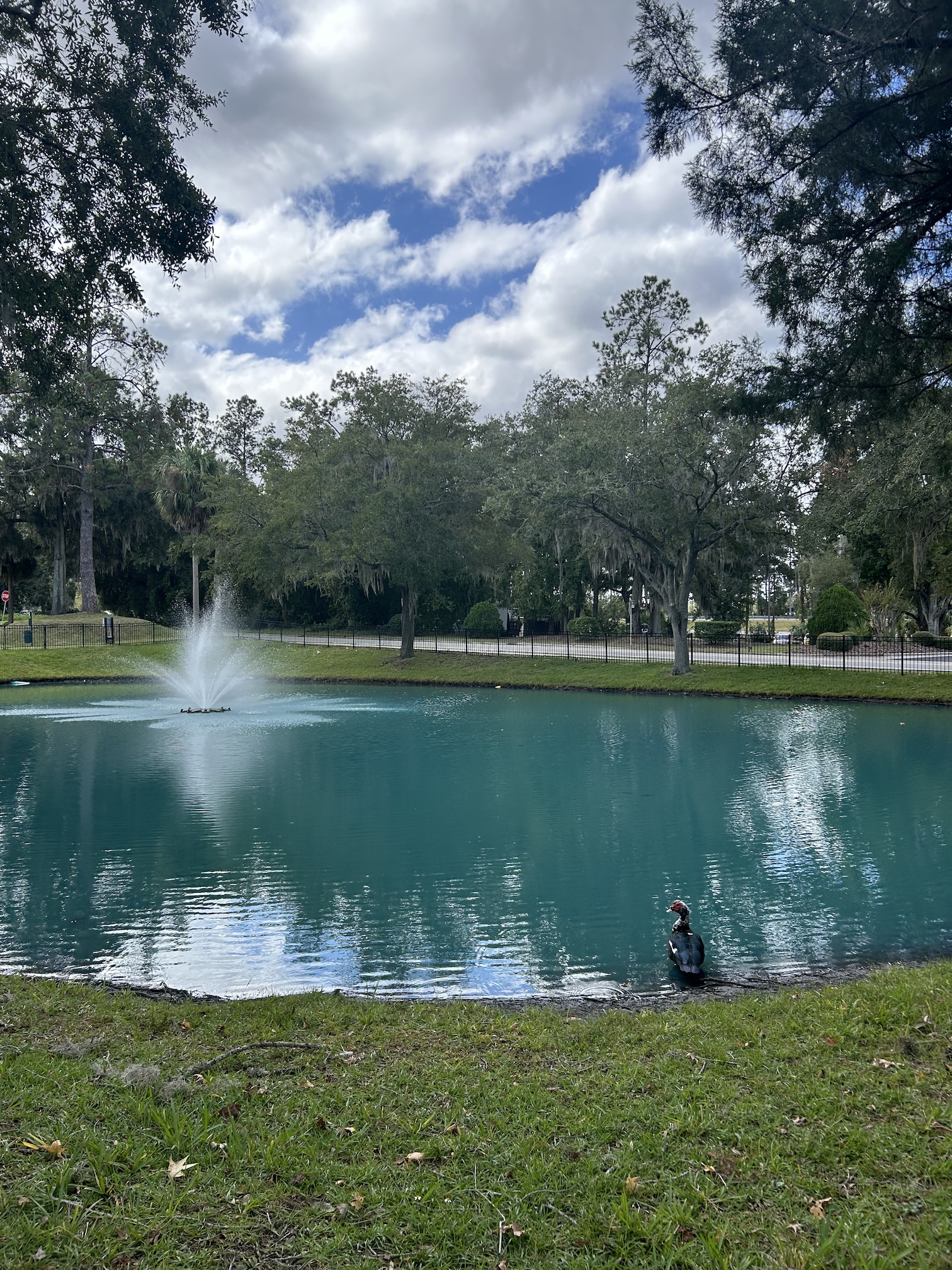
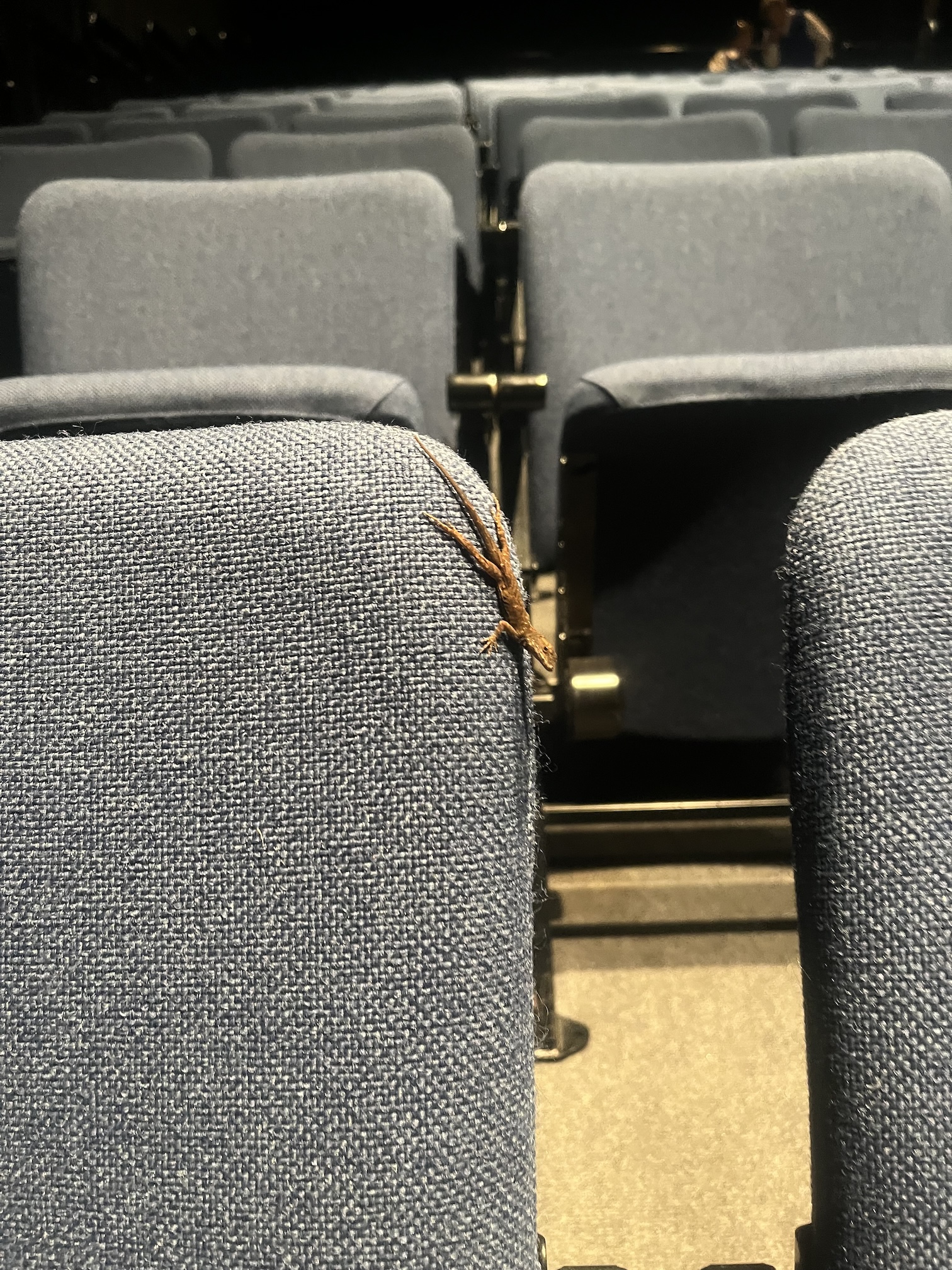
I went to Santa Fe College, where I met some outstanding theatre majors. We ripped some Shakespeare to shreds and then respectfully put it back together. I thank the students. Florida is bursting at the seams with wildlife. If it’s not a bear or deer, it’s a gator; if it’s not a gator, it’s an exotic bird or a butterfly. You really do feel like you’re encroaching on their space. Speaking of which, we also had an unexpected friend of the lizard variety take the best seats in the house (see below). On that note, and as I bat away an insect that is currently trying to take over this blog. Goodbye Gainesville! x
Illyria is the kind of place where you wash up on the banks of a river, battle the roaring sun, pretend to be someone you’re not, eat and drink your fill of cakes and ale, and immediately get involved in an elaborate love triangle. Wait, I’m mistaken – that’s San Antonio.
The five of us are incredibly lucky to have the city in our hands for the week!
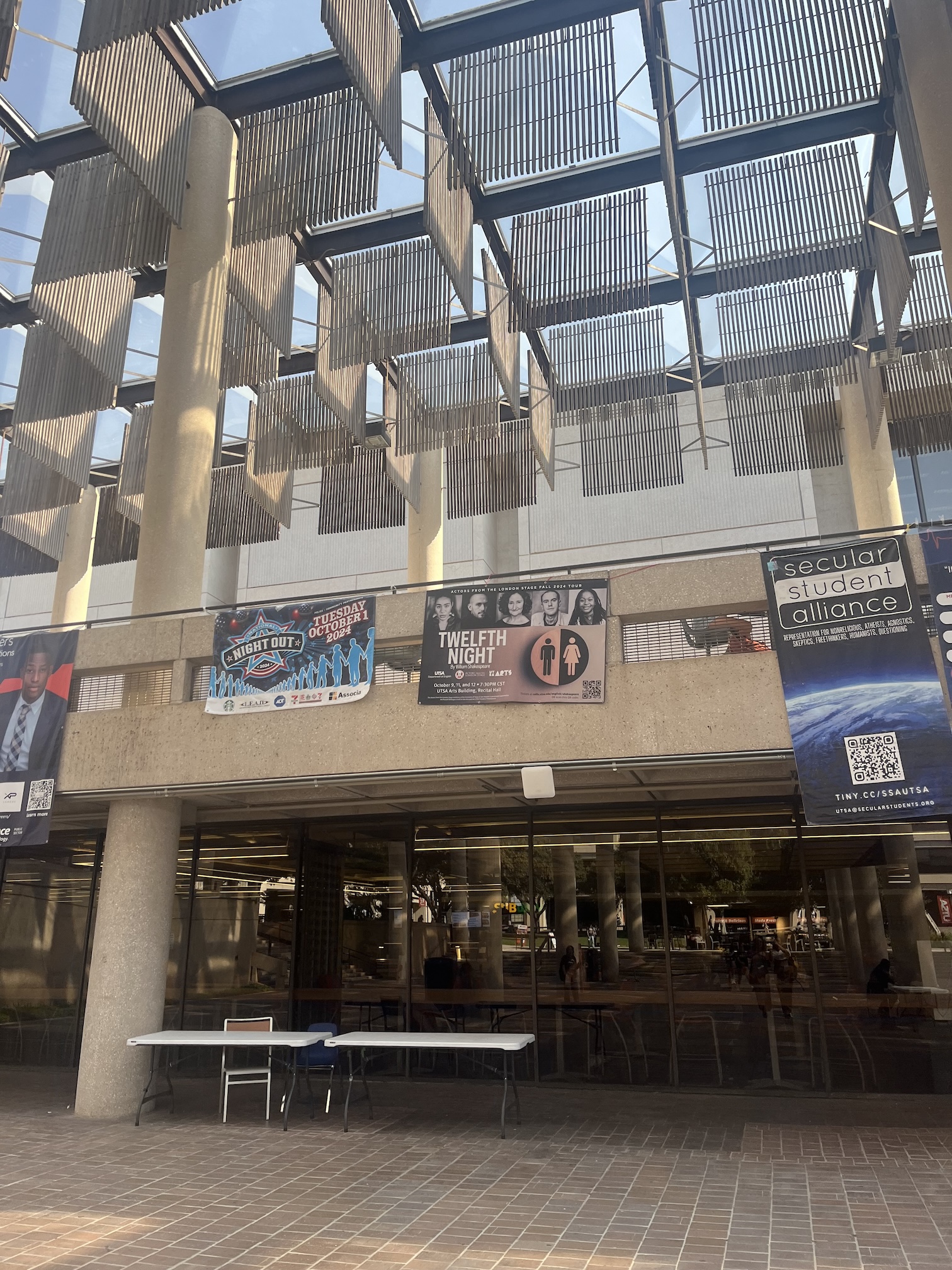
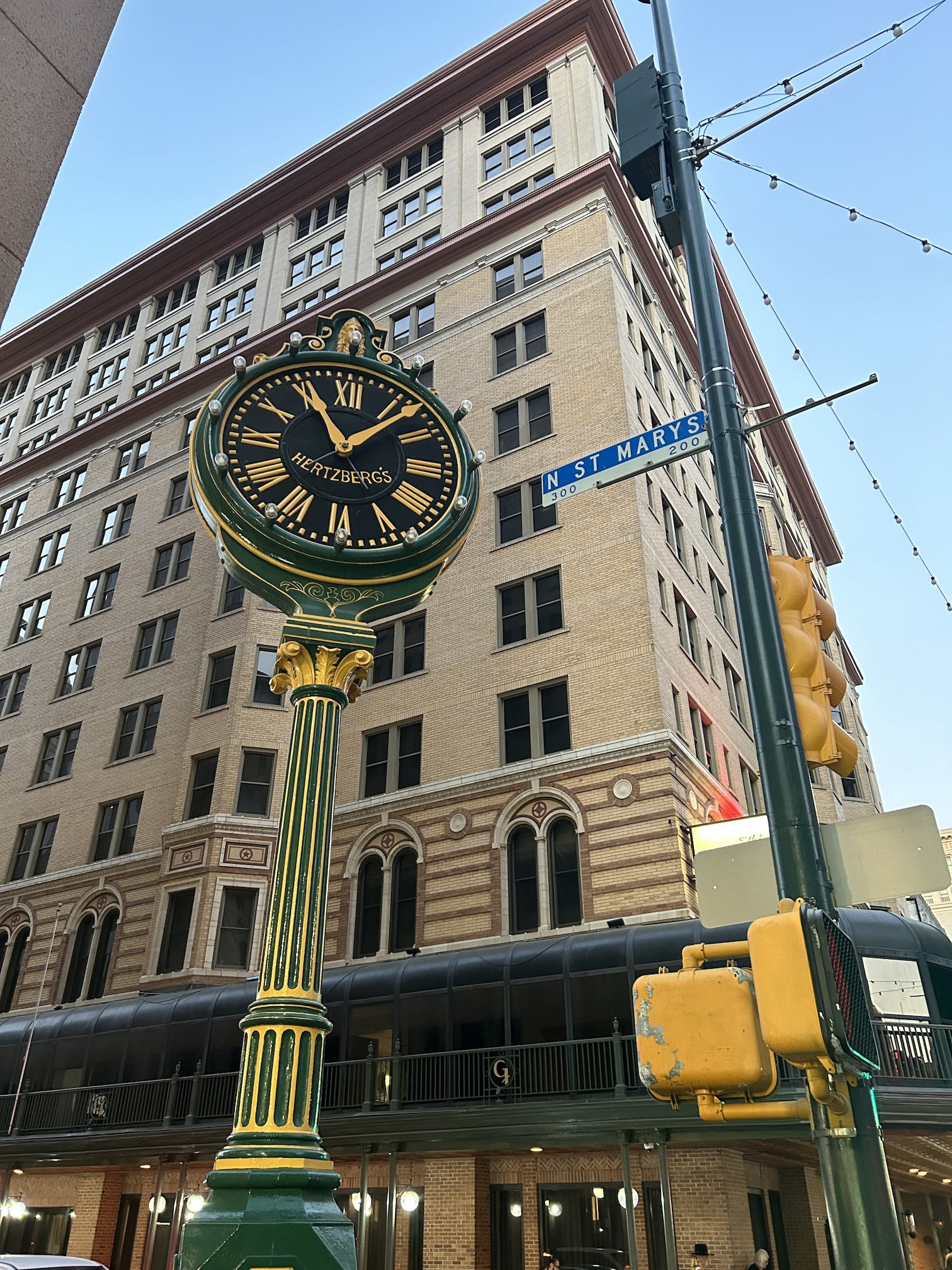
We start with the warmest welcome from Dr. Kimberly Fonzo, who greeted us at the airport alongside Gabby, our amazing stage manager for the week. However, I think they were there to catch our jaws before they hit the ground at how mind-blowingly different this state is to anywhere else we’ve been so far. “What country, friends, is this?” feels very apt as we predictably gawp at the size of everything and head to UTSA on the most extensive concrete highway you have ever seen, all to arrive at UTSA and a car park the size of a football field.
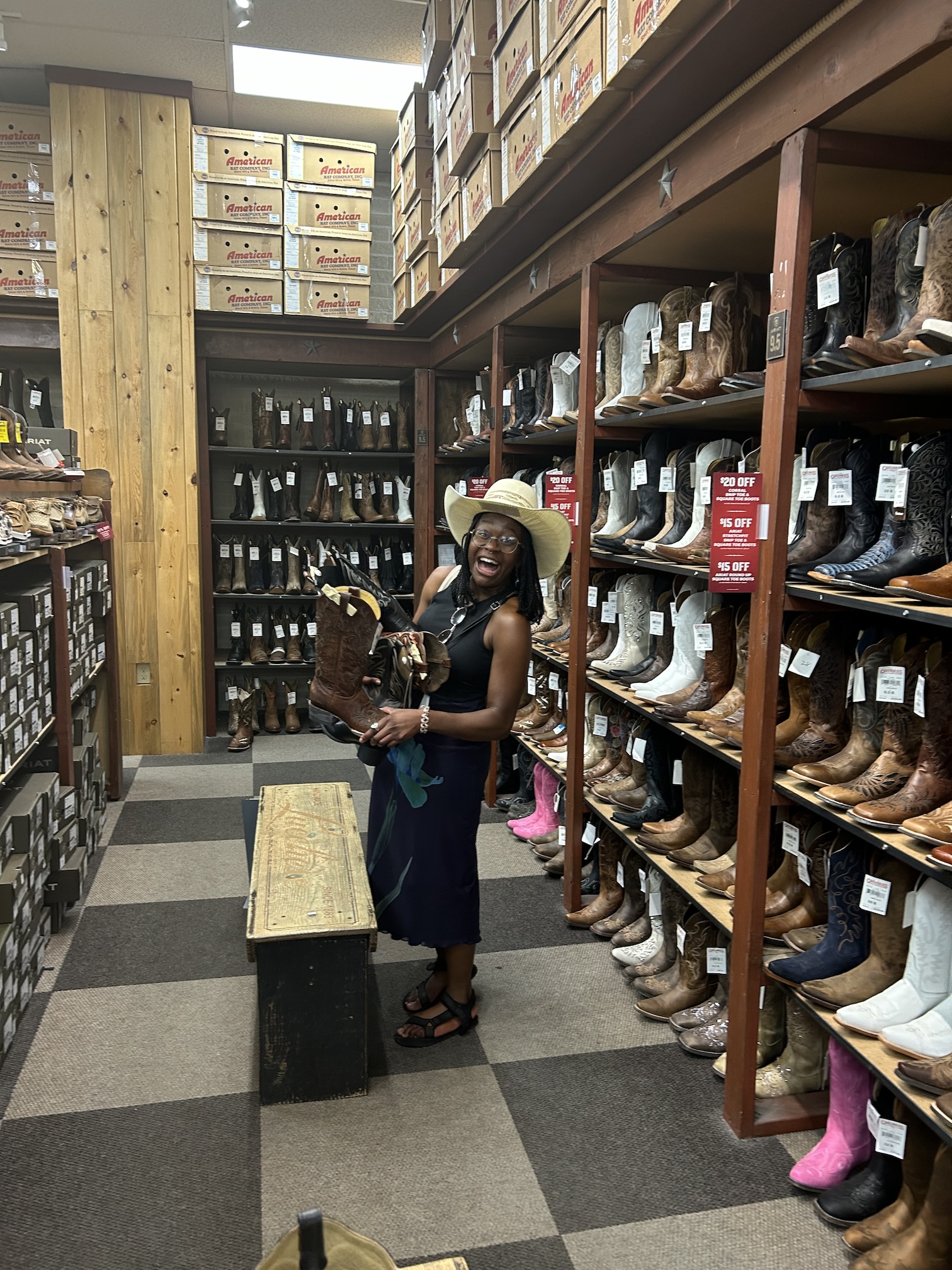
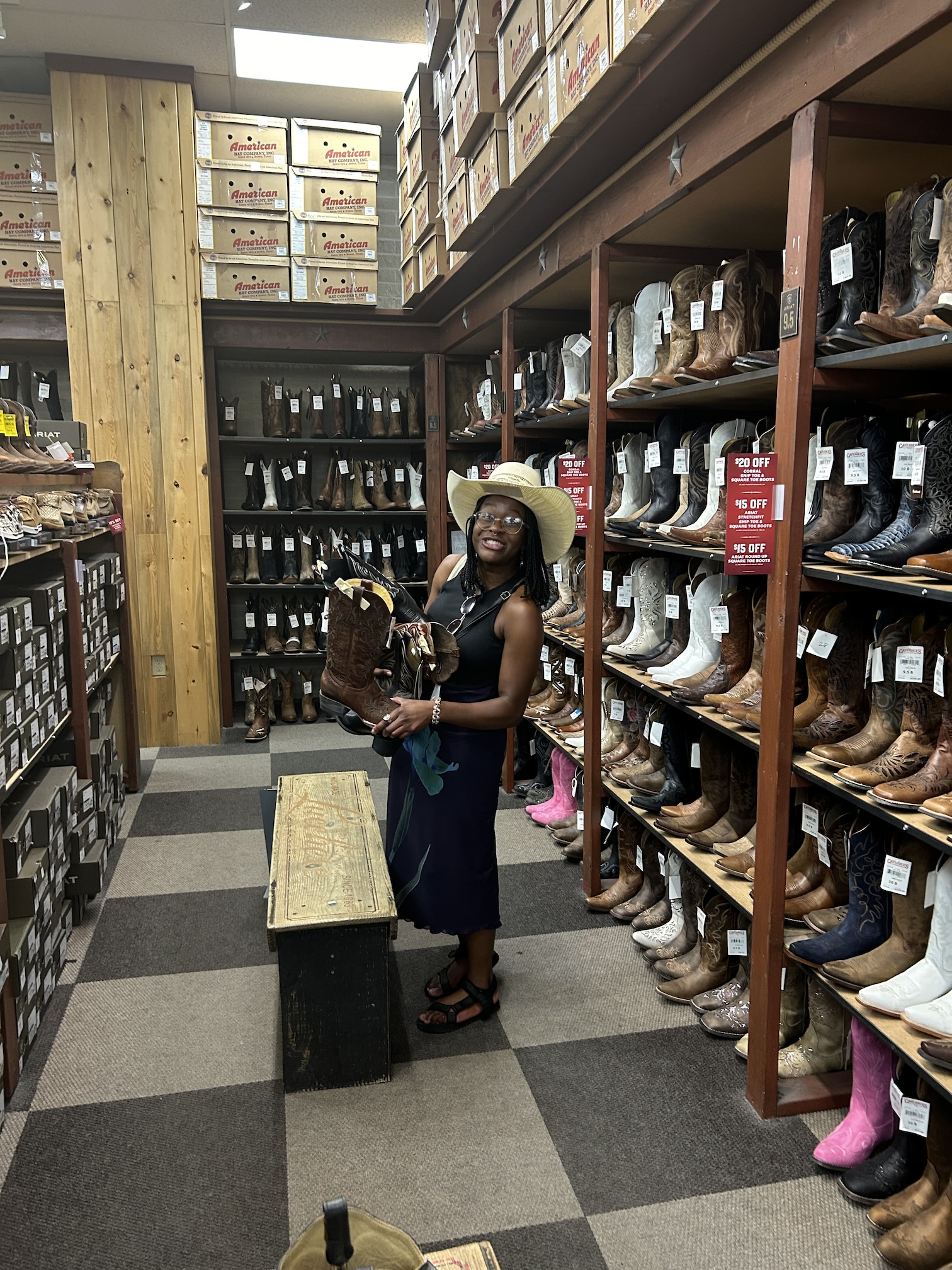
The first stop is with Dr. Xiaoyi Zhang. Dr. Zhang gets a special mention as Tilly and I had the utmost pleasure of working with her students over the week. She is not only absolutely brilliant, not only a Twelfth Night fan, not only Notre Dame alumni, but also saw the AFTLS production of Much Ado About Nothing in 2009! You can imagine we had a lot to talk about, the only thing interrupting our conversation was an important date with a pair of cowboy boots desperate to come home with us. As well as all of the touristy tourist stuff one must do when in a city like SAN AN. First stop was the Alamo. A conflicting experience and – diplomatically – I would say requires less attention than it deserves.
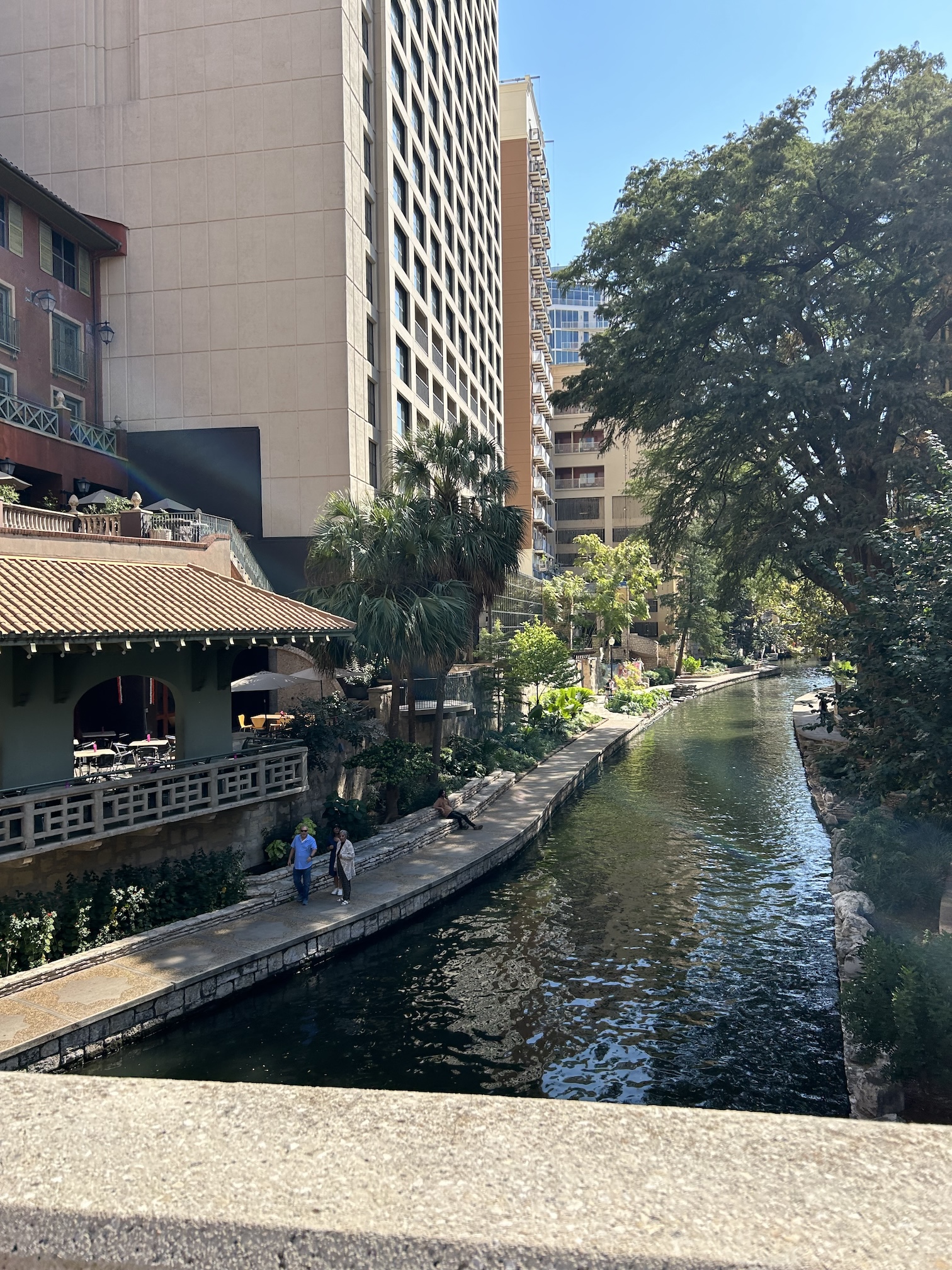
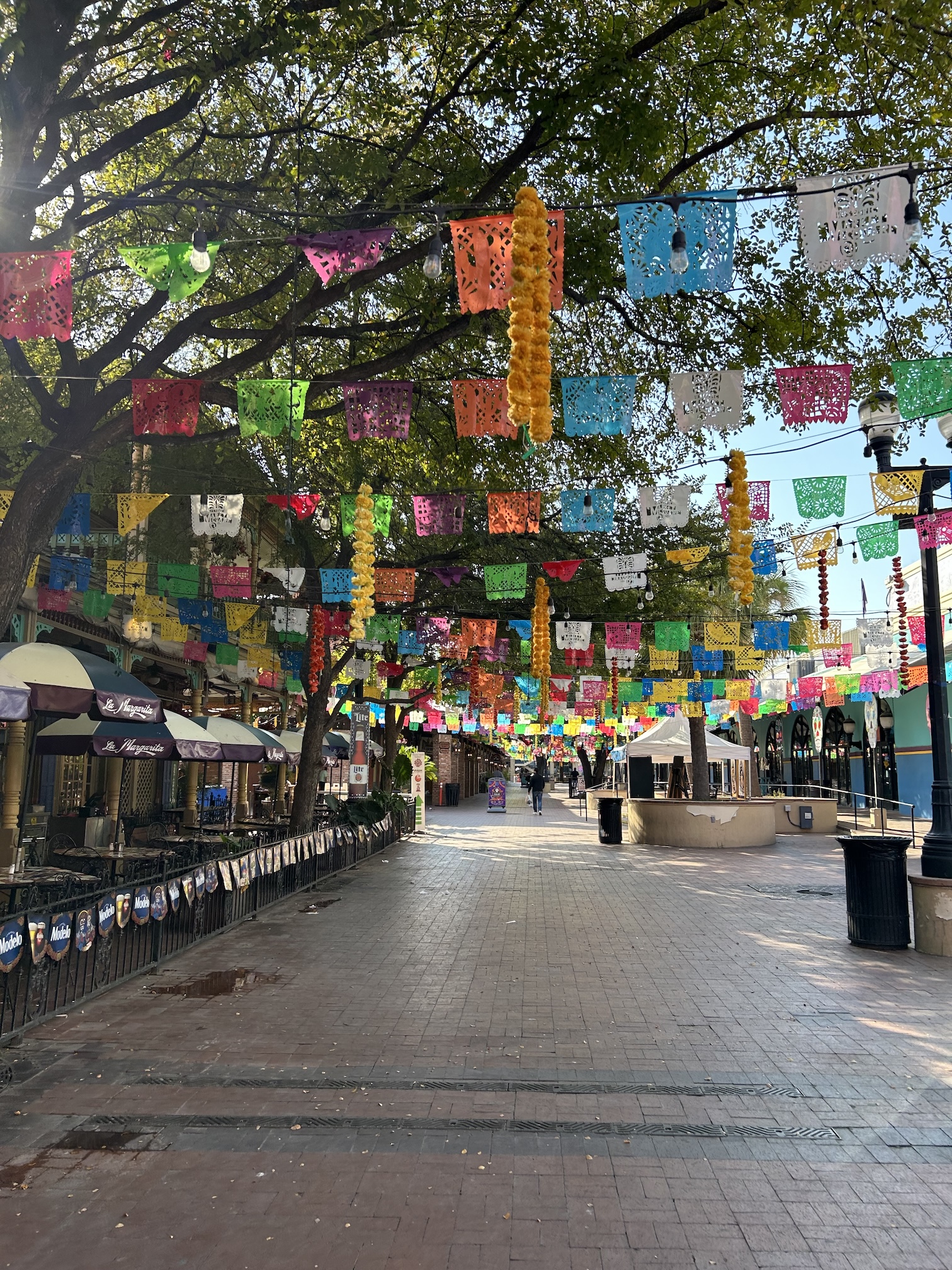
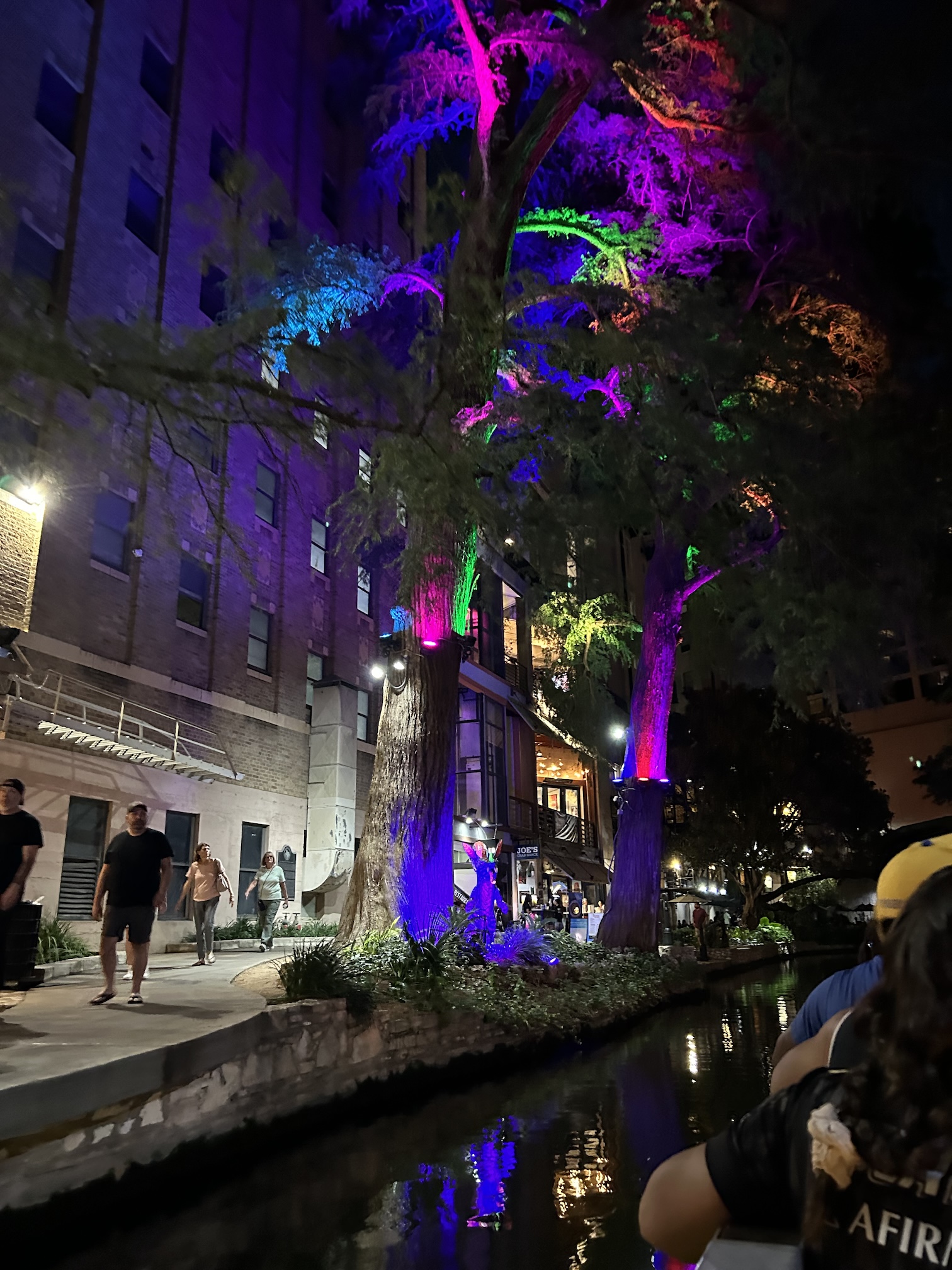
The Alamo, to even the most ardent history buffs, may fail to fill the cowboy boots of curiosity, but gosh does it make you revere the Mexican origins of San Antonio and interrogate its Spanish colonial past. The art scene, with murals and galleries showcasing Mexican-inspired art. The traditional mariachi music with UTSA sporting their very own mariachi band! The folklore, dance, food, music and essence of Mexico sings loudly even in the dead of night as the city hums with warmth long after the sun takes its last bow. The river walk is gorgeous and the food is fantastic – especially the varying Latin American cuisines, but there is always room for BBQ… dost thou think, because thou art full of food, there shall be no more brisket and big red?
We leave with our hearts and bellies full and bursting big with the love of San Antonio. Thank you for having us.
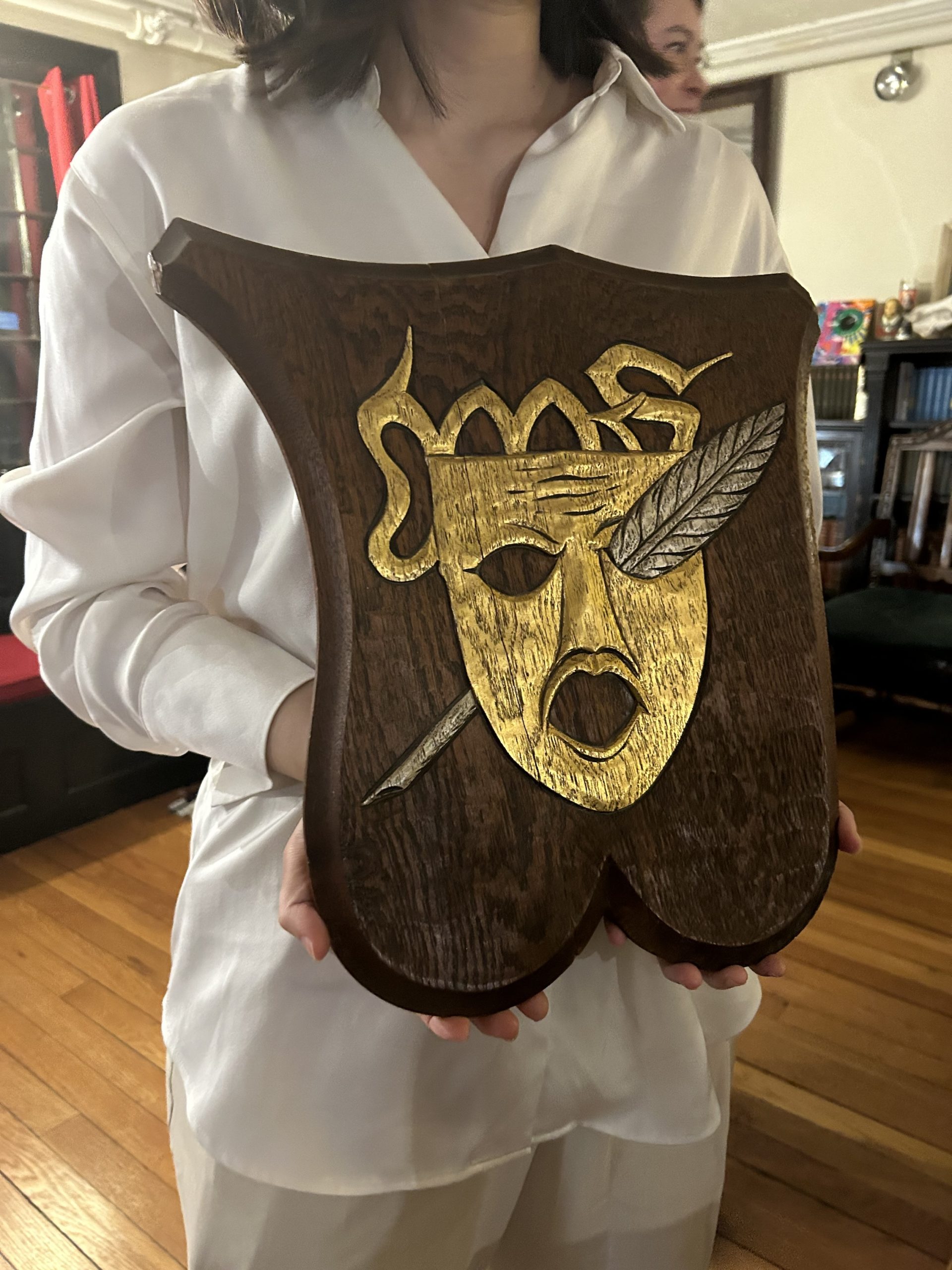
Being a honorary member of Alpha Psi Omega (APO), the theatre fraternity, is like being knighted with a prop sword – you get all the valour, camaraderie, and recognition, minus the heavy armour or weird initiation ceremonies. It’s not just about memorising lines or hitting your mark; it’s about wearing the invisible crown of theatrical brilliance, where every rehearsal feels like a royal decree to entertain. Whether you’re a spotlight-stealing lead or the unsung hero backstage, joining APO means you’re officially part of an elite squad of thespians who really know the bond you share with fellow creatives, the humans who laugh with you in the wings and cheer for you from the front row. In APO, the stage isn’t just a place to act – it’s where lifelong friendships are forged in the glow of shared stories, late-night rehearsals, and the knowledge that, together, you’re part of something truly special.
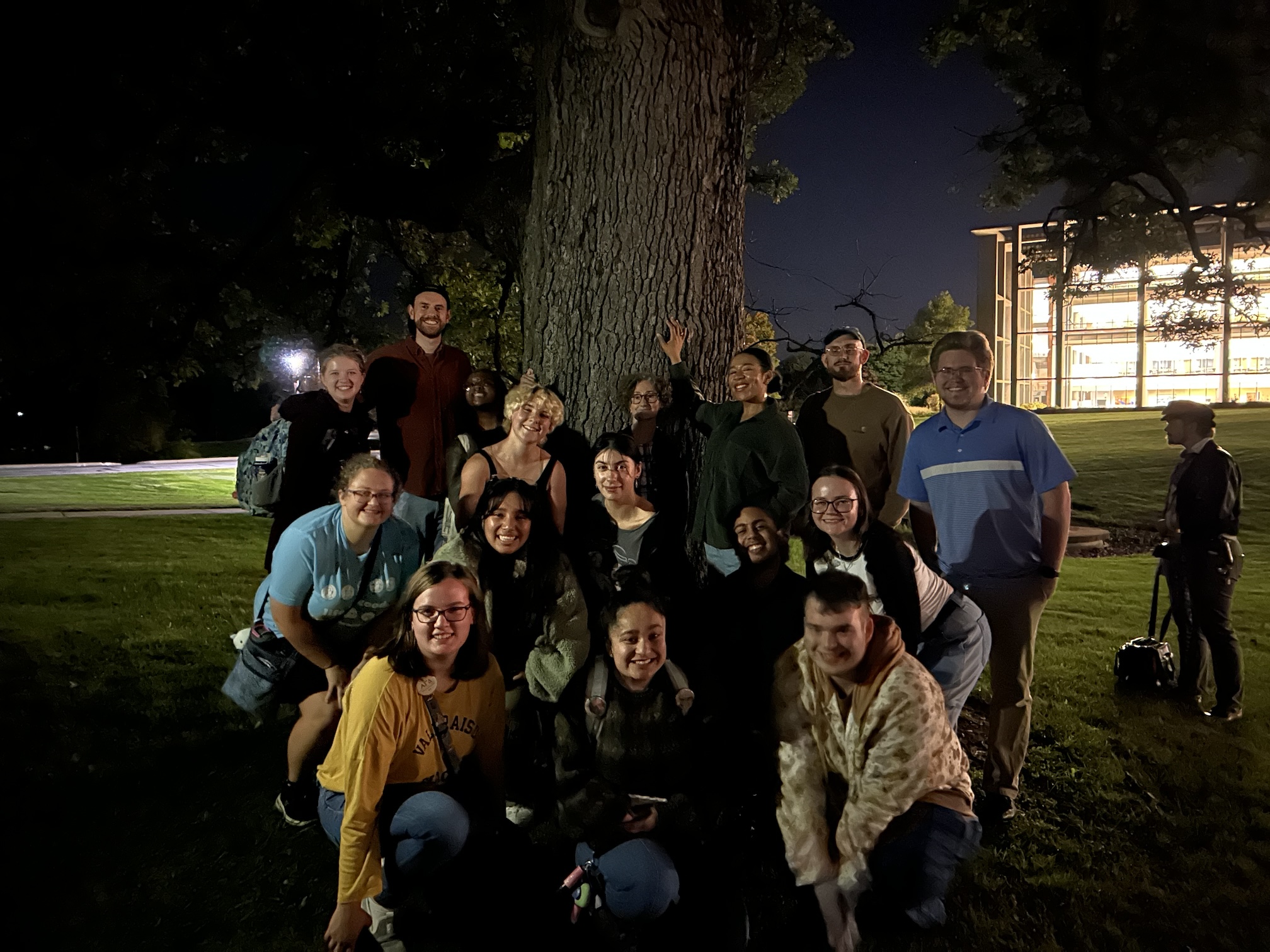
And then there’s Merlin. Merlin, the tree for theatre students at Valparaiso University, holds a special significance beyond its status as a campus landmark. The Merlin Tree serves as a central meeting point for theatre students, where they can gather before rehearsals, share ideas, and bond over their love for the arts; including reading Shakespeare under the stars! We gathered under there to share a moment with all the theatre lovers and learned the devastating news that the tree is being taken down. But no, in an act of defiance the students are rallying together to save the tree and the legacy it leaves behind. With a couple of charged months ahead as we enter October and then, knotty November, that simple act of courage, defiance and strength, standing in the truth of what you believe in will be with remain with me.
I had the pleasure of working with the cast and crew of Valparaiso’s production of Let the Right One In (click the link to buy tickets!). The perfect play for spooky season with an endlessly energetic cast. I’m gutted to miss the show, so please check it out for me if you’re in the area! We ran around on the beautiful stage for a couple of hours practicing behaviour and learning to balance space as performers with our bodies. The workshop ran over an hour and if I could I would have stayed another two!
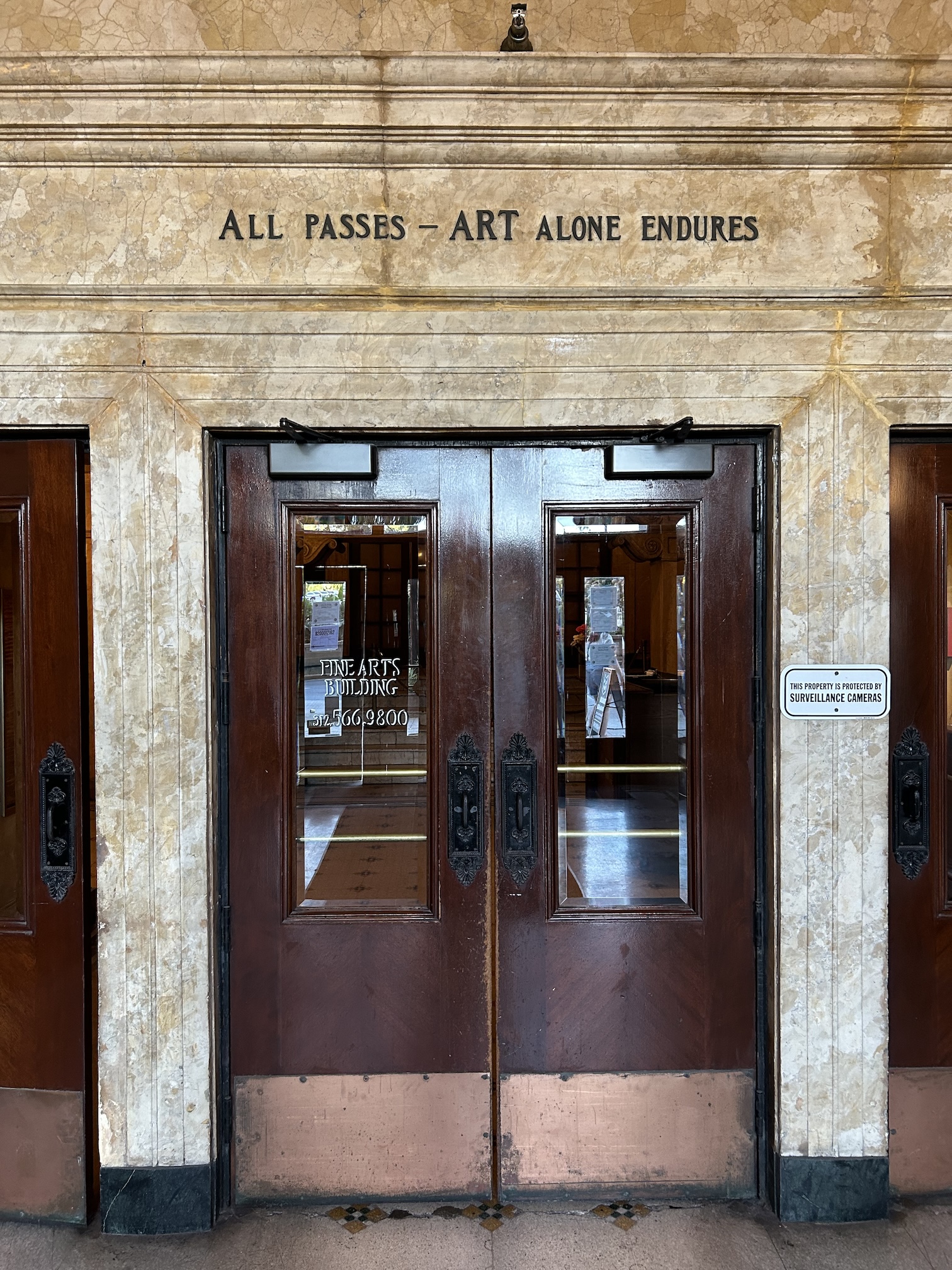
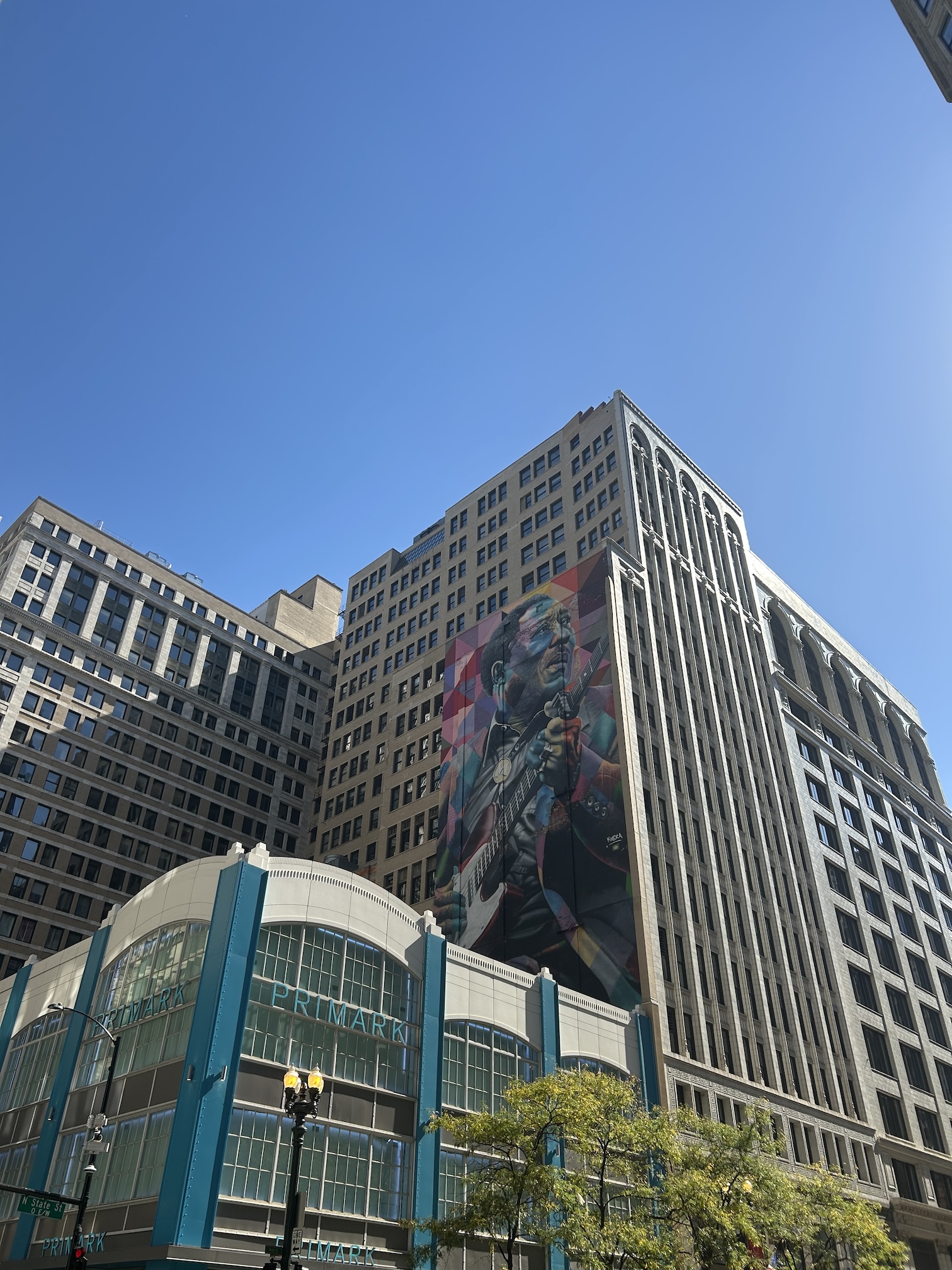
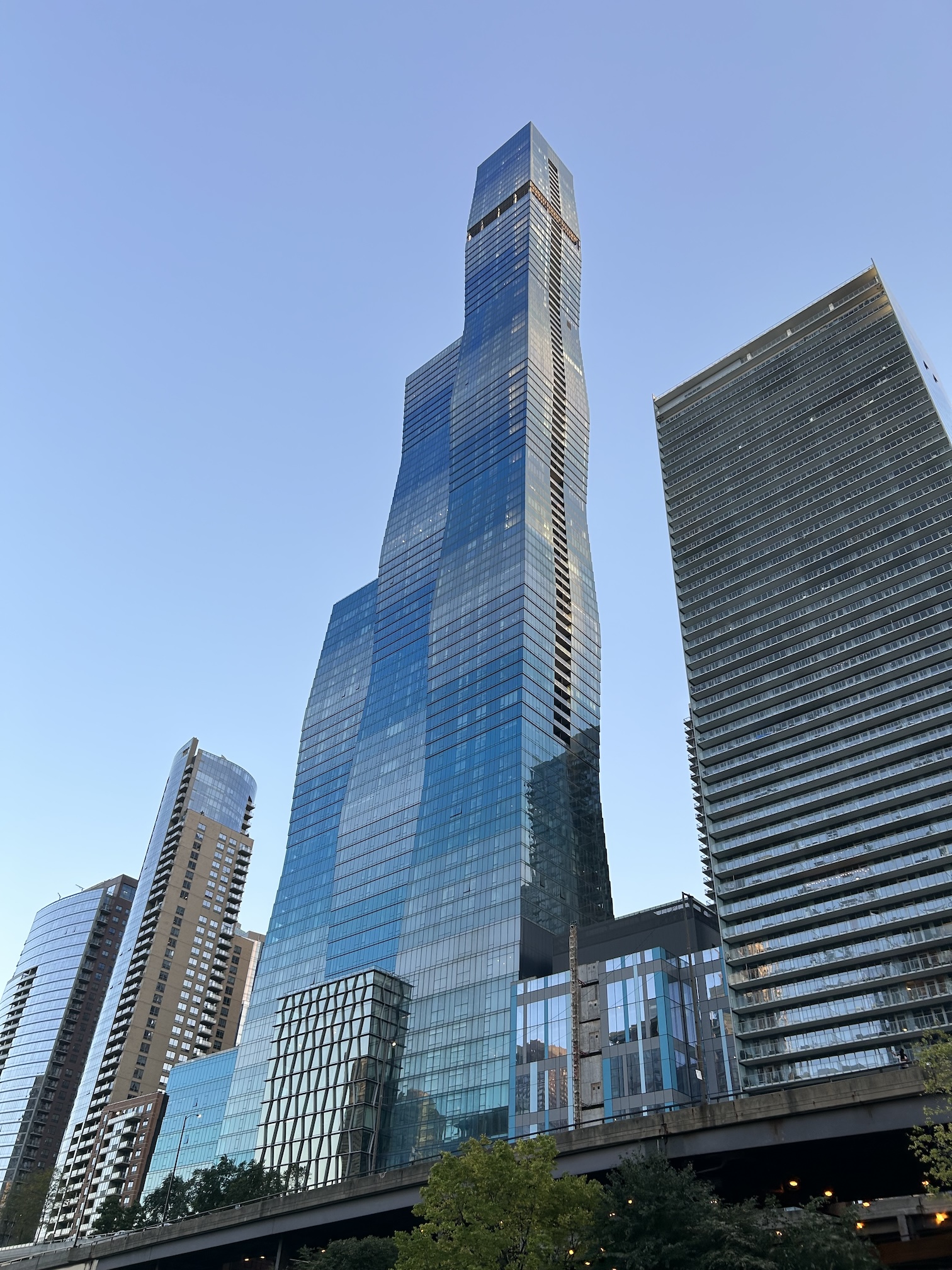
I look back on a week of ascension as we arrived at Valpo as mere mortals and head back into downtown Chicago as APO to absorb everything that robust and endlessly electrifying city has to offer. Including to name but a few: deep dish pizza, Millennium Park, The Art Institute of Chicago, Chicago Riverwalk, the architectural boat tour, the very Fine Arts Building, Wrigley Field, Chicago Cultural Center, Buddy Guys, Chinatown, American Blues Theatre…
I could keep going but we would be here – Oh THE BEAN, how could I forget THE BEAN! (Officially called Cloud Gate) – all day. I digress. I’ve never wanted to relentlessly “complete” a city in such a voracious way. I fear I dream of the impossible and will inevitably be back!
A pitch pipe, a tattoo sleeve, a comical number of kazoos and a pair of fishnet stockings make up just some of the wonderful, and certainly weird parts and props that sit in our cast suitcase.
Ah, the humble suitcase: the unsung hero of travel!
It’s not just a bag; it’s a portable miracle.
Imagine a world without suitcases – your socks would mingle awkwardly with your shampoo, there would be a great battle for your belongings at the other end, and you’d arrive at your final destination looking like a bootless ill-natured haggard. A suitcase holds your life in its clutches.
However, this is not just any case, this is THE SHOW CASE.
THE SHOW CASE holds all the discoveries, angst, epiphanies and compromises of rehearsal. It holds the greatness, the confusion, the ambition and all the joy in Twelfth Night. In non-thespian terms, this equates to a 50lb travel allowance (or approximately 22kg for our international friends), and seemed an insurmountable task to achieve at the start of our rehearsal process: squeezing a show into a suitcase. Five actors after five weeks of rehearsal morphed into directors, set designers, costume designers, musical directors, and great eaters of curry goat – superbly stewed by the one and only Francis – that we leave behind at the Karibu Centre in Brixton, our rehearsal hub. So, touching down at Chicago’s O’Hare International Airport after nearly nine hours in the sky and a further three-hour crawl through an overzealous customs, we nervously anticipate being reunited with our suitcases and most importantly THE SHOW CASE.
Imagine the sweet sigh of relief to see the weathered case, plastered to high heaven with stickers from previous destinations, float around effortlessly. A manic baggage claim where suitcases had been piling up for the past few hours. We bundle them and ourselves into a taxi, the AC blowing away any warmth provided by the Chicago air, but the jubilation of Mexican Independence Day and the relief of knowing all our company and cases are here keep us going as we enter Notre Dame, AFTLS headquarters – it’s starting to feel real now.
We meet with the awesome and astute Cate (Happy Birthday!) and get settled into our week at ND. Business commences, as we undertake lots of admin on the beautiful grounds. I could run out of lovely adjectives to describe the team, but more about ND in Week 7!
Westville vs. Wellesley
Westville Correctional Facility is a state prison located in Westville, Indiana. It’s one of the larger correctional facilities in the state and is operated by the Indiana Department of Corrections. The prison houses a mix of security levels, including medium and maximum security, which means it accommodates inmates serving a range of sentences, from shorter terms to life sentences. It is home to some of the fiercest Shakespeare lovers in the land.
Wellesley College is a prestigious private liberal arts college for women located in Wellesley, Massachusetts. It’s one of the Seven Sisters, a group of historically women’s colleges in the northeastern United States. Founded in 1870, Wellesley is known for its rigorous academic programs, small class sizes, and its beautiful campus, which features a mix of Gothic and modern architecture. It is also home to some of the fiercest Shakespeare lovers in the land. A Twelfth Night battle between Westville Correctional Facility and Wellesley College would be a delightful mix of Shakespearean wit, mistaken identities, and epic mischief.
Indulge me here.
Wellesley College would approach the play with precision and flair. Their Viola would be flawless, navigating between her male disguise as Cesario and her true self with grace and subtlety. They’d bring a beautiful, nuanced take on the humor and gender-bending of Twelfth Night, nailing the complex dialogue and social commentary. Their Sir Toby Belch would be played with just the right balance of drunken absurdity and clever jabs, while their Malvolio would offer a perfect study in stuffy pride, complete with cross-gartered yellow stockings that dazzle and repulse in equal measure.
On the Westville side, the interpretations would be raw and full of unexpected energy. Their Viola might bring a fierce, survivalist twist, delivering lines with the gravitas of someone who’s experienced a bit of life. Sir Toby would be a rough-and-tumble trickster, pulling pranks with a mischievous grin that suggests he’s up to more than just Shakespearean hijinks. And Malvolio? He would take his tragic humiliation to Shakespearean heights, maybe turning the cross-garter scene into an unforgettable, over-the-top performance that mixes humour with pathos, leaving the audience laughing and cringing at the same time.
Wellesley’s crew plotting with perfect timing, slipping in literary allusions as they conspire to deceive Malvolio, while Westville brings streetwise cunning to the art of trickery, upping the ante with a few unexpected twists of their own. The Westville-ians might even throw in a few modern- day references, as a basketball swish from Maria delivering the letter of deception to Malvolio proved popular in our AFTLS preview.
In the grand finale, the mistaken identities would create utter chaos, but the Westville actors would handle it with a winking, self-aware charm, while Wellesley keeps things perfectly buttoned-up until the big reveal, where everything falls apart hilariously.
By the end of the Twelfth Night battle, it’s clear both sides brought their A-game. The mix of academic finesse from Wellesley and Westville makes it a perfect Shakespearean showdown, full of laughter, mischief, and enough “what you will” to make the Bard himself proud.
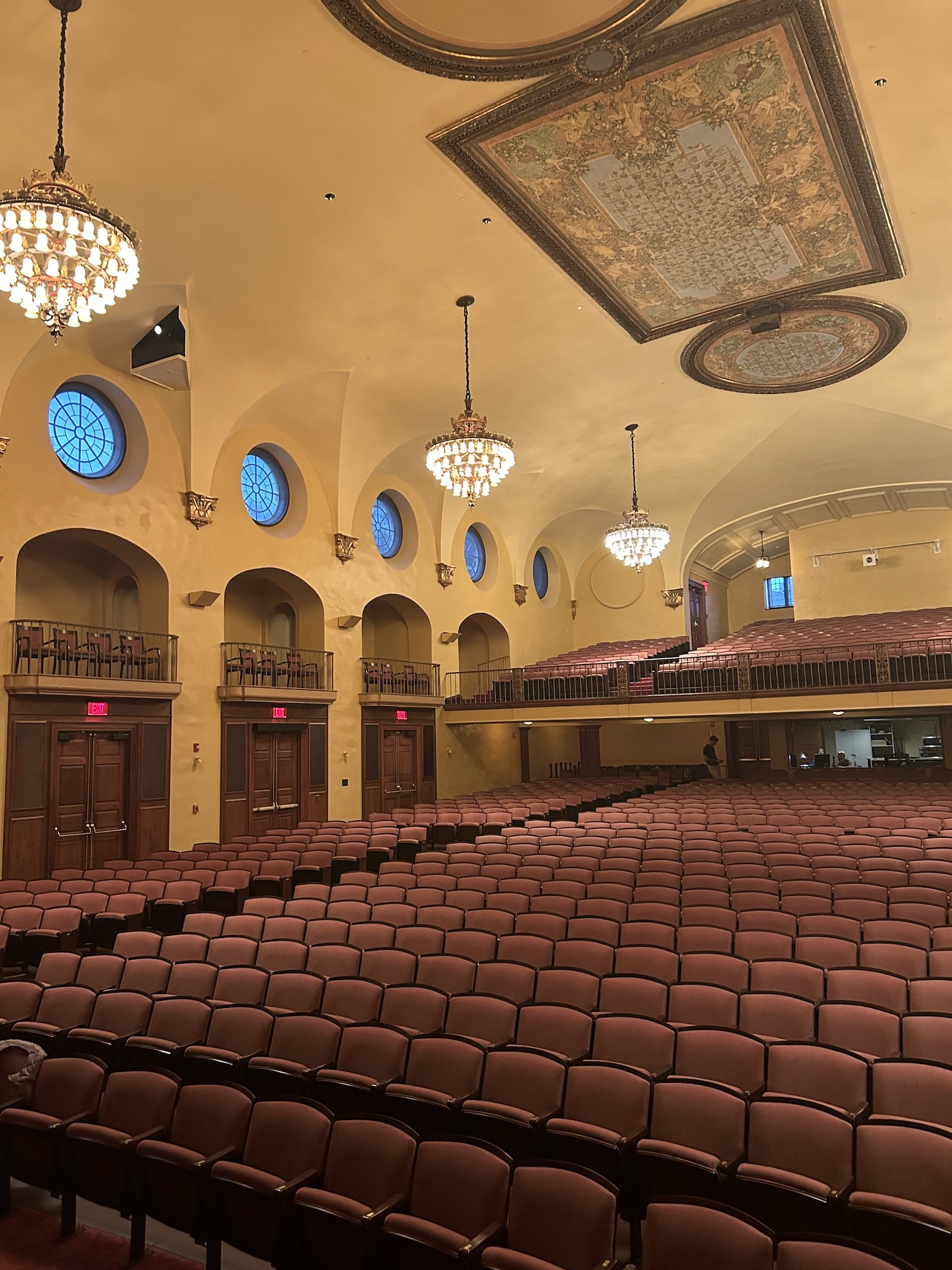
It truly was an honour to play to Westville, whose students have been studying Twelfth Night with AFTLS’ AD, the Scintillating Scott Jackson. Scott has been teaching Shakespeare at the facility for many years and they clearly admire him and the work. Equally it was absolutely terrifying, simply because they know that text like the back of their hand, so we needed to bring our A-game and deliver a world-class performance to a world-class audience. Thank you so much guys for attending the performance and being so generous with your feedback, praise, and inquisitiveness.
And last but not least, thank you Wellesley, thank you Marta and Sarah V. for your warmth and hospitality. Thank you to the brilliant women and members of the Shakespeare Society (please invite us back) and special shout out to Sid & Shirley for stage management and tech. Wellesley’s unfiltered passion for Shakespeare, theatre, and this weird and wonderful thing we do has lit the fire for the rest of the tour. You all are legends!
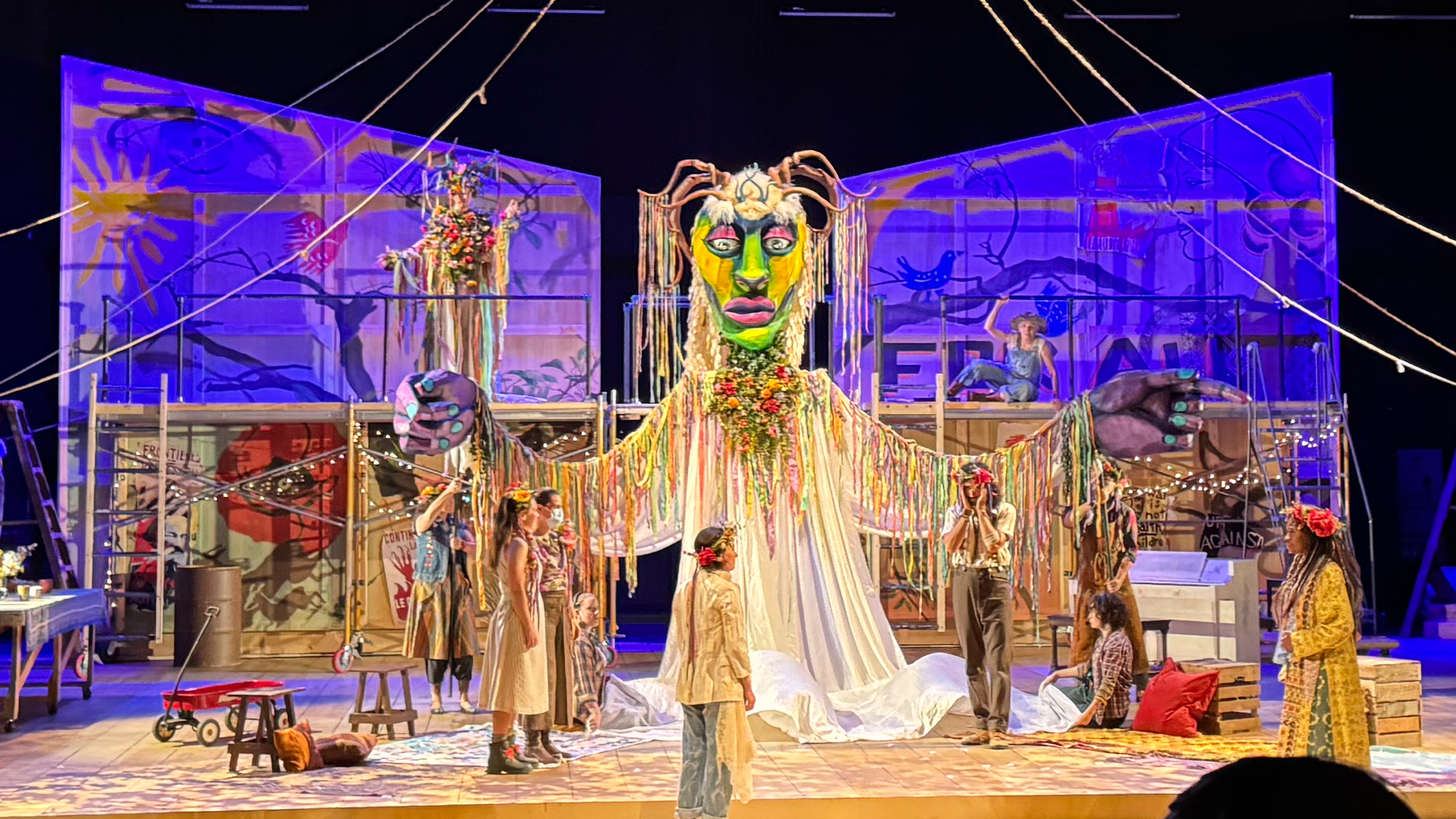
Greg Corbino’s journey to becoming a puppet designer started when he was a little kid. As he says, “it’s something I have always done and was interested in,” but it was not until he encountered Bread and Puppet Theatre in college that he really became fully invested in it. Much of Corbino’s style–specifically his use of cheap, resourceful materials (like cardboard and papier-mâché) along with a focus on colors and shapes, as well as building puppets to scale–is influenced by Peter Schumann, the co-founder of Bread and Puppet Theater, whose work really took off in the 1960s making giant puppets with kids in the Bronx.
Unlike the puppets many audiences encounter in musicals like The Lion King and Into the Woods, Corbino’s puppets focus on accessibility, both in material and in utility. In other words, they do not require significant training to operate. As Corbino highlights, compared to silicones, foams, or tricky items like toxic glues often used in theatrical puppetry, “we are using materials used by communities all over the world for parades, protests, and elementary school plays.” The puppets are representations of a way of working, one which requires many hands and collaboration. Indeed, while designing and building these puppets, Corbino worked alongside volunteer company members, as well as artisan Aimee Cole, who brought a unique costuming perspective, and director Sara Holdren, whose Arden world inspired Corbino’s interplay between color and light. Ultimately, the puppets reflect the collective theme of community central to this production of As You Like It.
As an audience member, you can expect large-scale 3D puppets, one which requires 5 actors to operate, but also a herd of deer that are flat and two dimensional. A new design for Corbino, the deer legs are articulated with a series of bolts and elastics allowing them to appear to leap across the stage. This choice to emphasize the “gesture” of a deer rather than go for a “realistic” one leans into the age-old magic of theatre, the audience’s willing suspension of disbelief. As Corbino puts it, “we are asking the audience to do the work of joining us in this magical place where objects come to life.”
We hope you’ll join us at this magical production this summer. While this is the Notre Dame Shakespeare Festival’s first foray into puppetry, we have a feeling it won’t be our last.