Gary Sanitation District Pump Station Update
Sponsor: American Structurepoint
Mentors: Jim Czarnik, Shaiza Sajjad
Students: Alexandria Jacob, Claire Shea, Macy Vance
Project Description:
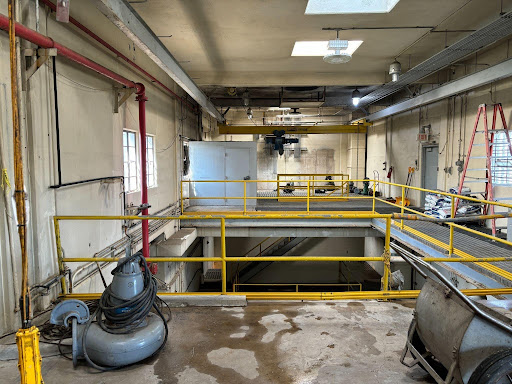
The 15th and Clay Pump Station in the Gary Sanitation District relies on a manually operated trash rack to remove large debris from incoming flow. When storms occur before an operator can arrive, the trash rack becomes obstructed easily, which leads to combined sewer overflow (CSO) into a river upstream, at the Elkhart St. CSO Diversion Structure. To prevent this, the trash rack will be removed and replaced with an automatic bar screen. A bypass structure will also be designed and constructed to keep the pump station operational during the removal and installation, and function as a secondary path for flow post-construction to prevent CSO in the case of a blockage.
Additionally, the grit removal system installed in 1999 is not in operation and partially removed because grit accumulated rapidly in the pipes, clogging the system. This project will design a more efficient system, including a detritor, a singular grit pump, a screw classifier, and new piping with fewer curves and more clean out points. Technical skills for this project include drafting with AutoCAD and Bluebeam, estimating peak hourly flow, and calculating required hydraulics. This project also requires engineering judgement in the recommendation of manufacturers, based on required equipment specifications. The final projection submittal will include a final design plan for the screen, bypass, and grit removal system, as well as permit applications and a total cost estimation.
Waste Activated Sludge Thickening Upgrade for the South Bend Wastewater Treatment Plant
Sponsor: Black & Veatch
Mentors: Hannah Beakas, Jack Beakas, Mark Rachow
Students: Teresa Elfrink, Jessica Perez, Margaret Tromp
Project Description:
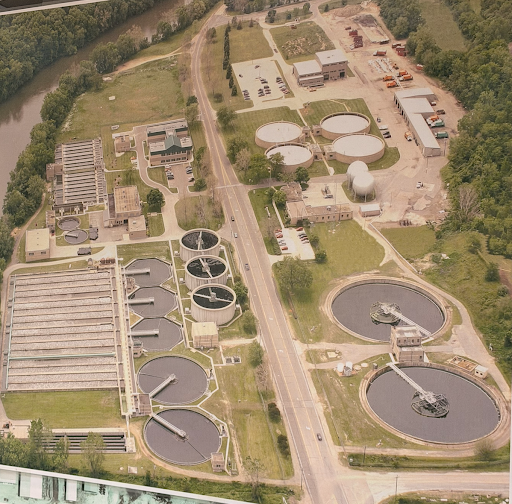
The goal of this project is to upgrade the Waste Activated Sludge (WAS) thickening equipment at the South Bend Wastewater Treatment Plant. The existing process relies on aging Dissolved Air Flotation (DAF) units that require replacement. This project will improve the technology and process of WAS thickening to modernize the plant while planning to meet the city’s growing wastewater demands and adhering to environmental regulations. The project involves process design, equipment selection, hydraulics, construction planning, and project management. The project will involve the creation of a basis of design memorandum that outlines the technical requirements and specifications.
To upgrade the plant, our team is evaluating multiple WAS thickening technologies to determine which would best fit the needs of the plant. Technologies being evaluated include DAF, Rotary Drum Thickening (RDT), Gravity Belt Thickener (GBT), and Centrifuge. The technologies will be evaluated primarily based on solids concentration, costs, flow requirements, feasibility, energy consumption, and operation and maintenance realities. To determine which is best, a decision matrix based on the client’s needs will provide an analysis on the four technologies. Additionally, preliminary engineering designs and layout specifications for the selected technology will be delivered to the client. Our services will help the City of South Bend Wastewater Treatment Plant to run a more efficient, affordable, and modern treatment process.
County Line Landfill Gas Collection and Control System
Sponsor: Weaver Consultants
Mentors: Jeff Neville (WCG), Madeline Gavin (WCG), and Megan Crowley (RS)
Students: Mara Morales, Greta McEvoy, Keala Cruz
Project Description:
A major problem with landfills, aside from foul odors, is the gas emissions they produce, with the main constituents being methane and carbon dioxide. Additionally, these landfill gases can pose the serious risk of underground fires and explosions if gas accumulation occurs unmonitored. However, when properly maintained and monitored, these landfill gases can be safely extracted to reduce greenhouse emissions and captured to be used as fuel to generate electricity.
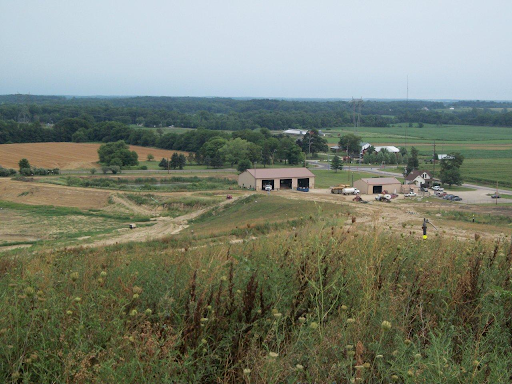
The County Line Landfill, owned and operated by Republic Services, is implementing a Gas Collection and Control System (GCCS) project to control landfill gas emissions to ensure safety and regulatory compliance. Students, acting as Weaver Consulting Group, are tasked with designing this gas control system using volume analysis techniques in Civil 3D based on the existing topography and the top and bottom grades of the landfill, in addition to the Landfill Gas Emissions Model (LandGEM) developed by the EPA to estimate the emission rates of several landfill gases (methane, CO2, etc.). Other software such as KYPipes and Excel will be used to determine the pipe hydraulics and condensate formation for the gas extraction process.