

Research Focus Areas
Custom Synthesis of Metal/Porous Nanoparticles
Nanotoxicology
Biomedical Image Contrast Agents
Precision Nanoprobes
Molecular Nanotechnology
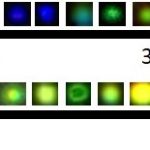
Custom Synthesis of Metal/Porous Nanoparticles
Standardized synthesis of Gold nanoparticles (nanoclusters, 5 nm, 10 nm, 16 nm) Silver nanoparticles (nanoclusters, 10 nm, 40 nm, 95 nm) Iron oxide nanoparticles (10 nm) Gadolinium oxide (5 nm, 10 nm) Hafnium oxide (5 nm, 10 nm) Microporous silica particles (15 nm, 50 nm, 100 nm, 400 nm) Other nanoparticles currently being optimized include …
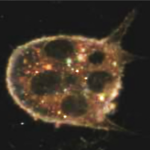
Nanotoxicology
Nanotoxicity assessment is an integral part of designing biomedical probes. In vitro toxicity of nanoparticles is assessed using murine (L929) and human cell lines (HUVEC, RAW246.7). In vivo toxicity was assessed in zebrafish models, and in vivo biodistribution/blood pool kinetics was assessed in athymic and euthymic mouse models. Representative Publications …
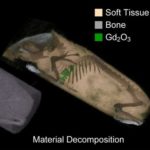
Biomedical Image Contrast Agents
Scaled up the synthesis of nanoparticle contrast agents. I specialize in the synthesis of long emission lifetime, fluorescent and photoluminescent nanoparticles. This is achieved by modifying Au cores with fluorophore embedded shells or Au nanoclusters with tunable photoluminescence. Fluorescent silica particles with sizes ranging from 15 nm to 400 nm are also available. Such probes …
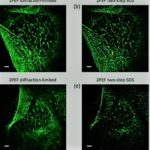
Precision Nanoprobes
Antibody-drug conjugates are emerging as a frontrunner in precision targeted therapeutics. However, this capability is still beyond the ability of most academic laboratories. The primary reason for this is the need to identify a precise binding site on the constant region of the antibody (Fc) for the drug molecule to be conjugated, while not affecting …
Molecular Nanotechnology
This is the current focus of my research. Utilizing anisotropic and hybrid nanoparticle architectures to introduce directionality in motion, precisely orienting targeting molecules and directed exertion of force by nanosystems. Anisotropic nanoparticles can be Janus hybrids or non-spherical nanoparticles and include rods, plates, prisms, and core-shells. This will lay the basis for nanomotors and nanomachines …

Summer in the PDNano Lab: Two NURF Students Take On the Brain and the Bowel
This summer, the PD[N]ano Lab hosted two NDnano Undergraduate Research Fellowship (NURF) students, Jack Latilla Campbell and Kolbe Schlosser, both of the University of Notre Dame. Working at the intersection of nanoscience, engineering, and precision medicine, each took on one of oncology’s hardest problems: how to kill a tumor without poisoning the patient. Chemotherapy has …

BIPH Affiliates Perez Romero and Nallathamby Receive NIH/NIAID R21 Award for Precision CMV Antiviral Delivery
Congratulations to BIPH affiliates Prof. Maria Del Pilar Perez Romero (Department of Biological Sciences) and Prof. Prakash D. Nallathamby (Berthiaume Institute for Precision Health; Aerospace and Mechanical Engineering) on receiving an NIH/NIAID R21 award, “Monoclonal Antibody-Conjugated Nanoparticles for Precision CMV Antiviral Delivery” (R21AI203022). Cytomegalovirus (CMV) is one of the most clinically significant yet overlooked viral …
 NIH Funding Opportunities
- Notice of Information Webinar: NIDCD Fellowship Pre-Application Webinar October 26, 2026Notice NOT-DC-27-010 from the NIH Guide for Grants and Contracts
Recent Comments