

Research Focus Areas
Custom Synthesis of Metal/Porous Nanoparticles
Nanotoxicology
Biomedical Image Contrast Agents
Precision Nanoprobes
Molecular Nanotechnology
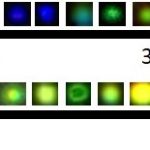
Custom Synthesis of Metal/Porous Nanoparticles
Standardized synthesis of Gold nanoparticles (nanoclusters, 5 nm, 10 nm, 16 nm) Silver nanoparticles (nanoclusters, 10 nm, 40 nm, 95 nm) Iron oxide nanoparticles (10 nm) Gadolinium oxide (5 nm, 10 nm) Hafnium oxide (5 nm, 10 nm) Microporous silica particles (15 nm, 50 nm, 100 nm, 400 nm) Other nanoparticles currently being optimized include …
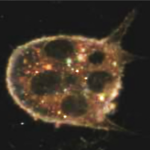
Nanotoxicology
Nanotoxicity assessment is an integral part of designing biomedical probes. In vitro toxicity of nanoparticles is assessed using murine (L929) and human cell lines (HUVEC, RAW246.7). In vivo toxicity was assessed in zebrafish models, and in vivo biodistribution/blood pool kinetics was assessed in athymic and euthymic mouse models. Representative Publications …
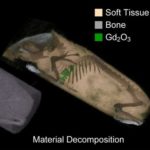
Biomedical Image Contrast Agents
Scaled up the synthesis of nanoparticle contrast agents. I specialize in the synthesis of long emission lifetime, fluorescent and photoluminescent nanoparticles. This is achieved by modifying Au cores with fluorophore embedded shells or Au nanoclusters with tunable photoluminescence. Fluorescent silica particles with sizes ranging from 15 nm to 400 nm are also available. Such probes …
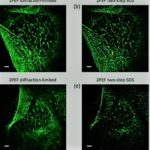
Precision Nanoprobes
Antibody-drug conjugates are emerging as a frontrunner in precision targeted therapeutics. However, this capability is still beyond the ability of most academic laboratories. The primary reason for this is the need to identify a precise binding site on the constant region of the antibody (Fc) for the drug molecule to be conjugated, while not affecting …
Molecular Nanotechnology
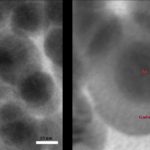
This is the current focus of my research. Utilizing anisotropic and hybrid nanoparticle architectures to introduce directionality in motion, precisely orienting targeting molecules and directed exertion of force by nanosystems. Anisotropic nanoparticles can be Janus hybrids or non-spherical nanoparticles and include rods, plates, prisms, and core-shells. This will lay the basis for nanomotors and nanomachines …
Our Lab at Notre Dame Receives Notice of Allowance for Novel Nanoparticle Immunotherapy Technology
The patent office has officially issued a Notice of Allowance for Application US 18/547,664, marking a significant step forward in the fight against cancer. The technology, developed by Prakash Nallathamby and the research team, introduces a novel approach utilizing “Bispecific bridge nanoparticles.” Bridging the Gap in Cancer Treatment Current challenges in cancer therapy often revolve …

2025 in Review: Innovation, Funding, and Student Success
2025 has been a landmark year for the Nallathamby Laboratory. From securing major federal funding to advancing our intellectual property and celebrating student milestones, our team has made significant strides in nanomedicine and precision health. Here is a look back at our key achievements. Protecting Our Innovations: Three New Patent Applications It has been a …
 NIH Funding Opportunities
- NIH Pause on New Submissions to the NIH Human Embryonic Stem Cell Registry and Request for Information on Reducing Reliance on Human Embryonic Stem Cells in NIH-Supported Research. January 23, 2026Notice NOT-OD-26-031 from the NIH Guide for Grants and Contracts
- Notice of Change: Early Expiration of NINDS Alzheimers Disease-Related Dementias (ADRD) Advanced Postdoctoral Career Transition Award (K99/R00 Independent Clinical Trial Not Allowed) January 22, 2026Notice NOT-NS-26-031 from the NIH Guide for Grants and Contracts
- Notice of Early Expiration of NIH HEAL Initiative PainCare Clinician Training Program (PCTP): Mentored Clinical Scientist Development Awards (K08/K23) January 22, 2026Notice NOT-NS-26-030 from the NIH Guide for Grants and Contracts
- NIH Policy on Research Involving Human Fetal Tissue January 22, 2026Notice NOT-OD-26-028 from the NIH Guide for Grants and Contracts
- Notice of Informational Webinar on the NIGMS Institutional Biomedical Undergraduate Research Training (BURT) Program (T34) January 22, 2026Notice NOT-GM-26-003 from the NIH Guide for Grants and Contracts
- Notice of Change: Expiration of PAR-25-277 -- High Impact, Interdisciplinary Science in NIDDK Research Areas (RC2 Clinical Trial Optional) January 22, 2026Notice NOT-DK-26-101 from the NIH Guide for Grants and Contracts
- NIH Requires Use of the eRA Prior Approval Module for the Submission of ALL Prior Approval Requests January 21, 2026Notice NOT-OD-26-026 from the NIH Guide for Grants and Contracts
- Notice on Update to Guidance on Prompt Reporting to OLAW Under the PHS Policy on Humane Care and Use of Laboratory Animals January 20, 2026Notice NOT-OD-25-148 from the NIH Guide for Grants and Contracts
Recent Comments