My time abroad in St. Petersburg is now, I believe, far enough removed that I can properly reflect on it. First, I will touch on my linguistic experience. I have like have made big strides in my abilities with the language, although I have learned that gaining fluency is not something that will happen passively. Before my program, I laid out five goals for my language learning. My first was to be able to hold a conversation on various topics. By and large, I believe I have met that goal, although I still struggle with understanding spoken Russian. My second goal was to understand both perspectives on U.S.-Russian relations. I have definitely met this goal; from meeting Russian locals to visiting the U.S. Consulate, I have greatly improved my knowledge of the countries’ relationship. My third was gaining ability to read Russian literature. I have not yet tested this, but I believe I am capable. My penultimate objective was achieving 2 semesters’ worth of study during my summer; I believe my time was actually more equivalent to something a semester and a half. My final goal was to gain greater insight into the human experience. I firmly believe I accomplished this, seeing another side of the globe and experiencing new perspectives.
Overall, my SLA Grant experience was extremely rewarding. I have learned how to view the world differently. Most importantly, I learned the outsiders’ view on American exceptionalism. That term has many connotations, both negative and positive; this summer has allowed me to more fully see both sides. This is not to say that I was a blind nationalist before, learning to see American evil; rather, I have learned to recognize both the good and the bad in America, what it represents, and where it stands in the world. I would highly recommend the SLA Grant to anyone considering applying. My biggest advice would be for them to think about more than just the language. My biggest regret, mostly due to the cultural divide, is not making true Russian friends. If you are preparing to study abroad, embrace the unusual and the unique, reach out, and immerse in not just culture, but also language.
Going forward, Russian and my time in Russia will play a large role in my life. I decided against skipping a year of Russian and am currently in Intermediate Russian I, where I can solidify my knowledge of Russian grammar. I am tentatively still going to receive a Russian minor, but I may pursue another study abroad next summer and push to receive a major or supplementary major. Beyond the classroom applications, this experience will help my future career goals. I outlined before the summer how I hope to work in international relations, security, or a similar field, likely in the public sector. This experience, in addition to improving my linguistic abilities, has also gained me an international viewpoint others in my field may lack. Most importantly, this experience will stay with me for the rest of my life. It is possible that I will return to Russia, most likely to Moscow, for study next summer, but it is also possible I may never see Russia or have any such experience again. When, in old age, I look back at my time at Notre Dame, there will be many fond memories, but my study abroad through the SLA Grant may stand foremost among them.

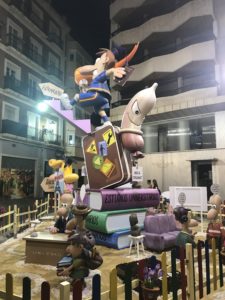 ant art displays that cost 100,000 euros to make each. Every neighborhood creates and then displays their own hoguera, which gives the character to the neighborhood. In total, there are over 30 hogueras on display in the city. Every day, firework-like bangs called las mascletas go off in the center of Alicante during the day, which leads to a full day of partying and drinking through out the streets. Then, on the weekend, people head to the beach to make bonfires and jump over them. One of my friends actually got burnt while trying to jump over the fire.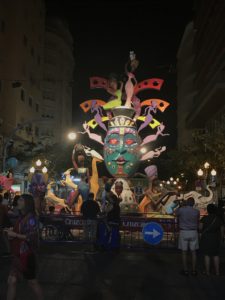
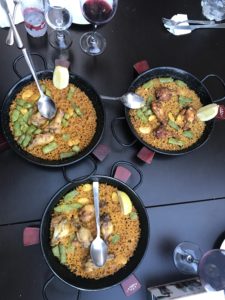 ion, where I learned how to make ensalada rusa and tortilla, which is the Spanish omelet. This was very exciting because I learned all about the ingredients and preparation, as well as the rationale for the importance of each of the dishes. When it gets very hot in the summer, cooler dishes are needed that require minimal use of the oven and are lighter to eat. These tapas that we created served exactly that purpose, the ensalada rusa required no cooking whatever, and the tortilla did not take long to create.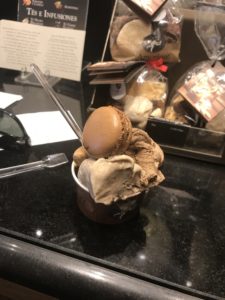
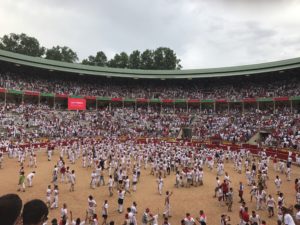 For class, we had to go interview people on social questions to see the contrasting opinions between Spain and the United States. One of the most important cultural issues in Spain is the role of los toros, or the bulls. It is a very controversial issue in Spain because there are strong cultural and historical ties to the killing of bulls in bullfights, as well as the running of the bulls, but many people are against these practices because of animal rights practices. In Catalonia, they have outlawed bullfights, but all other regions, including Alicante, have legal bullfights at least once a year. I witnessed both a bullfight and the running of the bulls, in order to gain a sense of what actually happened at these events before judging them.