Today we honor our veterans, worthy men and women who gave their best when they were called upon to serve and protect their country.
We pray that you will bless them for their unselfish service in the continual struggle to preserve our freedoms, our safety, and our country’s heritage, for all of us.Bless them abundantly for the hardships they faced, for the sacrifices they made for their many different contributions to America’s victories over tyranny and oppression.
We especially thank you and pray for Jason, Ken, Colleen, Ian, and Pier
We respect them, we thank them, we honor them, we are proud of them.
We pray that you will watch over them and their families. Please bless them with peace and happiness.
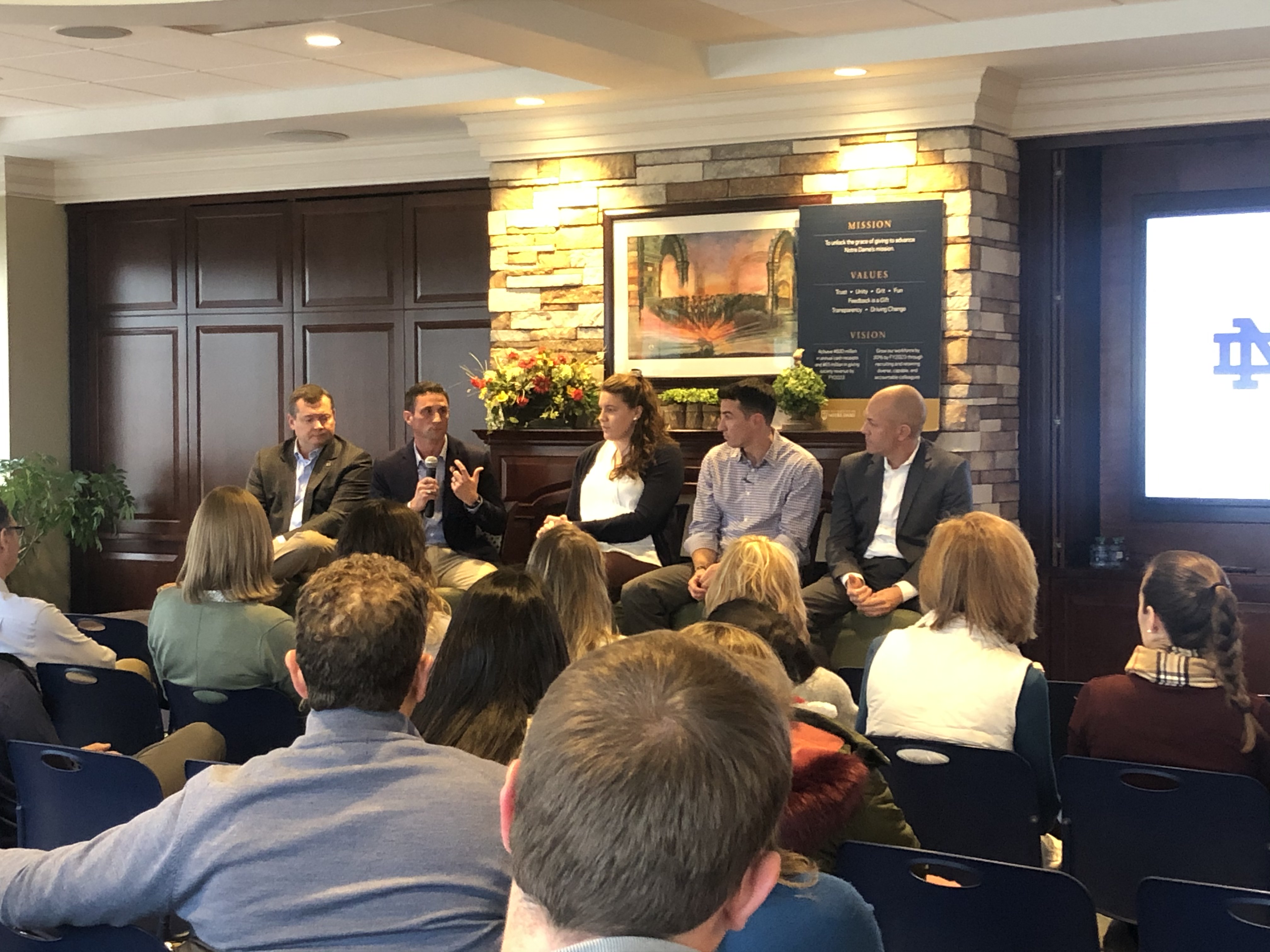
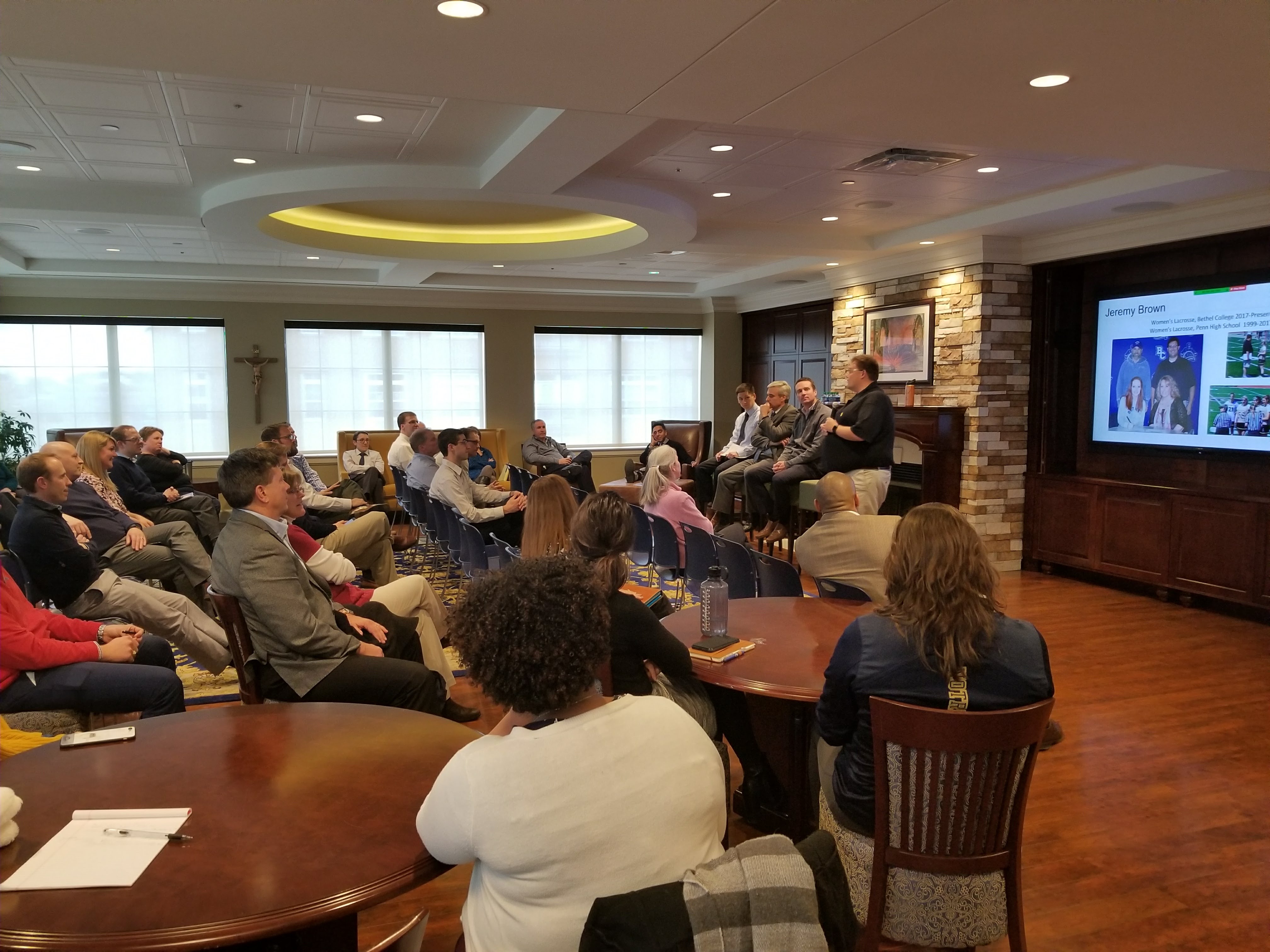
Special thanks to Heather Christophersen, Jesse Meyer, Brian Diss, and Shaheen Goldrick for leading a candid and helpful discussion on self-care in the workplace.
And thank you to the many colleagues who attended and contributed to our authentic dialogue.
We ran out of the time, but the conversation continues!
I am pleased to announce that Mary Flynt will be joining University Relations as our new Learning and Organizational Development (LOD) Associate. I look forward to her partnership in elevating LOD impact, advancing the UR mission, and embodying Notre Dame values. Most notably, Mary will be upgrading and leading onboarding- a program that impacted over 90 positions last fiscal year. (Special thanks to Linda Klaybor who is wonderfully bridging the onboarding gap between Gretchen Neely’s retirement and Mary’s eventual leadership.)
Mary joins us after four years in the Meruelo Family Center for Career Development (CCD), where she most recently served as experiential program manager. In this role, Mary oversaw the student internship funding program and helped manage several mentor programs, including Hesburgh Women of Impact and the Cavanaugh Council/President’s Circle. She served as the CCD’s primary administrator for IrishCompass, where she partnered with the Alumni Association on the ideation, strategy, implementation, and governance of the University’s professional development community. She also coordinated initiatives open to all students such as the JCPenney Suit-Up, industry career treks and employer mock interviews.
Prior to working in the CCD, Mary worked on the MBA admissions team in the Mendoza College of Business. She graduated from Ave Maria University in 2013 with a degree in business administration. When she’s not spending time with her large family, Mary is often attempting new sewing projects, going to concerts, adjusting to home ownership, volunteering as the St. Monica parish wedding coordinator, and making new friends with everyone she meets. Her husband Josh is also a member of UR, working on the marketing team in the Alumni Association.
You will be blessed to quickly introduce yourself to Mary as she begins her new role on Tuesday, August 6.
For Notre Dame,
Bryan Reaume
University Relations
Learning and Organizational Development
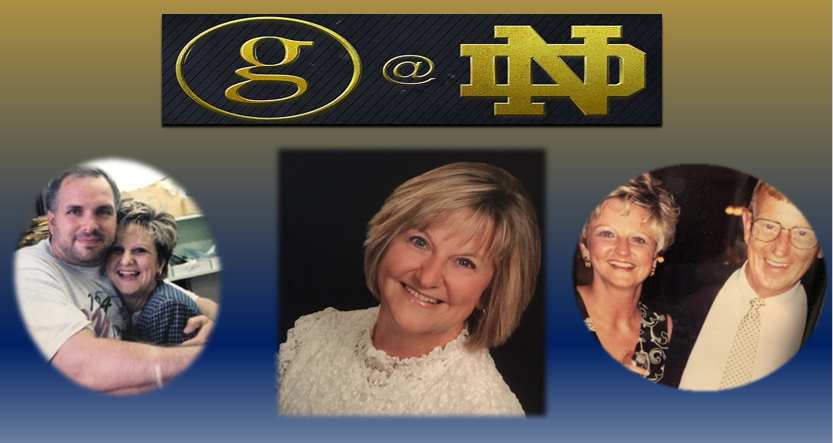
Garth has nothing on our beloved master G- Gretchen Neely.
She is a rock star!
And she has decided that her professional tour will end this summer.
Please join me in congratulating Gretchen on her decision to retire, effective June 30, 2019.
In 2013,* Gretchen was hired in University Relations as a “temporary on-call” employee. Within a month, her talent, positive attitude, and propensity for teamwork were recognized and she was hired full-time. Gretchen has faithfully served Recruiting, Learning and Organizational Development (LOD), and Internal Engagement and Execution. Her extra-mile service and warm welcome have provided lasting first impressions via the onboarding program. Her generous hospitality has fed stomachs and lightened spirits at countless professional development venues and departmental gatherings. Above all, Gretchen’s genuine care for others has created incredible impact on our UR family.
Before her time at Notre Dame, Gretchen served as an Executive Assistant to the CEO of Welch Packaging in Elkhart for 12 years. Prior to Welch, Gretchen served as an Executive Assistant at Bayer Federal Credit Union and Crown International.
Gretchen looks forward to traveling and spending more time with her recently retired husband Mike, their children and grandchildren, and Gretchen’s best friends since high school! She will also be back-on-campus enjoying Football Fridays.
May we all appreciate Gretchen’s farewell tour in the months ahead!
For Notre Dame,
Bryan Reaume
LOD
*Gretchen’s decision is completely separate/independent of the current Staff Retirement Incentive Program. A thoughtful transition plan, including the posting of a role on the LOD team, will commence in the coming weeks. Questions or inquiries about this new role can be directed to Bryan Reaume or James Riley.
Thank you to the following fundraisers who generously served as table facilitators at Becoming a Trusted Philanthropic Advisor (BATPA) sessions: Brian Green, Henry Scroope, Tom Molnar, Kim Biagini, George West, Eileen Murdock, Stephen Smith, Luke Conway, Lynn Hubert, Dan Santucci, Jesse Meyer
The following resources, have recently been added to Team Drive Dev-Fundraiser Best Practices:
Sponsored by the Office of Human Resources, these groups support networking and provide social outlets; they also assist the University with recruitment, retention, and educational activities. Current groups include:
The Diversity Committee invites you to another Cultural Tasting Extravaganza on Friday November 2. This is an opportunity for us to share and enjoy each other’s cultural and family traditional cuisine.
All colleagues, including those whose office is at different locations, are invited to prepare your favorite dish and drop it in the ESC Cafe. The hope is to have food available all day long!
All colleagues, including those who do not bring food, are invited to stop by and taste!
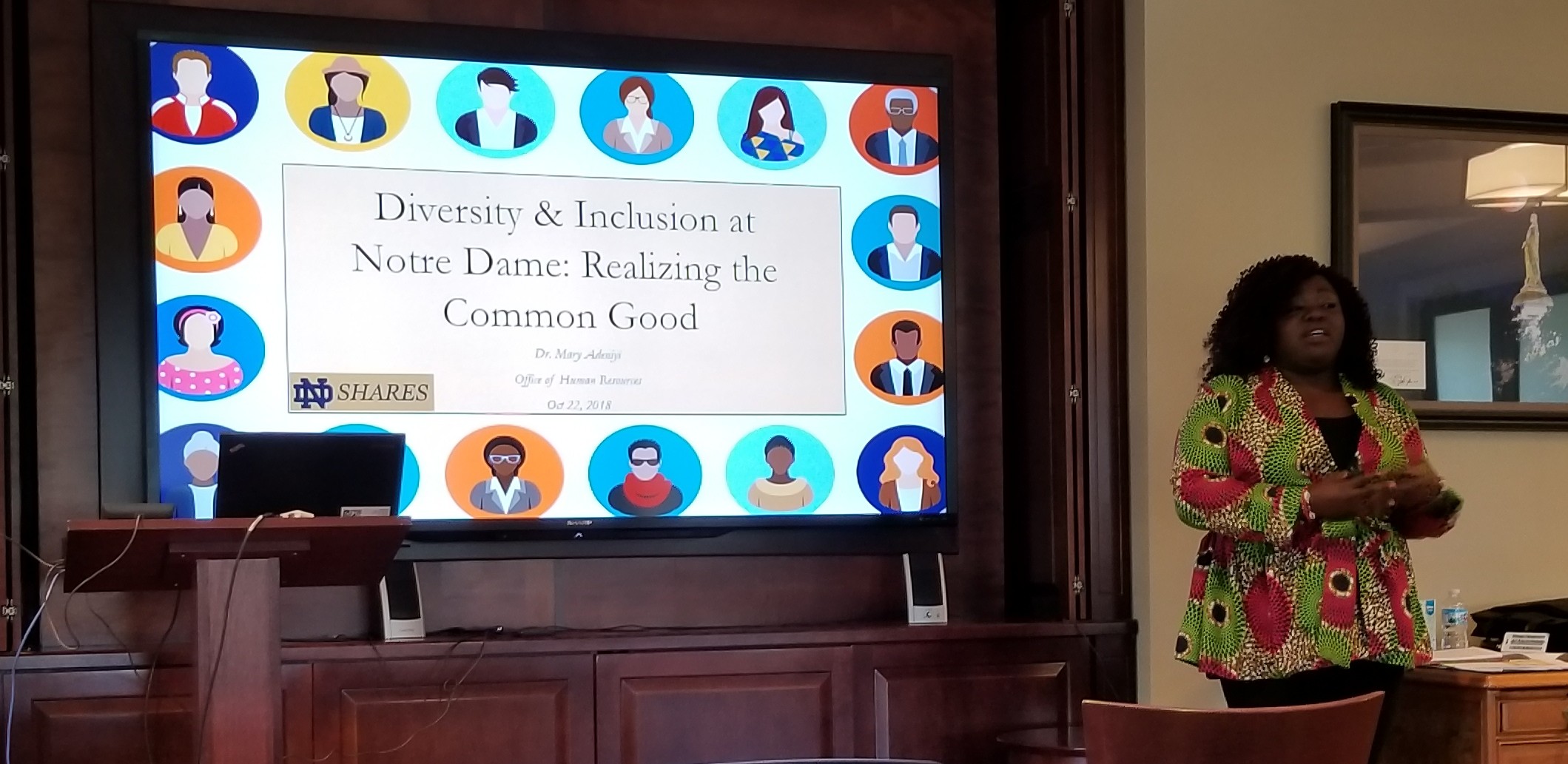
Many thanks to Jesus Bravo, the Diversity Committee, and the many colleagues who contributed to our dynamic dialogue at ND Shares Diversity. Trust, transparency, and unity were on full display. May we keep the discussion going!
The Diversity Committee invites you to a Cultural Tasting Extravaganza on Friday August 24. This is an opportunity for the us to share and enjoy each other’s cultural and family traditional cuisine.
Colleagues at ESC: Prepare your favorite dish and drop it in the ESC Cafe. Contact Alyssia Coates or Marilyn Bassett about what you will bring.
Colleagues at Grace: Contact Stacy Koebel about what you will bring and where to drop food.
The hope is to have food available in both locations all day long!
All Development colleagues, including those who do not bring food, are invited to stop by and taste!
The Strategic Applications and Business Intelligence team is excited to welcome Matt LaFlash to the team. Matt began at the University on Monday, August 6th, and will be serving in the role of Business Intelligence Professional.
Matt comes to us from Earlham College where he worked as a Business Intelligence Developer. Matt has multiple degrees from Ball State University including a BA in Pre-Medicine and Spanish with minors in Biology and Chemistry and a second BA in Biology with minors in African Studies, History, and Latin American Studies. He also has an MS in Information and Communication Science.
In Matt’s role he will be supporting our reporting functions primarily focusing on our efforts to utilize visualization more through Tableau to deliver insights. He will be working with all of our stakeholders to better understand your information needs so we can improve our systems to provide better information and insights.
Matt comes to South Bend with his wife Claudia and their two daughters Addie (3) and Charlotte (1). He loves to travel and cook, although he often lets his wife cook so he can focus on eating. He enjoys learning, especially foreign languages, and doing genealogical research.
We are excited to welcome Matt to the Development Business Intelligence team!
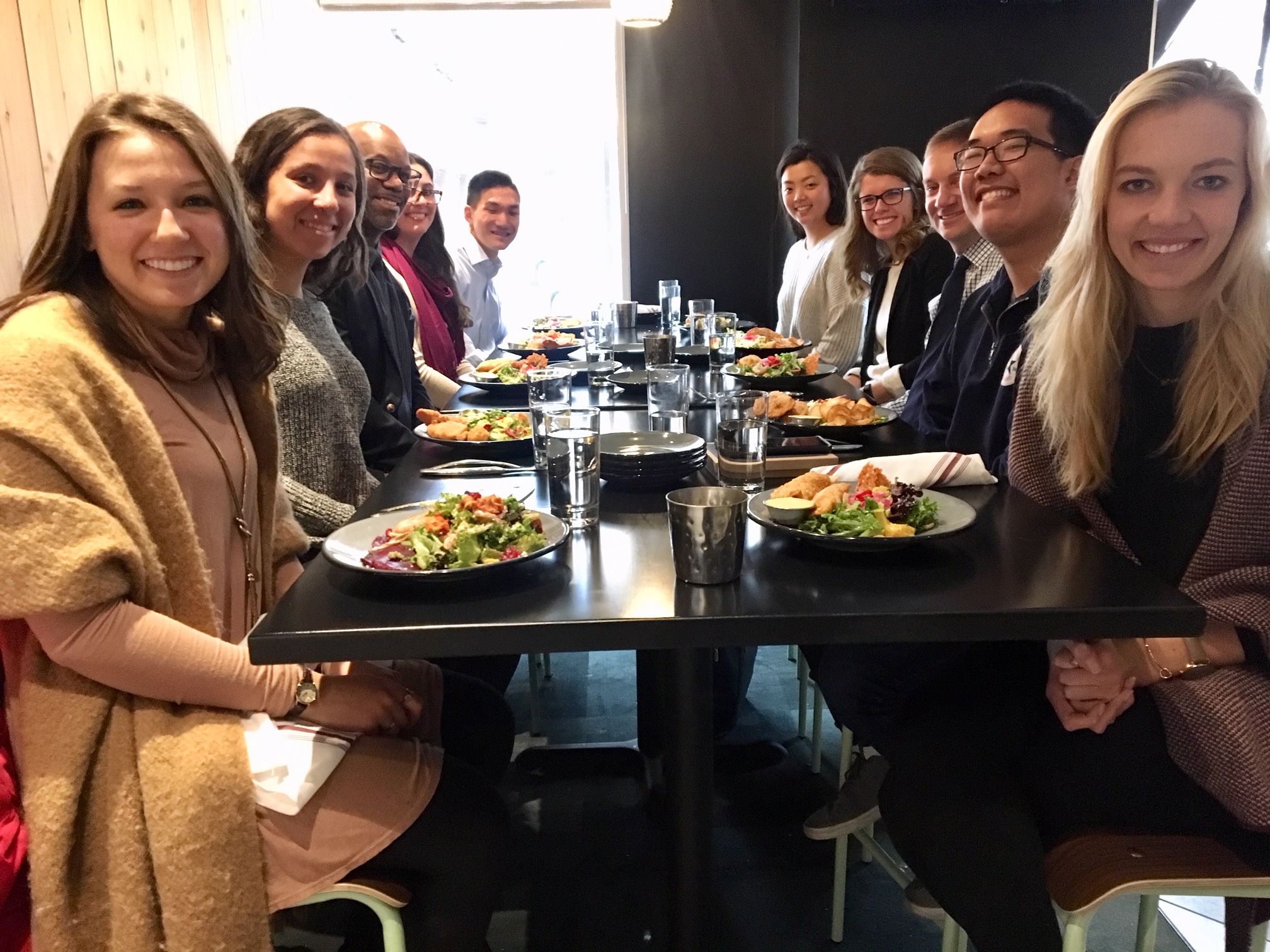
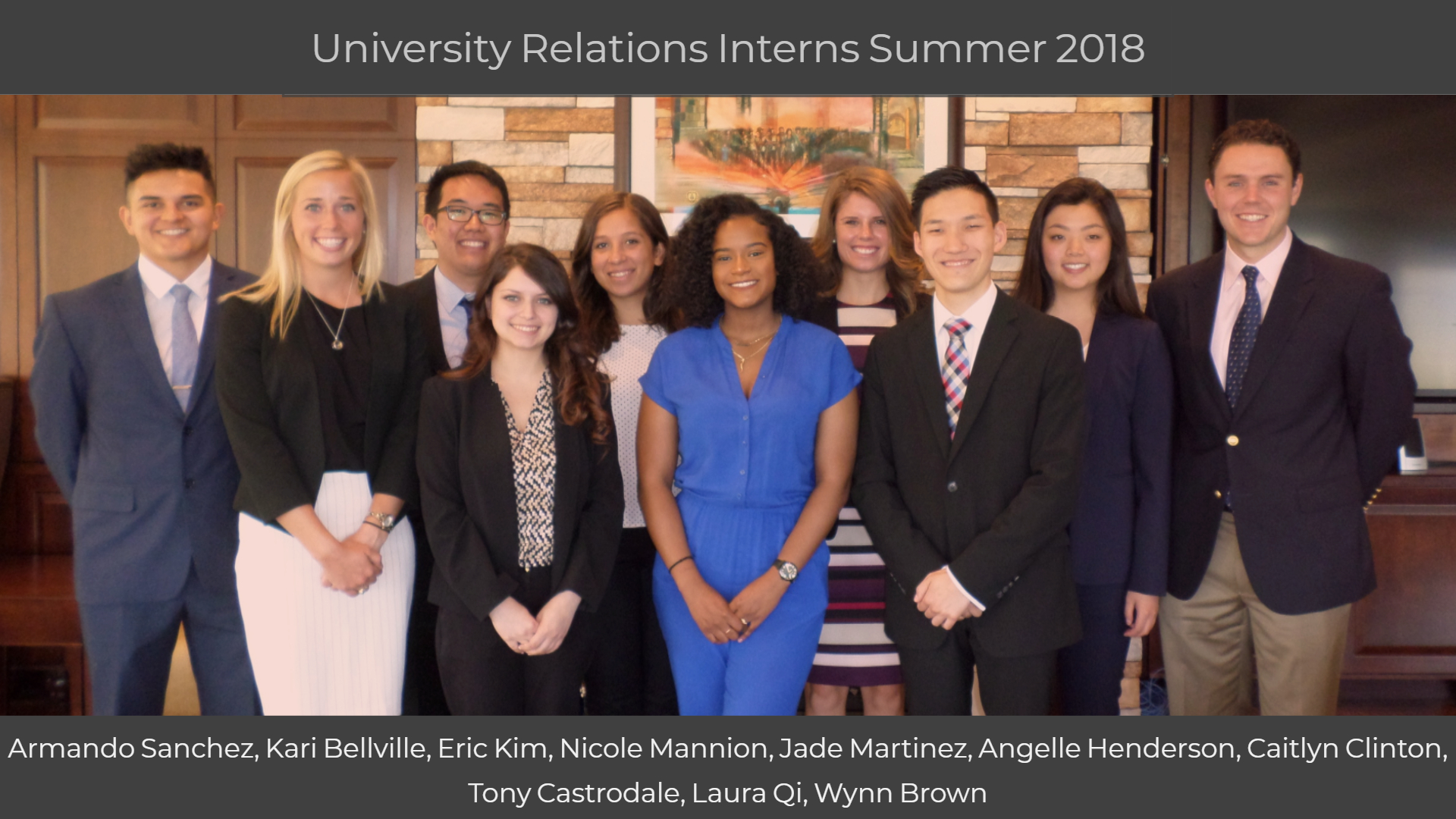
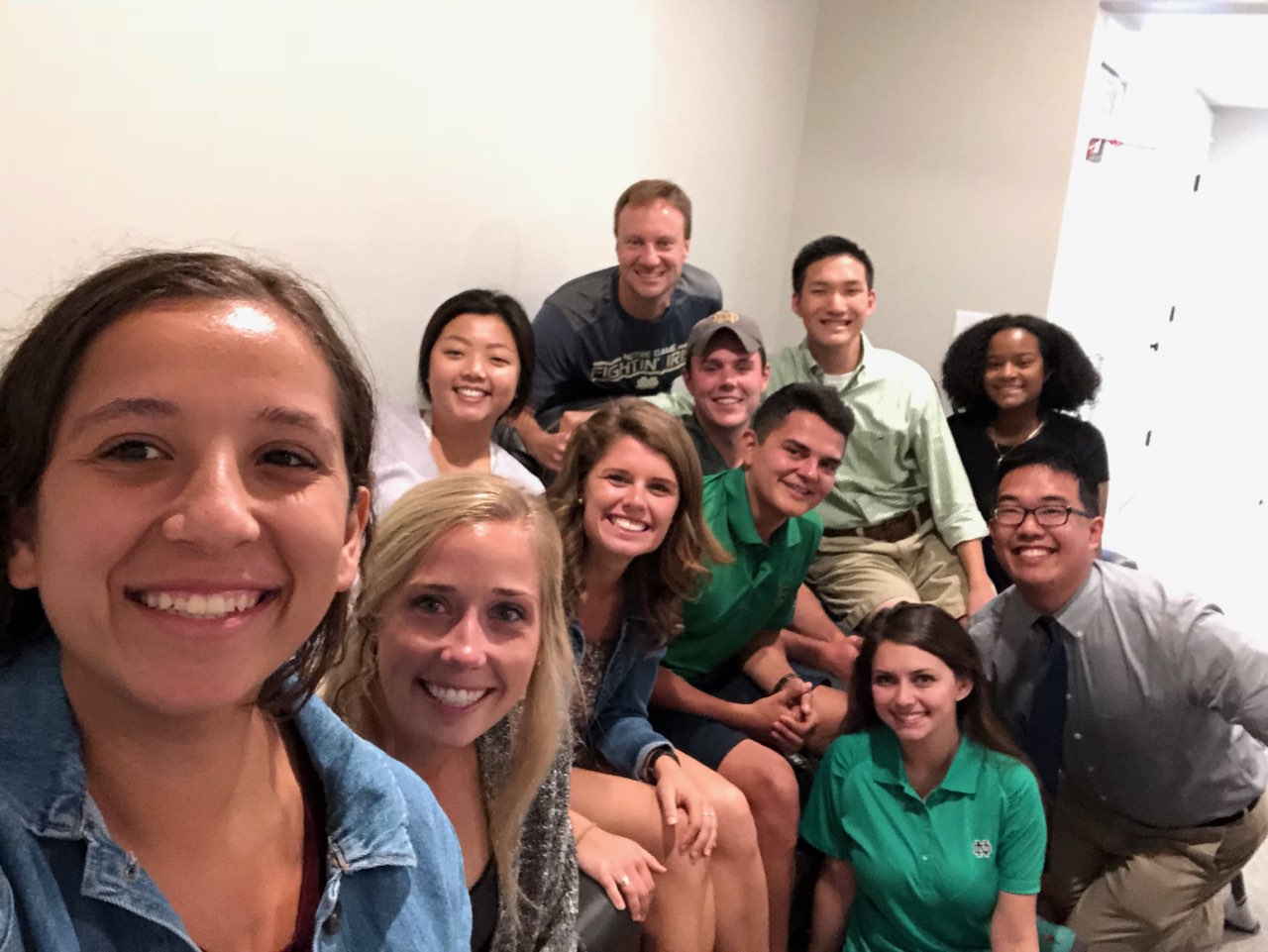
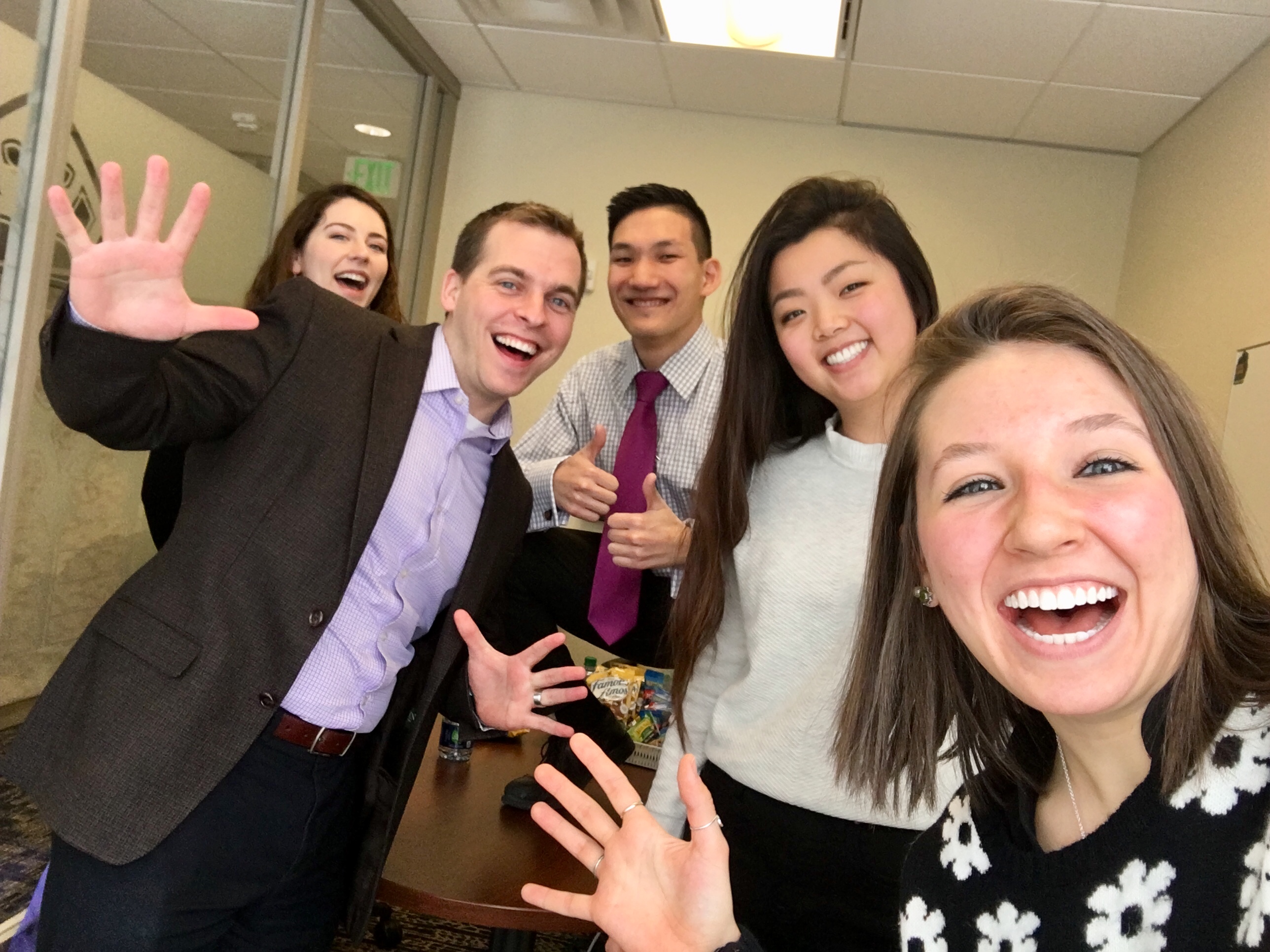
Please join me in congratulating this summer’s cohort of the UR Internship Program for completing their 8-week term. Their friendship inspires us: their work advances our mission.
I am grateful for all colleagues who so warmly welcomed and richly supported interns. Special thanks to those who served as supervisors, mentors, and Friday facilitators. This generous investment yielded a transformative experience.
We look forward to ongoing partnership with this summer’s cohort.
Revisit your job description/expectations and identify a core skill or responsibility.
Read a book or article on leadership and target one of its highlighted principles.
Identify a gap in university knowledge.
Brainstorm ways to grow in technological ability.
Solicit specific, direct feedback from trusted colleagues.
Main Idea #2: Work with your supervisor to create a detailed action plan that can be executed, measured, and supported throughout the fiscal year. List the action plan as a goal in Endeavor.
This plan can include many of the following activities:
Congratulations to Kennedy St. Charles for faithfully completing her two-year term as a participant in the university-wide Staff Fellows program. We are thankful for her rotational contributions to Storytelling, Special Events and Stewardship, Alumni Association, ND Trail, Campaign Administration, and Learning and Organizational Development. Kennedy’s final day in the office is Friday June 29.
We wish her the best in her next chapter: a fast-track MBA program in the Freeman School of Business at Tulane University.
Well done, Kennedy! You are forever a member of the Notre Dame/University Relations family.
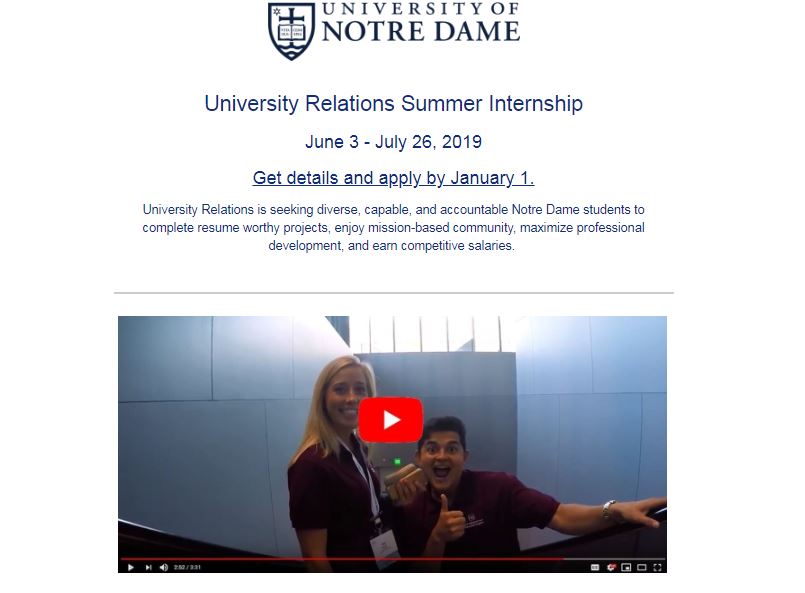
Please join me in welcoming the summer 2018 cohort of the University Relations Internship Program.
From June 4 to July 27, each intern will lead a resume-worthy project, receive mentoring, participate in professional development and immersion activities, and benefit from CASE learning resources, including a trip to Washington DC June 24-26. See more details about this summer’s program.
Many thanks to all who will supervise, mentor, host, and collaborate with our talented cohort.
For Notre Dame,
Bryan Reaume
How You Can Invest
Take an intern to coffee or lunch.
Listen to their stories. Share yours.
Inquire about their perspectives as Notre Dame students.
Make introductions. Assist their networking efforts.
When requested, participate in their projects.
Tell them the “why” of your service to Notre Dame and University Relations
Invite an intern to share at your team meeting, benefactor visit, or event. Interns will work their supervisors to confirm availability.
The University Relations Internship Program aims to invest in students, build and diversify the talent pipeline, produce meaningful work for the division, and energize student-colleague connection. Interns complete resume-worthy projects, acquire and sharpen business skills, and engage with the dynamic network of Notre Dame alumni, parents, and friends.
Projects should be “resume-worthy” and produce meaningful work. Summer interns work on projects Monday-Thursday, 8 AM-5 PM, for eight weeks (June 4-July 27.) Fridays are devoted to cohort activities and professional development.
Supervisors of interns collaborate with the LOD team to provide onboarding, ongoing coaching, mentoring, final presentations, and mid-term and final reviews.
Approved internships are funded through a central account.
Please contact me anytime with questions or comments.
Staff Chaplains, Fr. Jim Bracke, C.S.C., and Fr. Tim O’Connor, C.S.C., invite you to this two-part program and will present on ways to be “instruments of God’s peace” ~ St. Francis. No RSVP necessary. Bring your lunch.
In his September 2015 Letter on Diversity and Inclusion, Fr. John outlined several initiatives to promote diversity and inclusion within our Notre Dame community. He asked each of us to “recommit ourselves to building a community of respect, love and mutual support” at Notre Dame.
In the spirit of meeting these commitments, University-wide training programs for all staff have been developed on the subject of diversity and inclusion at Notre Dame. We are pleased to announce additional offerings of these programs, listed below. All staff who have not already done so are asked to attend the appropriate program.
If you are a manager, please bring this to the attention of your staff and ask them to enroll in the appropriate training.
We Are All ND
For non-supervising staff. All staff not currently in a supervisory role are asked to attend We Are All ND, an interactive and engaging half-day workshop that encourages each of us to take ownership of our campus environment and do our part to build and maintain a culture of inclusion where all are welcomed.
Multicultural Competencies / Hiring Game Changers
For managers/supervisors. All managers and supervisors of staff are asked to attend Multicultural Competencies / Hiring Game Changers. The first session of this day-and-a-half workshop will define the University’s Diversity and Inclusion Strategic Plan, explain multicultural competencies and discuss their benefits to Notre Dame. The second session will help you identify and hire “game changers” — top talent motivated to move your organization forward.
Registration
Upcoming session dates/times are listed below. Please note that additional dates will be added to the calendar once the below classes are filled. Sessions fill quickly, so please register in eNDeavor to secure your preferred session. Please work with your manager to ensure that your normal work schedule permits the training offering you choose.
This is an exciting chapter in Notre Dame’s history, a time when we are united and re-energized behind a common goal: making the Notre Dame workplace more inclusive, diverse, and welcoming than ever before.
Yours in Notre Dame,
Robert K. McQuade, Vice President for Human Resources
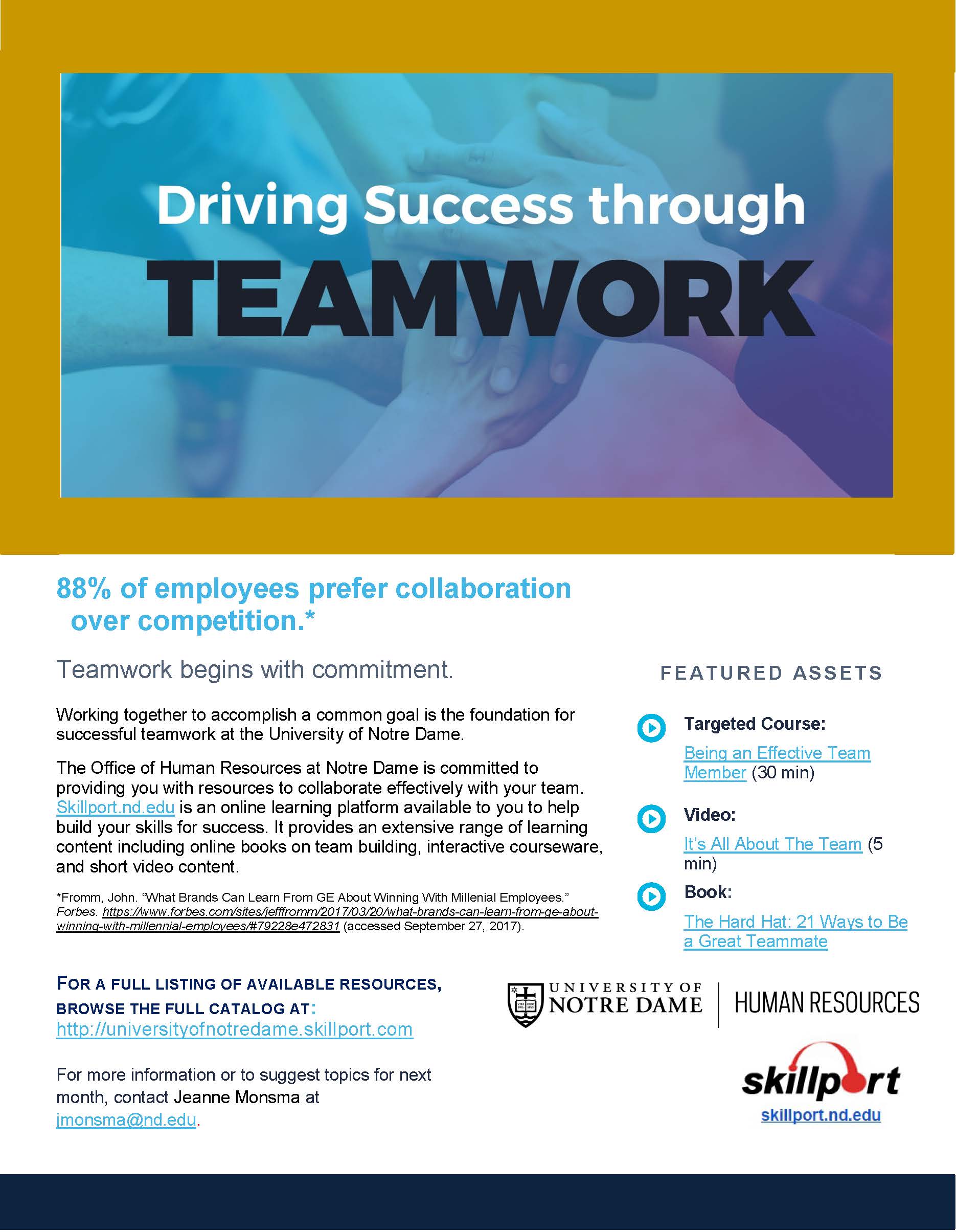
The University offers all staff and faculty a full schedule of professional development workshops every semester. Topics include Professional Skills, Communications, Teamwork, Leadership, and more.
Cancellation Policy:Cancellations must be made through endeavor.nd.edu at least three business days in advance. An enrollee who does not attend a scheduled program or who cancels fewer than three business days prior to the start date will incur a $100.00 charge to their department FOAPAL.
These multi-day programs and training workshops offer more in-depth development of interpersonal, professional, supervisory and management skills. Offerings change each semester.
For assessments or any custom programs such as team building, strategic planning or other topics customized specifically for a department or work team, supervisors and managers should contact their HR Consultant.
Dan T. Cathy is Chairman and Chief Executive Officer of Chick-fil-A, Inc, one of the nation’s largest family-owned businesses, and is a member of the company’s Board of Directors and Executive Committee. Since taking over the business from his father and founder, S. Truett Cathy, Dan represents the next generation of leadership for the Atlanta-based fast-food chicken restaurant chain. The Boardroom Insights Lecture Series is sponsored by the Eugene Clark Distinguished Lecture Series endowment.
Peter Diamandis, Founder of the XPrize Foundation
September 8, 4:00 PM – 5:30 PM
Jordan Auditorium, Mendoza College of Business
A pioneer in commercial spaceflight, Diamandis’ talk will describe the power of “exponential tech,” a phrase that refers to technology’s potential to bring about revolutionary change to business, health care, education and lifestyles in general on a global basis. Diamandis cites the large-scale disruptions already brought about by “exponential entrepreneurs” that have created companies such as Uber, Airbnb, SpaceX and Tesla.
Sponsored by the Thomas H. Quinn Lecture Series.The Thomas H. Quinn Lecture Series is an annual event hosted by the Mendoza College of Business to honor the Notre Dame alumnus and former member and chairman of Mendoza’s Business Advisory Council. Quinn earned a bachelor’s degree in economics from Notre Dame in 1969, and was a football monogram winner and member of the 1966 national championship team. He was a managing partner and member of the Investment Committee and Management Committee of private investment firm The Jordan Company (TJC), as well as the president and chief operating officer of Chicago-based Jordan Industries Inc. Quinn passed away April 29, 2016, at the age of 68. The Quinn Lecture is sponsored by Notre Dame alumnus and trustee John W. “Jay” Jordan II, Quinn’s college roommate, longtime friend and business partner.
Please join me in congratulating the Sorinterns for completing their 8-week summer internship. Their stories inspire us, their work advanced our mission, and the program they inaugurated will continue to shape our division.
I am grateful for colleagues who so warmly welcomed and richly supported the Sorinterns. Special thanks to those who served as supervisors, mentors, hosts, and teachers.
We look forward to ongoing partnership with the Sorinterns and future cohorts.
Frontline Supervision is a series of eight half-day sessions designed to develop the skills necessary to lead at the frontline of supervision at the University of Notre Dame. Each session provides maximum “how-to” skills which can be applied immediately on the job. The University is committed to training ALL staff who supervise others to ensure a professional and values-based approach to leading people.
As frontline supervisors, participants will need to be able to:
Understand their role as a “supervisor-leader” in today’s team environment
Organize time, workspace, and work processes
Motivate and reinforce good work efforts
Plan and appropriately delegate work assignments
Give feedback that positively coaches for good performance
Learn to confidently conduct difficult discussions about performance issues
Mediate conflict for a “win-win” resolution
This program is designed to allow leaders to develop and enhance skills within a cohort of up to 25 participants. By creating a shared experience, participants have the opportunity to build relationships with colleagues from different departments and divisions. Learning methods include case studies, small and large group discussions, and practice exercises. Additional tools and activities include:
Program Design
Pre-and Post-Training Competency Assessment
Individual Competency Development Plan
Pre-work and Supplemental Learning Resources
Reflective Learning Journals
Capstone Project at Series Summit
Attendance Requirements
Frontline participants and their managers are required to attend the series Kickoff, which is a pre-program orientation to understand their responsibilities in reinforcing the competencies taught in the program. Participants are also expected to attend the series Summit where they will present their capstone projects. The participants’ managers are invited back for the closing reception immediately after the Summit.
All sessions will be held in the Grace Hall Lower Level Training Room from 8:30 a.m. to 12:00 p.m. The Series Summit will be held at the Morris Inn, Smith Ballroom. Certificates of completion with a possible 3.6 CEUs (Continuing Education Units) are awarded to those attending at least seven sessions and the Summit.
Application Process
To reserve your seat in the Fall 2017 cohort, enroll in Frontline Supervision Cohort 15 in Endeavor. Once the enrollment date has passed, registered participants and their managers will receive a welcome email and calendar invite for the series Kickoff on August 1, 2017.
Schedule
All Regular Sessions: 8:30 a.m. – 12:00 p.m. in Grace Hall, Lower Level Training Room
DATE
SESSION
FRONTLINECOMPETENCIES
Tuesday, Aug 1, 2017, from 8:30 a.m. – 10:30 a.m.
Series Kick-Off
Wednesday, Aug 9, 2017
Roles & Responsibilities of Today’s Supervisor
Operational Know-How, Interpersonal Interactions, Organizing Time and Tasks
Notre Dame offers staff and faculty a full schedule of professional development opportunities every semester. Topics include Professional Skills, Communications, Teamwork, Leadership, and more. Our Summer 2017 Learning Programs will help you identify your true career interests and build new skills to help you achieve your career goals. Or, browse thousands of professional development course, books, and videos online anytime at skillport.nd.edu.
Cancellation Policy: To cancel a registration, please cancel in eNDeavor at least three days before the class start date so that waitlisted participants may be notified that a seat is available. Due to high demand and limited seating, departments will be charged $100 for cancellations made fewer than three days before the course start date.
Note: We Are All ND is required for all non-supervisory staff; Multicultural Competencies and Hiring Game Changers is required for all managers and supervisors of staff.
We Are All ND
Wed., June 14, 8:00 a.m. – 12:00 p.m.
We Are All ND
Thurs., July 20, 1:00 – 5:00 p.m.
We Are All ND
Thurs., July 20, 10:00 p.m. – 2:00 a.m.
We Are All ND
Wed., Sept. 13, 1:00 p.m. – 5:00 p.m.
We Are All ND
Wed., Sept. 27, 8:00 a.m. – 12:00 p.m.
Multicultural Competencies and Hiring Game Changers
Wed., July 26, 8:30 a.m. – 5:00 p.m. AND Thurs., July 27, 8:30 a.m. – 12:00 p.m.
Multicultural Competencies and Hiring Game Changers
Frontline Supervision is designed to develop the skills necessary to lead at the frontline at the University of Notre Dame. Each session is designed to provide maximum “how-to” skills which can be applied immediately on the job. Learning methods include case studies, small and large group discussions, practice exercises, and a capstone project. Participants must currently be frontline staff. Limited to 25 participants.
The program begins August 1, 2017. Please contact Mary Adeniyi at madeniyi@nd.edu or x1-3013 for more information.
Today’s Administrative Professional (TAP) is a competency-based development program for Notre Dame administrative staff who want to update current skills and learn new technical, interpersonal, and management competencies to ensure future career success. Today’s Administrative Professional supports the development of more consistent standards for skill and knowledge requirements of administrative positions.
Please welcome the CASE summer cohort of the University Relations Internship Program.
From June 5 to July 28, each intern will lead a resume-worthy project, receive mentoring from a UR colleague, participate in professional development and immersion activities with the LOD team, and benefit from learning resources from CASE, including a trip to Washington DC June 25-27. Read more about the UR Internship Program.
Many thanks to all who will supervise, mentor, host, and collaborate with our talented cohort. If you are interested in hosting an intern during the academic year or next summer, please contact Bryan Reaume.
Everyone is a leader, for everyone influences others. What is the impact of your influence?
Positive Indicators: Identifies strengths & abilities in others through real-time observation and analysis of results. Determines developmental needs and career interests. Allows and encourages others to have new experiences in order to grow and expand their knowledge.
Gap Indicators: Not a good people developer, very results driven and tactical therefore no time for long-term development. Plays it safe – can’t bring him/herself to assign really stretching (risky) work. Doesn’t support or cooperate with the developmental system in the organization.
In his September 2015 Letter on Diversity and Inclusion, Fr. John outlined several initiatives to promote diversity and inclusion within our Notre Dame community. He asked each of us to “recommit ourselves to building a community of respect, love and mutual support” at Notre Dame.
In the spirit of meeting these commitments, University-wide training programs for all staff have been developed on the subject of diversity and inclusion at Notre Dame. We are pleased to announce additional offerings of these programs, listed below.
All staff who have not done so already are asked to attend the appropriate program:
We Are All ND
For non-supervising staff. All staff not currently in a supervisory role are asked to attend We Are All ND, an interactive and engaging half-day workshop that encourages each of us to take ownership of our campus environment and do our part to build and maintain a culture of inclusion where all are welcomed.
Multicultural Competencies / Hiring Game Changers
For managers/supervisors. All managers and supervisors of staff are asked to attend Multicultural Competencies / Hiring Game Changers. The first session of this day-and-a-half workshop will define the University’s Diversity and Inclusion Strategic Plan, explain multicultural competencies and discuss their benefits to Notre Dame. The second session will help you identify and hire “game changers” — top talent motivated to move your organization forward.
Registration
Upcoming session dates/times are listed below. Sessions may fill quickly, so please register in eNDeavor soon to secure your preferred session. Please work with your manager to ensure that your normal work schedule permits the training offering you choose.
We Are All ND
(for non-supervising staff)
Wed., April 5, 8 a.m. – noon
Wed., April 5, 1 p.m. – 5 p.m.
Tue., April 18, 8 a.m. – noon
Tue., May 2, 8 a.m. – noon
Tue., May 16, 8 a.m. – noon
Wed., May 24, 8 a.m. – noon
Wed., Jun 14, 8 a.m. – noon
Wed., Jun 14, 1 p.m. – 5 p.m.
Wed., Jul 12, 8 a.m. – noon
Wed., July 12, 1 p.m. – 5 p.m.
Thu., July 20, 1 p.m. – 5 p.m. Register in eNDeavor | More information
Multicultural Competencies / Hiring Game Changers
(for managers and supervisors of staff)
Wed., May 3, 8:30 a.m. – 5 p.m. and Thu., May 4, 8 a.m. – noon
Wed., July 26, 8:30 a.m. – 5 p.m. and Thu., July 27, 8 a.m. – noon Register in eNDeavor | More information
This is an exciting chapter in Notre Dame’s history, a time when we are united and re-energized behind a common goal: making the Notre Dame workplace more inclusive, diverse, and welcoming than ever before. Again, thank you for being a part of it, and doing your part for it.
Yours in Notre Dame,
Robert K. McQuade, Vice President for Human Resources
University of Notre Dame
All Development staff are invited to ND Shares on Monday March 27 at 4:00 PM in the Family Room.
Ron Kraemer, Vice President for Information Technology & Chief Information and Digital Officer, will present Reflections on Leadership and Being Happy.
Ronald D. Kraemer was appointed vice president and chief information officer at the University of Notre Dame in August, 2010. In 2013, Kraemer was asked to take on the additional responsibility of serving as Notre Dame’s Chief Digital Officer.
A graduate of the University of Wisconsin-Eau Claire, Kraemer earned a master’s degree from the University of Tennessee, where his research concerned geographical information systems. Before joining the University of Wisconsin staff, Kraemer was a program manager at the Oak Ridge National Laboratory in Tennessee, where he worked with the University of Tennessee overseeing information technology operations and research initiatives and developing the system used to plan and schedule all airlifts for Operations Desert Shield and Desert Storm during the 1990-91 war in Iraq. He also served as associate director of the Energy, Environment and Resources Center at the University of Tennessee and spent several years as a senior systems analyst at Lockheed Missiles and Space Co., Inc., in Oak Ridge.
As vice president and chief information and digital officer, Kraemer leads all aspects of Notre Dame’s Office of Information Technologies, including a staff of more than 240. He oversees information technology (IT) infrastructure that supports the entire campus community, development of enterprise systems that underlie many of the University’s teaching, learning, research, engagement and business activities, and establishment of a governance structure to plan for future IT service needs across campus.
ND Shares is a Development team knowledge-sharing platform that:
– Draws upon the talent of Notre Dame staff, faculty, students, alumni, parents and friends.
– Invites sharing across lines of role, department, and physical location.
– Focuses on topics deemed important by the team.
– Promotes wellness of mind, body, and spirit of our Development colleagues.
– Reminds us of the great privilege to participate in and promote Notre Dame’s mission, vision and values.
You are invited to attend a networking-focused event with Lou Nanni and Micki Kidder. After a short presentation you will have the opportunity to practice the art of networking with colleagues. Refreshments will be served and a cash bar available. Visit womenthrive.nd.edu to register.
Tuesday, March 21, 8:30am-5:00pmANDWednesday, March 22, 8:00am – 12:00pm
McKenna Hall, Rm 100-104
During the first part of this day-and-a-half workshop, we will define our Diversity and Inclusion Strategic Plan, explain multicultural competencies and discuss their benefits to Notre Dame, and examine behaviors that can negatively influence campus climate and your team dynamics.
The focus then shifts to Hiring Game Changers, providing information on how to attract, identify, recruit, and hire top talent that is motivated to competently move your organization forward. Learn how to create an unbiased performance-based hiring strategy that can increase your percentage of landing the best candidates in the pool.
Please enroll directly inEndeavor.There are just a few more spots available, so first come first serve! Please refer to our No Show/Late Cancellation Policyfor more information about our cancellation fees.
Skilled: Is able to write and speak clearly, can get messages across that have the desired effect. Practices attentive and active listening, can accurately restate the opinions of others even when they may disagree. Tries to understand the people and data before making judgments and acting. Easy to approach and talk to, spends the extra effort to put others at ease, builds rapport. Is able to relate to individuals with backgrounds or beliefs that are different from their own.
Unskilled: Not a clear communicator in writing, may be hard to tell what the point is, too wordy or terse. Written communication may have grammatical problems. Doesn’t listen well, cuts people off and finishes their sentences if they hesitate. Interrupts to offer a solution or make a decision, doesn’t learn much from interactions with others. Many times misses the point others are trying to make. Inaccurate in restating the case of others. Intolerant of the slow pace of others, may be seen as self-centered (do it my way and at my speed). May be so action oriented that they resist process and problem complexity. May appear distant and not easy to be around. Doesn’t build rapport, may appear uninterested.
Over 40 colleagues attended our emotional intelligence workshop with Dana Conway. It was great to connect and hear so many perspectives. Thanks to all who participated!
I appreciate our discussion of Heroic Leadership and trust it will benefit our leadership culture. The interactive presentations included Jesuit history, homage to Stuart Smalley, a Beatles sing-along, and invitation from Stu and Mark to make “every pub our home.”
Special thanks to facilitators Laura Midkiff, Katherine Lane, Stu Fortener, and Beth Ferlic.
Skilled: Cool under pressure, does not become defensive or irritated when times are tough, considered mature, can be counted on to hold things together, is not knocked off balance by the unexpected. Is a settling influence in a crisis and sees the positive aspects of all situations. Can demonstrate the ability to recognize and understand emotions in self and others and uses this awareness to manage personal behavior and relationships. Is aware of and promotes diversity of thought and creates an environment of inclusiveness where all people feel welcome in their presence. Adheres to an appropriate and effective set of core values and beliefs during both good and bad times, acts in line with those values. Shows good judgement when making decisions.
Unskilled: Gets rattled and loses cool under pressure and stress. May be reactionary and blow up, say things he/she shouldn’t, gets easily overwhelmed and becomes emotional, defensive or withdrawn. May be sensitive to criticism, may be cynical or moody. May be knocked off balance by surprises, may also contribute to others losing composure or being unsettled. When challenged may be unwilling to build relationships. Strong individualist with low concern for values of others, may set his/her own rules, and can make others uncomfortable. Behavior may vary too much across situations, may be seen as too self serving.
We are currently interviewing students (undergraduate, graduate, and post-graduate) for the UR Summer CASE Internship. The program is an 8-week paid experience (June 5-July 28) that includes a trip to Washington DC.
Interns benefit from investments of mentoring and professional development and produce meaningful work for the division by completing resume-worthy projects.
If you would like an intern to join your team this summer, please complete this project proposal form.
Current academic year UR interns Elisa Villafana (AGSM), Emily Haskins (Foundation Relations), Kathy Wadolowski (SES), Alex Buccilli (LOD), Natalie Sargent (Academic Advancement), and Staff Fellow Kennedy St. Charles.
Skilled: Personally committed to and actively works to continuously improve self. Understands that different situations and levels may call for different skills and approaches. Works to deploy strengths and works on compensating for weakness and limits. Open to learning about different cultures and perspectives.
Unskilled: Doesn’t put in the effort to grow and change, doesn’t do anything to act on constructive feedback, does not adjust approach to different audiences and situations, may be immune to negative feedback appearing arrogant or defensive. May fear failure and the risk of admitting shortcomings. May not believe people really change, therefore it’s not worth the effort. May believe in development but always too busy.
In preparation for our ND Shares session on Monday, February 20th and as a continuation of our professional development efforts, I invite you to a discussion of the book Heroic Leadership by Chris Lowney. You may recall this was recommended by Jack Brennan at the 2016 UR Summit. I appreciate the book’s emphasis on everyone being a leader and lifelong learner. Purchasing the book is an approved expense. In the event you are concerned about reading the full book before our time together on February 20th, I encourage you to read this book summary and participate in the discussion.
I am excited and grateful to our Learning and Organizational Development team for launching a new initiative based on the competency model. Future learning offerings will complement your personal development plan and ongoing conversations with your manager. Each month will highlight specific competencies and corresponding learning resources such as Skillport content, webinars, university-wide HR offerings, and customized venues like ND Shares.
I encourage you to follow participation details in calendar invitations and UR blog posts* to maximize these opportunities.
Thank you for all you do for Notre Dame. Let us continue to grow together.
My best,
Micki
*Posts will appear in the lower-left column of ur.nd.edu and be tagged “People-Growth” within the blog itself.
Month Competency
February Self-Development, Emotional Intelligence
March Communication Skills
April/May Developing Others: Coaching, Managing, Receiving/Giving Feedback
June Influencing
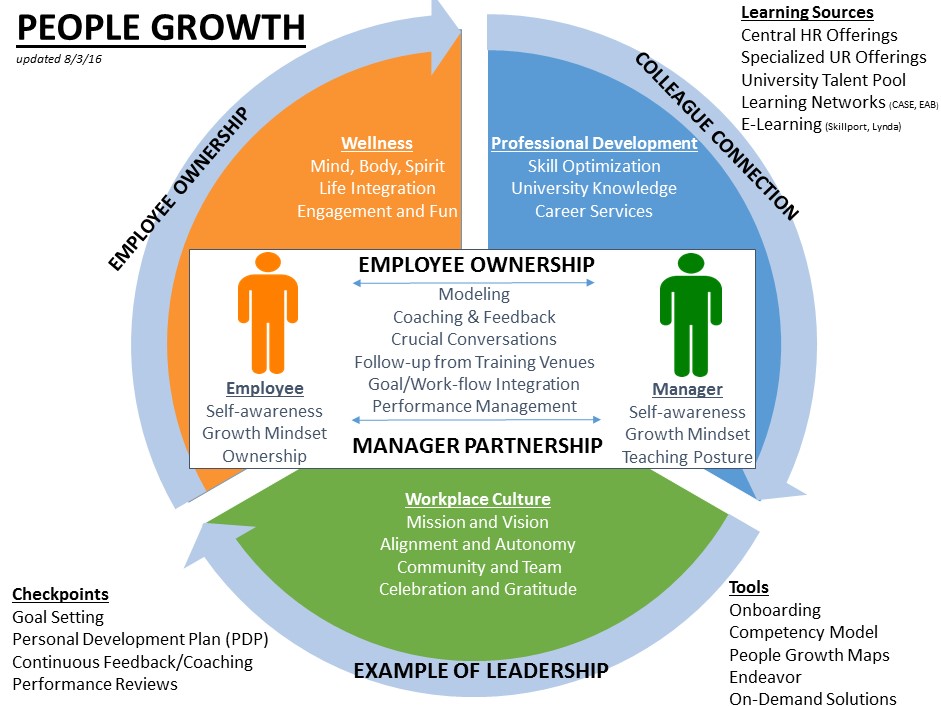
Consistent with the university’s mission, University Relations promotes the holistic growth of employees. The “people growth” model views the whole person, centers on employee ownership and manager partnership, and integrates wellness, professional development, and workplace culture.
I am pleased to announce two additions to our UR Academic Year Internship Program.
Elisa Villafana, College of Arts and Letters, will work with Andrea Bullock and Chris Wells on marketing communication to undergraduate alumni.
Alexandra Buccilli, Mendoza College of Business, will work with Bryan Reaume and Ann Moran to build and market the UR Internship Program.
As academic year interns, they will A) benefit from investments of mentoring and professional development B) produce meaningful work for the division by completing resume-worthy projects.
Many thanks to Andrea Bullock, Tom Molnar, Ron Linczer, Mary Bueno, and Aaron Wall for powerfully sharing about their families at ND Shares. They blessed all in attendance.
It is a privilege to work A) alongside all colleagues who care so well for their families B) in a mission that deeply affirms, values, and supports families.
Per many follow-up requests, note:
All panelists are happy to share more about their family experiences; feel free to contact them directly.
Forget the Pecking Order at Work is the mentioned TED Talk that notes how taking time to build relationships of trust and candor with colleagues increases both individual wellness and organizational effectiveness. (Thanks to Gavin for highlighting.)
As always, feel free to contact me about presenter ideas for future sessions of ND Shares.
Asking for Money? Compliment the Donor, Not Your Organization
Dear Reader,
You came to our hospital as a patient, in need of help. Thank you for that profound act of trust.
Now we come to you, humbly, to ask for your help in turn. The cause for excellent health care, here in our community, needs you. Will you consider becoming its champion … by making a gift?
WELL, WOULD YOU consider it? Would the opening paragraph of this one page, two-sided letter — personalized and signed by a hospital vice president — compel you to donate to a hospital that had cared for you or someone in your family?
The answer, for about 35,000 recipients, was yes. Over 10 years, that is the number of people who have responded with donations to this letter, which is tweaked and sent annually to former patients of the Sharp HealthCare system’s four main and three specialty hospitals in San Diego. The donations have ranged from $1 to $20,000.
Ten thousand of those responses were from new donors — an often hard-to-convince audience during any fund-raiser.
“It just goes to show you that an effective, well-crafted appeal can make a tremendous difference,” said James Sardina, the annual giving manager for the Sharp HealthCare Foundation.
Tom Ahern, the author of the letter, is one of the country’s most sought-after creators of fund-raising messages. He cites this piece as an example of how the language of giving — the right words, articulating the right appeal aimed at the right audience — can increase response rates.
“You have got to make your donors feel good in order to retain them,” said Mr. Ahern, who is based in Foster, R.I.
All good advertising copywriters know the power of the word “you” to generate a sense of immediacy and connection; Mr. Ahern used it in each of the first five sentences. But in explaining the success of this letter, he also cited the principle of reciprocity — meaning, in essence, we (the hospital) did something good for you (the reader and former patient). So perhaps, the letter suggests, you can do something good for us.
After all, it’s only fair, right? People like to think of themselves as being fair. Indeed, that is one of the nine moral adjectives that the psychologist Jennifer Shang has identified in her research on what motivates people to give. These “describe a core sense of who people actually are, as well as a core sense of who people would ideally like to be,” said Dr. Shang, a professor of philanthropic psychology at Plymouth University in Britain.
Photo
CreditDelcan & Company
The other eight adjectives are kind, compassionate, helpful, caring, friendly, generous, honest and hard-working.
In one study, Dr. Shang found that thanking those who contributed to a public radio station in the United States for being “kind and compassionate” increased giving among female donors by 10 percent.
That said, she added, successful fund-raising is complex. “Randomly injecting these words into the same communication that donors would not otherwise read anyway does not help anybody,” she said in an email. “It is about allowing the donors the opportunity to reflect on who they think they are.”
Yet many charitable organizations “churn out appeals that talk about how fabulous their organizations are and not about the donor’s part of the story,” said Jen Love, co-founder of the fund-raising consultancy Agents of Good. Making appeals more donor-centric, Ms. Love said, is the hallmark of effective fund-raising.
She and Mr. Ahern said the most effective medium to reach donors was one from the past: old-fashioned direct mail.
Older people, belonging to a generation that still prefers print, are the most generous: A 2013 study on generational giving habits commissioned by the software company Blackbaud found that those born in 1945 and earlier tend to give an average of $1,367 a year, surpassing millennials, who average $481 a year.
Because so much messaging has moved online, it’s not only older adults who are attracted by the novelty of delivered mail. “When you get something in your actual mailbox, that’s a thing!” said Ms. Love, whose firm is based in Waterdown, Ontario. “You think it might be an invitation to a wedding or a party.”
Of course, a good fund-raising appeal is just that: an invitation to help an organization that makes donors feel good about doing it, while communicating the urgency of the need.
“We try to get our clients to imagine that it’s 24 hours before your organization was founded,” said Ms. Love, whose clients include Habitat for Humanity, the Y.M.C.A. and Humber College in Toronto. “A group of people stood together that day and said, ‘We have to do something about this.’ Every single appeal now has to resonate with that same core value, that same ‘fist on the table’ insistence and energetic urgency.”
Urgency, and as Mr. Ahern said, the need to “celebrate how wonderful the donor is,” as he did in the windup of his letter for Sharp’s Chula Vista hospital, which is being mailed again in 2017, illustrate how the language of giving can have a huge effect.
“We cannot do great medicine without your help. So please consider Sharp Chula Vista in your decisions about charitable giving.
I know there are many good charities that will seek your help. Please know how honored we are when you choose to make a gift to Sharp HealthCare Foundation.”
I am pleased to announce two graduate students in the Mendoza College of Business have joined our University Relations team as academic year interns.
Emily McNally, Master of Science in Management, will work with Carla Ingrando and Lindsey McIntyre to create a foundation playbook.
Katherine Wadolowski, Master of Science in Management, will work with Beth Ferlic and David Daley to create a “Where Are They Now?” financial aid stewardship piece.
As academic year interns, they will A) benefit from investments of mentoring and professional development B) produce meaningful work for the division by completing resume-worthy projects.
Please join me in welcoming them.
For Notre Dame,
Bryan Reaume
Additional academic year internships now available.
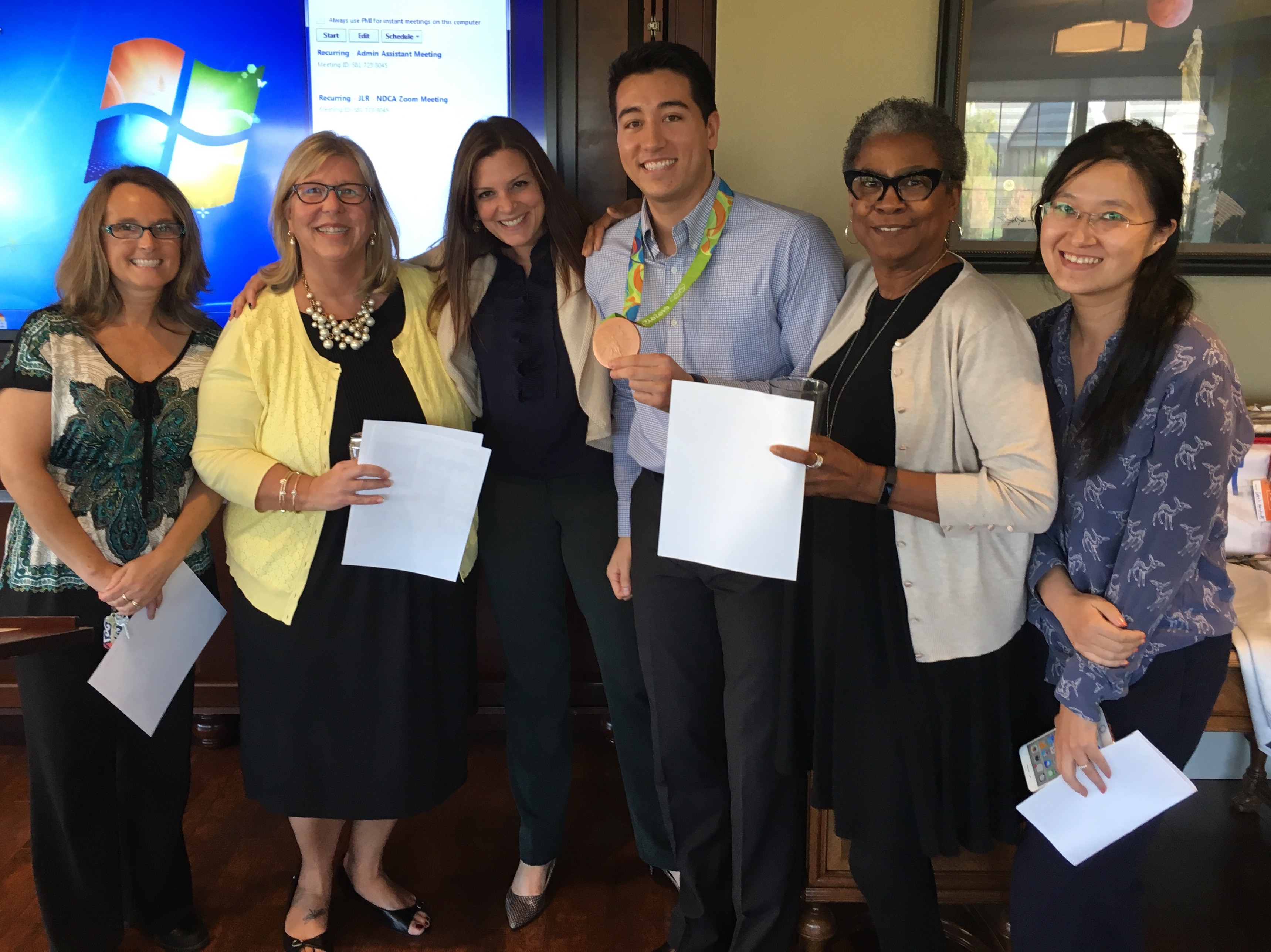
Many thanks to UR colleague Gerek Meinhardt for telling his fencing and Olympic story at ND Shares on Tuesday afternoon. He humbly shared his incredible achievements.
To celebrate national adoption month, the November 7 edition of ND Shares will feature a panel of Development colleagues who have adopted children; do not miss their incredible stories!
Please contact me anytime with ideas about potential presenters at ND Shares.
For Notre Dame,
Bryan Reaume
***********************************
ND Shares is a knowledge-sharing platform that
– Draws upon the talent of Notre Dame family
– Invites sharing across lines of role, department, and office physical location.
– Focuses on topics deemed important by the team.
– Promotes wellness of mind, body, and spirit of our Development colleagues.
– Reminds us of the great privilege to participate in and promote Notre Dame’s mission, vision and values.
Negotiation is an important business skill. We need to negotiate in many circumstances, from a salary or business contract to working with our colleagues. Research shows that gender can affect the success of a negotiation because men and women approach situations differently. Negotiation skills can be learned, and although gender may influence our approach, both men and women can use some of the same strategies to improve negotiations.
In this keynote, Dr. Susan G. Williams will share how awareness of the factors that create gender-related advantages and disadvantages in negotiations can help promote a more egalitarian workplace.
Learn how awareness of the factors that create gender-related advantages and disadvantages in negotiations can help promote a more egalitarian workplace.
Speaker:
Dr. Susan G. Williams
Professor Emerita of Management
Belmont University – Jack C. Massey Graduate School of Business
Did you know that small improvements in your writing skills can yield exponential results, such as better communication with others, better professional presence, and better career opportunities. Whether you are an administrative assistant, customer service representative, or an executive; if you communicate with others in writing, you need this course to help you identify and eliminate problem areas in your writing. Major topics covered will include how to:
Identify your audience and learn how to meet their needs
Organize your information with style
Write different types of communications
Write grammatically correct correspondence
In addition, you will be given a writing toolbox filled with the essential tools needed to complete every writing task, including emails. By the end of this course, you will be able to write clear, powerful, and professional business documents that will help you communicate effectively with colleagues and clients!
Are you currently performing at the level you have the potential to reach? If you could benefit from learning how to be more efficient, organized, and productive in your performance, then take this training. This course will teach you skills and strategies to enable you to achieve extraordinary results in your effectiveness no matter your work setting. Major topics covered will include:
How to do less and achieve more: learn how to goal set for greater success and learn the importance of planning
How to get more done by working with others: learn how to manage interruptions as well as coordinate competing demands and schedules
How to create a productive work environment: learn what some of the biggest time wasters are and tips for optimum productivity
How to get organized with paper, clutter, e-mails, and more: learn how to create a flow to get your work completed and how to manage your emails more effectively
By the end of this course, you will have an understanding of how to better manage yourself, as well as skills and strategies that can be enacted right away to get you on your way to being more effective in your work environment.
This half day workshop is required for all staff not currently in a supervisory role. Please register for and attend We Are All ND in an effort to allow each and every member of our community to unite behind a common goal as we work to cultivate a spirit of inclusion at Notre Dame.
New dates have been added, including Oct 13 at Innovation Park.
Workplace conflict can lead us to expanded thinking but it requires a certain mindset. Join Dr. Amanda McKendree of the Fanning Center for Business Communication in the Mendoza College of Business for insights into the causes of conflict as well as frameworks and resources to respond to it constructively.
These two professional development programs each have seven seats available.
Registration can be completed through Endeavor at endeavor.nd.edu
Resolving Conflict While Maintaining Relationships
Thursday, September 22
8:30 – noon, Grace LLTR
Be more effective in handling conflict using specific communication tactics that help you clearly understand the other person’s issue when you find yourself wanting to disagree or to express a very different opinion. Manage the aftermath and get the relationship back on track.
Amazing Moments
Thursday, September 22
1 – 3:30 p.m., Grace LLTR
Notre Dame is a special place with a unique character that affects nearly everyone who steps foot on campus. Learn about the Notre Dame way and how YOU can personally create amazing moments for visitors, fans, students, parents, donors, customers, potential new hires, faculty and co-workers.
New benefits have been added for all members of Council for Advancement and Support of Education (CASE), including free access to live and archived webinars.
Frontline Supervision is designed to develop the foundational skills necessary to lead at the frontline of supervision at the University of Notre Dame. The program consists of a series of 8 half-day sessions with a full-day Summit of mini-workshops. Enrollment is limited to those who currently supervise others.
Session
Date
ND Value
Kick-off Event
TBD
Roles & Responsibilities of Today’s Supervisor
Thur., Sep. 29, 2016
Integrity
Style-Flex Your Supervisory Approach
Thur., Oct. 13, 2016
Excellence
Prioritizing, Planning, Organizing & Time Management
TAP is a competency-based development program for Notre Dame administrative staff who want to update current skills and learn new technical, interpersonal, and management competencies to ensure future career success. TAP supports the development of more consistent standards for skill and knowledge requirements across administrative positions.
Classes will be held one Wednesday per month from 8:30 a.m. – 4:30 p.m. Technology classes will take place in the one of the campus training labs.
Module
Date
Professional Impact & Credibility
Sep. 7, 2016
Listening or Understanding & Empathy
Oct. 5
Adding Value through Change Management and Customer Focus
Notre Dame offers staff and faculty a full schedule of professional development opportunities every semester. Topics include Professional Skills, Communications, Teamwork, Leadership, and more. Our Summer 2016 Learning Programs will help you identify your true career interests and build new skills to help you achieve your career goals.
Cancellation Policy: To cancel an enrollment, please cancel in eNDeavor at least three days before the class start date so that waitlisted participants may be notified that a seat is available. Due to high demand and limited seating, departments will be charged $100 for cancellations made fewer than three days before the course start date.
Check out the lineup of Summer 2016 Learning Programs and Series
at hr.nd.edu.
All development staff, regardless of faith background, are invited to attend optional training sessions on the Catholic Mass by Fr. David Scheidler and Fr. Ralph Hagg.
Session I, 6/15, 1:30 PM – 2:30 PM, ESC Family Room
Introduction to the Catholic Mass: the theological and spiritual importance of Mass, including an overview of the various sections and purposes of Mass. The second half of Session I will offer interested Catholics the opportunity to be trained as an Extraordinary Ministers of Holy Communion. These individuals assist priests in the administering of the sacrament of Holy Communion. While the role of Extraordinary Minister itself is reserved for lay people of the Catholic faith, non-Catholics are welcome to attend and observe the training. This session will be led by Fr. David Scheidler
Session II, 6/24, 11:00 AM – 12:00 PM, ESC Family Room
The nuts and bolts of how to plan and prepare a Mass, including who to contact, supplies, room set-up, etc. This session will be led by Fr. Ralph Hagg.
Gretchen Neely will send calendar invitations to both sessions. If you plan on attending, please respond to the invitation(s). Attendance is optional.
Special thanks to the SES team for making these sessions available.
Most meetings simply don’t work and are a waste of precious time. Unfortunately, many higher education leaders spend much of their professional lives in these unproductive meetings. Higher education runs on thousands of daily meetings including committees, task forces, departmental meetings, and so on.
When was the last time you participated in an engaging, productive meeting where you felt that it was a great use of your time and attention? When’s the last time you looked at your meeting calendar and said to yourself, “I am really looking forward to Tuesday’s committee meeting!”
Here are 10 practical tips for improving your meetings, based on Academic Impressions’s powerful Meeting Diagnostic Tool (MDT):
1. To Lead or Facilitate?
Senior leaders often ask, “Should I facilitate or fully participate in the meeting?” We have found that trying to be the leader as well as the facilitator is not a good idea.
Facilitators move the group towards good decisions, use good processes, and are neutral. Often, a leader cannot be neutral about where a decision is going. Attendees know this and will wait until the leader signals his or her desired decision.
We suggest that the leader appoint a neutral facilitator; this will allow the leader to participate as the leader.
2. Monday Morning Meetings are Usually Not a Good Idea
About 80% of the organizations and campuses we have worked with have Monday morning meetings to “kick off” the week and get on the same page. This is especially true at the senior level. This idea looks good on paper but is often detrimental in practice.
On Monday mornings, people are thinking about their staff, thinking about the weekend, and worrying about the unknown problems that await them. Instead of having Monday morning meetings, let people have this time to deal with Monday morning distractions. Then, you can have a Monday afternoon “kick off” meeting or wait until Tuesday morning to engage participants who are ready to be fully present.
We have found this technique to be useful in de-stressing frenzied work environments. One organization, for example, had full-morning meetings for the senior team on Mondays. When the team members anonymously evaluated these meetings, leadership found that the Monday morning meetings were highly disliked. Upon changing the meeting time, the leader observed a dramatic decrease in the team’s sense of stress.
3. Select the Right Participants for the Meeting
If you have a regular team or group meeting, the membership is rather fixed. But, if you are organizing a meeting where you need to invite people to help solve a problem, create a strategy, make an important decision, or unpack a complex challenge, be judicious when selecting participants. There are several questions that you need to consider:
What experience or skill does this person bring to the table?
What would be lost if you didn’t invite the person?
What is their interest in the topic?
Are there any political reasons you need to think about before you invite them? (This could be potential blowback, stepping on someone’s toes, or resistance to the outcome if not invited.)
In your experience, what past contributions has this person made to other important meetings? How can they contribute to your meeting?
Make sure the right people are there to accomplish the purposes and goals of the meeting. Keep in mind that small meetings aren’t necessarily better; the right people being present is key. Don’t be intimidated by a large group of the right people. Manage them well by using the techniques and suggestions, and you will be able to tap their gifts and talents.
4. Prioritize Your Agenda
Facilitators often cover trivial items, like updates and gossip, at the beginning of meetings—before the “real” meeting begins. They develop this habit because they believe that:
It allows the latecomers to be there during the “real” meeting. Unfortunately, this also encourages lateness because people think, “Heck, the first 10 minutes aren’t important anyway.”
This creates positive momentum by giving attendees an early sense of accomplishment. This is not true.
Instead, starting with the most important agenda items is more effective because:
It conveys respect for participants who arrived on time.
It discourages lateness because important conversations happen early.
The priority stuff is dealt with early when people are more alert, not feeling rushed or overwhelmed, and not thinking about the next meeting they need to go to.
It communicates discipline and rigor, and attendees understand that they are expected to show up on time and start working.
5. Make Sure Everyone Understands the ‘Decision Rules’ in Advance
It is very important that meeting participants clearly understand how the group will make decisions. This sounds simple, but often the agreements or rules around decision-making are fuzzy and can create a lot of frustration and confusion for people.
Before the group makes a decision, the meeting leader or facilitator needs to articulate the decision rules. There are several voting conventions you can use to make decisions. For example:
Consensus – This term can cause a lot of confusion for folks because they often define it differently. We suggest that you agree upon a definition so that everyone understands it. The following is our definition:
“Consensus has been reached when everyone agrees that the process has been fair and transparent, people feel heard, good information was used to make the final decision and people are willing to support (not necessarily be happy with it) the final decision” (Sanaghan and Gabriel 2012).
Super Majority – 75% of the group agrees to the decision.
Legislative Majority – 67% of the group agrees to the decision.
Simple Majority – 51% of the group agrees to the decision. Stay away from these types of decisions; due to the minimal support, they will rarely get implemented.
When it is time to make the decision, give each participant one to two minutes to state their position and rationale. But don’t allow any debate or questions. After this advocacy round, have participants vote anonymously on their choice.
6. Review Group Agreements Before People Leave the Meeting
One of the things that promotes ineffective meetings is poor wrap-up. Even an exciting, energizing, and productive meeting can be rendered ineffective in the last ten to fifteen minutes.
Effective wrap-up requires strong discipline to summarize the decisions made and next steps. Three things to remember:
People will tend to resist this wrap-up because it holds them accountable.
Psychologically, attendees are already out the door by the end of the meeting.
You have to build time into the agenda to summarize, or it won’t happen:
For a one-hour meeting, use the last ten minutes to summarize.
In a two-hour meeting, reserve fifteen minutes.
In a three-hour meeting, reserve twenty minutes.
In a daylong meeting, take the last twenty to thirty minutes.
During this time you also need to review any issues that are in the “parking lot” and define clear next steps for these items. They don’t need to be solved; just makes sure there is an owner and action that moves the items forward. Since the “parking lot” is a means of capturing ideas that are worth consideration at a later date, it is very important that these items not be allowed to die.
Review time at the end of your meetings communicates accountability and offers a sense of closure for participants.
7. Consciously Encourage Participation
Many people think that “If someone has something to say, they will say it.” However, introverts often won’t fully participate. The meeting leader or facilitator needs to encourage meaningful participation by everyone. The following techniques help do this: THINK/PAIR/SHARE
For this technique the leader/facilitator:
Asks the group a focus question regarding an agenda item (e.g., “How can we have a reward and recognition program that doesn’t cost more money?” or “What can we do to improve customer service?”)
Gives each meeting participant two minutes to think of some strategies and ideas and write them down on a piece of paper. Participants then spend two to three minutes sharing their ideas with the person sitting next to them. Finally, participants share their paired ideas with the entire group.
Takes one idea from each group, writes it in full view of everyone on a flipchart, and goes around as many times as necessary to record all ideas. Taking one idea from each pair allows everyone to feel like they have added something of value to the conversation. If you take all the ideas from the first and second pair, there is a good chance the other pairs will not have anything to contribute because the first two groups will have shared all the good ideas.
INDEX CARDS
For this technique, the leader/facilitator:
Hands out several index cards to each meeting participant while asking a relevant focus question
Asks participants to spend five minutes writing their answers legibly and anonymously on the available index cards. Let them know there are plenty more index cards if they need them.
Collects the cards and writes down the suggestions on a flipchart. The leader/facilitator might want to ask someone to help write the ideas down, so the meeting moves quickly.
Leads the group in review and discussion of each idea. If you are trying to reach a decision about the suggested ideas, you can use the Las Vegas vote or the nominal group technique.
Using this technique neutralizes the most verbal participants, encourages more thoughtful and considered suggestions, involves shyer meeting participants who may be reluctant to participate verbally, and neutralizes power or bias in the meeting discussion through anonymity.
ROUND ROBIN
For this technique the leader/facilitator:
Asks a focus question (e.g., “How can we improve our retention efforts?” or “How do we reward and recognize our people?”)
Goes around the room to solicit ideas from each participant.
Allows participants to “pass” if requested, but makes sure to double back to see if they have anything else to offer.
This technique creates a sense of gentle structure, neutralizes the overly verbal participants, and communicates a desire to hear from everyone.
8. Let People Advocate Before Making an Important Decision
When a group is at the place where they need to make a decision on a set of actions or recommendations, give each person two minutes to express their views and opinions about the set of actions and recommendations. Make sure you keep the “lobbying” to two minutes,especially for senior leaders; if participants see the leader getting more “air time,” they will resent it.
After each person has “lobbied,” have people anonymously indicate their top three recommendations. This is a fair process that gives people a last chance to influence others in the meeting.
9. Use Silence Strategically
This is a great technique to use when things are moving too fast or the group has just run out of ideas. When this happens, suggest that participants take a silent minute to think about what is being discussed. This will help people feel less overwhelmed and give people time to generate new ideas to spark a creative discussion.
This can also be a useful technique when a group is experiencing some conflict or tempers are rising. One minute of silence can create the space for something new to evolve.
10. Ground Rules are Essential
Almost everyone comes to meetings with hidden or tacit expectations about how people should behave or how a meeting “should” operate (e.g., everyone “should” be on time, come prepared, fully participate, etc.). Unfortunately, we rarely agree on a handful of these ground rules. Creating these powerful protocols will vastly improve the effectiveness and productiveness of your meetings.
Two ground rules that we strongly suggest are:
One person speaks at a time. This helps eliminate sidebars that take the energy and focus away from the discussion. If you see more than one person talking during a meeting, gently remind people of the ground rule. Don’t single anyone out (e.g., ”Pat, can you stop talking while Barbara is explaining the new budget?”). Do it as soon as it occurs so you nip it in the bud. Also, apply it equally to all participants. If you let the senior leader violate the ground rule, you don’t have a ground rule any more.
Start and end on time. This helps communicate that everyone’s time is valuable, and it gives the meeting facilitator permission to begin the meeting on time, even if someone is missing.
Use whatever ground rules you believe will help you have an effective meeting. Pay attention to both task (e.g., start and end on time, distribute agenda before meeting) and process (e.g., practice active listening, one person talks at a time, define the decision rules before making decisions). Also, remember that meeting participants need to agree to the ground rules beforeyou begin the meeting. It is hard to impose ground rules after the meeting begins.
Registration for all programs is through Endeavor.
ND Essentials for Managing People (formerly Quick Start for Managers, all managers encouraged to attend)
Tuesday, June 14th, 1 – 3:30 p.m.
Grace LLTR
Facilitator: Human Resources Consultants
Learn the University processes, tools and resources that are essential to supervising others. This session will introduce supervisors to: managing time off/overtime; compensation; the online performance management process; coaching/counseling/disciplinary processes; harassment-free workplace obligations for supervisors; and other essentials for getting started on the right path. Open to all supervisors.
Professional Development Dialogues
Thursday, June 16, 1 – 4 p.m.
Grace LLTR
Facilitator: Dana Conway, Conway Coaching and Consulting
Professional Development conversations with your staff are necessary to empower staff members to grow their skills and knowledge to meet the needs of the organization and to achieve their personal career goals and aspirations. Learn how to guide, coach, and motivate your staff to take charge of their professional and career development. Open to all supervisors
Developing Your Emotional Intelligence
Thursday, June 16, 8:30 – noon,
Grace LLTR
Facilitator: Dana Conway, Conway Coaching and Consulting
Emotional Intelligence (EQ) is a set of emotional and social skills that influence the way we perceive and express ourselves, develop and maintain social relationships, cope with challenges, and use emotional information in an effective and meaningful way. Learn about your own EQ strengths and blind spots and techniques for developing your EQ to optimize your professional and personal growth.
Some organizational memberships are tied to specific University Relations units. If you have questions about joining any of these groups, please contact Bryan Reaume.
On the top right of the homepage, click on “Log in now” and then click on “I’m a new user” in the middle.
Clicking the link takes you to the registration page through which you will be prompted to provide your location, institution name, and your personal information. You will also create a unique password.
Click “submit” and you will receive an email in your university inbox containing a confirmation code and a link to log in to the website. Please check your spam folder if the email containing the link does not arrive in your inbox after several minutes.
Tip: after creating your account, manage your subscriptions to receive the Advancement Form email.
When logged in, use the drop-down menu in top right corner by clicking on arrow next to your name.
Special thanks to Dr. Jessica Payne, the SES team, and all who made our first ND Shares so successful. Dr. Payne was obviously brilliant, warmly engaging, and refreshingly practical as she shared her research on the science of sleep.
See more details and RSVP via calendar events sent by Gavin.
ND Shares is knowledge-sharing platform for all Development employees that:
– Draws upon the talent of Notre Dame staff, faculty, students, alumni, parents and friends.
– Invites sharing across lines of role, department, and physical location.
– Focuses on topics deemed important by the team.
– Promotes wellness of mind, body, and spirit.
– Reminds us of the great privilege to participate in and promote Notre Dame’s mission, vision and values.
If you or your team has a speaker/topic idea consistent with the below goals, please contact Leah Corachea.
Congratulations and well done to Kristine Alumbaugh, Gretchen Neely, Kristin Schoenfield, Kathryn Edel, Jessica Witous, Lauren Brown (not pictured,) and Holly Happ (not pictured) for completing the learning series Today’s Administrative Professional (TAP.) We appreciate their investment in their growth and their commitment to ongoing improvement.
If you FAIL, never give up because F-A-I-L means “First Attempt In Learning.”
END is not the end. In fact, E-N-D means “Effort Never Dies.”
If you get NO as an answer, remember NO means “Next Opportunity.”
Be Positive!
This is an excerpt from, “The State of Professional Development in Higher Education.” Read the full report here.
As you plan your attendance at a professional development (PD) event or program, consider these 10 practices for making the most of the experience:
BEFORE THE EVENT
Commit to yourself that you will take time to reflect and process what you learn at the event. For example, can you stay an extra afternoon or even an extra day following the event? If not, block time on your calendar for the day you return from the event for reflection. The challenge in returning immediately to your busy office and catching up on your day-to-day tasks is that you may not have time to reflect and plan – unless you intentionally schedule that time.
Schedule a reminder on your calendar for a date 3 months following the conference to review the materials, and to debrief how they’ve informed your thinking and work and how much progress you’ve made.
AT THE EVENT
For each session you attend at the event, write down one reaction, one takeaway, and one question you have.
While at the conference, create an action plan. What are 2-3 action steps you can commit to? In your plan, include: How much time will you need to complete these steps? What resources will you need? Which allies on campus can be helpful to you? How will you know if you’re successful?
At the event, identify a thought partner and schedule a follow-up conference call with your partner, to take place 2-4 weeks following the program. Don’t leave the meeting without having the call on the calendar!
ON THE WAY HOME
Use the plane or train ride home to prepare an informal presentation or some informal remarks to distill the most critical ideas from the event and their implications.
BACK ON CAMPUS
Share your informal remarks with your supervisor to gather his/her input and ideas, and then prepare a formal presentation to share your most important ideas with your colleagues.
Beyond just a formal presentation, save your conference workbook and other resources from the event, and share these with your colleagues. You could share some reading or an instructional video that you found especially useful. Schedule a “lunch and learn” session with your colleagues to discuss the workbook, video, or article you shared.
Create and extend your network by carving out one hour in the week after the event to review all the business cards you collected and plan appropriate follow up. Also, did you meet anyone who would be a useful contact for one of your colleagues? Similarly, stay connected with the speakers at the event who resonated with you. Follow them on social media, sign up for their newsletters, and—if appropriate—stay in touch with them.
Build momentum immediately around your action steps or the new skills you learned at the event. Improve those new skills by practicing; don’t let yourself lose them in the midst of a return to your day-to-day tasks. Can you find someone that you can practice a new skill (like how to have a difficult conversation) with? Can you work with a “test” or “dummy” data set to begin working with some of the new data mining practices you’ve learned? The key is to build momentum by implementing something—even if it’s something very small—within the first few weeks after the event.
Amit co-founded Academic Impressions in 2002 to provide research, publishing, and training on issues that directly impact the sustainability of higher education. Under his direction, AI has published hundreds of articles and papers, interactive training programs, and topical and timely webcasts, serving over 50,000 academic and administrative leaders across 3,500 colleges and universities.
Amit leads and manages AI’s research, programming, and publications on higher ed leadership development. Many of AI’s research and thought leadership papers have been authored by Amit, including The Other Higher Ed Bubble, Small but Mighty: 4 Small Colleges Thriving in a Disruptive Environment, General Education Reform: Unseen Opportunities, and Meeting the Challenge of Program Prioritization.
Amit has consulted with dozens of higher ed leaders, cabinet members, and board members—discussing current challenges and practical solutions while helping to identify which issues they can address to best impact change at their institution. Amit is a frequent contributor to Forbes, discussing issues in higher education. He also serves as an active board member of The Challenge Foundation, an organization helping low-income students successfully earn a college degree.
Consistent with the university’s mission, University Relations promotes the holistic growth of employees. The “people growth” mental model views the whole person, centers on employee ownership and manager partnership, and integrates wellness, professional development, and workplace culture.
Notre Dame staff are offered a full schedule of professional development opportunities every semester. Topics include Professional Skills, Communications, Teamwork, Leadership, and more.
Cancellation Policy: To cancel an enrollment, please cancel in eNDeavor at least three days before the class start date so that waitlisted participants may be notified that a seat is available. Due to high demand and limited seating, departments will be charged $100 for cancellations made fewer than three days before the course start date.
EAB hosts 60-minute webconferences on topics such as driving fundraising via culture and metrics. Once you have initially logged into to EAB.com, registration for webconferences is a simple 3-click process.