A French Nun’s Chronicle of 16th Century Geneva

by Alan Krieger, Theology and Philosophy Librarian

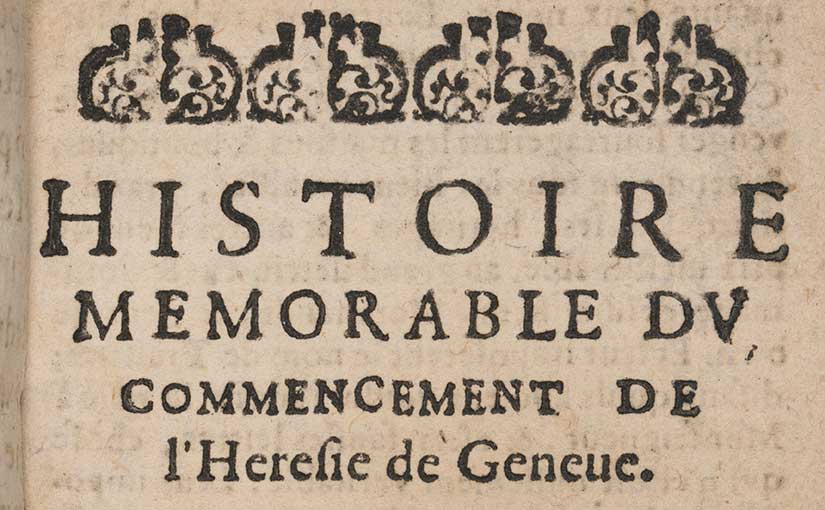
Hesburgh Libraries has recently acquired the true first edition of one of the earliest French historical works written by a woman, Jeanne de Jussie’s Le Levain du Calvinisme, ou commencement de l’heresie de Geneve (Chambery, [1611]).
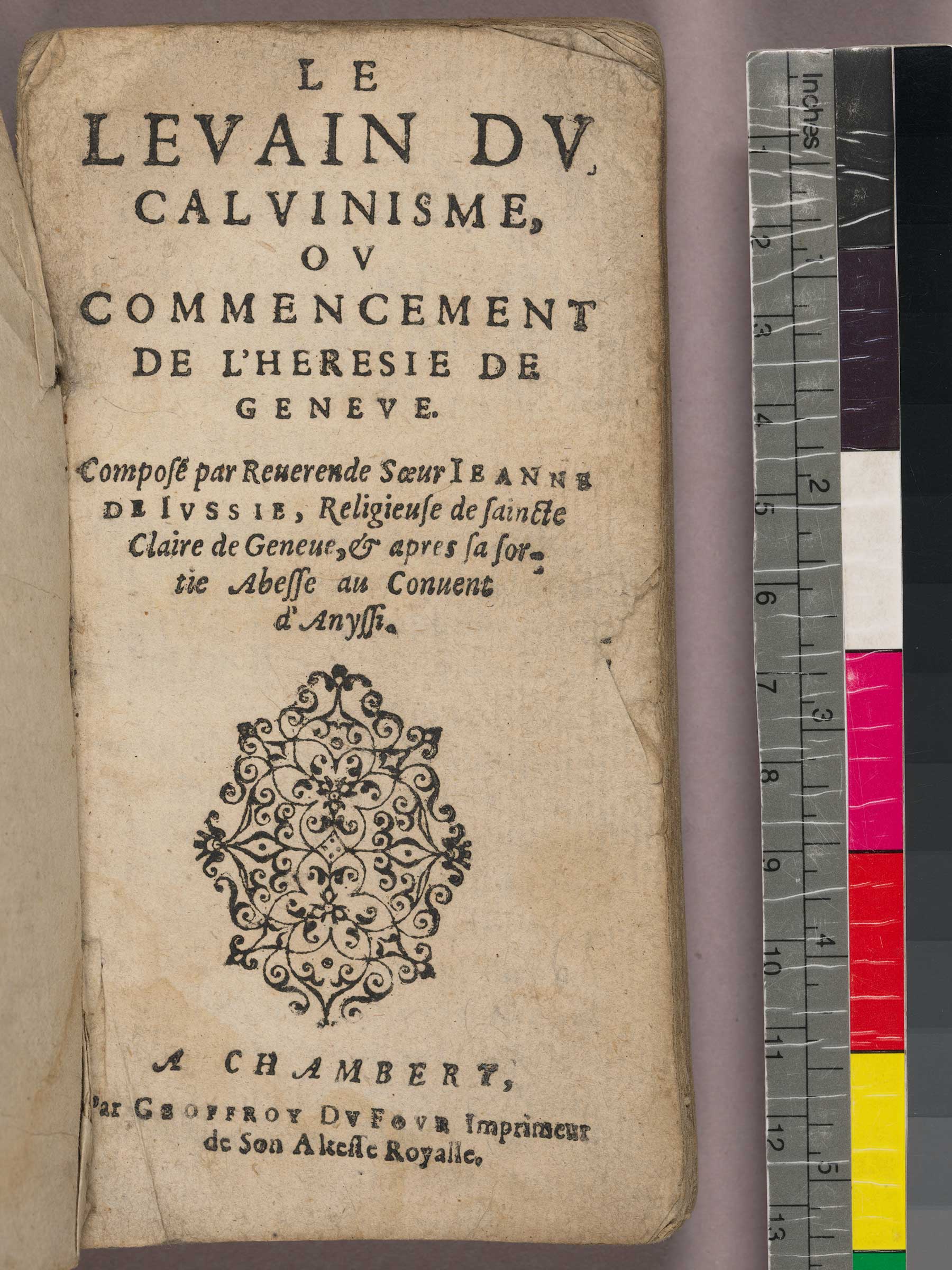
Jeanne de Jussie (1503-1561) was a French-Swiss nun who recounts her experiences living in Switzerland during the early years of the Swiss Reformation in this extremely rare work. Having entered the Convent of the Poor Clares in Geneva in 1521, Jeanne was appointed secretary of the Convent in 1530 and was responsible for its correspondence. Around the year 1535, she began writing in manuscript form what is now known as her “Short Chronicle,” intended to pass on current events and observations to future nuns, and which provides the basis for the book published here; an English translation of the manuscript (The Short Chronicle: a Poor Clare’s Account of the Reformation of Geneva, edited and translated by Carrie F. Klaus) was published by the University of Chicago Press in 2006.
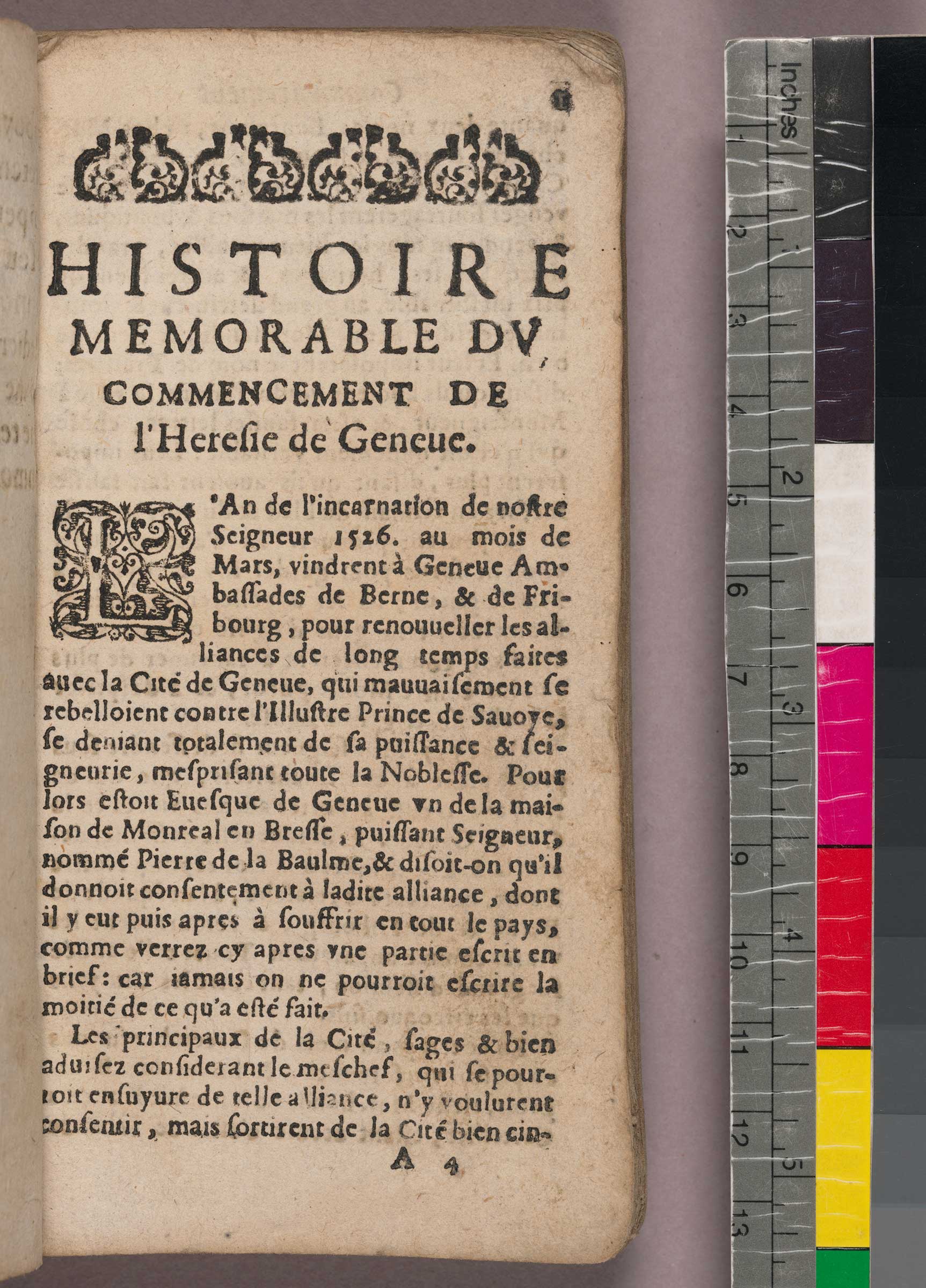
The year 1535 also proved to be an important year in Jeanne’s life for another reason: religious opponents broke into the Convent and the sisters were threatened for weeks before obtaining permission to leave Geneva peacefully, and then moving to Annecy, where they lived in the Monastery of the Holy Cross. This and many other contemporary events are described in this work, one of the few efforts to offer a detailed look into life in the city of Geneva during this tumultuous period. Jeanne’s narrative has continued to interest scholars not only for its contemporary description of key events, but also for its female perspective; the author is clear in noting that female Catholics were often subjected to more abuse concerning their beliefs than men.

This is the first of two issues published in 1611 (ours lacks the printing date, while the second issue includes it and is four pages longer); we have found no other North American holdings of this true first edition.
A Closer Look at a Glossed Bible Leaf

by David T. Gura, Ph.D., Curator, Ancient and Medieval Manuscripts

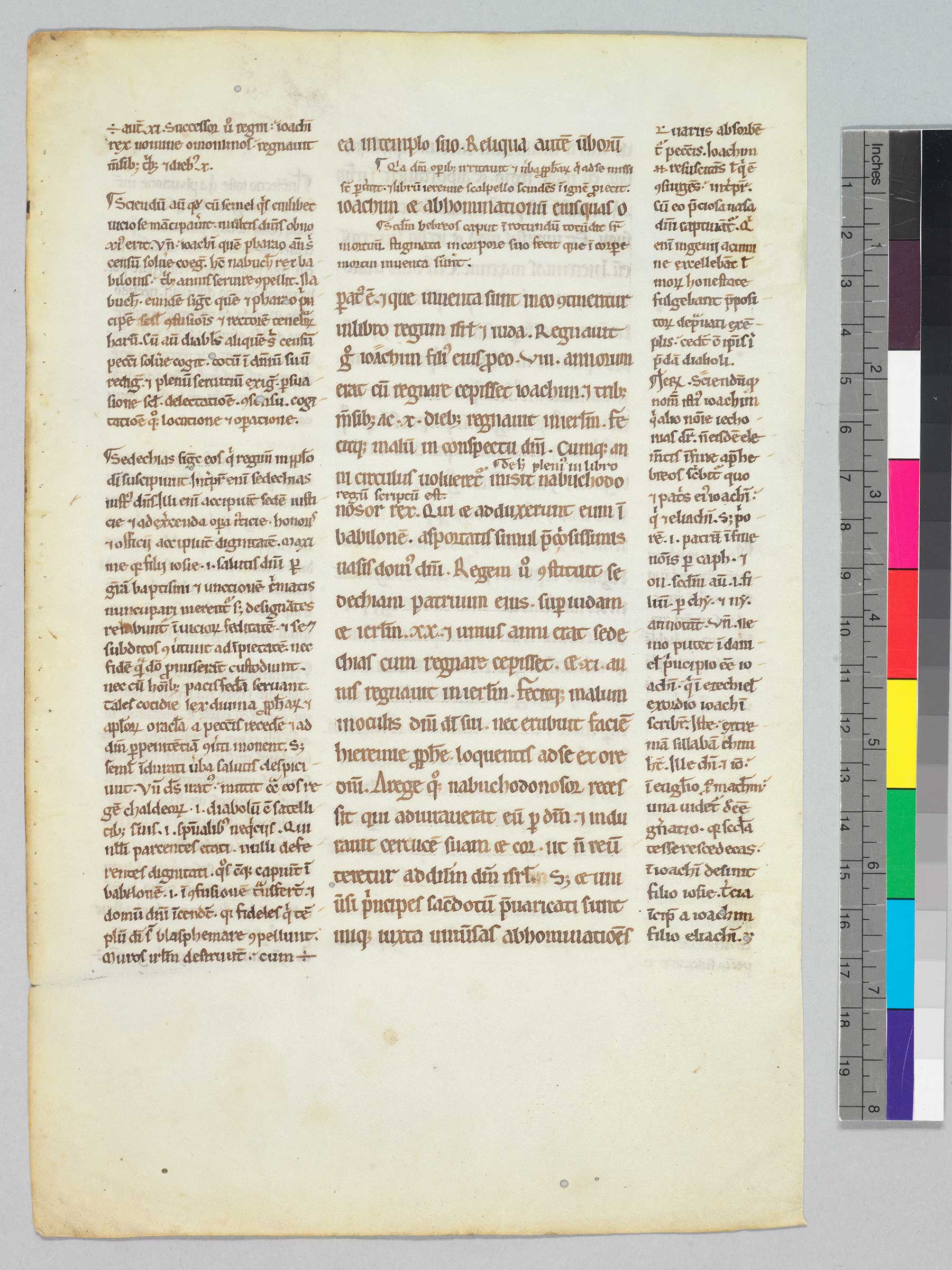
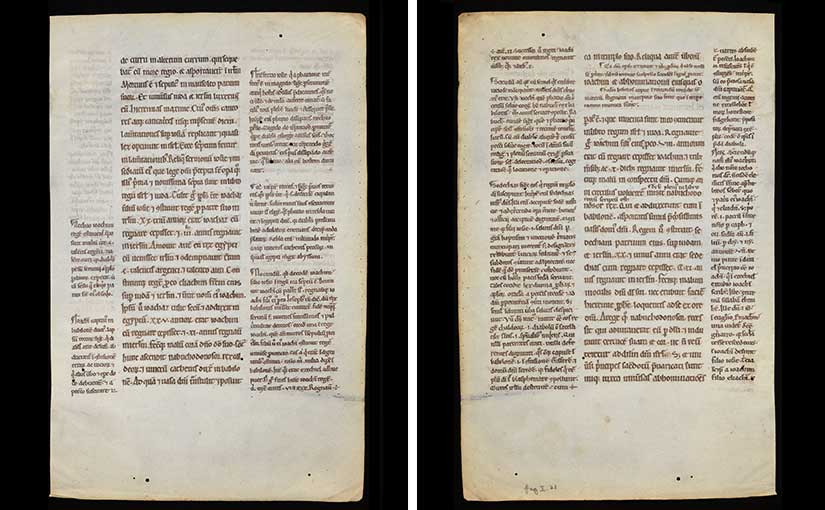
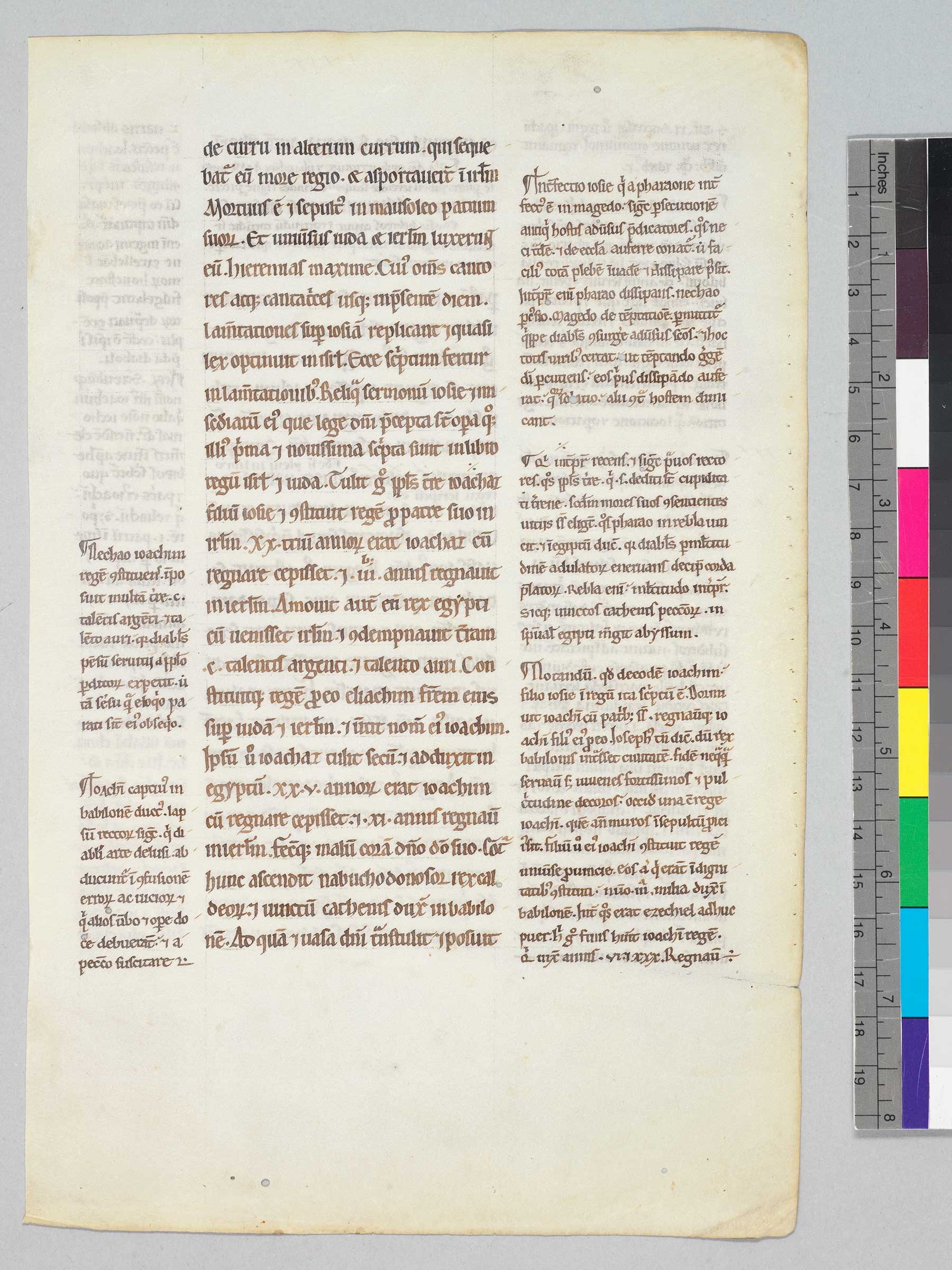
This leaf (Frag. I. 21) comes from a glossed Bible produced in France during the twelfth century. Glossed bibles contained both scripture and explanatory comments (glosses) on the same page and were used in teaching and formation. The small format of this Bible (305 x 207 mm) allowed a master to bring it to the schoolroom easily for use. The layout of glossed bibles is intentional and functional: scripture occupies the central column and space is allotted for glosses to be written in the margins (marginal glosses) and between lines (interlinear glosses). The glosses can explicate the biblical text in literal, allegorical, moral, and even anagogical ways.

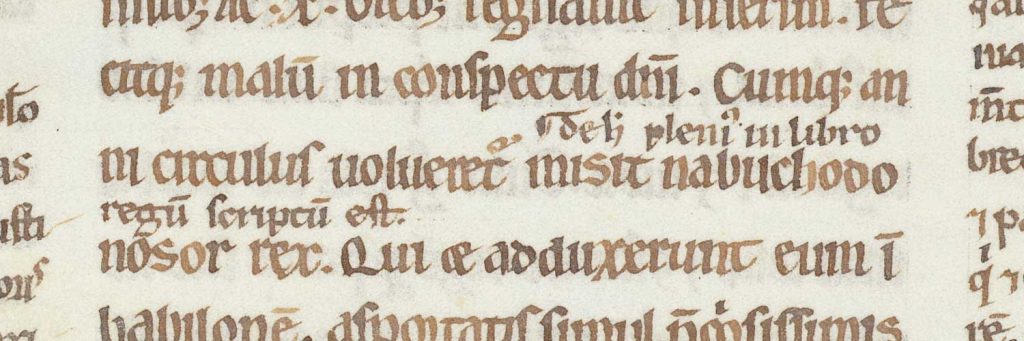
The particular text of this leaf comes from 2 Chronicles (II Paralipomenon). The function of interlinear and marginal glosses is distinct and can be observed in the following two examples. On the verso above the text misit Nabuchodonosor rex (“King Nebuchadnezzar sent”) an interlinear gloss is written: de hoc plenius in libro Regum scriptum est (“there is a fuller written account about him in the book of Kings”). The gloss is short and informative, directing the reader to find more information about a proper name.

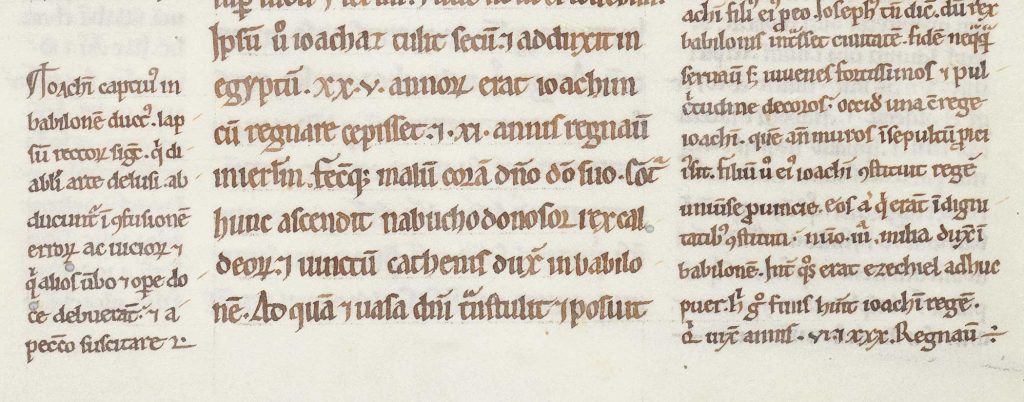
Compare this to the gloss on Joachim copied in the left margin of the recto. This comment is more substantive and begins a literal/historical interpretation, then moves to allegorical and moral explications: “Joachim was taken prisoner and lead into Babylon; this signifies the fall of the righteous who were deceived by the Devil’s handiwork. They are lead astray into the ruin of heresy and vice. These people were supposed to teach others in word and deed and raise them from sin.” (Ioachim captiuus in Babilonem ductus, lapsum rectorum significat qui diaboli arte delusi, abducuntur in confusionem errorum ac uiciorum et qui alios uerbo et opere docere debuerant, et a peccato suscitare.)

The parent manuscript was formerly in the Benedictine abbey of Saint-Oyan de Joux (Saint-Claude), where it appeared in the abbey’s library catalogue dated 8 March 1492. The codex was later in the collection of William L. Clements of Bay City, Michigan (1860-1934) and then in possession of the Cleveland, Ohio, biblioclast Otto F. Ege by 1937. Leaves were also being offered for sale by Philip Duschnes (New York, NY) in 1943 and 1946.

Bibliography

Alexander Andrée, “Glossed Bibles,” in The Oxford Handbook of the Latin Bible, ed. H.A.G. Houghton, 208-224. Oxford University Press, 2023.

Auguste Castan “Le Bibliothèque de l’Abbaye de Saint-Claude du Jura: Esquisse de son histoire.” Bibliothèque de l’École des chartes 50 (1889): 301-354.

David T. Gura, A Descriptive Catalogue of the Medieval and Renaissance Manuscripts of the University of Notre Dame and Saint Mary’s College. Notre Dame (IN): University of Notre Dame Press, 2016, p. 429-430.

Scott J. Gwara, Otto Ege’s Manuscripts: A Study of Ege’s Manuscript Collections, Portfolios, and Retail Trade. Cayce, SC, 2013, 31-32, 39, 40, 71-72.