The Riddle of Grendel’s Monstrous Mother: Echoes of Scylla in Beowulf?

Grendel’s mother has long been regarded by scholars as the least monstrous of the three—not being an obvious vampire-cannibal like Grendel nor a fire-breathing dragon. Her vengeful response to the death of her son, and her decision to continue the feud between the Grendelkin has been regarded as ethical (within the broader context of warrior ethos), legal (within the context of early medieval Norse and English laws), and even heroic (aligned with the heroism as depicted in the poem).

Grendel’s mother tries to stab Beowulf. Illustration by J.R. Skelton, 1908.

While I would generally agree with this broad characterization of Grendel’s mother, and there is no doubt that her actions mirror those of any avenging warrior in Beowulf, to erase her monstrosity seems to ignore at least some of the evidence. While I do not find her maternity at all indicative of abject horror (indeed quite the opposite as it is her identity as “mother” that humanizes her in my view), certain terms used to describe her and indeed everything from her association as Caines cynn “Cain’s kin” (107; 1261-65) and the hellish descriptions of her lair suggest some measure of monstrosity embedded in her character. And for this Halloween, we will spend some time unpacking the nature of her monstrosity.

I would contend that the main reason scholars argue about Grendel’s mother’s monstrosity and characterization is because of her enigmatic design. As I point out in my dissertation, riddles encode Beowulf, and, in my opinion, employ riddling rhetorical strategies, especially imitation, equivocation, esotericism and paradox. These obfuscations help account for the many irregularities observed in the poem the scholars have scratched their heads over for more than a century and help explain why often the heroes looks like the monsters—and the monsters like the heroes.  

Grendel’s mother battles Beowulf. Illustration by John Howe, 2006. All rights reserved.

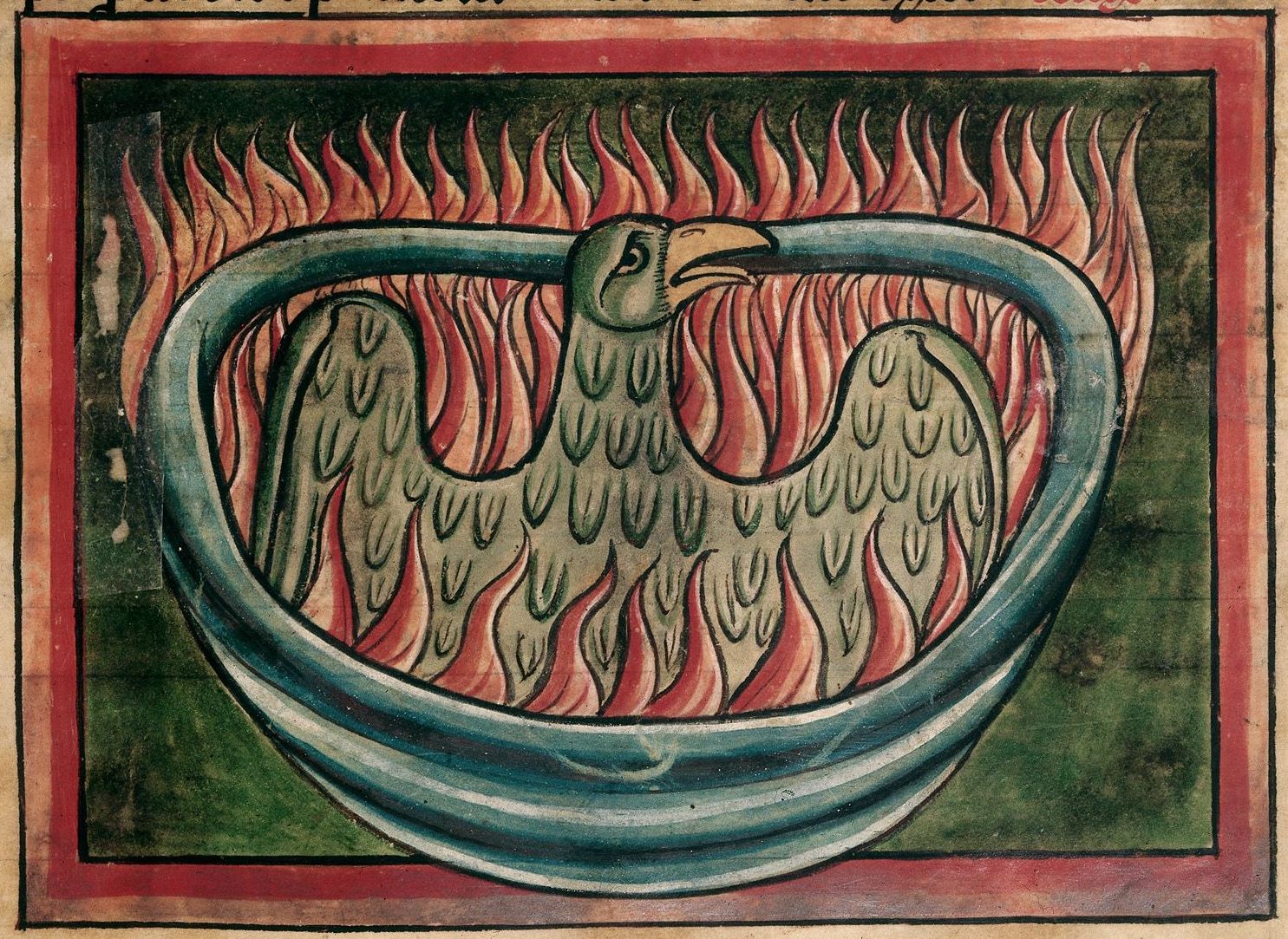
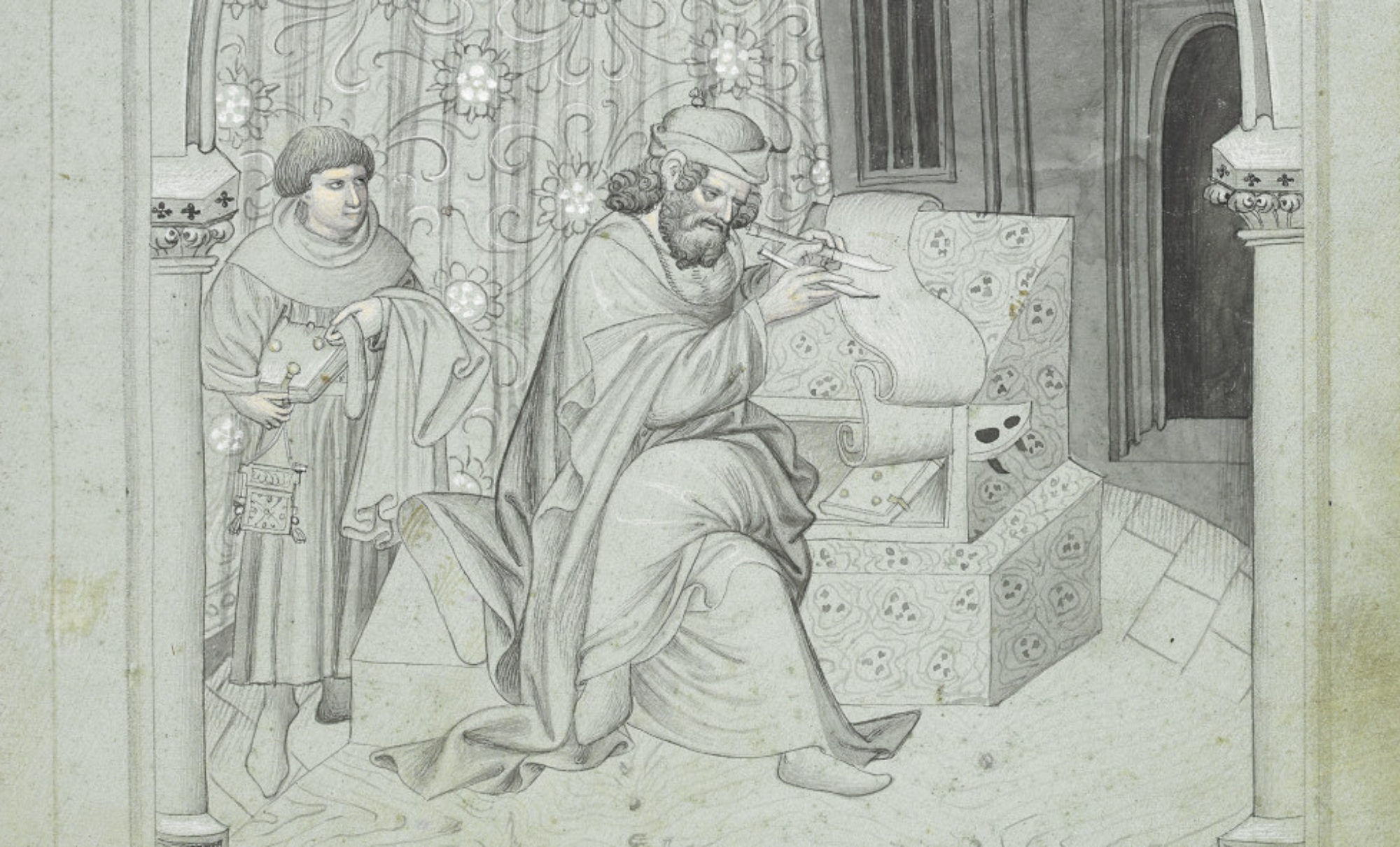
Because of the influence of riddling rhetorical strategies on Beowulf, turning to the Anglo-Latin enigmata tradition is an especially fruitful practice, especially in explorations of monstrosity in the poem. Indeed, monsterized riddles have long been a feature starting with the late classical enigmatist, Symphosius, who establishes the Anglo-Latin tradition, includes numerous riddles on wondrous creatures, such as the phoenix (Enigma 31). Similarly, Aldhelm’s enigmata also feature numerous monsterized riddles, in some cases the solution is a wondrous creature (as with Symphosius’ paradoxical phoenix-riddle), in other cases the mundane is made monstrous through imitation, and the monsterization is another mechanism of obfuscation (as in Aldhelm’s Enigma 97 solved nox). Even Boniface, whose riddles center on vices and virtues, monsterizes his vice-riddles in the mode of Prudentius’ Psychomachia, a popular classroom text in early medieval English which depicts vices as monsters in an allegorical epic.

Ira’s sword shatters on Patientia’s helmet, then the enraged Ira dies by her own blade (c.900, Bern, Burgerbibliothek, Codex 264, p.79).

But what does this have to do with Grendel’s monstrous mother? Let’s start with her introduction and the complex portrait it paints:

Þæt gesyne wearþ,
widcuþ werum,   þætte wrecend þa gyt

lifde æfter laþum,   lange þrage,
æfter guðceare:   Grendles modor.
Ides aglæcwif   yrmþe gemunde,
se þe wæteregesan   wunian scolde,
cealde streamas,   siþðan Cain wearð
to ecgbanan   angan breþer,
fæderenmæge.   He þa fag gewat,
morþre gemearcod,   mandream fleon,
westen warode. 

“That became manifest, widely known to men, that an avenger still lived after the hostile one, for a long time, after war-grief: Grendel’s mother. A lady, a fearsome woman remembered misery, he who must inhabit the terrible-waters, the cold streams because Cain became the edge-slayer to his only brother, kin of the same father. He then went hostile, marked by murder, fled the joys of men, inhabiting the wilderness.”

Beowulf, 1255-65.

The first term used to describe Grendel’s mother emphasizes her desire for vengeance. The narrator names her a wrecend “avenger” (1256) —an appropriate title considering her entire characterization is framed by revenge and feuding—and her motive is thrice repeated almost verbatim and with language that could apply equally to avenging heroes in the poem (1276-78, 1339-1340, 1546). Moreover, Grendel’s mother’s is thrice described as wif “woman” (1259, 1519, 2120,) and even twice as an ides “lady” (1259, 1351) establishing gender as one of the pillars of her characterization, alongside her roles as avenger and mother. Kinship ties are further emphasized when Grendel’s mother is described as Grendles maga “Grendel’s female relative” (1391) and twice as Grendles mæg “Grendel’s kinsman” (2006, 2353), which account for her desire for revenge in upholding the warrior ethics and continuing the feud between the Danes and the Grendelkin.

Beowulf fights Grendels mother Gareth Hinds
Beowulf fights Grendel’s mother. Illustration fromm Gareth Hinds graphic novel, Beowulf (2007). All rights reserved.

Moreover, like the monstrous vices in Prudentius’ Psychomachia and Boniface’s Enigmata, the avenger—Grendel’s mother—is clearly wondrous and monstrous in certain descriptions of her. She and her lake monsters are wæteregesa “water-terrors” (1260). Grendel’s mother is called se broga “the terror” (1260), and together with her son, she is described as mihitig manscaða “man-slayer” (1339), micle mearcstapa “great marked-wanderer” (1348), dyrna gast “secret spirit” (1357), ælwiht “alien thing” (1518), thrice as ellorgæst “foreign spirit” (1349, 1617, 1621) and even deofol “devil” (1680). She is even described as a merewif mihtig “mighty mermaid” (1519), aglæcwif “fearsome warrior woman” (1259) or wif unhyre “untamed woman” (2120), grundwyrgenne “ground wolf” (1518) and twice is characterized with the compound a brimwulf “sea-wolf” (1506, 1599).

It is my contention that descriptions of Scylla—a classical monster, famously featured in the Odyssey and popular in Anglo-Latin literature contemporary with Beowulf—likely influence the characterization of Grendel’s mother, a riddle embedded in the poetic compounds used to describe her and in the depiction of her monstrous lair.

Scylla as a maiden with a kētos tail and dog heads sprouting from her body. Detail from a red-figure bell-crater in the Louvre, 450–425 BC. This form of Scylla was prevalent in ancient depictions.

Scylla is a monstrous sea creature from Greek mythology, known for inhabiting a narrow strait opposite the whirlpool Charybdis. She often has multiple heads with each head bearing a set of sharp, ravenous teeth. Scylla’s body is a woman’s often combining serpentine, aquatic and canine features. She emerges from a rocky cliffside and narrow passage where she lives. She preys on passing sailors, snatching them from ships with her many heads and her “sea dogs” which accompany her. Once a beautiful nymph, she becomes cursed and exiled.

Scylla is the riddle-subject of Aldhelm’s Enigma 95 (solved Scilla) and is featured in his prose De uirginitate (X). Aldhelm’s Enigma 95 describes Scylla as follows:

Ecce, molosorum nomen mihi fata dederunt
(Argolicae gentis sic promit lingua loquelis),
Ex quo me dirae fallebant carmina Circae,
Quae fontis liquidi maculabat flumina uerbis;
Femora cum cruribus, suras cum poplite bino
Abstulit immiscens crudelis uerba uirago.
Pignora nunc pauidi refereunt ululantia nautae,
Tonsis dum trudunt classes et caerula findunt.
Uastos uerrentes fluctus grassante procella,
Palmula qua remis succurrit panda per undas,
Auscultare procul quae latrant inguina circum.
Sic me pellexit dudum Titania proles,
Ut merito vivam salsis in fluctibus exul.

“Look, the Fates gave me the name of dogs—thus does the language of the Greeks render it in words—ever since the incantations of dread Circe, who stained the waters of the flowing mountains with her words, deceived me. Weaving words, the cruel witch deprived me of thighs together with shins, and calves, together with knees. Terrified mariners relate that, as they impel their ships with oars and cleave the sea, sweeping along the mighty wave while the tempest rages, where the broad blade of howling offspring that bark about my loins. Thus the daughter Titan [scil. Circe] once tricked me, so that I should live as an exile—deservedly—in the salty waves.”

Lapidge and Rossier, Aldhelm: The Poetic Works, 91.

In this riddle, solved Scylla (Scilla), Aldhelm emphasizes her canine connection, and gives a reference to her origin in Greek mythology and her transformation at the hands of the witch, Circe. There is also mention of the danger she poses to any who sail by her watery abode, alongside her “howling offspring that bark” about her an further threaten wayward travelers.

Scylla and Glaucus by Peter Paul Rubens (ca. 1636)
Scylla and Glaucus by Peter Paul Rubens (ca. 1636). Musée Bonnat-Helleu.

Scylla also appears twice in the Liber monstrorum (I.14, II.19), where she is described in detail. This first mention from Liber monstrorum I.14 in the section on humaniod monsters is as follows:

Scylla monstrum nautis inimicissimum in eo freto quod Italiam et Siciliam interluit fuisse perhibetur capite quidem et pectore uirginali sicut sirenae, sed luporum uterum et caudas delfinorum habuit. Et hoc sirenarum et Scyllae distinguit naturam quod ipsae morifero carmine mauigantes decipiunt et illa per uim fortitudinis marinis succinta canibus miserorum fertur lacerasse naufragia.

“It is reckoned that Scylla has been the monster most hostile to sailors in that channel which washes between Italy and Sicily, having indeed the head and chest of a maiden (like the sirens), but the belly of a wolf and the tail of dolphins. And what distinguishes the nature of the sirens from Scylla is that they deceive seamen by their deadly song, whilst she with the strength of her force, girt about with sea-dogs, is said to have mangled the wrecks of the unfortunate .”

Orchard, Pride and Prodigies, 266-67.

This description emphasizes her superlative hostility [inimicissimum]—similar to Grendel’s mother’s characterization as an aglæcwif “fearsome warrior woman” (1259) or wif unhyre “untamed woman” (2120). Emphasis on the narrow channel where Scylla resides shifts to her hybrid representation with “the head and chest of a maiden (like sirens) but the belly of a wolf and the tail of a dolphins” (fuisse perhibetur capite quidem et pectore uirginali sicut sirenae, sed luporum uterum et caudas delfinorum habuit). This establishes Scylla as a woman-canine-marine creature, combining “maiden” (virgo), “wolf” (lupus), and “dolphin” (delphinus) parts. Moreover, she is twice compared to the treacherous sirens, while explaining that unlike the sirens, who use song to ensnare their victims, Scylla uses force, violence and her mighty strength, with her “sea-dogs” (marinis canibus) to take down unfortunate sailors who enter her domain.

Scylla, relief sculpture on a pair of terracotta plaques with glass inlays, late 4th century BCE; in the Metropolitan Museum of Art, New York City. The Metropolitan Museum of Art, New York City, Sandra Brue Gift, 1998 (accession no. 1998.210.1, .2); www.metmuseum.org.

In the second section, centered on bestial monsters, there is an entry on the sea-beasts of Scylla. Liber monstrorum II.19 reads as follows:

fingunt quoque poetae inmari Tyrrheno ceruleos esse canes, qui posteriorem corporis partem cum piscibus habent commune. Ipsis quoque Scyllam ratem Ulixis lacerans marinis succincta canibus describitur.

“the poets also image that there are azure dogs in the Mediterranean, the hind parts of whose bodies they share with fish; also girt round with these same sea-dogs Scylla is described tearing apart the ship of Ulysses”

Orchard, Pride and Prodigies, 266-67.

This entry focuses on the “azure dog” (ceruleos canes) or “sea dogs” (marinis canibus) of Scylla, which are described as featuring canine heads and legs, but “the hind parts of whose bodies they share with fish” (qui posteriorem corporis partem cum piscibus habent commune) making them a canine-marine hybrid creature. Scylla is directly mentioned in connection with her accompanying sea-monsters, and the passage directly references the struggles of Odysseus [i.e. Ulysses] when he encounters Scylla on his epic journey home.

Asteas - Europa on the bull - Dionysos with satyrs and maenads and Pan - Montesarchio
Paestan red figure calyx-crater showing Scylla wielding a trident (ca. 350 BCE). Museo Archeologico Nazionale del Sannio Caudino, Montesarchio. 

The key features of Scylla’s narrow channel are present also in the monster-mere found in Beowulf which is the home and hall of the Grendelkin. Grendel’s Mother’s lair is described in the poem as follows:

Hie dygel lond
warigeað, wulfhleoþu,   windige næssas,
frecne fengelad,   ðær fyrgenstream
under næssa genipu   niþer gewiteð,
flod under foldan
.

“They [Grendelkin] inhabit the secret land, the wolf-slopes, the windy narrows, the dangerous fen-path, where the mountain stream cascades downward under the cover of cliffs, the flood under the land.”

Beowulf, 1357-61.

This description emphasizes the dangerous narrows and the crafty cliffs surrounding the monstrous abode and in this way echoes Scylla’s watery domain. In this passage are numerous references to the steep and narrow geography, especially in descriptions of the wulfhleoþu windige næssas “wolf-slopes (and) windy narrows” (1358), and fyrgenstream under næssa genipu, “a mountain river under the cover of cliffs” (1359-60). As Beowulf enters the waves, he finds himself, like those caught by Scylla in the Odyssey, in a violent struggle for his life at the hands of a ferocious woman who pulls him to the depths of her haunted lake. The narrator explains how:

Bær þa seo brimwylf,   þa heo to botme com,
hringa þengel         to hofe sinum,
swa he ne mihte,         no he þæs modig wæs,
wæpna gewealdan,   ac hine wundra þæs fela
swencte on sunde,         sædeor monig
hildetuxum         heresyrcan bræc,
ehton aglæcan.         ða se eorl ongeat
þæt he in niðsele         nathwylcum wæs,
þær him nænig wæter         wihte ne sceþede,
ne him for hrofsele         hrinan ne mehte
færgripe flodes;         fyrleoht geseah,
blacne leoman,         beorhte scinan.
Ongeat þa se goda         grundwyrgenne,
merewif mihtig .

“When she came to the bottom, the sea-wolf bore the prince of rings to her hall, so he could not, no matter how brave he was, wield weapons, but so many wonders afflicted him while swimming, many a sea-beast poked the battle-armor with battle-tusks, harassed the fearsome assailant (Beowulf). Then the man perceived that he was in some kind of hostile-hall, where no water could harm them at all, nor could the sudden grasps of the flood touch them because of the roofed-hall.  He saw firelight, pale illumination brightly shining. Then the good one (Beowulf) perceived the bottom-wolf, the mighty sea-woman.”

Beowulf, 1506-1519.

Henry Justice Ford “Beowulf battles with Grendels Mother” (1899).

In reading this passage from the poem, we can observe numerous parallels between Grendel’s mother and Scylla, which I believe suggests that the classical monster, frequently featured in Anglo-Latin texts, may have influenced the depiction and characterization of Grendl’s mother. Just like with Scylla’s channel, the monster-mere in Beowulf includes sea-creatures that attack anyone who enters their watery lair. Both Scylla and Grendel’s mother are ancient, cursed and exiled monsters, the former as a result of a witch’s curse, the latter is prediluvian, cursed and marked as kin of Cain. Grendel’s mother seems to travel with sea-beasts (nicoras) which resemble Scylla’s sea-dogs. Both Scylla and Grendel’s mother are hybrid women monsters—featuring both canine or lupine characteristics (as indicated by her description as brimwulf “sea-wolf” and grundwyrgenne “bottom-wolf”) characteristics and piscine or serpentine characteristics (as indicated by her description as merewif “mermaid”). And, both Scylla and Grendel’s mom occupy a craggy narrow passage that is terrifying and dangerous for sailors or sea-men.

While I would not push so far as to contend that Grendel’s mother is intended as a literal representation of Scylla, and while I agree with others who have observed her ethically complex characterization, it seems plausible—even probable—that the famous Scylla could have influenced her enigmatic monsterization. At the very least, many counted among the learned audiences of Beowulf in early medieval England would likely have discerned the numerous and noteworthy parallels between these two monstrous women.

Richard Fahey, PhD
Medieval Institute
University of Notre Damme

Selected Bibliography

Acker, Paul. “Horror and the Maternal in Beowulf.Publication of the Modern Language Association 121.3 (2006): 702-16.

Aldhelm. Aldhelm: The Poetic Works. Translated by Michael Lapidge and James L. Rosier. Dover, NH: D. S. Brewer, 1985.

—. Aldhelm: The Prose Works. Translated by Michael Lapidge and Michael Herren. Cambridge, UK: D. S. Brewer, 1979.

Fahey, Richard. “Enigmatic Design and Psychomachic Monstrosity in Beowulf.” Dissertation: University of Notre Dame, 2020.

Hennequin, M. Wendy. “We’ve Created a Monster: The Strange Case of Grendel’s Mother.” English Studies 89.5 (2008): 503-23.

Klaeber’s Beowulf, 4th Edition. Edited by Robert D. Fulk, Robert E. Bjork and John D. Niles. Toronto, ON: University of Toronto Press, [reprint] 2009.

Kiernan, Kevin S. “Grendel’s Heroic Mother.” In Geardagum 6 (1984): 13-33.

Lockett, Leslie. “The Role of Grendel’s Arm in Feud, Law, and the Narrative Strategy of Beowulf.” In Latin Learning and English Lore: Studies in Anglo-Saxon Literature for Michael Lapidge (I), edited by Katherine O’Brien O’Keeffe and Andy Orchard, 368-88. Toronto, ON: University of Toronto Press, 2005.

Orchard, Andy. A Critical Companion to Beowulf. Cambridge, UK: D.S. Brewer, 2003.

—. Pride and Prodigies: Studies in the Monsters of the Beowulf-Manuscript. Toronto, ON: University of Toronto Press, 1995.

Sayers, William. “Grendel’s Mother, Icelandic Gryla, and Irish Nechta Scene: Eviscerating Fear.” Proceedings of the Harvard Celtic Colloquium 16 (1996): 256-68.

Ivory in the Rust: Reading the Old English “Ruin” in South Bend

As a medievalist studying at the University of Notre Dame, I am afforded many luxuries. The university’s resources for research in my field are exceptional, and I can honestly say that from my personal experience both the Medieval Institute and my home English Department have proven to be places where intellectual curiosity flourishes and where the spirit of generosity pervades. It has been a wonderful place to pursue my graduate studies, and of course the campus is absolutely beautiful, as the university’s collection of scenic images affirms. But when I decided to move off campus my second year, out of the gilded bubble surrounding the university and into the rust belt of South Bend, I met with some starkly different and rather unsettling imagery.
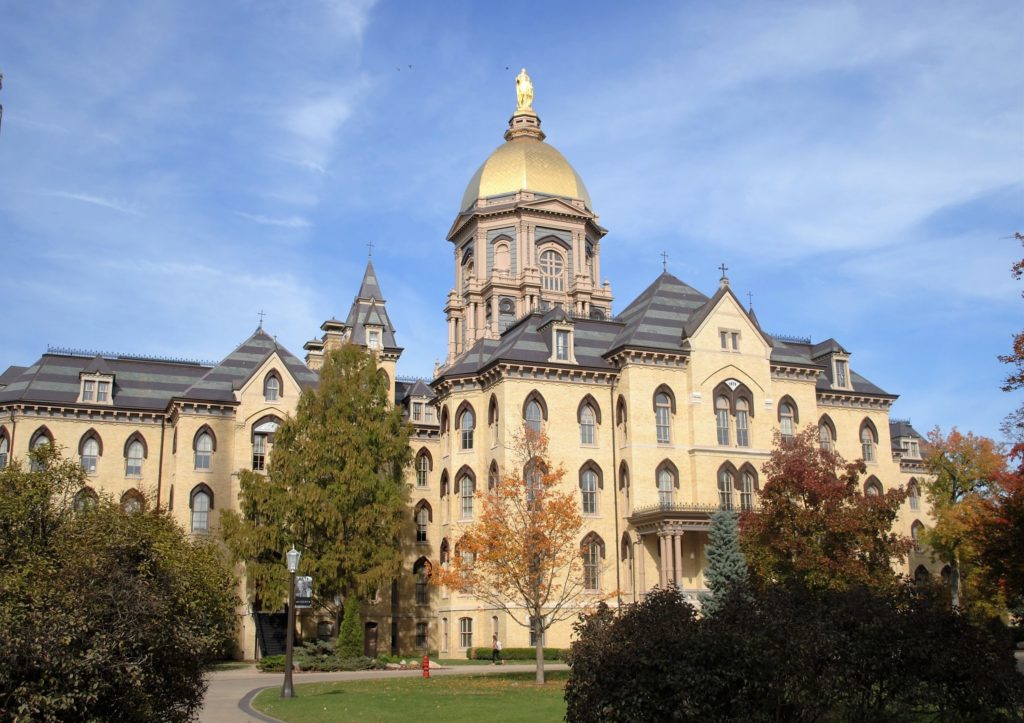
University of Notre Dame’s Golden Dome and Main Building

The juxtaposition between the two spheres which I came to inhabit—between the gorgeous Neo-Gothic architecture that adorns the picturesque campus and the industrial ruins scattered throughout the cityscape of South Bend—became repeatedly reinforced by my regular journey between these worlds on each morning commute and then again each night as I returned home. Every evening, I would leave the Golden Dome behind and drive by boarded up houses and businesses, like this one on Sample Street, which I routinely passed on my way home.

Ruined Building on Sample Street, photograph taken and edited by Rajuli (Khetarpal) Fahey

Below is a closer view from the front of the building. I pause on this particular structure, because it became engrained in my mind over time—the beautiful green decay and broken bricks—the state of disrepair. To me, this building came to represent the rust belt ruins of South Bend. My wife—artist and graduate of Massachusetts College of Art & Design, Rajuli (Khetarpal) Fahey—photographed the rotting building and describes experiencing an overwhelming stench of mildew and mold wafting from the broken windows upon approaching the structure.
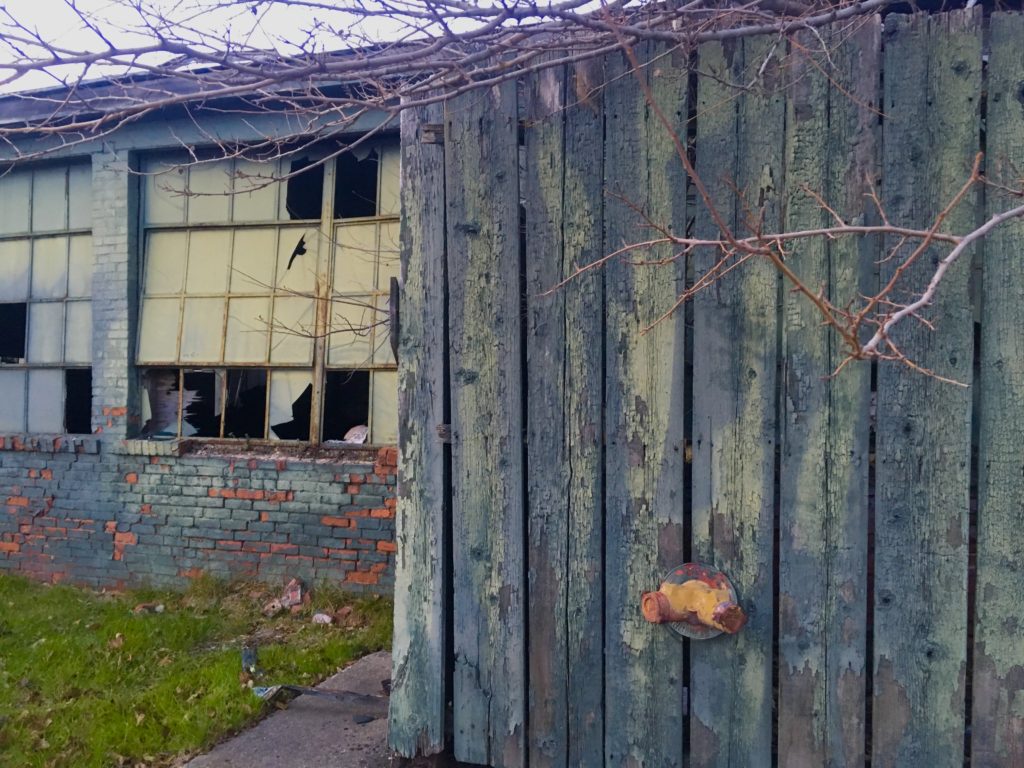
Sample Street Ruin, photograph taken and edited by Rajuli (Khetarpal) Fahey

In my opinion, there is a certain beauty in the haunting imagery of this broken down building, which recalls a time before the place fell into ruin while simultaneously emphasizing its current dilapidation. This theme is well known to Anglo-Saxonists, as the question of ubi sunt “where are (they now)?” pervades the so-called Old English elegies, which reflect on the transitory nature of human existence, noting the decay of great civilizations passed. As I read these medieval poems in the ivory tower of Hesburgh Library, I found myself thinking about South Bend and the many other rust belt cities across the country, weathered by similar economic decay. More than any other Old English elegy, the Exeter Book Ruin prompted me to meditate on the industrial remnants of a former time in South Bend.
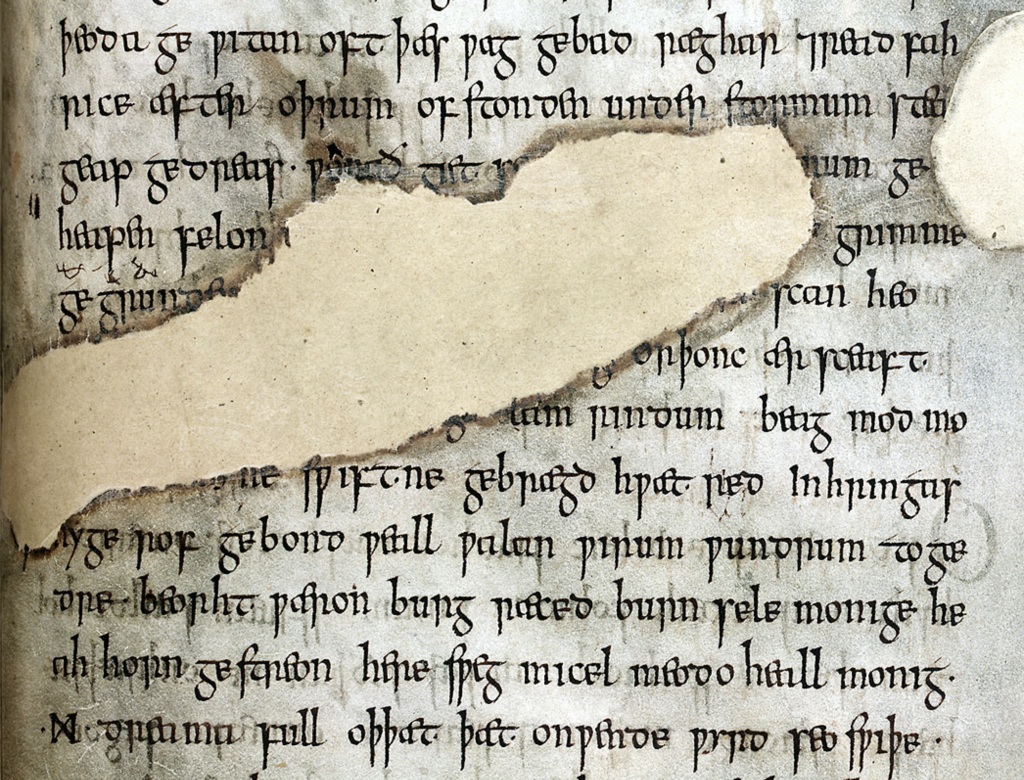
Exeter Cathedral Library MS 3501, f. 124r, all rights reserved Dean & Chapter Exeter Cathedral

The Old English Ruin is itself a ruin—appearing on fire-damaged folia in the Exeter Book (Exeter Cathedral Library MS 3501). Fittingly, the poem bears its own marks from the wear of time and circumstance, and at first sounds almost like a riddle—beginning with one of the lexical markers scholars have used identify riddles (wrætlic meaning “wondrous” or “marvelous”). Moreover, in its manuscript context, the Old English Ruin is embedded within the two major collections of riddles found in the Exeter Book, amongst some stray riddles and the more enigmatic “elegies” in the codex, including The Wife’s Lament and The Husband’s Message. The Exeter Book Ruin demonstrates an interest in contemplating the destructive and the inevitable—crushing—passage of time, particularly on monumental manmade structures.

As Rajuli and I were discussing the poem and pockets of dilapidation throughout the city, she suggested that we drive around the city and take a family tour to document some of the ruins of South Bend, which I use here to complement sections of my translation of the Old English Ruin.
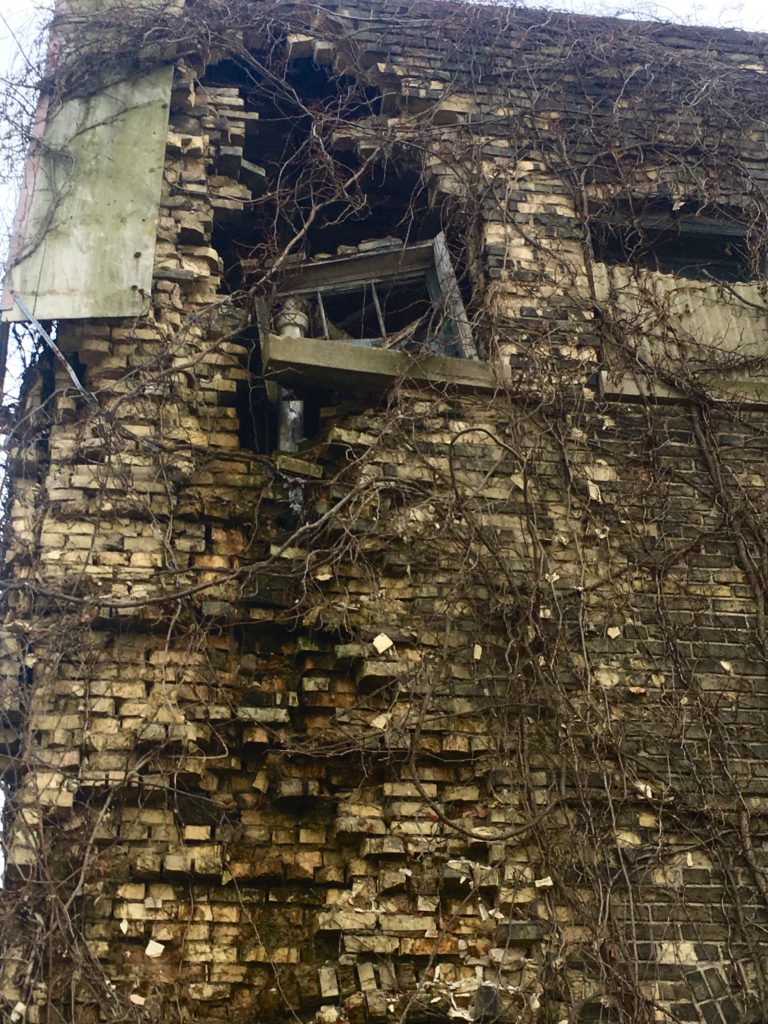
Ruined wall-stones in South Bend, photograph by Richard Fahey and edited by Rajuli (Khetarpal) Fahey

Wrætlic is þes wealstan wyrde gebræcon;
burgstede burston brosnað enta geweorc
Hrofas sind gehrorene hreorge torras,
hrungeat berofen (1-4).

“Wondrous are these wall-stones,
broken by fortune, the citadels crumbled,
the work of giants ruined.
The roofs are collapsed,
the towers tumbled, the pillars bereft.”
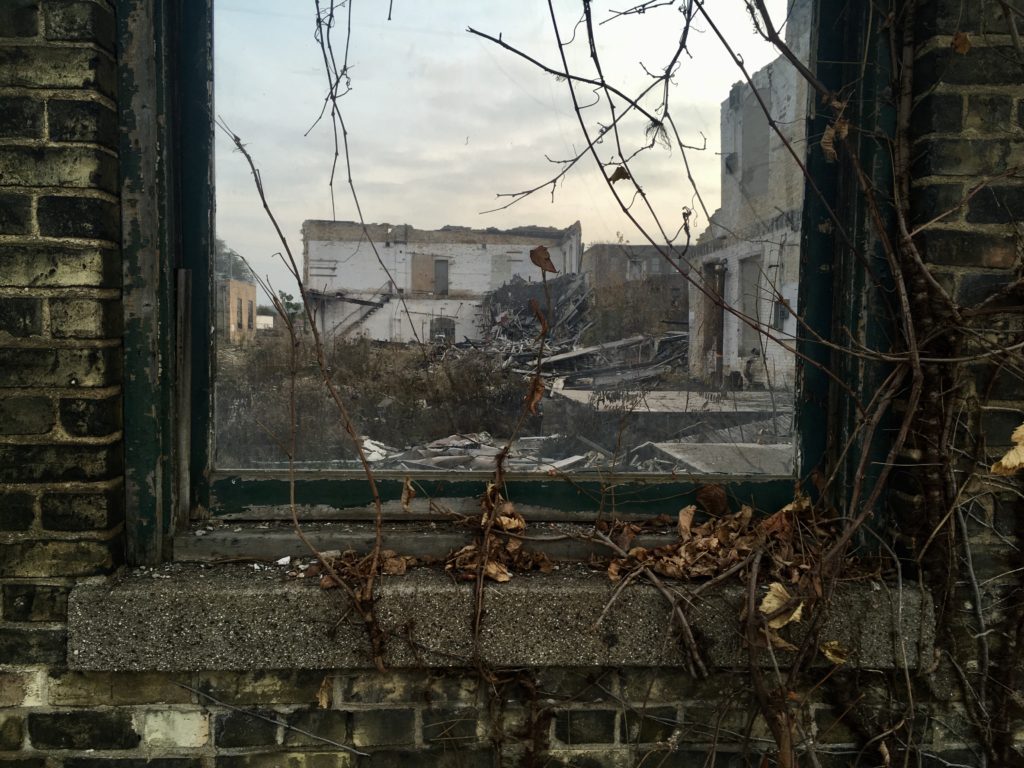
Ruined South Bend factories, photograph by Richard Fahey and edited by Rajuli (Khetarpal) Fahey

wurdon hyra wigsteal westen staþolas,
brosnade burgsteall (27-28).

  “their fortification became deserted places,
their strongholds crumbled.”

Ruined factory near Western Ave, South Bend, photograph by Richard Fahey and edited by Rajuli (Khetarpal) Fahey

Forþon þas hofu dreorgiað,
ond þæs teaforgeapa  tigelum sceadeð
hrostbeages hrof (29-31).

“Therefore these houses have decayed,
and this gabbled structure sheds its tiles,
the roof of ringed-wood.”

Red’s abandoned business on Indiana Ave, South Bend, photograph taken and edited by Rajuli (Khetarpal) Fahey

Sadly, the descriptions of desolation and structural decay in the poem reflects a bit too closely the current state of disrepair which still plagues certain parts of South Bend. This deserted business located on Indiana Avenue, once both Red’s Appliance Repair Center and Southside Electric, still bears obsolete information etched on the brick wall, whispering to us from the past. Reminding us that things were not always as they are today, and begging for renewal. Nevertheless, the enduring dilapidation that decorates the city stands as a reminder of how South Bend, and places like it, became collateral damage—destroyed by the tides of economic fluctuation.

Greeting sign upon entering the city of South Bend

As the sign suggests, South Bend is a city on the rise, racing to catch up to 21st century, and doing quite well in this effort. During my tenure at the University of Notre Dame, I have seen the city of South Bend improve tenfold—drawing new and thriving businesses, expanding campus infrastructure, renovating depressed neighborhoods, and even beginning to cultivate and encourage artistic movements within the city. Many rust belt cities do not have the advantage of housing such a vibrant university community which generates innovation and economic growth, and those cities have far greater challenges to overcome. Both the campus and the city at large often seem as if they are one enormous construction site: demolishing, repairing and rebuilding. Still, amidst citywide growth and revitalization lies the skeletal ruins of the rust belt economy.

Richard Fahey
PhD Candidate
Department of English
University of Notre Dame

Text and translation of the Old English Ruin

Collection of images “Rust Belt Ruins of South Bend


Translating the Wanderer

Bodleian_DOrville77_f100r_cropped
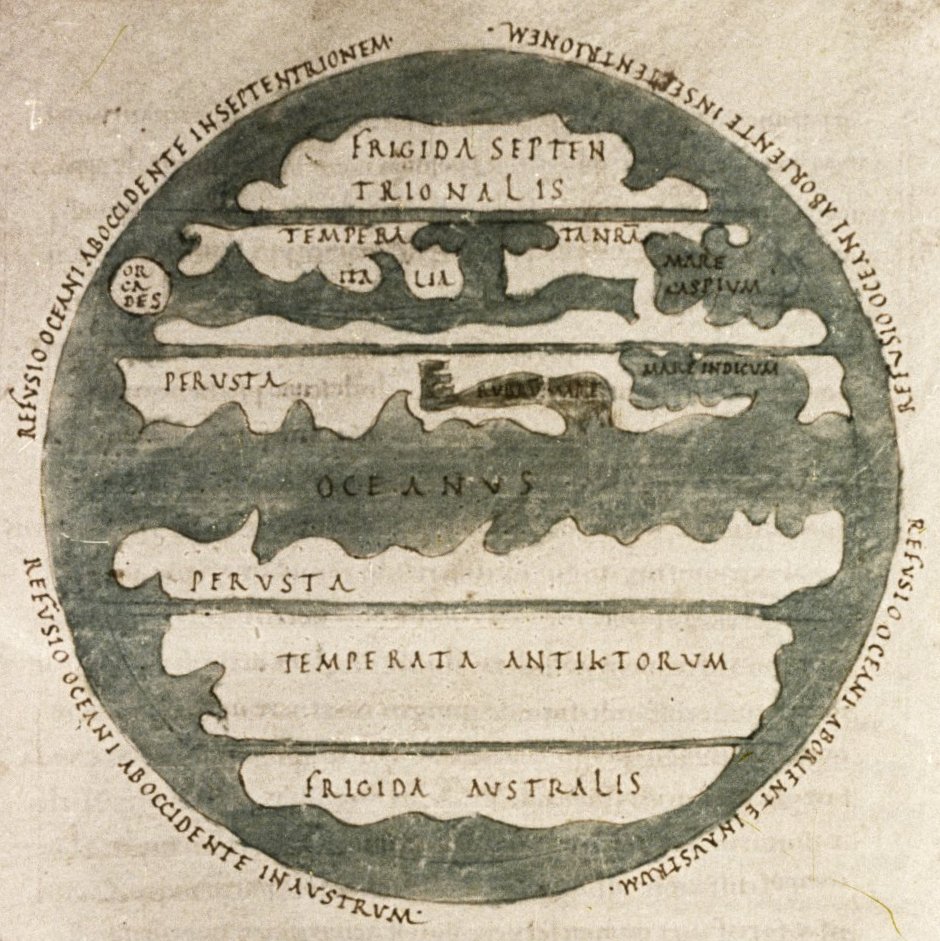
A map of the world, showing the various cold, temperate, and hot zones; Macrobius, Commentary on the Somnium Scipionis; Germany, 10th cent.; Oxford, Bodleian Library, D’Orville MS 77, f. 100r

The latest in the Chequered Board‘s ongoing series of poetic translations is one of the most famous, and most haunting, poems in Old English literature.

The Wanderer, contained in the Exeter Book (Exeter Cathedral Library MS 3501), is one of a group of nine Old English poems known as the elegies, poems characterized by “a contrasting pattern of loss and consolation, ostensibly based on a specific personal experience or observation, and expressing an attitude towards that experience.”1 In The Wanderer, a litany of loss which extends throughout nearly the entirety of the poem comes to an abrupt halt in its final lines. These concluding moments assure the reader that it shall go well for those who seek consolation with the “father in heaven,” returning to the opening lines of the poem in which we are confronted with a lone traveler seeking to find some kind of favor or honor with his maker. The poem seems to give us resolution, though not one to be enjoyed in the present.

Early in college, long before I had remotely considered the idea of becoming an Anglo-Saxonist, I gave my heart to a very different poem, T.S. Eliot’s The Love Song of J. Alfred Prufrock. I loved the poem’s frustration with futility, its questions left unanswered, and its dips into existential crisis. The poem impressed me with its lament for the mundaneness of life and concern with ever-passing time: “I shall grow old… I grow old… / I shall wear the bottoms of my trousers rolled” (ll. 120-121). The speaker of The Love Song is keenly aware of his status and absurdity – “I have seen the moment of my greatness flicker” (l. 84), “Almost, at times, the Fool” (l. 118) – and also of the difficulty of conveying meaning in the modern world – “That is not it at all, / That is not what I meant, at all” (ll. 109-110). The poem leaves us in the dreamscape of mermaids singing on the sea, “and we drown” (l. 131). It is not a happy poem.

Strangely, The Wanderer, written perhaps a thousand years before Eliot penned his Love Song, strikes some of these same chords. The poem begins with the image of a lone traveler with calloused hands, wandering over the seas and on land with a burdened mind. While Prufrock fears the future, the speaker of The Wanderer grieves for a past in which he enjoyed the company of kinsmen and the secure status of servitude to a lord. Images of a golden past, along with the faces of friends, “float” away from the speaker, and he reflects upon the death of all things of this world, offering a rather ordered catalogue of unfortunate events produced by a failing world. To say the least, it is not a happy poem. But it is extremely powerful poetry responding to the same concerns with which modern poets wrestle. Its world of mead-halls and thanes and warrior-glory is inexplicably also our world of suffering and futility and stagnation.

My main goal in offering this translation is to do some measure of justice to the beauty and depth of the original. I have stayed as close to the original language as possible, hopefully creating a work which sounds poetic to the modern ear while retaining some of its strangeness. C.S. Lewis famously wrote of J.R.R. Tolkien’s The Fellowship of the Ring: “here are beauties which pierce like swords or burn like cold iron. Here is a book which will break your heart.”2 Whether or not one believes these words are true of The Lord of the Rings, I hope you will agree that they are true of The Wanderer. The world of The Wanderer may be grey and rimmed with frost, but it is also a world of exquisite beauty, a world where the grief of the human soul is laid bare – the soul fully exposed in all of its wretchedness, yet not wholly defeated.

Maj-Britt Frenze
PhD Student
Medieval Institute
University of Notre Dame

1 S.B. Greenfield, “Old English Elegies,” in Continuations and Beginning: Studies in Old English Literature, ed. Eric Gerald Stanely (London: Nelson, 1996), 143.
2 C.S. Lewis, in Time and Tide, August 14, 1954, and October 22, 1955. Reprinted in Lesley Walmsley, ed., C.S. Lewis: Essay Collection and Other Short Pieces (London: HarperCollins, 2000).