Grendel’s Shapeshifting: From Shadow Monster to Human Warrior

Of all the horrifying scenes, which activate what Michael Lapidge has termed the psychology of terror in Beowulf,[1] none are more terrifying than the scene of Grendelโ€™s approach from the night, through the marsh and to the hall. Translations and adaptations of Beowulf approach Grendel in a variety of waysโ€”from emphasizing his monsterization as a eoten โ€œgiantโ€ (761) and รพyrs โ€œtrollโ€ (426) to more humanizing treatments that focus on his status as a wonsaeli wer โ€œunfortunate manโ€ (105).

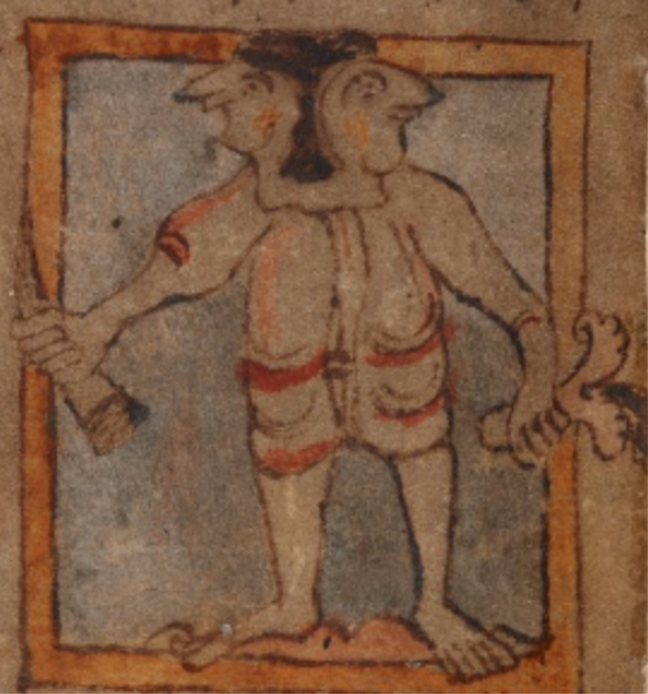
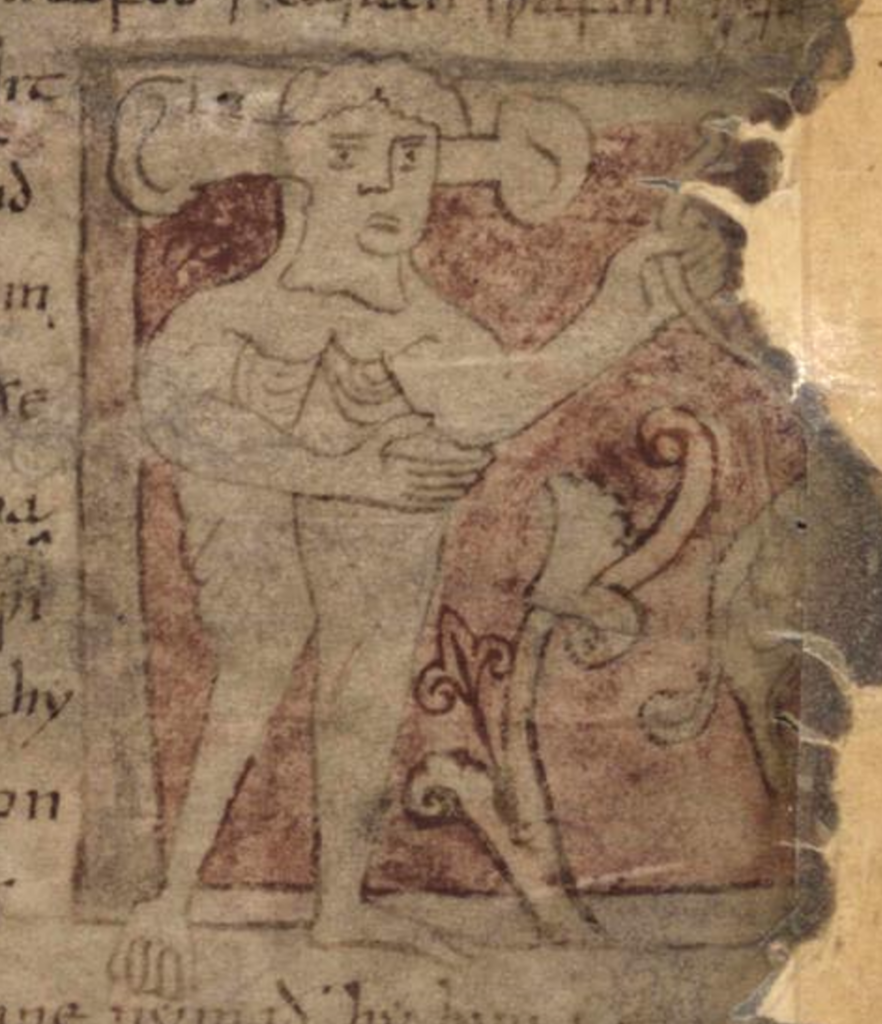
Monster from the Nowell Codex’s ‘Wonders of the East’, British Library, Cotton Vittelius a.xv, f101v.

This Halloween, in continuing our series on Monsters & Magic, I offer a translation and recitation of the monsterโ€™s haunting journey to Heorot. This scene has been well-treated in the scholarship, and Katherine Oโ€™ Brien Oโ€™Keeffe has noted that once the monster finally enters the hall, there is a potential โ€œhorror of recognitionโ€ by the audience who is then able to identify Grendel as human.[2] 

This blog will focus closely on the Old English poetic language and how Grendel shape-shifts as he draws nearer to Heorot, seemingly coming ever better into focus and transforming to match the space in which he inhabits. I will consider three major sections of his approach, signaled by the thrice repeated verb com โ€œhe cameโ€ (703, 710, 720), and I will reflect on the ways in which Grendel is described in each leg of his journey.
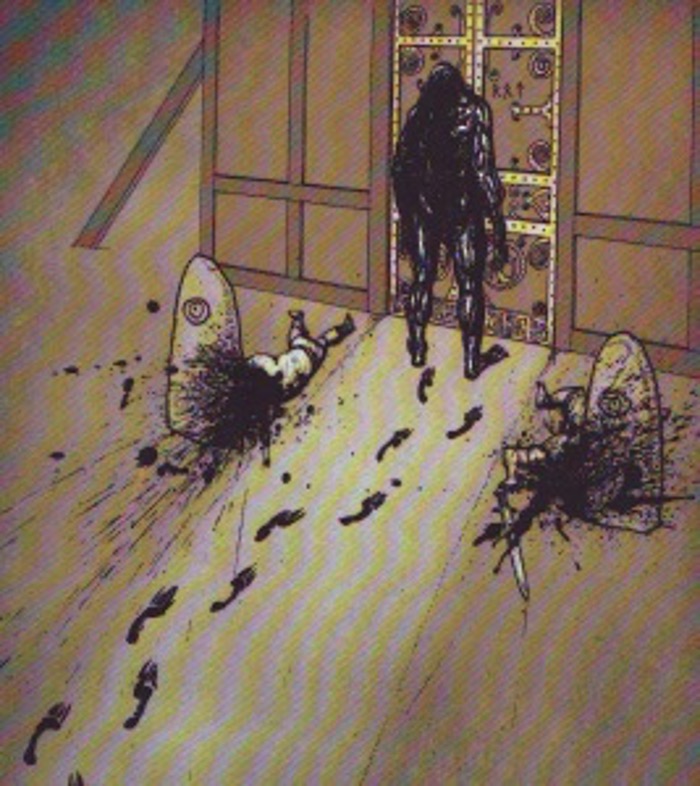
Image of Grendel as a Shadow Monster from Gareth Hind’s graphic novel adaptation of Beowulf (1999)

In the first passage, Grendel com on wanre niht โ€œcame in the dark nightโ€ (702), and he is characterized as sceadugenga โ€œshadow-walkerโ€ (703): either a โ€œgoing shadowโ€ or โ€œone who goes in the shadowsโ€ (both at available options based on the poetic compound). His movement is described as scriรฐan โ€œslitheringโ€ or โ€œglidingโ€ (703), further emphasizing his portrayal as a shadow monster. Later, when Grendel is named a synscaรฐa: either a โ€œrelentlessโ€ or a โ€œsinful ravagerโ€ (707), depending on how one interprets the polysemous Old English syn in the compound,[3] the monster is described as pulling men under shadow, characterizing Grendel as a night terror shrouded in darkness.  Indeed, when Grendel comes from the dark night, he is represented by the narrator as a shadow monster that hunts and haunts after sundown.
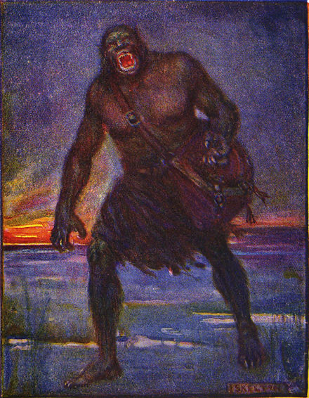
Image of Grendel by J. R. Skelton from “Stories of Beowulf” (1908).

In the second passage, when Grendel รฐa com of more under misthleoรพum โ€œthen came from the marsh under misty-slopesโ€ (710), the monster emerges from the swamp and is addressed by his name: Grendel (711). I imagine the silhouette of the monster taking shape in the mistโ€”perhaps a human shapeโ€”corresponding to his characterization as manscaรฐa, which likewise plays on polysemous Old English man in the compound, (either mฤn meaning โ€œcriminalโ€ or man meaning โ€œhumanโ€).[4] The alliteration in line 712 seems to stress the possibility of monstrous manscaรฐa as โ€œravager of humansโ€ or a โ€œhuman-shaped ravagerโ€ since manscaรฐa alliterates with the monsterโ€™s intended prey, manna cynn โ€œthe kin of humansโ€ or โ€œmankindโ€ (712).

The mist rising from the marsh continues to obscure the audienceโ€™s view as Grendel wod under wolcnum โ€œwent under the cloudโ€ (714) maintaining the suspense generated in the scene by suspending knowledge of Grendelโ€™s ontology. Nevertheless, in this second leg of his journey, Grendelโ€™s form seems to come into focus as he shifts from sceadugenga โ€œa shadow-walkerโ€ (703) into manscaรฐa โ€œa mean, man-shaped, ravager of menโ€ (712).

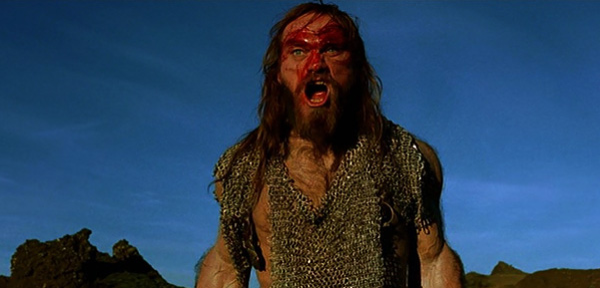
Grendel portrayed as human in Sturla Gunnarsson’s ‘Beowulf & Grendel’ (2005)

In the third passage, Grendel finally arrived at the hall and the audience learns at long last what Grendel is: rinc dreamum bedรฆled โ€œmany bereft of joyโ€ (720-21). During the last leg of his journey, Grendelโ€™s humanity is laid bare leading to the ultimate realization identified by Oโ€™Brien Oโ€™Keeffe, when Beowulf appears to recognize Grendelโ€™s humanity after the monster bursts open the door of the hall.

Throughout the next twenty lines, in addition to Grendel (720), the term rinc โ€œhuman warriorโ€ is repeated: twice in reference to the Geatish troop as a whole (728, 730), once in reference to the sleeping man Grendel cannibalizes when he arrives, who the audience later learns is Hondscio (741), and once in reference to Beowulf himself (747). This repeated use of rinc โ€œhuman warriorโ€ highlights how Grendel is a mirror for the hero and the Geatish warriors, characterized in identical terms.
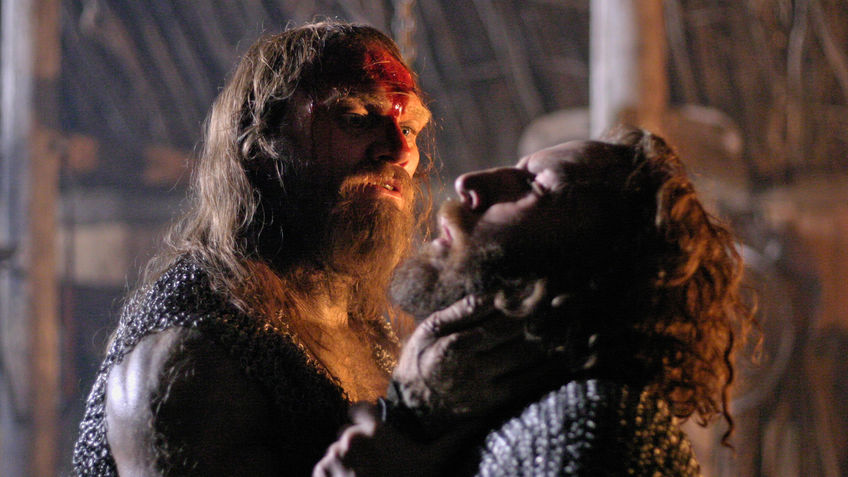
Grendel killing Hondscio in Sturla Gunnarsson’s ‘Beowulf & Grendel’ (2005)

Similarly, when Grendel approaches from the shadows, Beowulf is described as bolgenmod โ€œswollen-mindedโ€ and angrily awaiting battle (709); however, once the monster arrives at the hall, Grendel becomes gebolgen โ€œswollen (with rage)โ€ as he enters the hall ready to glut himself upon the men sleeping inside (723). This parallel description interweaves the respective emotions and behaviors of both hero and monster in Beowulf.

The interplay between hero and monster continues when Beowulf and Grendel struggle together, both called reรพe renweardas โ€œferocious hall-guardians (770) and heaรฐodeore โ€œbattle-brave onesโ€ (772) during their epic battle that nearly destroys the hall. The fusion of hero and monster together into a shared plural subject and object respectively helps to underscore their mutual affinity: the hall must contend against the fury of both warriors and each is a fearsomeโ€”yet overconfidentโ€”conqueror, who intends to overcome any enemy he encounters.
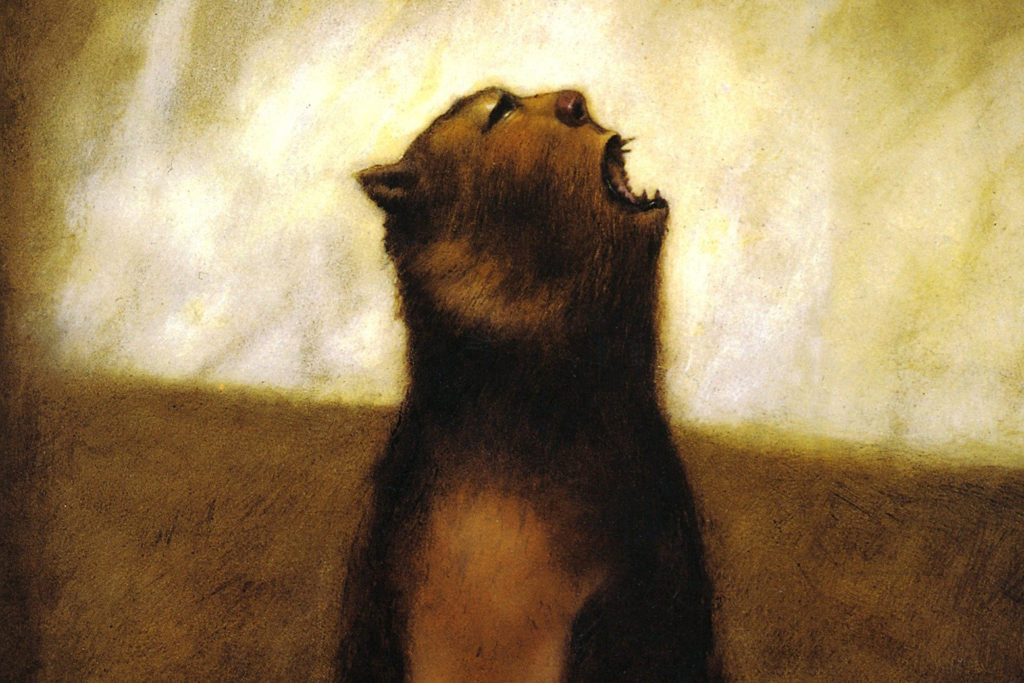
Grendel from the cover of John Gardner’s novel, ‘Grendel’ (1980).

We know that this is Grendelโ€™s final chance to haunt the hall, and the monster is at least able to feast on one last human, this time a Geat and one of Beowulfโ€™s own warriors (Hondscio). Sadly for Grendel, once Beowulf finally decides to enter the fray, and after a relatively brief struggle, the monster is fatally disarmed and retreats to die at home in the marshes.

Naturally, vengeance follows. Unfortunately for the Danes, and especially Hroรฐgarโ€™s best thane ร†schere, the audience soon learns that Grendel has a mommy, and anyone who messes with her baby boy, will have to answer to her.

Richard Fahey
PhD in English
University of Notre Dame

Further Reading:

Brodeur, Arthur G. The Art of Beowulf. Berkeley, CA: University of California Press, 1959.

Fahey, Richard. โ€œMedieval Trolls: Monsters from Scandinavian Myth and Legend.โ€ Medieval Studies Research Blog. Medieval Institute: University of Notre Dame (March 20, 2020).

โ€”. “Enigmatic Design & Psychomachic Monstrosity in Beowulf.” University of Notre Dame: Dissertation, 2020.

โ€”. โ€œMearcstapan: Monsters Across the Border.โ€ Medieval Studies Research Blog. Medieval Institute: University of Notre Dame (July 20, 2018).

Gwara, Scott. Heroic Identity in the World of Beowulf. Leiden, Netherlands: Brill, 2009.

Johansen, J. G. โ€œGrendel the Brave? Beowulf, Line 834.โ€ English Studies 63 (1982): 193-97.

Joy, Eileen, Mary K. Ramsey, and Bruce D. Gilchrist, editors. The Postmodern Beowulf: A Critical Casebook. Morgantown, WV: West Virginia University Press, 2006.

Kim, Dorothy. “The Question of Race in Beowulf.” JSTOR Daily (September 25, 2019).

Kรถberl, Johann. The Indeterminacy of Beowulf. Lanham, MD: University of America Press, 2002.

Lapidge, Michael. โ€œBeowulf and the Psychology of Terror.โ€ In Heroic Poetry in the Anglo-Saxon Period: Studies in Honor of Jess B. Bessinger, edited by Helen Damico and John Leyerle, Studies in Medieval Culture 32, 373-402. Kalamazoo, MI: Medieval Institute Publications, Western Michigan University, 1993.

Oโ€™Brien Oโ€™Keeffe, Katherine. โ€œBeowulf, Lines 702b-836: Transformations and the Limits of the Human.โ€ Texas Studies in Literature and Language 23.4 (1981): 484-94.

Orchard, Andy. Pride and Prodigies: Studies in the Monsters of the Beowulf-Manuscript. Toronto, ON: University of Toronto Press, 1995.

Sharma, Manish. โ€œMetalepsis and Monstrosity: The Boundaries of Narrative in Beowulf.โ€ Studies in Philology 102 (2005): 247-79.

Ringler, Richard N. โ€œHim Sฤ“o Wฤ“n Gelฤ“ah: The Design for Irony in Grendelโ€™s Last Visit to Heorot.โ€ Speculum 41.1 (1966): 49-67.


[1] Michael Lapidge, โ€œBeowulf and the Psychology of Terror,โ€ 373-402.

[2] Katherine Oโ€™Brien Oโ€™Keeffe, โ€œTransformations and the Limits of the Human,โ€ 492.

[3] Andy Orchard raises the possibility of polysemy in synscaรฐa, see Pride and Prodigies, 38.

[4] Orchard also raises the possibility of polysemy in manscaรฐa, see Pride and Prodigies, 31.

Monstrous Ethiopians? Racial Attitudes and Exoticism in the Old English ‘Wonders of the East’

The flare of recent racial tensions, especially in the wake of the Trump administrationโ€™s xenophobic rhetoric, has had repercussions in Charlottesville and across the United States. White nationalist organizations, such as the Alt-Right, have become the face of this hatred and have renewed national concern about the nature of race relations and prejudices in the United States. And of course, the internet has opened new windows and doors into impressionable minds and offered these groups new ways to the spread their toxic rhetoric.

As medievalists it is especially important that we do our part to counter the way in which White supremacist organizations, who have historically appropriated medieval literature into their rhetoric of hatred. It falls especially to Anglo-Saxonists, who have historically been caught in an unfortunate web of association with White Supremacist rhetoric, to explicitly set the record straight and to offer alternative models of medieval thinking about race and ethnicity. The fact is that 20th century Anglo-Saxonist scholarship has intellectually contributedโ€”even helped to createโ€”the romantic idea of the โ€˜Germanic heroโ€™ (whether in the paragons of Beowulf or Siegfried), and without the work of literary and linguistic scholars of Germanic philology, Hitlerโ€™s Nazi rhetoric regarding the racial superiority of an imaged โ€˜Aryan raceโ€™ may not have been possible or at the very least may not have had the same type of intellectual traction.

Moreover, the persistent assumption that medieval people in Europe were necessarily racist, and that they collectively held attitudes of racial superiority congruent with modern White supremacist groups, is both dangerous and non-factual. This assumption contributes to the narrative that ethnic Europeans always considered themselves to be somehow cultural better than their neighbors to the south and east. With all this in mind, I wish to return to the sourcesโ€”to a medieval text from Anglo-Saxon Englandโ€”in order to reflect on racial attitudes and prejudices in so far as the text presents them. My discussion will center primarily the Old English The Wonders of the East, an Anglo-Saxon translation of the Latin De rebus in Oriente mirabilbus, which catalogues wondrous places, peoples and creatures from far way lands, generally somewhere in Africa or Asia.

Scholars Susan M. Kim and Asa Mittman have argued that Anglo-Saxon audiences would have likely considered the wonders described in the texts as truly existing and point out that, โ€œthe very status of the Wonders as wonders implies at once the stretching of possibility, and an insistence on the viability of the same possibility, at once the incredibility and the truth of the narrativeโ€ (1), leading to the conclusion that โ€œthe Anglo-Saxon readers and viewers of these texts probably considered them trueโ€ (2). The British Library agrees and states in their blog, describing the monsters illustrated in theย Wonders: โ€œbelief in the existence of monstrous races of human beings was central to medieval thinking, although almost everything about them was open to debate and discussion.โ€

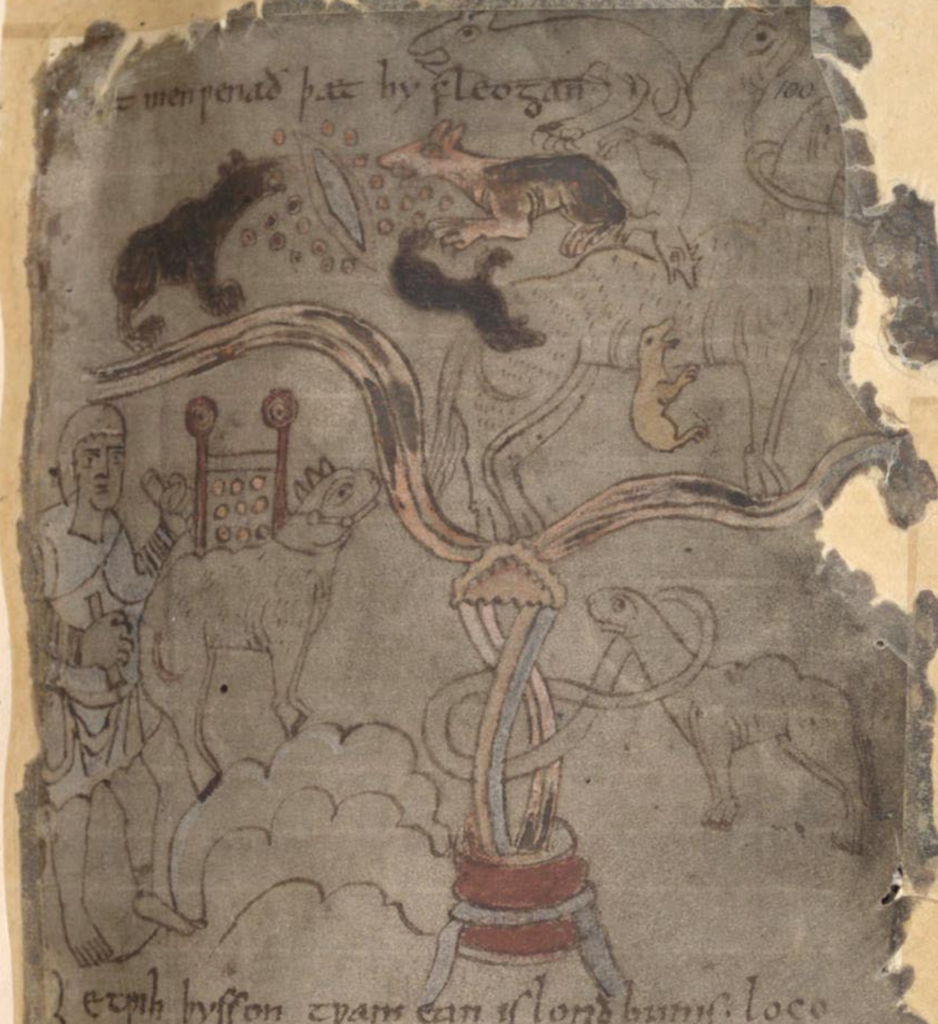
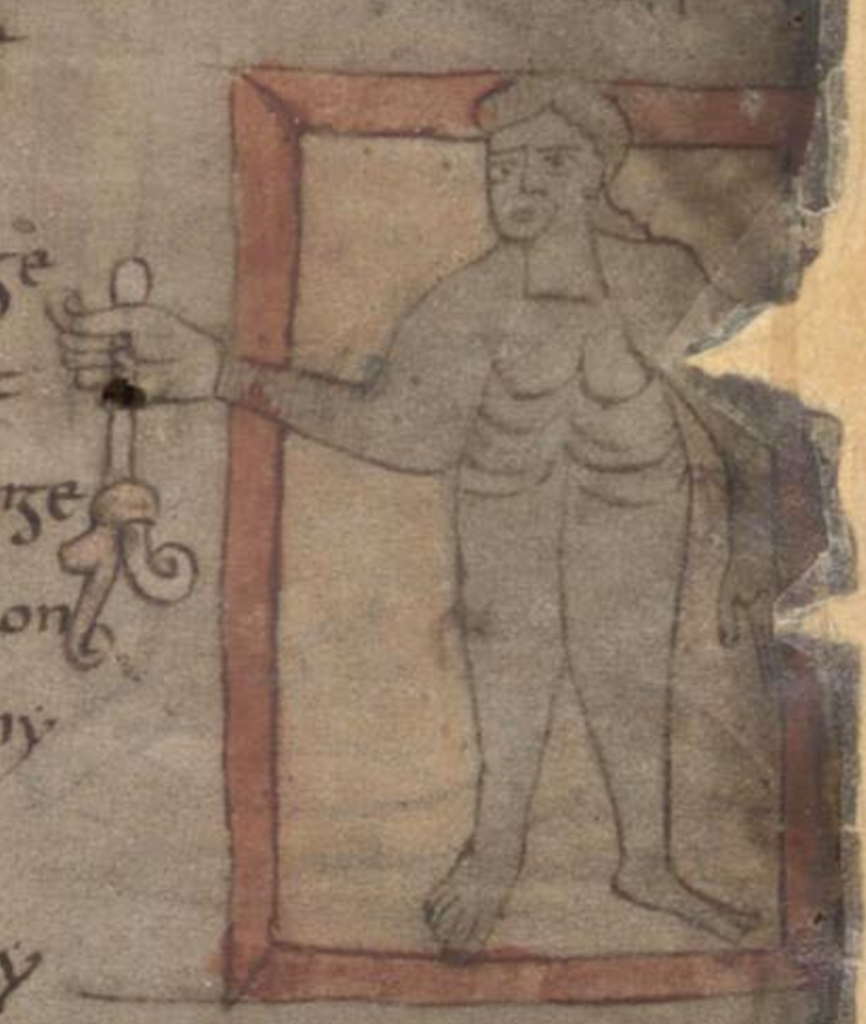
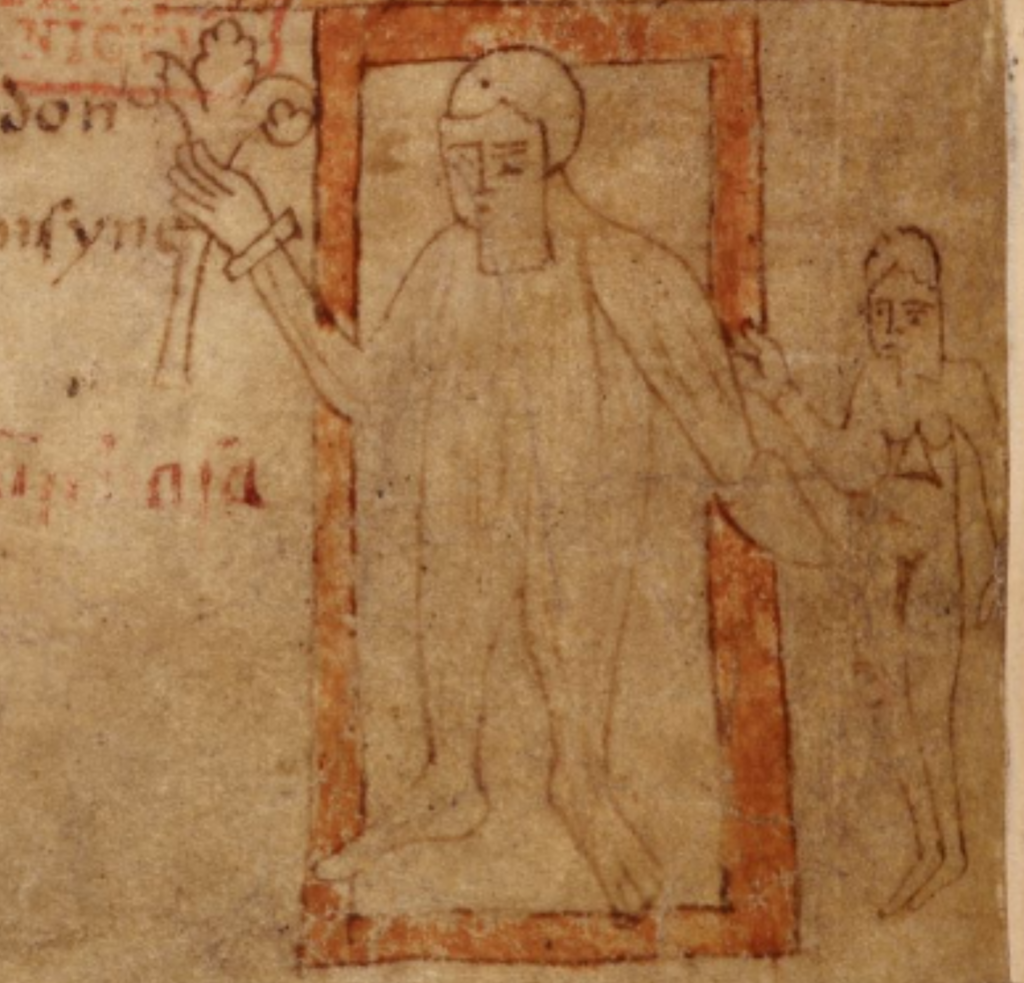
Marvels depicted in the Old English ‘Wonders of the East,’ BL Cotton Vitellius a.xv, f. 101r.

The Liber Monstrorum, a Latin text similarly interested in monsters and wonders and which Michael Lapidge has argued was composed in Anglo-Saxon England, presents his marvels with more skepticism. Its opening disclaimer casts serious doubt regarding the veracity of many of the marvels described and offers an alternative perspective noting that quaedam tantum in ipsis mirabilibus uera esse creduntur “only certain things in the wonders are believed to be true” and that most may in fact beย rumoroso sermone tamen fictaย “nevertheless rumor by false speech.”

But, what about when one encounters a โ€˜wonderโ€™ in a medieval text which (however distortedly) attempts to discuss a group of people or species of animal, which does exist in places far from Europe? What does it say about racial attitudes in Anglo-Saxon England if an ethnic groupโ€”such as Ethiopiansโ€”is included in a catalogue of monsters? How might we read this?

Before we get to the passage describing the sigelwaraย โ€˜Ethiopians,โ€™ letโ€™s begin by briefly discussing the text as a whole and some of the other wonders in the collection. The Old English Wonders is found in two manuscripts, (BL, Cotton Tiberius b.v and BL, Cotton Vitellius a.xvโ€”often called the Nowell Codex or simply the Beowulf-manuscript). One of the monstrous people included in theย text is the blemmyae, known explicitly from the Latin source text but left unnamed in the Old English Wonders. What makes these people wondrous is their unusual physical appearance. It is said of these people:

The blemmyae depicted in the Old English ‘Wonders of the East,’ BL, Cotton Vitellius a.xv, f. 102v.

Old English Prose Modern English Translation
รžonne syndon oรพre ealond suรฐ from Brixonte, on รพon beoรฐ men acende buton heafdum, รพa habbaรฐ on hyra breostum heora eagan ond muรฐ. Hy seondon eahta fota lange ond eahta fota brade. รar beoรฐ dracan cende รพa beoรฐ on lenge hundteontige fot-mรฆl longe and fiftiges; hy beoรฐ greate swa stรฆnene sweras micle. For รพara dracaena micelnesse ne mรฆg nan man na yรพelice on รพรฆt land gefaran. Then there is another island, south of the Brixontes, on which there are born men without heads who have their eyes and mouth in their chests. They are eight feet tall and eight feet wide. There are dragons born there which are one hundred and fifty feet in length, and are as thick as great stone pillars. Because of the abundance of the dragons, no one can journey easily in that land.

The blemmyae are pretty unbelievable by modern standards, and today we would recognize such creatures as a fiction or fabrication derived more likely from the imagination than from experience. Emphasis is on the peculiar placement of his face and his enormous size, which is followed up by the corresponding reference to the enormous dragons also found in the wondrous domain of the blemmyae.

Physical description is front and center in the description of the panotii, another unnamed people known from the Latin source text. The panotii are described as follows:

The panotii depicted in Old English ‘Wonders of the East,’ BL, Cotton Vitellius a.xv, f. 104r.

Old English Prose Modern English Translation
รžonne is east รพรฆr beoรฐ men acende รพa beoรฐ on wรฆstme fiftyne fota lange ond x on brade. Hy habbaรฐ micel heafod ond earan swรฆ fon. Oรพer eare hy him on niht underbredaรฐ, ond mid oรพran hy wreoรฐ him. Beoรฐ รพa earan swiรฐe leohte ond hy beoรฐ swa on lic-homan swa white swa meolc. Gyf hy hwilcne mannan on รพรฆm lande geseoรฐ oรฐรพe ongytaรฐ, รพonne nymaรฐ hy hyra earan him on hand ond fleoรฐ swiรฐe, swa hrรฆdlece swa is wen รพรฆt hy fleogen. Going east from there is a place where people are born who are in size fifteen feet tall and ten broad. They have large heads and ears like fans. They spread one ear beneath them at night, and they wrap themselves with the other. Their ears are very light and their bodies are as white as milk. And if they see or perceive someone in their lands, they take their ears in their hands and flee far, so quickly that the belief is that they flew.

These wondrous people are likewise described as monstrous in size and are identified by their unusual facial features, namely large heads and fan-shaped ears. They are described also as having milky white bodies, and so here reference to skin color is one of the ways in which the text physically depicts and characterizes the racialized panotii. The passage goes on to describe their peculiar sleeping habits and speedy flight whenever they sense anyone in their territory.

Another group of people, described in the Wonders as hostes, Latin for โ€˜enemies,โ€™ are also described firstly by their physical featuresโ€”in this case their huge size and dark skinโ€”and only after is the reference to their cannibalism.

The hostes depicted in the Old English ‘Wonders of the East,’ BL Cotton Vitellius a.xv, f. 102r.

Old English Prose Modern English Translation
Begeondan Brixonte รฐรฆre ea, east รพonon beoรฐ men acende lange ond micle, รพa habbaรฐ fet ond sconcan xiifota lange, sidan mid breostum seofan fota lange. Hi beoรฐ sweartes hiwes, ond Hostes hy synd nemned. Cuรพlice swa hwlycne man swa hi lรฆccaรฐ, รพonne fretaรฐ hi hyne. Beyond the River Brixontes, east from there, there are people born big and tall, who have feet and shanks twelve feet long, flanks with chests seven feet long. They are of dark color, and are called Hostes. As surely as they catch someone they devour him.

In this passage, we are told of a people who are to a certain extent characterized by skin color, and so the racial element has now come into playโ€”even violent racialization. In this example, we have reference to a group of dark-skinned cannibals. Still, it seems that, at least according the Wonders, the monstrous hostes are to be feared not because of their “race” or the color of their skin, but rather on account of their potentially life-threatening behavior. Nevertheless, this is a clear racialization and monsterization of the gigantic Hostes.

Another reference to dark-skinned people in the Wonders describes a group who live upon a marvelous mountain:

Old English Prose Modern English Translation
รonne is oรฐer dun รพรฆr syndon swearte menn, ond nรฆnig oรฐer man to รฐam mannum geferan mag forรฐam รพe seo dun byรฐ eall byrnende. Then there is another mountain where there are dark people, and no one else can travel to those people because the mountain is everywhere burning.

Here what seems wondrous is the mountain, described as โ€˜everywhere burningโ€™ and possibly the fact that these people are able to live in such an inhospitable environment. While this is certainly a racialization of these peoples, I would suggest that what is being most marveled at is the mountain and the way it protects these inhabitants, and perhaps least of all that these people are described as swearteโ€”โ€˜swarthyโ€™ or โ€˜darkโ€™ in Old English.

Which brings us, at long last, to the passage on sigelwara or โ€˜Ethiopiansโ€™ in the Wonders, which begins not with reference to these people, but rather to the nearby marvelous trees, on which gemstones are said to grow.

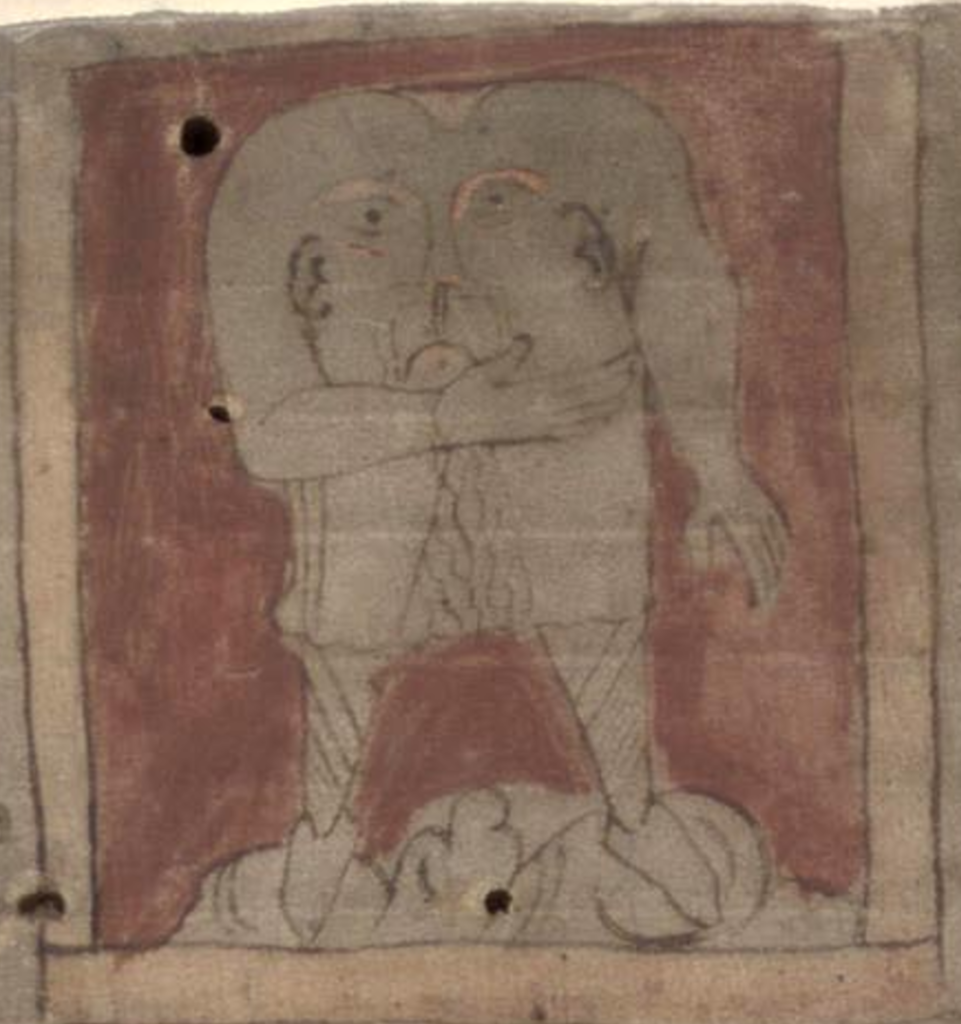
The sigelwara depicted in the Old English ‘Wonders of the East,’ BL Cotton Vitellius a.xv, 106v.

Old English Prose Modern English Translation
รonne is treowcyn on รพรฆm รพa deorwyrรพystan stanas synd of acende, รพonon hy growaรฐ. รžรฆr รพa moncyn is seondan sweartes hyiwes on onsyne, รพa mon hateรฐ sigelwara. Then, there is a kind of tree, which grows there, on which the most precious stones sprout. There is also a group of people there of dark color in appearance, who are called Ethiopians (sigelwara).

Indeed it is the jewel-producing trees, which are the true wonder in this section, and the reference to the sigelwara appears as something of an afterthought, though they are characterized entirely based on their skin color, and therefore highly racialized. This physical feature is mentioned before the text promptly transitions to the next wonder in the collection.

Nevertheless, the Old English Wonders refers to Ethiopians in its list of marvels, and I would argue the text is most guilty of exoticism as it reflects a sense of wonder about different groups of people without any reference to respective racial superiority or inferiority. That these people were from a far away place and are described as visually different seems only to heighten the interest and intrigue. In other words, the Ethiopians are a wondrous people.

It is true that with the Wonders, we have a text that racializes and characterizes groups of people based on their physical characteristics, and so the text isโ€”or at least can be read asโ€”racist in this sense. However, it is important to note that white-skinned people are just as wondrous (or monstrous) as dark-skinned people in the text, primarily made marvelous by their status as strange, foreign and other. The Wonders demonstrates medieval fascination with the exotic and the marvelous, and the spatial orientation of the text may even reflect a desire to be elsewhere. Indeed, certainly in Anglo-Saxon England as with most of medieval Europe, people considered themselves to be living in something of a cultural backwater, and places to the south and east (whether cities such as Rome, Constantinople, Baghdad, or regions such as Ethiopia or India) were considered culturally superior in that they were places full of knowledge and wonders.

While the Old English Wonders of the East should by no means be taken as a representative of all medieval people’s perception or interest in exotic wonders (as no single text could), it nevertheless tells a somewhat different story about racial attitudes in Anglo-Saxon England than the narratives pushed by modern Neo-Nazi and White Supremacist groups, who we all know are the real monsters.

Richard Fahey
PhD Candidate
Department of English
University of Notre Dame


Works Cited:

British Library’s “Monsters and Marvels in the Beowulf Manuscript” (2013).

Fulk, R. D. The Beowulf Manuscript. Dumbarton Oaks, 2010: 16-31.

Kim, Susan M. and Asa Mittman. “Ungefrรฆgelicu deor: Truth and the Wonders of the East.”ย Different Visions: A Journal of New Perspectives on Medieval Artย 2 (2010): 1-22.ย 

Mittman, Asa Simon. ‘Are the ‘monstrous races’ races?’ย Postmedievalย 6:1 (2015):ย ย 36-51.

Orchard, Andy. Pride and Prodigies: Studies in the Monsters of the Beowulf Manuscript. 1995.

MANSCRIPT SHELFMARKS:

London, British Library, Cotton Tiberius b.v fols.78v-87r.

London, British Library, Cotton Vitellius a.xv fols.98v-106.