Greco-Latin Polemic and the Problem of the Single Immersion Baptism

Of the many issues that rose to the fore in the course of the conflicts between the Latin and Greek churches during the Middle Ages, one of the most consistent, and to me, surprising, was the repeated accusation that the Greeks rebaptized Latin Christians when they, for whatever reason, wished to switch their ritual use (what we would now understand as a “conversion” between different denominations). Although the veracity of these claims has been debated, I think, as I have written elsewhere, that there is good reason to believe that the Greeks really did rebaptize Latins. Complaints about the practice began in the mid-11th century with Cardinal Humbert of Silva Candida, who was elsewhere highly accurate in his claims about liturgical practice, and continue well into the 13th century, including an honorable mention in the canons of the Fourth Lateran Council under Pope Innocent III.

What is less clear, though, is why the Greeks were so keen to rebaptize their Latin cousins. It is tempting to see rebaptism as symptomatic of more ethereal theological topics, in which the perceived differences between the two churches was sufficiently great that the Greek clergy (or at least a subset of them) felt the need to mark the reception of these “converts” from heresy by means of the administration of the sacrament. Certainly this understanding had precedent: as early as 325, the canons of the First Council of Nicaea mandated the reception of Paulianists, who were nontrinitarians, by means of baptism. But I think that this understanding is a mistake with reference to the Latin/Greek conflict. Especially in its earlier phase, in the 11th century, there was no general sense of lasting division: the Greeks generally viewed the Latins as wayward brethren to be corrected, not as heretics utterly outside of the Church, and therefore rebaptism can’t be understood as a requirement resulting from serious deficiencies in the faith on the scale of nontrinitarianism.

Rather, I think that these rebaptisms were because of perceived ritual deficiencies in the Latin rite of baptism, and particularly, in the idea that the Latins were prone to using a single immersion when administering the sacrament. And when looking at this possibility we find a much greater incidence of Latin complaint and Greek explanation. Shortly after Cardinal Humbert complained about rebaptisms, Michael Cerularius, the Patriarch of Constantinople, wrote to Peter, the Patriarch of Antioch, that the Latins performed baptism with a single immersion [1]. The two centuries that followed saw repetitions of both: Odo of Deuil, Leo Tuscus, an anonymous Dominican author writing from Constantinople in the mid-13th century, and Jerome of Ascoli (i.e., Pope Nicholas IV) all noted that Latin Christians were being rebaptized. The “Byzantine Lists”, a genre of polemic that enumerated liturgical and cultural “errors” committed by the Latins, again and again returned to the notion that the baptism of the Latin rite was performed through a single immersion [2]. In doing so, the authors of these lists were implicitly invoking another of the canons of the early church, this time from the so-called Apostolic Canons (no. 50): “If any Bishop or Priest does not perform three immersions in making one baptism, but only a single immersion […], let him be deposed” [3]

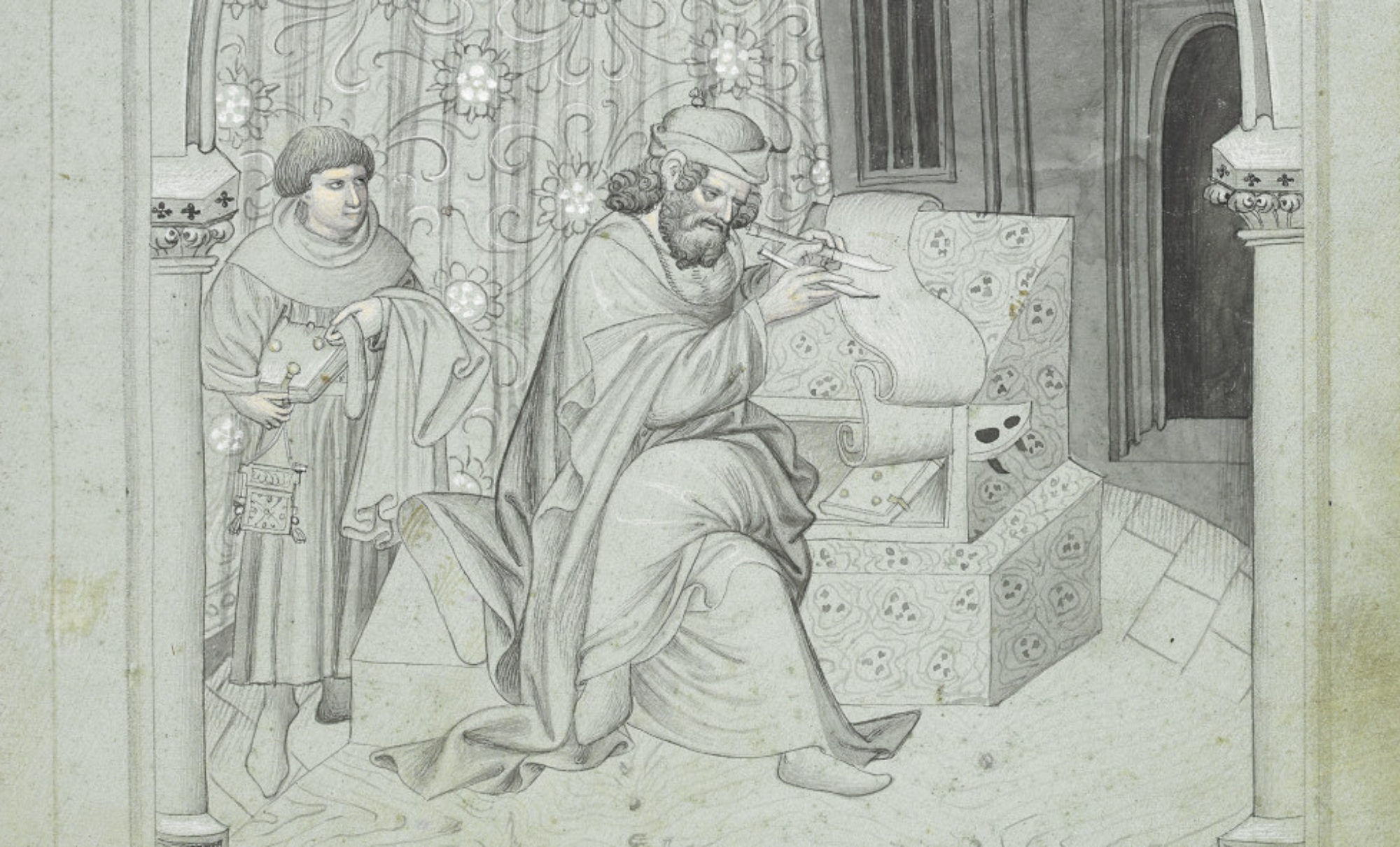
Assuming that my conclusion is correct, that Greeks rebaptized Latins with some degree of frequency because they believed their form of the sacrament to be ritually defective, the question that next arises is how the Greeks came to hold that belief. Prior to the widespread adoption of affusion or aspersion in the Latin West, the form of baptism appears to have been similar to that of the Greek East: a full triune immersion, done together with the invocation of the persons of the Trinity. We see this clearly referenced as late as the early 13th century, when Pope Innocent III, writing to the Maronite Church, instructs them to invoke the Trinity only once “while completing a triple immersion” [4]. The great exception to the standard Latin practice was the famous license given by Pope Gregory the Great to the church in Spain to baptize with a single immersion as a way to signify the oneness of the Trinity and thereby to combat Arianism. This practice was further codified by the 633 Council of Toledo and its existence confirmed in the works of Isidore of Seville and Ildefonsus of Toledo [5]. The practice is referenced twice more, toward the end of the eighth century, in the letters of Alcuin of York, who acknowledged that the practice existed in certain parts of Spain only long enough to condemn the people who baptize in this way as “neglecting to imitate, in baptism, the three-day burial of our Savior” [6]. They maintain this custom, according to Alcuin, “contrary to the universal custom of the holy Church” making Spain the “wet-nurse of schismatics” [7].

Gregory the Great, the source of the conflict? Antiphonary of Hartker of the monastery of Saint Gall (Cod. Sang. 390, 13 (paginated). Creative Common licensing.

Returning, then, to the polemics of the Greeks, is it possible that their complaints about a Latin single-immersion baptism stemmed from the Spanish practice? I see no other possible cause, although this feels unsatisfactory as an explanation. At most, the single-immersion baptism was a regionalism confined to the Iberia, and the opposition of Alcuin, the great champion of Romanization in the West, makes it unlikely that it would ever have spread further than its native peninsula. Indeed, the gradual imposition of the Roman rite throughout the Christian West likely reduced the frequency of single-immersion baptisms within Spain itself in the centuries following the initial permission of Pope Gregory. If the practice survived at all by the mid-11th century, when Cardinal Humbert and Patriarch Michael wrote their respective complaints – and I haven’t found any evidence from that time for or against – it would probably have been a very rare indeed for someone baptized “incorrectly” to have been found in Constantinople.

Pending further evidence, then, we are left with the Greeks reacting at most to an improbability, and more likely to outdated information. While I fully acknowledge that it’s no more than supposition on my part, my best guess is that the works either of Gregory the Great or of Isidore of Seville (or of both, or of someone else entirely) were received in the theological circles of 11th-century Constantinople, leaving the mistaken impression that the practice of single immersion baptism was common in the West. From there, the notion that the Latins performed this sacrament incorrectly, along with most of the others, proved hard to dislodge.

Nick Kamas
PhD in Medieval Studies
University of Notre Dame

  1.  Cornelius Will, ed., Acta et Scripta quae de controversiis ecclesiae graecae et latinae saeculo undecimo composita extant (Leipzig: N. G. Elwert, 1861), 153 (Humbert) and 182 (Michael).
  2. Tia M. Kolbaba, The Byzantine Lists: Errors of the Latins (Urbana and Chicago, University of Illinois Press, 2000), 192.
  3. The Rudder, trans. Ralph Masterjohn (West Brookfield, Massachusetts: The Orthodox Christian Educational Society, 2005), 179.
  4. “in trina immersione unica tantum fiat invocatio Trinitatis”. No. 216. Acta Innocentii III, ed. P. Theodosius Haluščynskyj (Vatican, Typis Polyglottis, 1944), 458.
  5. J.D.C. Fisher, Christian Initiation, Baptism in the Medieval West (London: S.P.C.K., 1965), 91.
  6. “triduanamque nostri salvatoris sepulturam in baptismo imitari neglegentes”. Ep. 139. Ed. Ernest Duemmler, MGH Epp. 4 (Berlin: Weidmannos, 1895), 221.
  7.  “[…] Hispania – quae olim tyrannorum nutrix fuit, nun vero scismaticorum – contra universalem sanctae ecclesiae consuetudinem […].” “Adfirmant enim quidam sub invocatione sanctae Trinitatis unam esse mersionem agendam.” Ep. 137. Ibid., 212.

Eastern Liturgical Rite(s) under Pope Innocent III

The Roman Pontiffs, over the course of the second half of the Middle Ages, were not noteworthy for their enthusiasm for the liturgical rites of the Eastern Christian Churches. In few cases was this made clearer than in the aftermath of the Fourth Crusade, an especially distasteful moment of intra-Christian violence that left the Latin crusaders, originally destined for the Holy Land, instead governing the capital city of the Eastern Roman Empire. Although he initially decried the violence, Innocent III, then the Pope of Rome, quickly attempted to eradicate some of the liturgical differences that had plagued relations between the Roman and Constantinopolitan Churches for the previous century and a half, ever since the ill-fated trip of Cardinal Humbert and his co-legates to Constantinople in 1054. Among other changes, all new bishops, whether Greek or Latin, were to be consecrated according to the Roman rite, Latin clergy were to be appointed to those churches that had been abandoned by Greek priests fleeing the crusaders, and those Greek clergy who remained were to be encouraged to switch to the Latin rite for the celebration of the Eucharist [1]. Although he was not privy to the election of Thomas Morosini as the (Latin) Patriarch of Constantinople in the wake of the city’s conquest, he quickly confirmed him in his office and clarified that he would have the traditional jurisdictional authority of the Constantinopolitan See [2]. All of this transpired prior to the Fourth Lateran Council in 1215, with its famous canon dealing with “the pride of the Greeks against the Latins.”

Pope Innocent III, from the Monastery of Sacro Speco of Saint Benedict – Subiaco (Rome).

Creative Commons CC0 1.0 Universal Public Domain Dedication.

This policy, in fact, marked a sharp deviation from Innocent’s prior treatment of the Greek rite. Too easily forgotten is the fact that the Greeks had a substantial presence in much of the Italian peninsula (and to this day there exists in Italy a few thousand people who speak Griko, essentially a dialect of medieval Greek). Alongside this substantial Greek population were Greek-rite monastic establishments and a number of dioceses served by Greek prelates, all of which were under the ultimate jurisdiction of the See of Rome. Innocent III, in his dealings with these communities prior to the Fourth Crusade, was noticeably less aggressive, balancing his apparent preference for the Latinization of ordination rites with a policy of non-interference on the matter of clerical marriage and active support for Basilian monasteries under his jurisdiction [3].

It has been popular with some modern commentators, Joseph Gill being perhaps the foremost example, while admitting that Innocent III had a distinct preference for the Latin rite, to argue that he was primarily concerned with enforcing (Latin) canon law. In this reading, the chief concern of the papacy was the allegiance of the Eastern clerics; once that had been secured, the secondary priority was to extirpate practices that were actively contrary to the law of the Roman church while at the same time tolerating, to a greater or lesser degree, ritual aspects that didn’t interfere with canonical norms [4].

To see whether this was in fact the case, helpfully, there are two other points of comparison. The activity of the crusaders in the Levant occasioned a resumption of active communication and communion between the Papacy and the Maronite Church. As part of this exchange, Innocent III issued a papal bull in January of 1215 in which he formally accepted the Maronite Church and confirmed several of its privileges. At the same time, though, he demanded certain changes: the Maronite Church must maintain the truth of the filioque, that only a single invocation of the Trinity be made during the rite of baptism, that the sacrament of Chrismation/Confirmation be done only by a bishop, and that the bishops wear vestments according to the Roman use [5]. In Bulgaria, facing a tsar and a primate eager to secure legitimacy for their positions and the autocephaly of the Bulgarian church, the subordination to Rome likewise came with a demand. As in Constantinople following the Latin conquest and in some of the Greek communities in the south of the Italian peninsula, the Roman rite was to be used for the ordination of priests and bishops [6].

These distinct differences in approach gives rise to the obvious questions: Did Pope Innocent III have a consistent stance toward the liturgical rites of the Christian East and, if so, what was it? Is it really fair to suggest that the pope was motivated first, by the question of allegiance, and second, to matters of ritual? Perhaps this was the case, but my sense is that the matters were more closely linked than many commentators assume. My suspicion is that, for Innocent, the willing submission of various Greeks, Bulgarians, and Lebanese to aspects of the Roman rite was itself the proof that they also accepted papal authority more broadly. I think that modern scholarship often fails to appreciate the intimate connection between practice and belief — lex orandi, lex credendi, after all — and that this is especially the case when it comes to the ritual differences that divided the churches of Rome and Constantinople. By requiring concrete changes in ritual practice, down to the style of vestments to be worn by the Maronite clergy, Innocent III caused these churches to give physical, tangible proof that they accepted the teaching, jurisdictional, and legal authority of the Apostolic See.

Nick Kamas
PhD in Medieval Studies
University of Notre Dame

  1. Summarized by Alfred Andrea, “Innocent III and the Byzantine Rite, 1198–1216,” in Urbs capta: La IVe croisade et ses conséquences, ed. Angeliki Laiou (Paris: Lethielleux, 2005), 118–120.
  2. Jean Richard, “The Establishment of the Latin Church in the Empire of Constantinople (1204–27,” in Latins and Greeks in the Eastern Mediterranean after 1204 (London: Routledge, 1989), 49.
  3. Andrea, “Innocent III,” 116–118.
  4. Joseph Gill, “Innocent III and the Greeks: Aggressor or Apostle?,” in Relations between East and West in the Middle Ages, ed. Derek Baker (Edinburgh: Edinburgh University Press, 1973), 103–105.
  5. No. 216, Acta Innocentii III, ed. P. Theodosius Haluščynskyj (Rome: Typis Polyglottis Vaticanis, 1944), 459–460.
  6. Andrea, “Innocent III,” 117. See also Francesco Dall’Aglio, “Innocent III and South-Eastern Europe: Orthodox, Heterodox, or Heretics?” Studia Ceranea 9 (2019), 20.

Ivo of Chartres, De nativitate

Following the liturgical calendar, the second installment in the festal homilies of Ivo of Chartres pertains to the celebration of the Nativity of Christ (De nativitate). For a short discussion of the context of this work, please see my previous post about his homily on Advent (De adventu Domini).

Emmanuel Tzanes, Christ Healing the Blind (1686). Public domain.

Stylistically, there are many similarities between Ivo’s homilies on Advent and on the Nativity. Perhaps most notable is the ongoing use of parallel structure. While a bit less noticeable than in the homily on Advent, Ivo regularly contrasts human and godly nature, the Mosaic and Christian laws, Eve and Mary, etc. Throughout, the focus in the text is the economy of salvation, that is, how the life of Christ has made possible the rewards of heaven and eternal life for his listeners.

Some passages in this homily merit further reflection. The first half of the text is dominated by a meditation on Christ as the Great Physician, based on the miracle of the healing of the man born blind in the Gospel of St. John (9:6) and further echoing, although never directly citing, a passage in the Gospel of Luke (5:31, “They that are whole, need not the physician: but they that are sick”). For Ivo, in a spiritual sense, Christ applies both homeopathic and heteropathic remedies. In order to confer health “through similar things” (“sanitatem contulit aegrotis per similia”), Christ endured and overcame the physical aspects of human life – birth, suffering, and death – in order that humanity might enjoy the spiritual counterparts of each – rebirth (in baptism), the avoidance of eternal torture, freedom from eternal death. Conversely, Christ the Physician also effected a cure through opposite means (“quibus contrariis contrarios morbos evacuaverit”): he granted freedom as a servant; he overcame pride through humility; he corrected our disobedience though his own obedience.

The second half of the text settles into a style of typological commentary very typical of Ivo’s other homilies, especially his liturgical commentaries, in which he contrasts the historical accounts in Genesis and the requirements of the Mosaic Law with their Christian and New Testament parallels. The sacrificial lamb of the original Passover is a forerunner of the true Lamb. Instead of doors being marked with the blood of the sacrifice, the foreheads of the faithful are marked with the sign of Christ’s sacrifice, i.e., the Cross. In place of the Old Testament priesthood, Christ himself is the priest who offers himself, since no other priest would be worthy to make such a sacrifice. In a similar way, Eve is contrasted with Mary: the curse of Eve, to bear children in pain, is revoked in the person of Christ’s mother, who received instead a blessing (“Benedicta tu in mulieribus”).

Ivo concludes with an emphasis on the incomplete knowledge of the divine afforded to us who are still making our pilgrimage, as it were, on earth, and exhorts us to be mindful of the salvific works of Christ as a means of easing the burden of the present life.