Why Fortify?ย  A Short Introduction to Four Byzantine Fortifications in the Maeander Valley

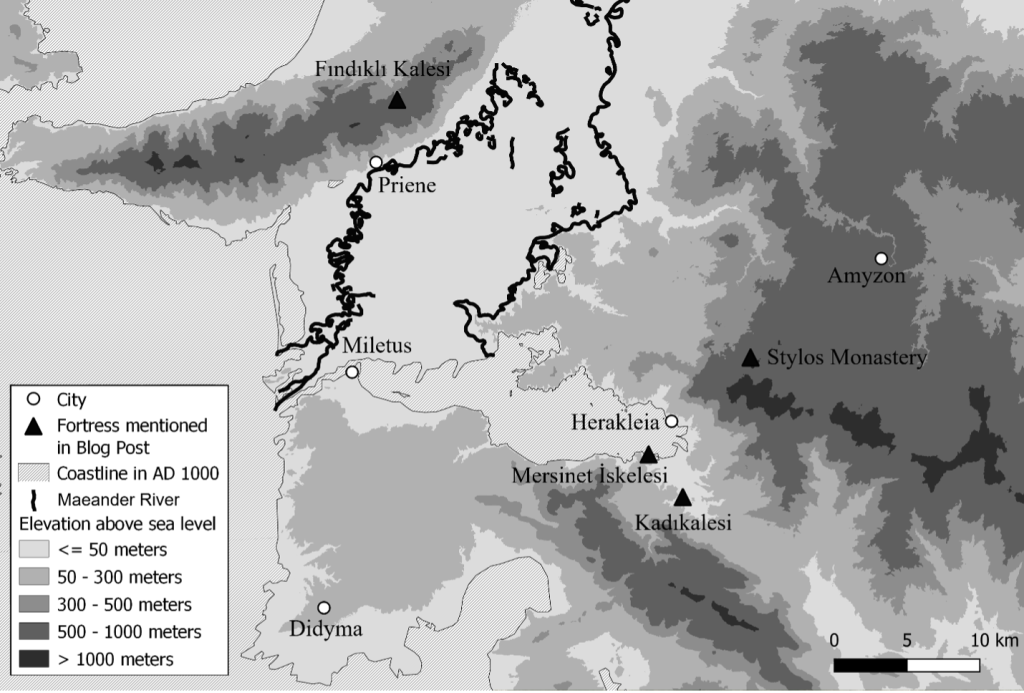
I chose these four fortresses as representations of the observable differences between Byzantine fortified sites.  Not all fortifications were made equal.  Differences lie not only in the choice of how walls and towers are constructed, but also in the placement of these fortified sites in the landscape.  Careful analysis of these features can reveal the underlying assumptions and motivations of the builders.  I have chosen among these four fortifications a military base, a refuge, a center for agricultural exploitation, and a fortified residence within the Maeander River valley.

The Locations of the Fortresses, made by author in QGIS.

Kadฤฑkalesi[1]

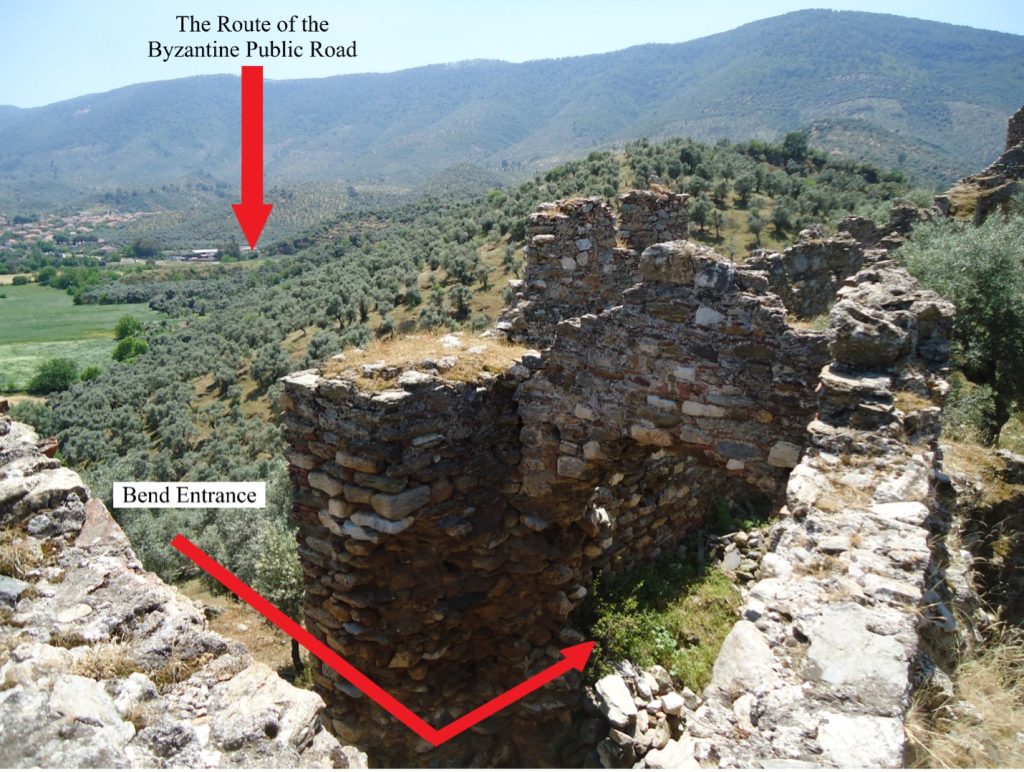
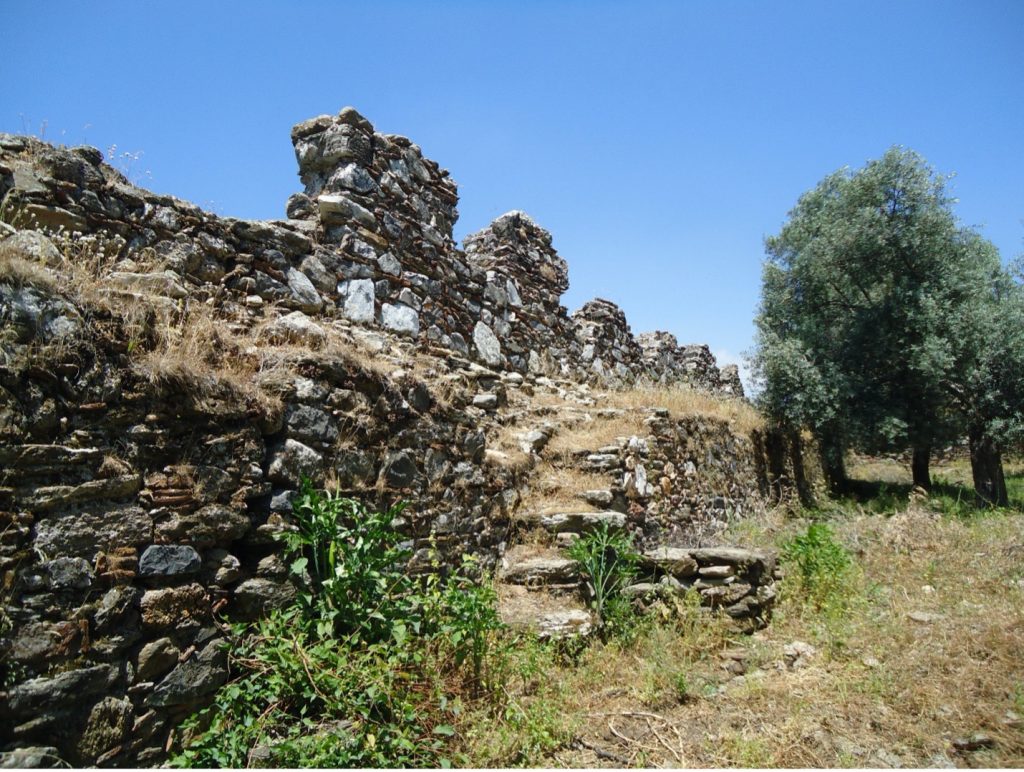
Kadฤฑkalesi is a great example of a military fortress likely built and used by the Byzantine armed forces.  The entrances, not just the main one but the two postern entrances too, had a bent gate, which denies an attacker a good view inside the fortress (see Figure 2).  The towers project from the walls and include a larger circular tower which is more resilient to projectiles than a square tower.  Throughout the entire circuit of walls, platforms known as battlements were built for soldiers to be able to view the landscape.  The walls were caped with crenulations, which provided coverage for those soldiers from fire from below (see Figure 3).  This fortress was found on a small hill above a road, about 50 meters above sea level.  On the one hand, this elevation gave the soldiers good visibility of the surrounding countryside, but, on the other, it was low enough that the soldiers could quickly do something about a threat (see Figure 2). 

The Bent Gate of Kadฤฑkalesi, photo by author.
The Battlements of Kadฤฑkalesi, photo by author.

Fฤฑndฤฑklฤฑ Kalesi[2]

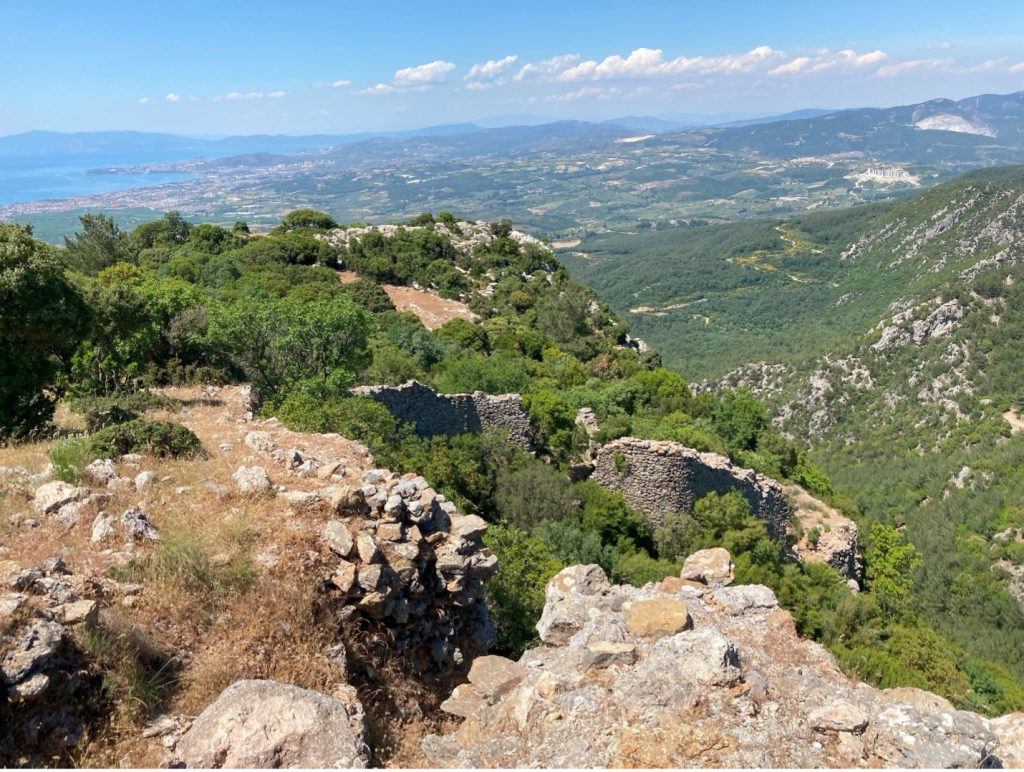
Fฤฑndฤฑklฤฑ Kalesi was a large fortress on the top of a mountain, enclosing an area of seven hectares at an elevation higher than 600 meters above sea level.ย  Like Kadฤฑkalesi, the walls were built with military concerns in mind; a series of towers and periodic battlements defend the portions of wall spanning the gaps between rocks, while a double gate fortifies the most vulnerable part of the fortress in the southeast.ย  The size of the fortress was partly determined by geology; the walls follow the edges of a massive rock outcropping.ย  Unlike Kadฤฑkalesi, however, the fortress was isolated from the Byzantine roads that cross the mountain and unable to serve in the policing of routes.ย  I agree with scholars who see Fฤฑndฤฑklฤฑ Kalesi as a refuge for times of invasion with only a small permanent peacetime population.[3] ย This was a fortress, not of lords or soldiers, but of farmers and shepherds, who needed its great size to house flocks of sheep and its isolated location to keep just far enough away from any potential raiders that this โ€˜bluff in stoneโ€™ may appear like a formidable military fortress.ย 

View North from Inside Fฤฑndฤฑklฤฑ Kalesi, photo by author.

Mersinet ฤฐskelesi[4]

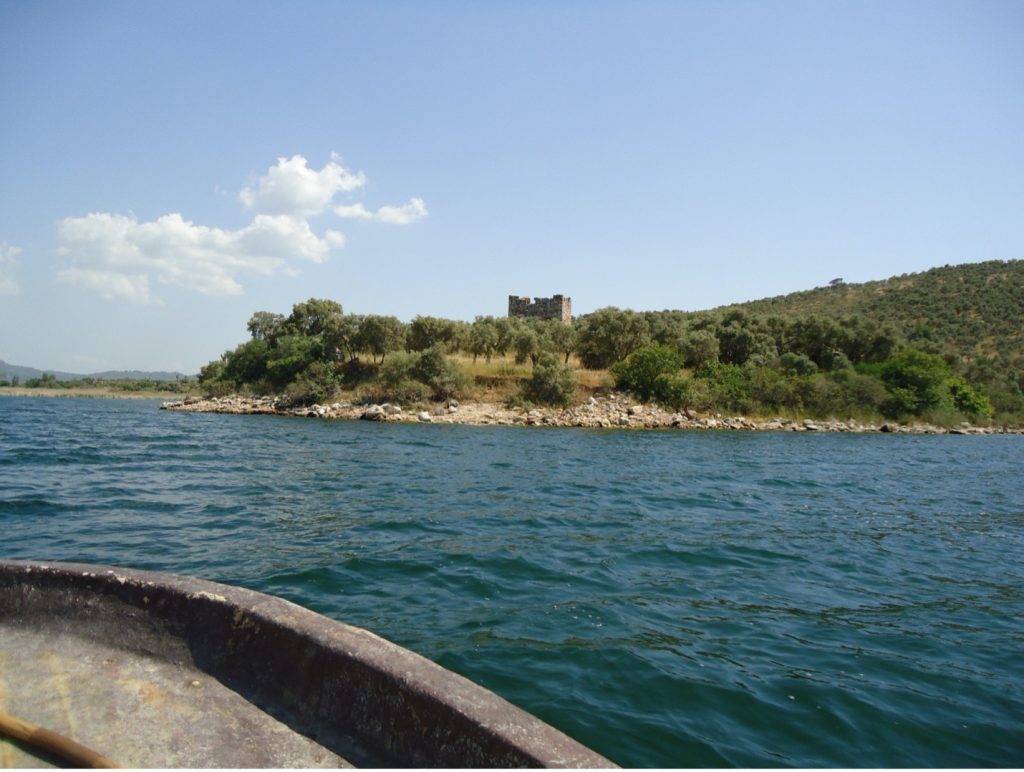
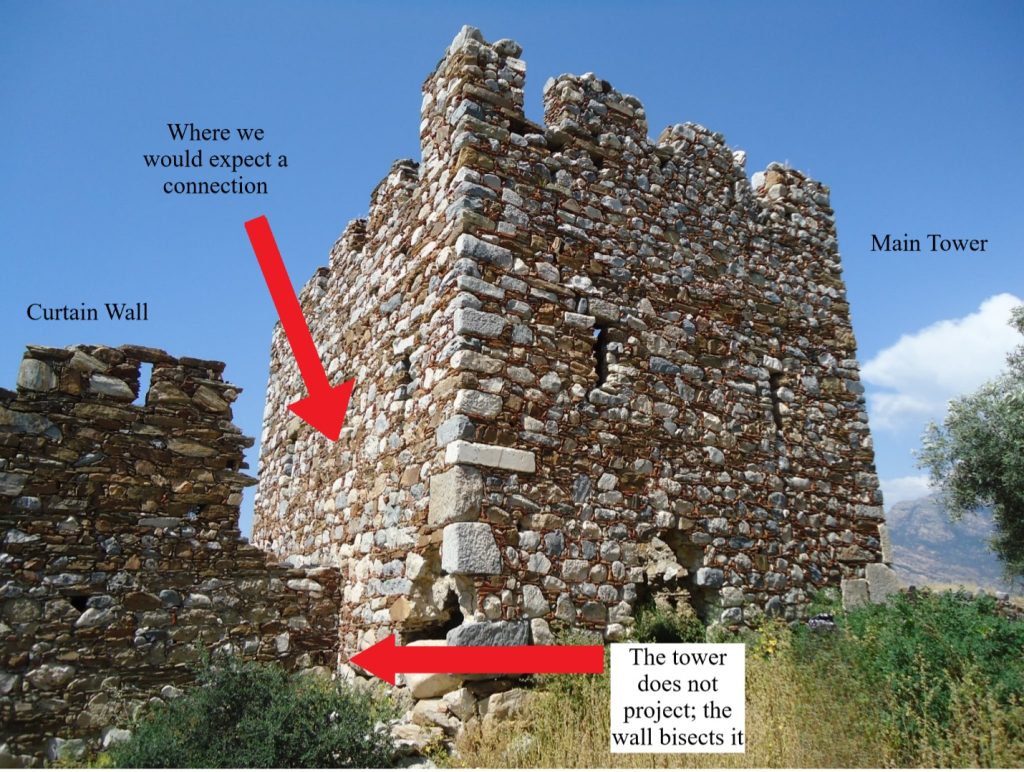
The impressive fortress found on the southern coast of Lake Bafa appears to be a military fort like Kadฤฑkalesi.  The use of blind arches to support the battlements even shows an improvement over the thick walls of Kadฤฑkalesi.  However, I argue that military effectiveness was not the main concern of this fortress.  The defining element of the fortress is a great tower bisected by the enceinte wall.  However, there is no communication between the walls and the tower; anyone stationed in the tower could not advance into the battlements in response to a threat.  Second, the tower does not protrude from the wall, which decreased its visibility and potential range of fire.  While Mersinet ฤฐskelesiโ€™s position does provide a good view of the eastern half of Lake Bafa, nearby hills could provide a better view.  Instead, this fortress has more in common with the isolated towers found around Lake Bafa and in the wider Maeander Valley.  Mersinet ฤฐskelesi is an isolated tower with an increased budget.  I suspect that this fortress and the other towers have something to do with the exploitation of agricultural estates as these towers lie at the edge of the most plentiful area of farmable land adjacent to Lake Bafa, even if this fortress is usually interpreted as a fortified monastery[5] or military base.[6] 

View of Tower of Mersinet ฤฐskelesi from Lake Bafa, photo by author.
Central Tower of Mersinet ฤฐskelesi from inside the Fortress, photo by author.

The Monastery of Stylos[7]

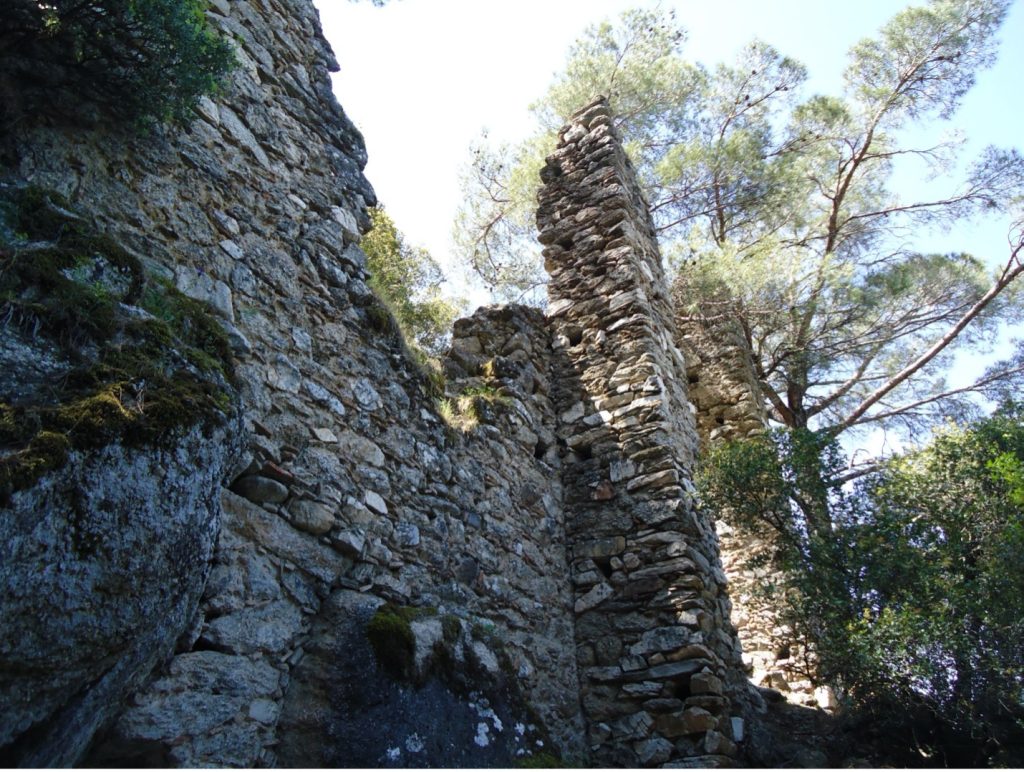
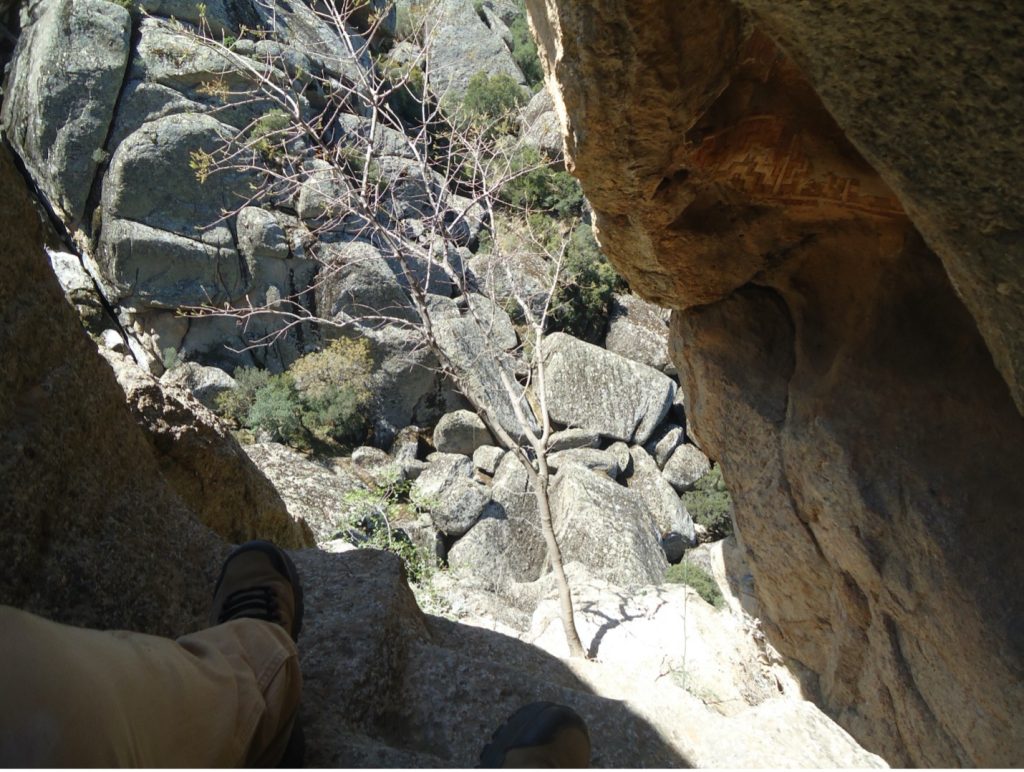
The final fortress is the monastery of Stylos.  Its walls aided the defense of a community which resided in isolated places like a type of fortified residence.  However, this monastery was never intended to operate like a military fortress.  For instance, the battlements were limited to walls located at known entrances on the north and south side.  They were only interested in watching visitors who intended to use a proper gate and not in observing the wider region.  Nor was it a refuge.  While the monastery was deep in its mountain like Fฤฑndฤฑklฤฑ Kalesi, Stylos is near a branch of an ancient road network, which gives the monastery a greater ability to interact with others on and off the mountain.  Finally, the division of interior fortification betrays a uniquely monastic concern: the proper veneration of the founder of the monastery.  The inner bastion of the monastery contains the hermitage of Saint Paul the Younger cut in a tower of rock and decorated with a painted program of religious images (see Figures 6 and 7).  I suspect the fortification of the hermitage likely served to encourage the veneration of their founder and to connect that founder with the builder of the walls, likely Christodoulos of Latros who would go on to found the Monastery of Saint John the Theologian on Patmos.  Whatever the purpose of the inner gate was, it is hard to imagine it served the defense of the monastery. 

The Inner Gate of Stylos Leading to the Hermitage, photo by author.
View of the Hermitage of Saint Paul the Younger, photo by author.

Tyler Wolford, PhD
Byzantine Studies Postdoctoral Fellowship
Medieval Institute
University of Notre Dame


[1] Wolfgang Mรผller-Wiener, โ€œMittelalterliche Befestigungen im sรผdlichen Jonien,โ€ IstMitt 11 (1961): 19-23.

[2] Hans Lohmann et al., Survey in der Mykale 1, Bonn: Rudolf Habelt, 2014-2017, II.510-513 (MYK 65).

[3] Jesko Fildhuth, Das byzantinische Priene, Berlin: DAI, 2017, 96-98; for an opposing view see Lohmann et al., Survey in der Mykale, I.284-290.

[4] Mรผller-Wiener, โ€œMittelalterliche Befestigungen,โ€ 17-19.

[5] Urs Peschlow, โ€œLatmos,โ€ Reallexikon zur byzantinischen Kunst 5 (1995): 695-696.  

[6] Mรผller-Wiener, โ€œMittelalterliche Befestigungen,โ€ 18-19.

[7] Theodor Wiegand, Der Latmos, Milet III.1, Berlin: Georg Reimer, 1913, 61-72.

Reading Medieval Fables as Trans Narratives: The Ass and the Lion Skin Revisited

In an earlier blog post, I wrote about four fables where animals โ€œdress upโ€ as another species, and looked at these in terms of socioeconomic classโ€”this is what medieval authors like Marie de France, Robert Henryson, and Alexander Neckam were clearly aiming to comment on, and these fables can be seen, I argued, in the context of medieval sumptuary laws and anxiety about social mobility.

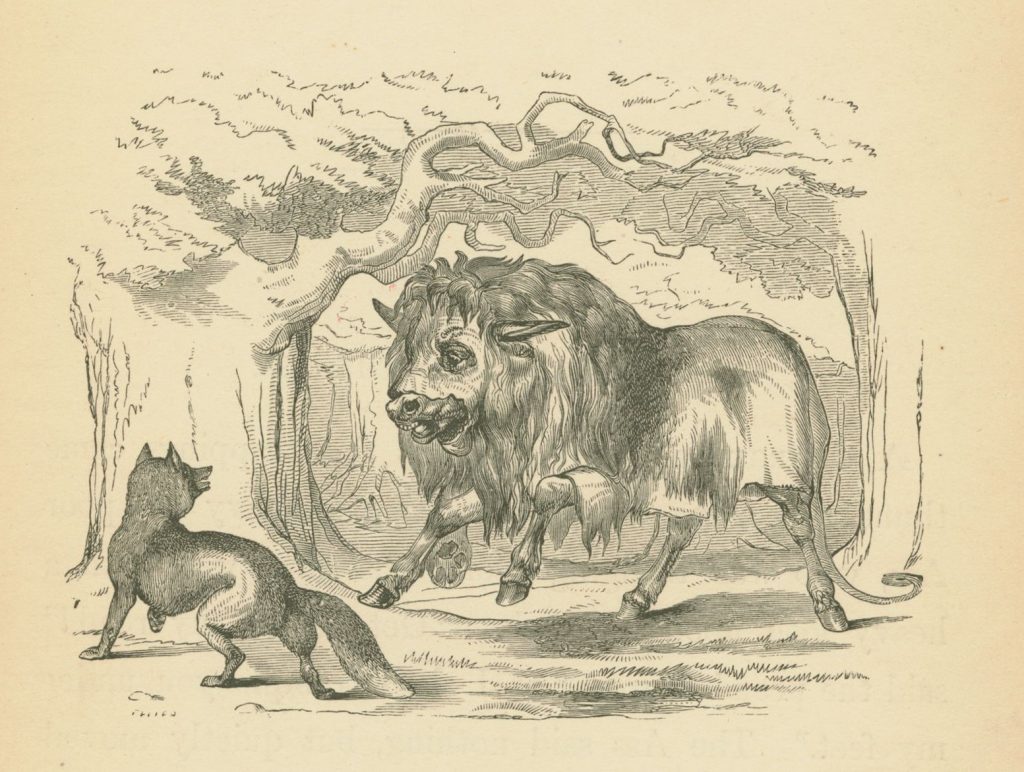
From an illustration by John Tenniel, โ€œThe ass in the lionโ€™s skin,โ€ 1848. New York Public Library.

Iโ€™d now like to revisit the same fables, considering them this time through a different lens: trans experience. This way of interpreting these fables has been on my mind the whole time. In discussing the fables with other people, I have found that they readily come up with trans readings of them (i.e., they suggest to me that the stories about one species wearing the skin or feathers of another can be seen as metaphors for being transgender, and that a trans reading of them could be interesting). As someone who hasnโ€™t really worked in trans studies before, I have felt underequipped, in terms of offering a theoretically-informed take that meaningfully incorporates other scholarship in this area (there is a lot of exciting new work being done in trans medieval studies; see โ€œFurther Reading,โ€ below, for a very non-comprehensive selection).

Despite this hesitation on my part, a trans reading of these fables feels far more salient to me right now than a socioeconomic one, and I think there are more urgent ethical stakes; medieval sumptuary laws are obsolete (and were, at the time, apparently rather ineffectual), whereas trans people are currently a hypervisible minority whose rights are under attack.

The thing is, when you look at these fables as trans narratives, they send a bleak message. These fables essentially suggest, as many other fables do as well, that we can never escape certain fundamental, supposedly โ€œnaturalโ€ categories, and that trying is dangerous and inadvisable. Iโ€™d like to look more closely at a couple of versions of a single fable, The Ass and the Lion Skin (Perry Index 188/358), to illustrate how this message is set up, as well as the parallels one could see between what befalls these fictional animal characters and the experiences of trans humans.

The first version I discuss is a Latin prose fable from the thirteenth century, by Odo of Cheriton:

Asini uiderunt quod homines male et dure tractauerunt eos, stimulando, (h)onera imponendo. Viderunt etiam quod timuerunt Leones. Condixerunt ad inuicem quod acciperent pelles leoninas, et sic homines timerent illos. Fecerunt sic. Asini igitur, induti pellibus leoninis, saltabant, discurrebant. Homines fugerunt credentes esse Leones. Tandem Asini inceperunt recanare. Homines diligenter auscultauerunt et dixerunt: Vox ista uox Asinorum est; accedamus proprius. Accesserunt tandem; viderunt caudas illorum et pedes et dixerunt: Certe isti sunt Asini, non Leones, et ceperunt Asinos et multum bene uerberauerunt.1

The donkeys saw that humans treated them badly and harshly, striking them and putting burdens on them. They also saw that they [i.e., the humans] were afraid of lions. They decided amongst themselves to put on lion skins, and that way humans would be afraid of them. They did this. And so the donkeys, wearing lion skins, leapt and ran about. Humans fled, thinking that they were lions. Eventually the donkeys started braying. The humans listened carefully and said: โ€œThat sound is the sound of donkeys; letโ€™s get closer.โ€ After a while they got up close; they saw their tails and feet and said, โ€œClearly these are donkeys, not lions,โ€ and they seized the donkeys and beat them very thoroughly.

Odoโ€™s moral then proceeds to analogize the wayward donkeys to โ€œfalse menโ€ (homines falsi), particularly those in the Benedictine order; his fables often criticized the clergy.

Odoโ€™s version of this fable differs from others in some respects, e.g., the earliest version, which is also in Latin (Avianus, ca. 400 CE),2 or the late Middle English version in Caxtonโ€™s Aesop.3 While in the latter two versions, a single donkey comes across a lion skin by chance, in Odoโ€™s telling, the act of donning lion skins is a collective decision by multiple donkeys, a calculated response to their ill treatment by humans. These donkeys arenโ€™t just taking on the appearance of a different species, they are taking on the appearance of a much higher-status species, in an attempt to protect themselves (lions often stand in for tyrants, rulers, kings, etc. in fables, whereas fable donkeys are typically quite abject). If we are reading species as analogous to gender, here, there are, of course, differences of power and privilege when it comes to gender, too. The fact that women and men are not simply treated differently, but unequally, has induced some feminists to assert that transmasculine identities arise as a response to the social pressures of misogyny (i.e., that transmasc people are trying to โ€œescapeโ€ womanhood because being a woman in a patriarchal culture is painful). One troubling implication of this line of thought is that a lot of trans people simply wouldnโ€™t exist as such, in an โ€œidealโ€ society without gender inequality.

In The Ass and the Lion Skin, the wearing of a new skin is not just a matter of appearance; the animal in the lion skin looks different, and they behave differently as well, chasing others as though they were a feline predator instead of an equid beast of burden. Initially, those other characters react to the donkey(s) as if they were indeed a lion, until something gives the donkey away. If we choose to read Odoโ€™s fable through a trans lens (though his aim seems to have been to denounce clerical misbehavior), the fact that it is the donkeysโ€™ brays that give them away might sound familiar to anyone who has dysphoria about their voice not matching their gender identity, and anyone who has been misgendered after starting to speak.

The humans in this fable scrutinize, too, specific physical characteristicsโ€”the tail and feetโ€”and on those grounds determine what the donkeys โ€œreallyโ€ are, and react with violence. I canโ€™t help but think of โ€œtransvestigatorsโ€ who pore over photos of trans people (or cis people that they think might be trans), insisting that a particular feature reveals that the photoโ€™s subject is quintessentially male or female, at odds with their presentation and identity. I also canโ€™t help but think that being โ€œclockedโ€ as trans can indeed be the prelude to experiencing hostility, from hate speech to physical violence.

Not only do the donkeys undergo physical violence, this violence is intended to restore the status quo. It is coupled with a kind of ontological violenceโ€”the (re)definition of the target in the dominant partyโ€™s terms. โ€œClearly, these are donkeys, not lions,โ€ the men say before beating them. Even more strikingly, in Avianusโ€™s version, the donkeyโ€™s master concludes by saying, โ€œMaybe you can trick strangers with your imitation roar; to me, you will always be a donkey, as you were beforeโ€ (forsitan ignotos imitato murmure fallas; at mihi, qui quondam, semper asellus eris, lines 17โ€“18). In a trans context, this makes me think of a stubborn family member who insists that they simply canโ€™t perceive or treat their relative as their actual gender identity, because theyโ€™ve spent so many years thinking of them as the gender assigned to them at birth.

So, when I look at these โ€œtrans-speciesโ€ fables in terms of transgender experience, my takeaway is depressing. The texts promote a status quo in which no one really can, or should try to, appear or behave outside of the categories โ€œnatureโ€ has assigned. They gloss the act of wearing a โ€œnew skinโ€ as a form of untenable inauthenticity, and portray the โ€œtrans-speciesโ€ characters as being inevitably put back in their place with violence. These are the lessons we are seemingly meant to learn.

I want to do some kind of reparative reading of these fables, and to find something liberatory or subversive, but I struggle to, because the texts themselves do work in the opposite directionโ€”and transphobes have recognized that. Another famous fable of an animal wearing a different skinโ€”the fable of The Wolf that Dressed in a Sheepskin (Perry Index 451), in which a wolf mimics a sheep in order to better prey on the flockโ€”has been used in recent years by anti-trans authors and cartoonists (who I wonโ€™t platform with linksโ€”this should be easy to find if you wish). This kind of rhetoric often fixates on transfemininity, in particular, portraying trans women as deceptive and even dangerous. For instance, the trope of predatory men-dressed-as-women attempting to infiltrate womenโ€™s bathrooms has been used as an argument for anti-trans โ€œbathroom bans,โ€ which have been passed in 19 US states over the last four years, part of a larger wave of anti-transgender legislation. The โ€œbathroom banโ€ laws purport to address what is in fact a thoroughly imaginary problem, making bathrooms less safe for anyone who is trans and/or gender non-conforming.

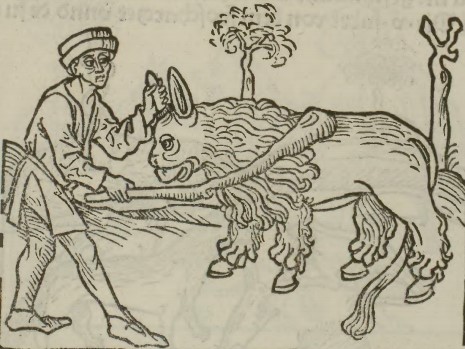
Woodcut of The Ass and the Lion Skin, from a 1479 incunabulum of Heinrich Steinhรถwelโ€™s Fables of Aesop.

What do we do with didactic literature, stories that aim to teach lessonsโ€”in this case, medieval fables with moralsโ€”if the lessons are not ones we want to endorse or to heed, and if the stories themselves are being weaponized against a vulnerable minority? I donโ€™t know. I think one step is to acknowledge that these texts are โ€œnaturalizingโ€ social categories by mapping them onto different animal species, in order to suggest that social differences (such as class and gender) are starkly distinct and immutable, impossible to changeโ€”as impossible as it would be for a donkey to become a lion, or a wolf to become a sheep. However, as I argued in the previous post, if these social categories actually were โ€œnatural,โ€ โ€œbiologically innate,โ€ and unalterable, there would be no impetus to tell stories, over and over again, warning people not to act โ€œunnaturally.โ€

Nonetheless, if we want liberatory or subversive trans fables, we might have to write them, or rewrite them, rather than looking to the medieval versions of these particular texts.

Linnet Heald
PhD in Medieval Studies
University of Notre Dame

Further Reading:

  1. Latin text from Lรฉopold Hervieux, Les Fabulistes latins depuis le siรจcle dโ€™Auguste jusquโ€™ร  la fin du moyen รขge, vol. 4, Eudes de Cheriton et ses dรฉrivรฉs (Paris: Firmin Didot, 1896), pp. 198โ€“99. All translations in this post are mine. โ†ฉ๏ธŽ
  2. Duff, Arnold Mackay, and John Wight Duff, eds. Minor Latin Poets, Volume 2. Loeb Classical Library, vol. 434. Cambridge, Mass: Harvard University Press, 2006, p. 690. โ†ฉ๏ธŽ
  3. Lenaghan, R. T., ed. Caxtonโ€™s Aesop: Edited with an Introduction and Notes. Cambridge: Harvard University Press, 1967, p. 179. โ†ฉ๏ธŽ

Planting Seeds of Wonder: Local Farming, Regional Agrotourism and the Enchanted Orchard Renaissance Faire

Recently, I composed a blog on my role as playwright, academic consultant and creative & theatrical director of two recent Renaissance faires, and I then followed up with a blog centered on the community spirit that imbued our first faire, Wyndonshire Renaissance Faire. This blog will take the second of our inaugural 2024 spring faires, Enchanted Orchard Renaissance Faire, as the topic of discussion, and continue discussion of the community efforts that went into putting this event together at warp speed. In addition, I will discuss the educational and agricultural focus of this faire, which brought regional tourism to North Central Massachusetts and offered the opportunity to create a story that explores issues specific to local and sustainable farming. This year, Enchanted Orchard will commence in just a few weeks, on May 3rd and 4th 2025.

The Gate Leading to the Fantasy Realm of Enchanted Orchard at our inaugural Renaissance Faire, 2024.

As I mention in my previous blog, after building the creative team at Wyndonshire, because of some uncertainty with respect to funding the project by the town of Winchendon, my wife, Rajuli, and I reached out to a local farm and festival venue, Red Apple Farm, owned by Al and Nancy Rose, to see if they might be open to bringing a Renaissance Faire to their business in the event that we needed a change of venue. After pitching the project, the whole team at Red Apple Farm was excited for the prospect, and once Winchendon determined they were able to move forward with the project, we agreed to produce a second โ€œsisterโ€ faire with Red Apple Farm, with characters and plot lines intersecting with those at Wyndonshire. I began to conceive of a second fantasy realm, the agrarian kingdom of Enchanted Orchard.

Rajuli and the Nagashri Dancers at Enchanted Orchard Renaissance Faire, 2024.

Rajuli’s and my ability to produce a second large-scale Renaissance Faire was only possible with the help of our team, what became FaeGuild Wonders, and Red Apple Farm, our incredible partnering venue.  Red Apple Farm embraced our vision and helped shape and grow Enchanted Orchard into the fabulous event that it was, ranked by a popular vlogger, Chelle Belle, as one of the best Renaissance Faires in New England last year (2024).  Al and Nancy Rose, the entrepreneurial owners behind the blooming success of Red Apple Farm, are some of the kindest and most collaborative people Iโ€™ve personally had the chance to partner with, and without their leadership, there would be no Enchanted Orchard (and for that matter, no NorthFolk Nightmarket). They partner with local businesses, and are committed to growing regional tourism and community, which is deeply embedded in their mission and the way they run their business.

Orchard Wizard (Richard Fahey) with the Stewards of the Orchard (Al & Nancy Rose) at Enchanted Orchard Renaissance Faire, 2024.

In addition to Al and Nancy Rose, our Orchard Stewards, Enchanted Orchard thrived because of many other members of the Red Apple Farm team, including Sarah McLennan (who coordinated vendors and helped organize the event), Kirsten Killay (who manages the Red Apple Farm Cidery), Loryn Killay (who spearheads marketing and promotion necessary to advertise the event), Aaron Rose (who redesigned the webpage) and the Samsโ€”Samuel Miller and Samuel Dossetโ€”who constructed the picturesque towering gate that leads into the fantasy kingdom of Enchanted Orchard. The latter Samuel updated the event’s map to account for the faire’s expansion this year, and has become Enchanted Orchard’s royal cartographer.

Kristin Killay and Alicia Pelkey at the Red Apple Cidery also known as the “Toadstool Tavern” at Enchanted Orchard Renaissance Faire, 2024.

To further highlight the level of Red Apple Farm’s integration into the event, their Cideryโ€”transformed into the Toadstool Tavern for Enchanted Orchardโ€”featured all the different flavors made specifically for the faire. Many of these ciders developed for the event are now standard or seasonal options available throughout the year at Red Apple Farmโ€™s Cidery. Moreover, the cider is a connecting point for our events, as it is one of the main economic exports of the Enchanted Orchard kingdom, and it was available at Wyndonshire as well as an imported drink from their neighboring kingdom.

Mt. Witchusett Witches gather outside the Brew Barn at Red Apple Farm during Enchanted Orchard Renaissance Faire, 2024.

Red Apple Farm also collaborates with a local restaurant, the Gardner Ale House, which manages the Brew Barn at Red Apple Farm. The Brew Barn is a cozy, tavernesque restaurant on the farm, which serves food and drink, and was crucial for the success of Enchanted Orchardโ€™s second day (Sunday, May 5th, 2024) when the rain threatened to drown out the event. Because of the Brew Barnโ€™s openness to collaborating, we were able to pivot and move many performance acts inside and out of the inclement weather. Although this required a major reworking of the schedule, we did our best to make sure each performer or group had at least one indoor show in case they were rained out during their showtime. While the rain did put a damper on some performances, the event was sustained by adding outdoor fires throughout the faire and bringing many of the performances indoors and the event was a success. Despite the weather, the turnout and experience from patrons on the second day was extremely positive and this gave us the added benefit of a learning opportunity with respect to what to plan for in the case of inclement weather in future.

May Queen (Tammy Dykstra), Knight of the Tree (Quinne Richards) and the Orchard King (Paul Taft), Enchanted Orchard Renaissance Faire, 2024.

I wrote an entirely new script for this faire, and last year’s story, “Seeds of Wonder,” was a prologue to the first act, “The Romance of the Orchard,” which will commence this year. Enchanted Orchard Renaissance Faire highlights sustainable farming which was the foundation of agrarian life in the medieval world. The major conflict in this faire centers on the issue of conservation versus preservation. This takes the form of a heated debate between the Enchant Orchard nobility with the May Queen (played by Tammy Dykstra and Siobhan Doherty) and Duke of Thorns (played by Dave Fournier) arguing for the protection of the Thornwood and the creatures that live there, who are part of the kingdomโ€™s broader ecosystem. Alternatively, the Orchard King (played by Paul Taft and Gary Joiner) and Blossom Baroness (played by Jen Knight) contend that expanding the orchard would better provide for the people of the kingdom and foster economic growth for the realm while at the same time minimizing food insecurity throughout the kingdom. This tension is played out in both staged theatrical scenes and numerous immersive skits and side conversations had between members of the Enchanted Orchard nobility throughout the event.

Blueberry Princess (Melanie “Melegie” Long) and Prince of Leaves (Michael Barboza-McLean) reunite at Enchanted Orchard Renaissance Faire, 2024.

Toward this end, the Orchard King takes advantage of his royal authority to press upon the newly returned Prince of Leaves (played by Michael Barboza-McLean and Vajra Spring), advocating for the virtues of his proposed expansion of the orchard. Because the Prince of Leaves seems somewhat amenable to his ideas and influence, and seizing an opportunity to undercut the wishes of his rival, the May Queen, the Orchard King announces at the end of Enchanted Orchardโ€™s annual Beltane Banquet, that he is betrothing his daughter, Blueberry Princess (Melanie โ€œMelegieโ€ Long), much to her sorrow and surprise, to his rivalโ€™s son, the Prince of Leaves, in an effort to โ€œweave peaceโ€ in the realm and as a means to press his advantage on the young prince now enfianced to the heiress of the realm.

Knights of Lord Talbot’s Frank Walker and Cameron Hardy battle at the tournament melee in celebration of the Beltane Banquet at Enchanted Orchard, 2024.

However, because of the fast production of this faire, the script was centered primarily on the nobility, leaving many of the other characters to participate in a highly immersive and interactive character scavenger hunt, which invited patrons to find and receive specific items from cast members in order to earn a small prize. This encouraged frequent interaction between character actors and patrons, and the activity was a huge success, especially with the kinderfolk who attend. The scavenger hunt was coupled with a โ€œknightโ€™s questโ€, which asked patrons to find a noble from each house and resulted in a knighting ceremony, conducted by the royal champions from the The Knights of Lord Talbot. Moreover, the Sheriff of Thornwood (played by Jennifer MacLean), gave out citations through the day to fairgoers for various offenses and Sir John Fastolf (Frank Walker) held a baronial court to deal out justice for crimes cited by the Sheriff, which might sometimes involve a short stay in the stockades.

Viking Jarl (Jason Sumrall) takes the Sheriff of Thornwood (Jennifer McLean) into custody at Enchanted Orchard Renaissance Faire, 2024.

As with Wyndonshire, The Green Sash marauders raided Orchard Toward, while the The Mt. Wichusett Witches made secret bargains and brewed magic potions for a number of the Enchanted Orchard nobles, ending with a flash mob dance that led patrons to the final event at the faire, the community Maypole dance which brought performers, cast members and patrons together for a final celebration of spring and the planting season.

May Pole Dance and celebration at the inaugural Enchanted Orchard Renaissance Faire, 2024.

Some of the theatrical performance groups were familiar from Wyndonshire: such as the The Phoenix Swords, The Harlot Queens,  The Warlock Wondershow and LaLoopna Hoops. Many musical groups were at both faires as well, namely Meraki Caravan,  The Shank Painters, XPresso and Dead Gods are the New Gods. However, there were some new faces at Enchanted Orchard as well, such as Skeleton Crew Theater [giant troll-puppets], Diva Di [Shakespeare drag artist], Massachusetts Historical Swordsmanship [HEMA] [medieval European combat] and solo fire performers such as Samantha Lynne and Luna Faun. This year we welcome some additional performing groups, including the Iconic Sproutinโ€™ Divas [featuring Diva Di and other drag artists], Winds of Alluria [musical group], Michael OJ [magician], Finlayโ€™s Fire Troupe [fire-spinning show], and Captain Tactless [tavern musician], Dume & Glume: Ethical Executioneers [improv comedy show], The Misfits of Avalon [musical group], Bayt Al-Asad: House of the Lion [medieval Middle Eastern combat], and Combatantโ€™s Keep [medieval joust show].

Skeleton Crew Theater’s trolls wander through the Enchanted Orchard Renaissance Faire. Image by Kit Catlett (May 4th, 2024).

The Orchard King made a surprise wedding pronouncement arranging the union of his daughter, the Blueberry Princess, and the Prince of Leaves, the son of his rival, the May Queen, at the end of last yearโ€™s faire. Enchanted Orchardโ€™s second annual event picks up where last year left off, and this year features โ€œThe Romance of the Orchard,โ€ in which a love triangle blooms and whispers of revolution and news of “The Wyndonshire Wedding” and the fall of Wyndonshire spreads to all of high and low estate. If you came last year to experience the magic of our inaugural faire, we hope that you return for more wonders and delights. f you didn’t make it last year, and you enjoy immersive storytelling and modern medievalism, we hope you join us this year for Enchanted Orchard Renaissance Faire 2025โ€”which brings together the local performing art and farming communities in North Central Massachusettsโ€”and combines theater, music, comedy, performance art, interactive activities, family fun and an artisan vendor market.

Master of Arms (Keith Fisher) at the Knights of Lord Talbot Camp during Enchanted Orchard Renaissance Faire. Image by Kit Catlett, May 4th, 2024.

Fairegoers will be able to learn how to sword fight, try their skill at axe-throwing, ride a unicorn or catch a goblin hayride, watch a joust and medieval melee combat in both European and Middle Eastern traditions. This year, Enchanted Orchard will commence on the first weekend in May, so consider saving the date, and I hope to see you thereโ€”just look for the wandering wizard!ย 

Richard Fahey
PhD in English
Medieval Institute
University of Notre Dame

Creative & Theatrical Director
FaeGuild Wonders