Hospital Lands

My first interest in Byzantine studies was the hospital. In hindsight, I was influenced by the contemporary politics during my undergraduate years. In the midst of American debates on healthcare, I became fascinated by the medieval concern for the sick that was manifest in the Byzantine hospital.

I wrote my undergraduate thesis and MA thesis on Byzantine hospitals.[1] My doctoral work moved away from this interest in hospitals and into questions of landscape. However, sometimes things you stop looking for can find you instead. Hospitals kept showing up in my research on Byzantine landscapes, often in the guise of the lands in the provinces whose exploitation supported the efforts of healing in the imperial capital.

In this blog post, I want to highlight three Constantinopolitan hospitals, whose estates I have encountered in my research on the landscapes of Western Asia Minor. Linking the hospital with their estate lands reminds us that the charity of the capital often depended upon the labor of the provinces.

Myrelaion

The monastery of the Myrelaion was founded by the emperor Romanos Lepekanos around the year 920 from his own personal mansion. The main church of the monastery is found at Bodrum Camii, which was built upon a late antique rotunda (see photo 1 and 2). 
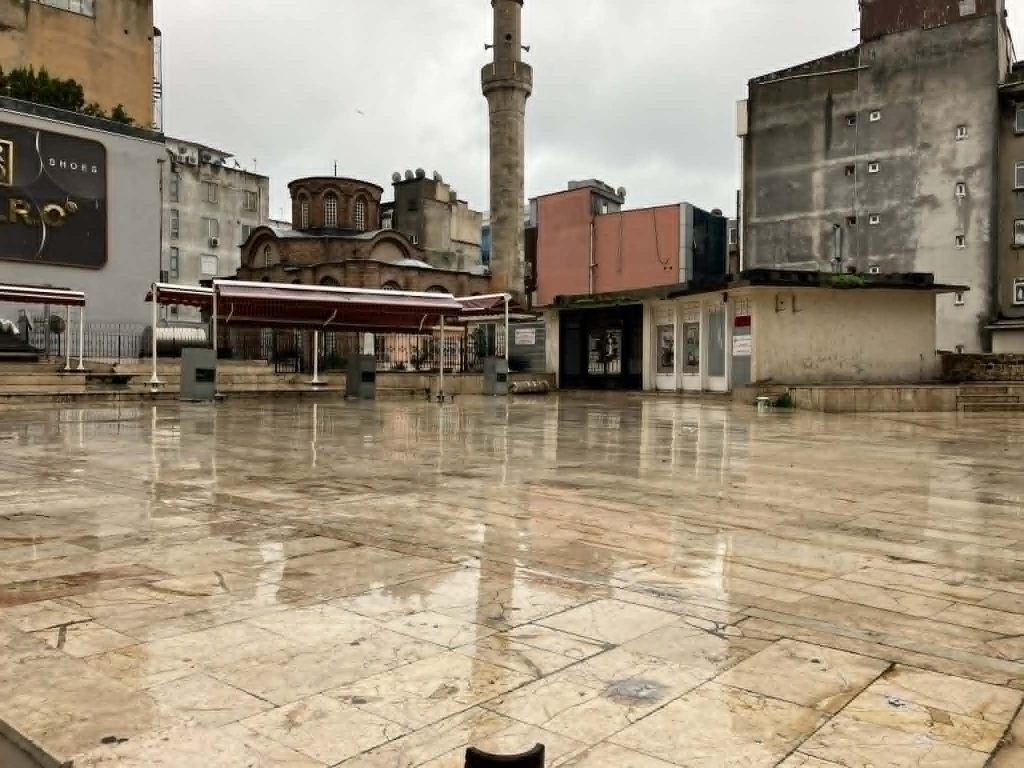
Bodrum Camii from the far side of the platform created by the late antique rotunda (photo by author).
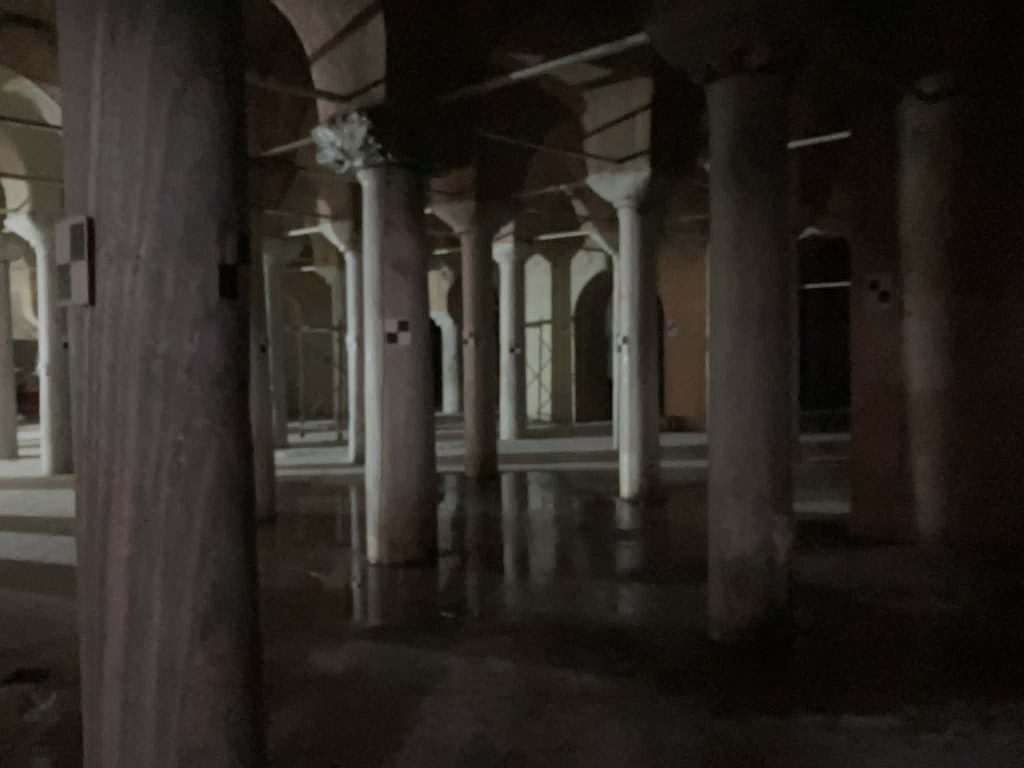
Image of the columns within the late antique rotunda underneath Bodrum Camii (Photo by Author).

Its hospital is known from a Byzantine medical book, attributed to the Romanos, koukouleisios and protomenutes of the imperial hospital of the Myrelaion in Constantinople (Vind. Med. Gr. 48) who probably also lived during the tenth century.[2]

A dramatic account of the Myrelaion estates in western Asia Minor comes from the Life of Saint Nikephoros of Miletus. Here the managers of these estates are positioned as the villains of the tale, interested in stealing the lands which belong to the metropolitan of Miletus. The titular saint does his best to combat the aggressive growth of these estates, arguing before the emperor in Constantinople that the loss of the episcopal estates was a danger โ€œto both the living and the dead.โ€ 

Pantokrator

The monastery of the Pantokrator was founded by John II Komnenos and his wife, Eirene (formerly Piroska of Hungry) in the twelfth century. The monastery church survives in modern Istanbul as the Zeyrek Camii (see photos 3 and 4).
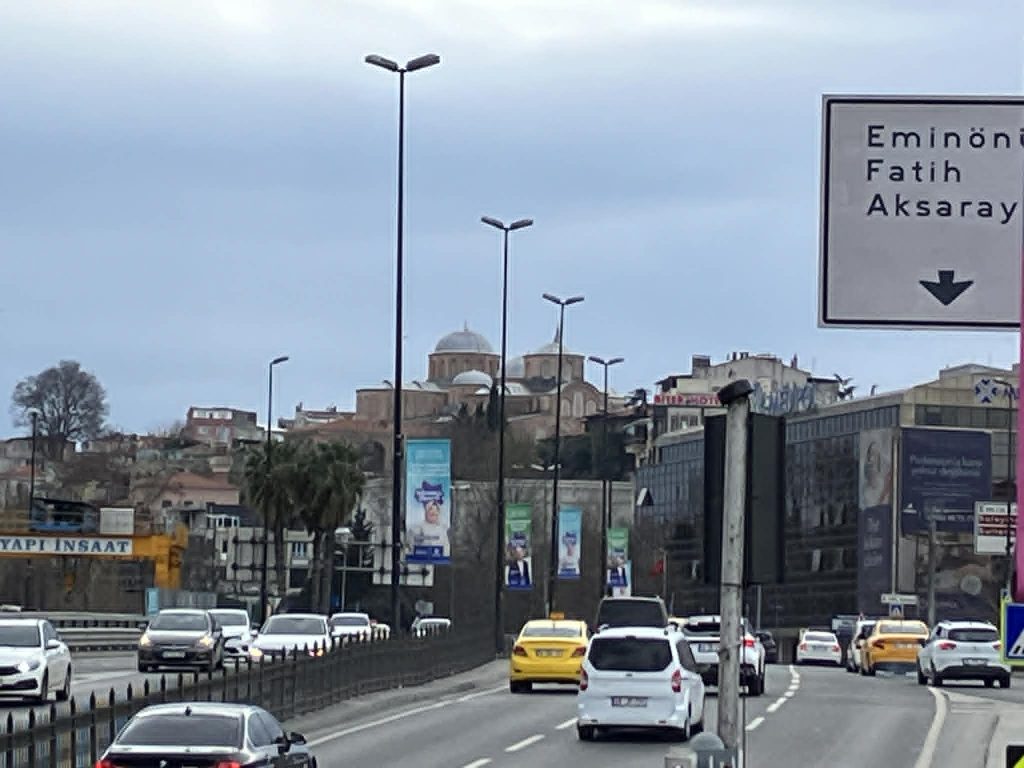
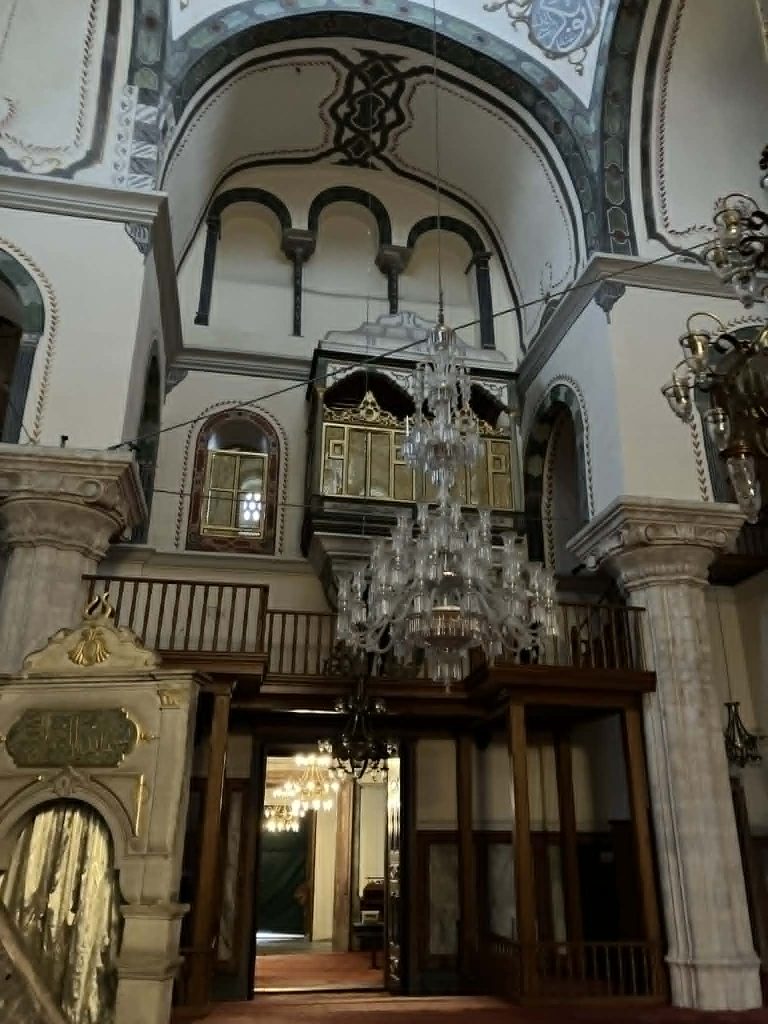
A view of Zeyrek Camii from the north and below on Ataturk Boulevard (Photo by author).
Inside of the Zeyrek Camii looking south (Photo by author).

The Pantokrator hospital is well known due to the detailed account of its operation in its typikon, a type of monastic charter which lays out the liturgical rules and administrative needs of the monastery at its foundation. For those interested in Byzantine hospitals, the English translation of this typikon is a great primary source to start reading.[3] In fact, the monastery operated four hospitals: a leper hospital, a nursing home, a monastic infirmary, and a medical hospital. I had argued for a relationship between the Unkapanฤฑ cistern and the hospital, due to the prescription of bathing in the hospital shown in the typikon (see photo 5).
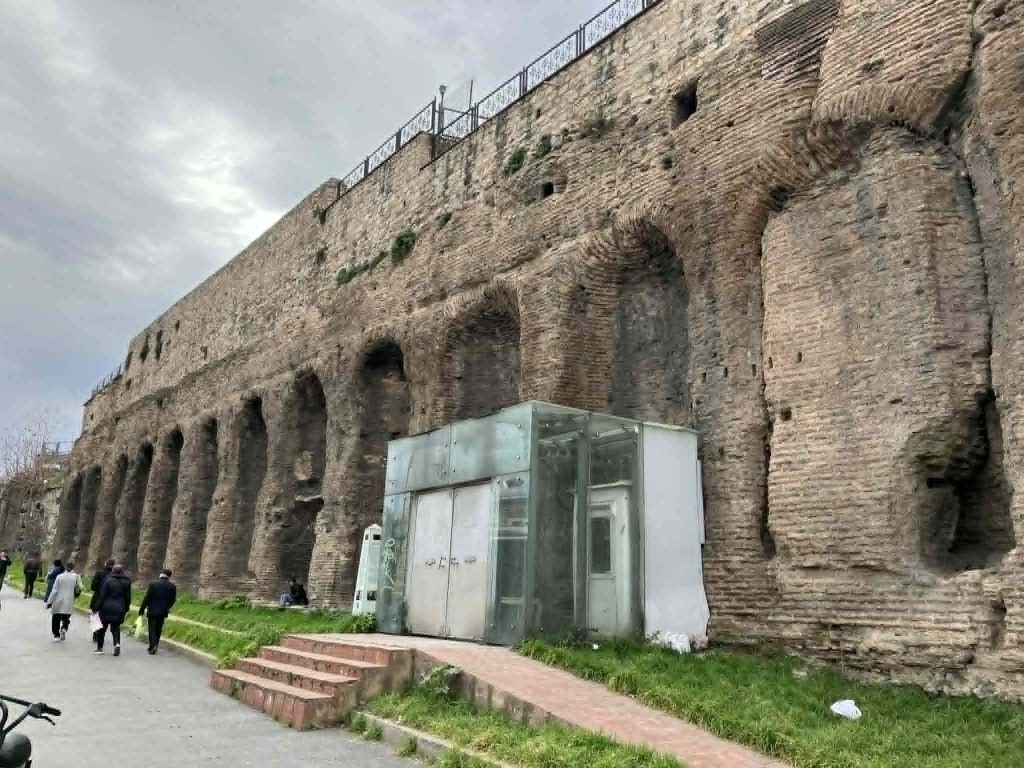
Unkapanฤฑ Cistern from below (photo by author).

The typikon also lists the lands given to the monastery. However, my interest is a property given to the monastery after the typikon was composed. The Pantokrator monastery owned the Bare estate in region of Smyrna before the chaos of the Fourth Crusade (1204). Bare is known from the Lembos cartulary, whose new edition and translation should whet the curiosity of anyone interested to learn more.[4]

Sampson

The date of the foundation of the Sampson hospital is less than straightforward.[5] The hospital burned down in the Nika Riots of the sixth century. The hospital, with a wing designated entirely for eyecare, appears in the seventh-century Miracles of Saint Artemios.[6]  In another miracle collection, the hospital is the true stage of the action: tenth-century Miracles of Saint Sampson the Hospitable recorded by Symeon Metaphrastis as part of his larger project of rewriting hagiography. 

The ruins between Hagia Sophia and Hagia Eirene have been excavated roughly where the hospital is known to be located, although this identification is not certain.

The imperial estate known as Sampson was responsible for renaming the city of Priene in western Asia Minor in the twelfth century (see photo 6). The inhabitants of these estates were bad neighbors; three different thirteenth-century monastic archives preserve documents of court cases against them. The Sampson estates may have originated as imperial support for the Sampson hospital, but the estate was under the control of a relative of the emperor in the twelfth century.

A view of the acropolis of Priene from below within the city ruins (photo by author).

Tyler Wolford, PhD
Byzantine Studies Postdoctoral Fellowship
Medieval Institute
University of Notre Dame


[1] Tyler Wolford, Healing on the Fourth Hill: Searching for the Pantokrator Hospital.  Ungraduated Honors Thesis, Ball State University, 2012.  Partially published as ibid., โ€œTo Each According to their Need: Medical and Charitable Institutions in the Pantokrator Monastery.โ€ In Piroska and the Pantokrator: Dynastic Memory, Healing, and Salvation in Komnenian Constantinople.  Edited by Marianne Sรกghy and Robert G. Ousterhout, 195-224. Budapest, 2019.  Ibid., The Hospitals of the Monastery: Contextualizing the Nosokomeion and Xenodocheion in the Monasteries of Late Antique Egypt and Palestine.  Masterโ€™s Thesis, Koรง University, 2014.  Partially published as Tyler Wolford, โ€œSeparate Places for the Sick in the Monastery: The Late Antique Palestinian Infirmary and Guesthouse.โ€ In Places of Illness, Spaces for Healing: The Built Environment of Healthcare in Anatolia Through the Ages.  Edited by Luciene Thys-ลženocak and Inge Uytterhoeven, 133-154.  Istanbul, 2025.

[2] Peregrine Horden, โ€œMedieval hospital formularies: Byzantium and Islam Compared.โ€ In Medical Books in the Byzantine World.  Edited by Barbara Zipser.  Bologna 2013.  150-151.

[3] Robert Jordan.  โ€œ28. Pantokrator.  Typikon of Emperor John II Komnenos for the Monastery of Christ Pantokrator in Constantinople.โ€ In Byzantine Monastic Foundation Documents (BMFD), edited by John Philip Thomas and Angela Constantinides Hero, 725-781. Washington D.C.: Dumbarton Oaks Research Library and Collection, 2000.

[4] Alexander Daniel Beihammer and Despoina Ariantzi. The Cartulary of the Lembos Monastery Near Smyrna: A Thirteenth-Century Monastic Archive of Byzantine Asia Minor. De Gruyter, 2026.

[5] Timothy Miller, โ€œThe Sampson Hospital of Constantinople.โ€ Byzantinische Forschungen 15 (1990): 101-135.

[6] Virgil S. Crisafulli and John W. Nesbitt.  The Miracles of St. Artemios. The Medieval Mediterranean 13. Leiden, New York, and Kรถln, 1997.

Grotesque Ghosts and Moral Reproof in Middle English Literature: The Awntyrs off Arthure at the Terne Wathelyn

The day has suddenly turned to night; King Arthur and his knights are all frightened; and Guinevere, who is accompanying the entourage, begins to cry when out of nowhere the woods ring with terrible sounds of howling and wailing and grievous lamentation. A female-seeming being approaches Sir Gawain, having risen from a lake, and

Bare was the body and blak to the bone,
Al biclagged [clotted] in clay uncomly cladde [โ€ฆ].
On the chef [head] of the cholle [neck],
A pade [toad] pikes [bites] on the polle [skull],
With eighen [eyes] holked [sunken] ful holle [hollow]
That gloed [glowed] as the gledes [coals]. (ll. 105-106, 114-117)[1]

The apparition continues to yell and murmur and groan as if it were mad and is shrouded in some sort of unfathomable clothing, covered by toads and circled on all sides by snakes.

Gawain finds his courage and, brandishing his sword, demands that the specter give an account of herself. She concedes, saying that she was once a queenโ€”the fairest in the landโ€”and was wealthy and privileged beyond compare, even more so than Guinevere. But now she is dead, having lost allโ€”her body a filthy, rotting corpseโ€”and, she says, โ€œGod has me geven of his grace / To dre [suffer through] my paynes in this placeโ€ (ll. 140-141).

The place that she is referring to is the Tarn Wadling, a lake in Cumbria, just south-east of Carlisle by about ten miles.[2] Tarn (< ME terne, tarne) is a word that originated as a local northern English term (< ON *tarnu, tjorn, tjรถrn) meaning โ€˜a lake, pond, or pool,โ€™ but it has since come to be used to mean specifically โ€˜a small mountain lake, having no significant tributaries.โ€™[3]

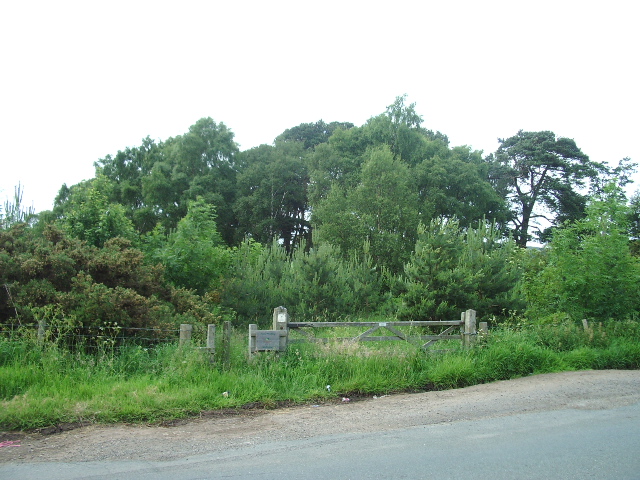
Entrance to the woods surrounding the Tarn Wadling.

King Arthur and crew come upon the Tarn Wadling during a hunt in Inglewood Forest. The finery of the courtโ€”and especially of Guinevereโ€”is described in several stanzas, much as the ghost describes the splendor she once enjoyed a number of stanzas later. After Gawain talks with her for a bit, she begs to see and speak to Guinevere. We quickly find out why, for she proclaims to Guinevere, โ€œLo, how delful [doleful] deth has thi dame dight [left]โ€ (l. 160)! The spirit is her mother, and she urges Guinevere to โ€œMuse on my mirrourโ€ (l. 167). Death will leave her in such a fashion too if she does not give thought to her actions and the afterlife.

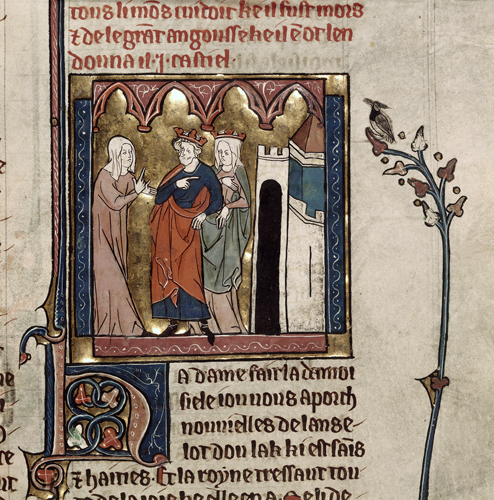
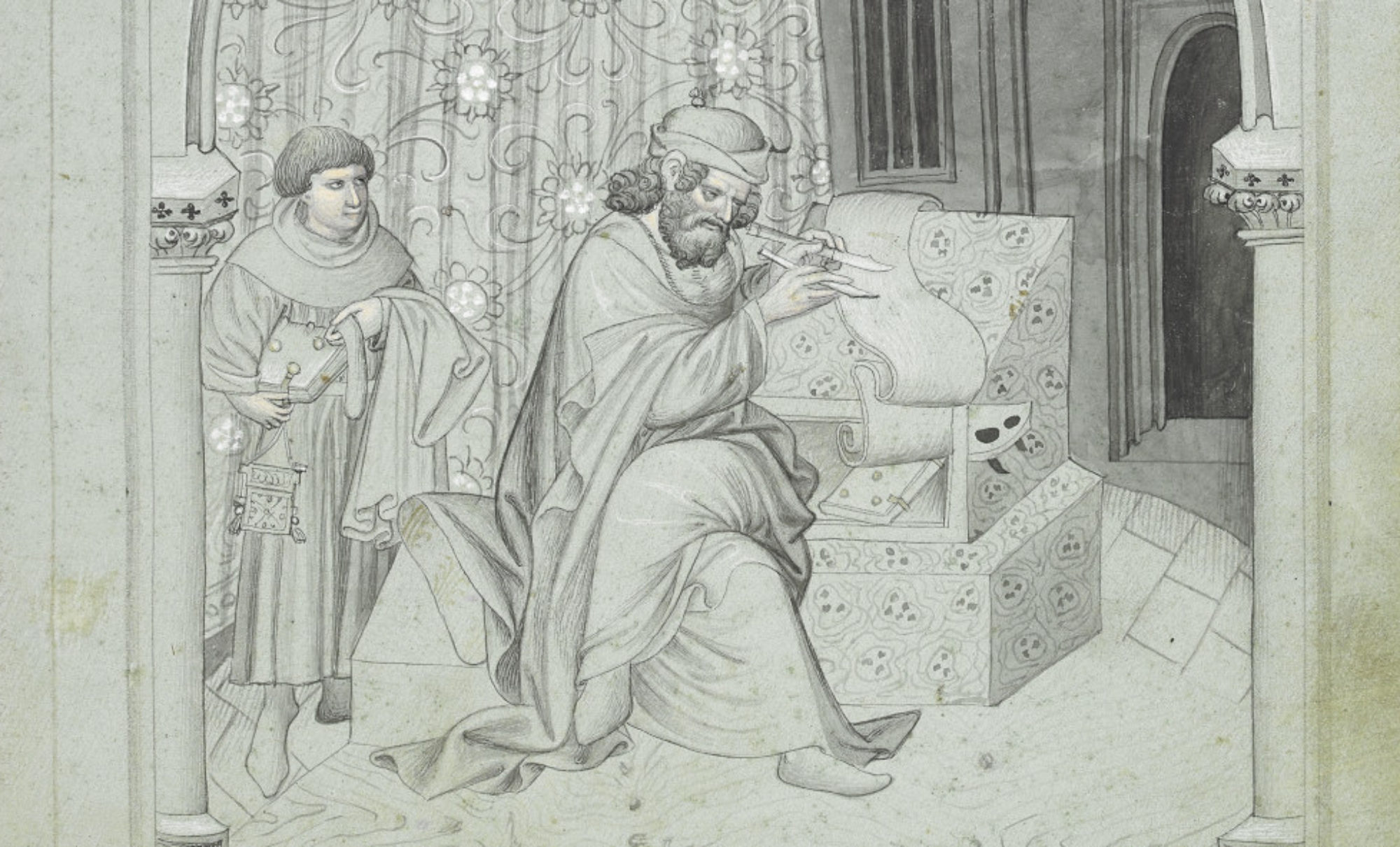
Arthur and Guinevere. London, British Library, MS Royal 20 D IV, f. 207r[4].
The first thing that Guinevereโ€™s mother counsels is that, if you are rich, you should have pity on the poor, for it is in your power to do so. When you are dead, nothing will help you at that point, but โ€œThe praier of poer may purchas the pesโ€ (l. 178). She stresses this to Guinevere and holds herself up as a counterexample. She failed, and now, she says,

โ€œ[โ€ฆ] I, in danger and doel, in dongone I dwelle,
Naxte [nasty] and nedefull, naked on night.
Ther folo me a ferde [troop] of fendes of helle;
They hurle me unhendely; thei harme me in hight [violently];
In bras and in brymston I bren as a belle [bonfire].
Was never wrought in this world a wofuller wight. (ll. 184-189)

While Guinevereโ€™s mother advocates for compassion and generosity, we discover, however, that it was lust and the breaking of her marriage vows that landed her in torment. These sins bear obvious relation to Guinevereโ€™s own life, and the author doesnโ€™t even feel the need to clarify. Her mother is a mirror.

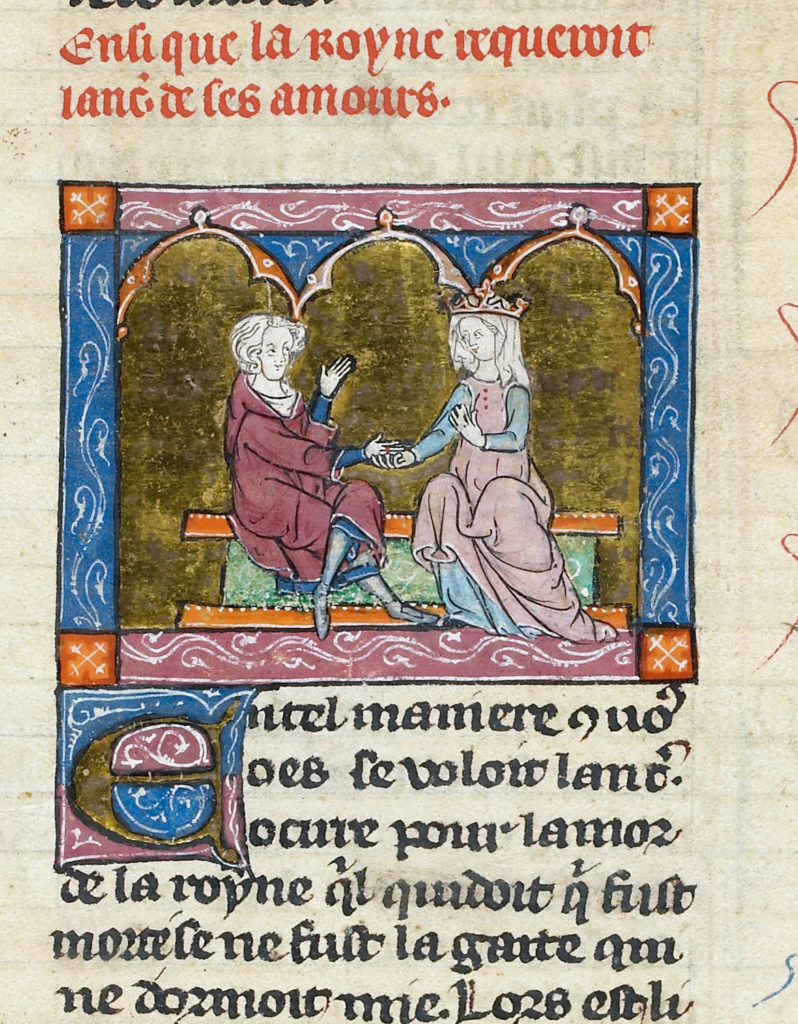
Guinevere and Lancelot. London, British Library, MS Additional 10293, f. 199r[5].
Nonetheless, it is interesting that what this text emphasizes the most is the need for all to have and to practice charity. Sin is bad, of course; and pride is the most hateful fault, as Guinevereโ€™s mother explains. But the Awntyrs is not a treatise on the sins; it is a work that teaches that, of the virtues, โ€œ[โ€ฆ] charitรฉ is chef [paramount], and then is chaste [chastity], / And then almessedede aure [above] al other thingโ€ (ll. 252-253). The duty of the Christian, according to the author of the Awntyrs, lies in each personโ€™s responsibility towards every other. And this extends ad infinitum, for the prayers of those on earth are succor to the dead. The audience learns this because Guinevere promises to provide Masses for her motherโ€™s soul, praying that Christ will bring to bliss she for whom he was crucified, he to whom she was dedicated in Baptism, though her mother stresses again that Guinevere must also provide for those living who lack food.

Before Guinevereโ€™s mother departs, Gawain pipes in, having clearly been listening. He asks about those nobles and knights who enter otherโ€™s lands in territorial expansion, crushing under their heels the people and seizing the glory and the riches without any right. Now, if anyone is familiar with Gawain, this is rather too self-aware for his characterโ€”clearly the author is speaking here. The royal wraith responds by denouncing Arthur as too covetous a king and saying that the court should be wary. The second half of the Awntyrs deals precisely with these problems of excess and conquest, and I leave this part of the plot for readers to explore on their own.

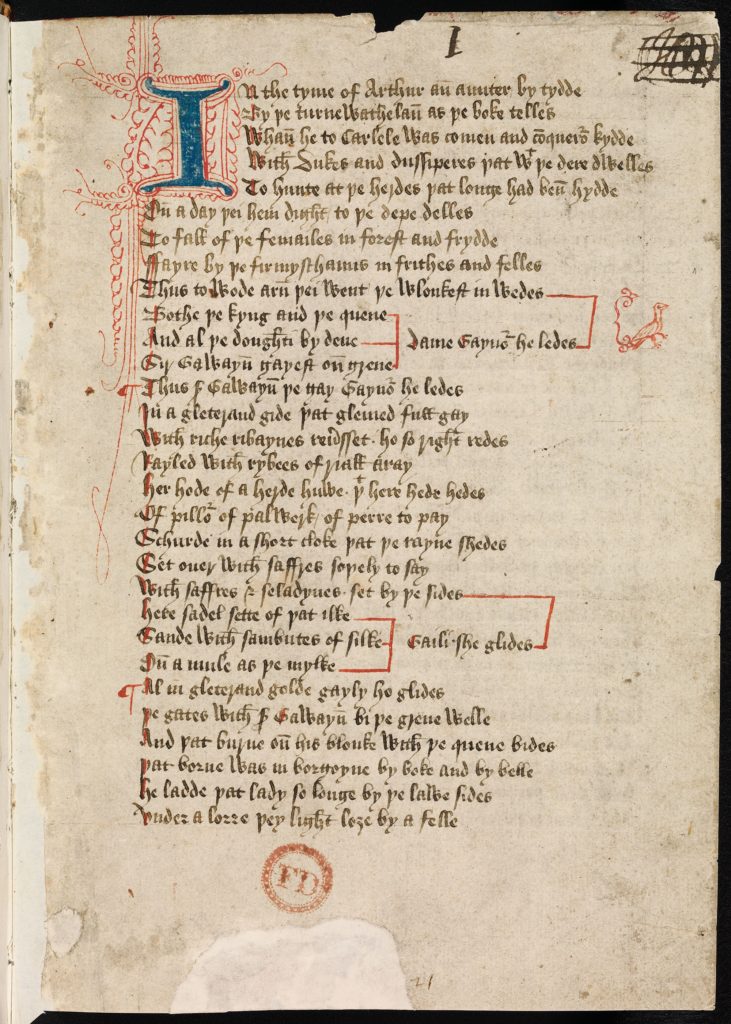
Concerning the fifteenth-century text that has reached us, it is preserved in four manuscripts: Oxford, Bodleian Library, MS Douce 324; London, Lambeth Palace Library, MS 491.B; Lincoln, Lincoln Cathedral Library, MS 91 (Thornton Manuscript); and Princeton, Princeton University Library, MS Taylor 9 (Ireland Blackburn Manuscript).

The beginning of The Awntyrs off Arthure.f. 1r of Oxford, Bodleian Library, MS Douce 324 (c. 1450-1475)[6].ย Photo: ยฉ Bodleian Libraries, University of Oxford.
The underlying dialect in the manuscripts is northern, being locatable most likely to the historic county of Cumberland (now part of Cumbria), which is also where the action of the narrative takes place. The work is extremely ornate, making use of both alliteration and rhyme. And as the textโ€™s editor, Thomas Hahn, also notes, given the themes, it is quite probable that the author was a cleric, possibly residing in Carlisle. The Latin exempla tradition most certainly influenced the text, but the genius of the author was to weave his moral teaching into an exciting Arthurian tale, sweetening the medicine, as it were, with a captivating literary exterior.[7]

Be this as it may, the Tarn Wadling has always been eerie, emitting strange sounds and even once having an island appear and then disappear. It is hard to say whether it was due to a desire to bring an end to the place and quash superstitions or increase his arable land and acreage that Lord Lonsdale ordered the lake to be drained and filled in sometime during the nineteenth century.[8] Sadly, the tarn itself is no more, but the stories persistโ€”as perhaps do the spirits.


Hannah Zdansky, Ph.D.
University of Notre Dame


[1] The edition used is the following: โ€œThe Awntyrs off Arthur.โ€ Sir Gawain: Eleven Romances and Tales. Ed. Thomas Hahn. Kalamazoo: Medieval Institute Publications, 1995. This can be found online here: http://d.lib.rochester.edu/teams/text/hahn-sir-gawain-awntyrs-off-arthur. And here is an introduction: http://d.lib.rochester.edu/teams/text/hahn-sir-gawain-awyntyrs-off-arthur-introduction.

[2] You can find information about the location here: https://www.woodlandtrust.org.uk/visiting-woods/wood/4726/tarn-wadling/.

[3] See the entry โ€œtarnโ€ in the Oxford English Dictionary as well as โ€œterneโ€ in the Middle English Dictionary.

[4] The entire manuscript is digitized here: http://www.bl.uk/manuscripts/FullDisplay.aspx?ref=Royal_MS_20_d_iv. Dated c. 1300-1380, it contains part of the Lancelot of the Vulgate Cycle. The image shows Arthur and Guinevere receiving news from a damsel.

[5] See the catalogue description with some images here: https://www.bl.uk/catalogues/illuminatedmanuscripts/record.asp?MSID=18463&CollID=27&NStart=10293. This manuscript contains another copy of the Lancelot, c. 1316.

[6] See images here: https://digital.bodleian.ox.ac.uk/inquire/Discover/Search/#/?p=c+0,t+,rsrs+0,rsps+10,fa+,so+ox%3Asort%5Easc,scids+,pid+f03eea52-0af3-4ff7-9069-c41a4b2f6c6b,vi+6e581efc-2391-4258-b621-0f85fe45f40f. You can find more information here: http://medievalromance.bodleian.ox.ac.uk/A_ghostly_encounter.

[7] On this, see especially David N. Klausnerโ€™s โ€œExempla and The Awntyrs of Arthure.โ€ Medieval Studies 34 (1972): 307-25. Thomas Hahn provides further reading, editions with introductory material as well as scholarly articles, at the end of his introduction (see note 1).

[8] For more on the history of the Tarn Wadling, go here: https://www.cumbriacountyhistory.org.uk/tarn-wadling-background.