An Old Norse Saga Guide to Surviving the Holidays

Christmas is the most wonderful time of the year, but between treacherous weather, family politics, and dietary decisions, it can also be a tricky time to navigate. To help you get through the season, here are some top tips from the Old Norse sagas on surviving the holidays.

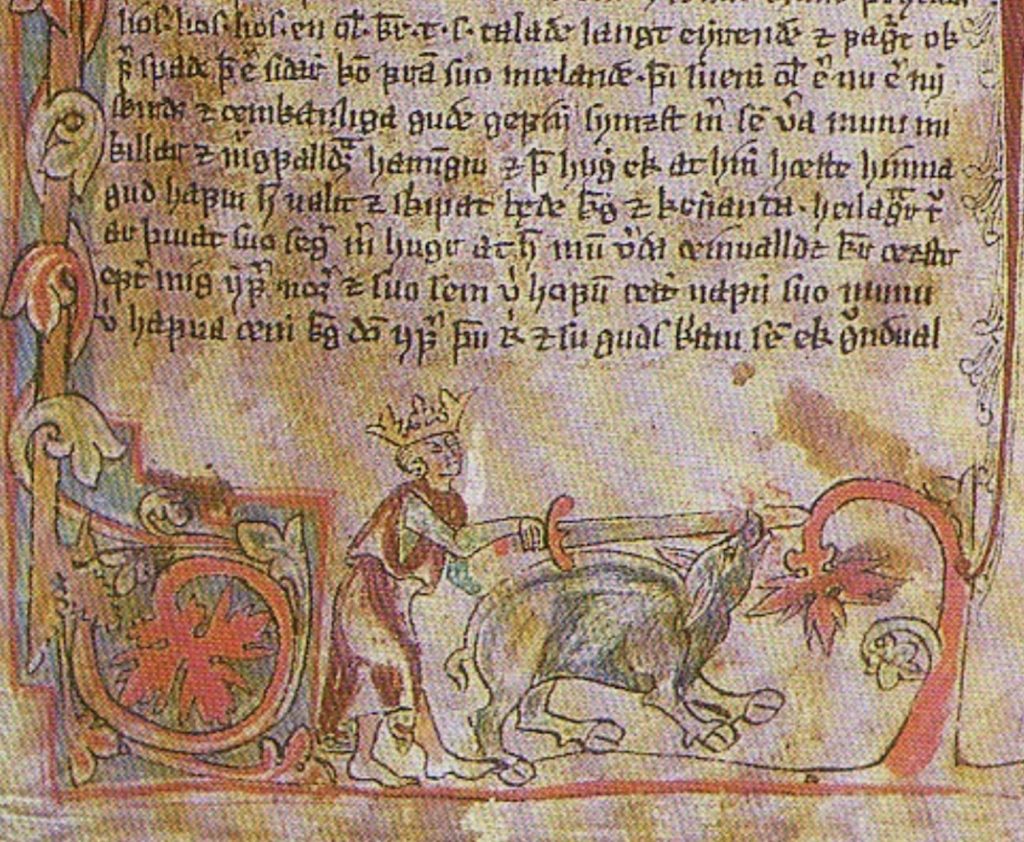
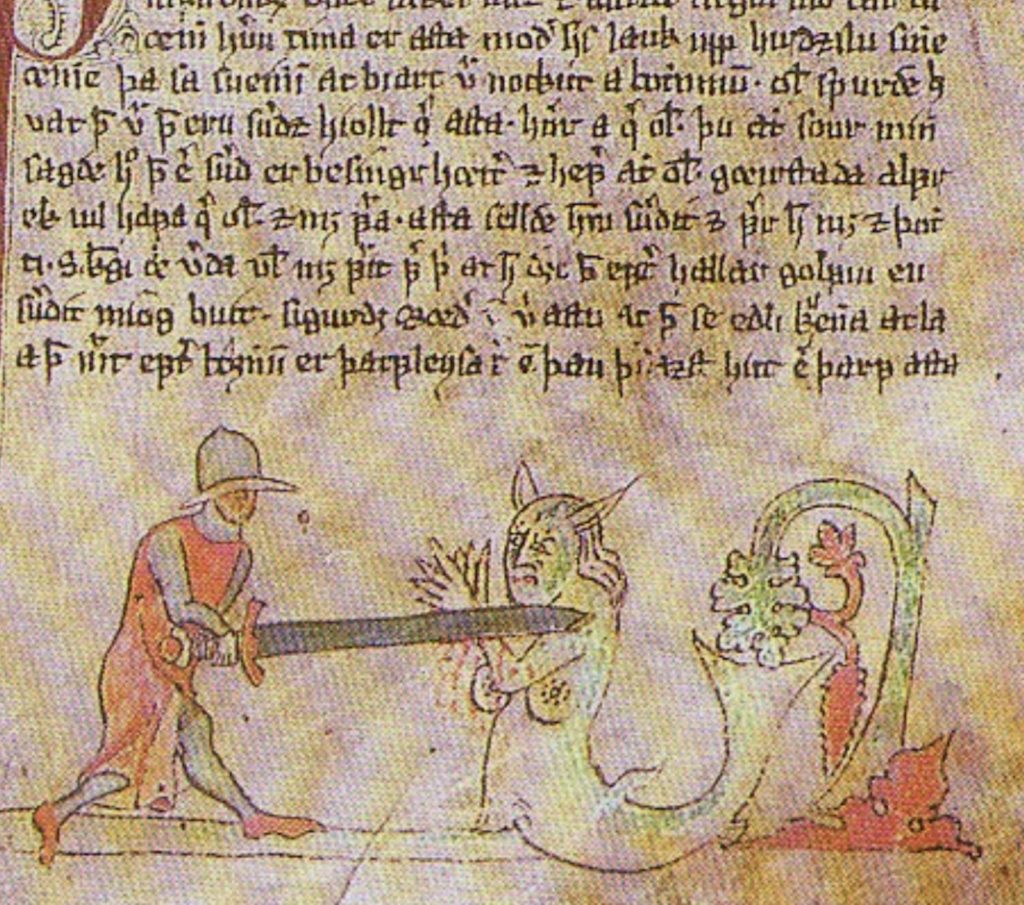
Drinking with the Devil. Reykjavík, Stofnun Árna Magnússonar í íslenskum fræðum, AM 673 a III 4to (Teiknibók), 18v. Image from handrit.is

Pick the right day to celebrate

If you lived in the Middle Ages, deciding when to host your winter festivities could be tricky. For a long time, as Scandinavia gradually converted to Christianity, the winter months saw the coexistence of two different Yule festivals: Christian Christmas and pagan Jól. The latter was likely celebrated differently across the region but said in one king’s saga, Hákonar saga góða, to begin on midwinter night and continue for three nights. These diverging celebrations became a point of friction during the conversion process so, around the middle of the tenth century, the Christian Norwegian king, Hákon the Good, attempted to consolidate the two. According to his saga, he decreed that ‘observance of Yule should begin at the same time as Christian people observed Christmas’ (97).

Although not without its challenges, this was a clever move. We can see its legacy several decades later in Óláfs saga helga, which describes the changing customs of a man named Sigurðr:

During the pagan period, he was accustomed to hold three sacrificial banquets every year, one at the winter nights, the second at midwinter, the third in the summer. And when he accepted Christianity, he still kept up his established custom with the banquets. Then, in the autumn he held a great party for his friends, and also a Yule feast in the winter and then again invited many people; a third banquet he held at Easter. (127)

Once you’ve settled on a date to celebrate, make sure you invite the right people – and if you get an invitation to someone else’s Yule-feast, it’s bad form to not show up. Some time after Sigurðr’s death, his brother Þórir invited his son Ásbjǫrn to a Yule feast, but Ásbjǫrn refused the invitation. Þórir took this as a personal slight and in return made such great mockery of Ásbjǫrn and his expeditions that Ásbjǫrn sullenly ‘stayed at home during the winter and went to no parties’ (131). A sad fate indeed.

Choose the perfect gifts

To be a powerful king in medieval Scandinavia, you had to surround yourself with groups of loyal retainers who would feast with you, fight for you, and uphold your rules. This loyalty needed to be rewarded, and Yule was the perfect time for kings and other powerful men to shower their best retainers with gifts. There’s even a term for gifts given in this season: ‘jólagjǫf’. In Óláfs saga helga, for instance, it is said that the king had a custom of ‘making great preparations, […] gathering together his treasures to give friendly gifts on the eighth evening of Yule’ (199). One of these gifts was a beautiful gold-adorned sword, given to his skald Sigvatr. This was said to be a fine, enviable treasure, though perhaps not as enviable as Óláfr’s earlier gift to Brynjólfr, which he received with a rather unimaginative verse:

Bragningr gaf mér
brand ok Vettaland.

The ruler gave me a sword and Vettaland (an important estate). (51)

Yule-gifts were also an important way to cement friendships and alliances in Scandinavian and Icelandic society, for which clothes appear to have been a popular choice. According to Laxdæla saga, King Haraldr Fairhair once gifted Óláfr Peacock ‘an entire suit of clothes made from scarlet’ (30). Even more impressive is a set of Yule-gifts exchanged between the Norwegian Arinbjǫrn and the Icelander Egill in Egils saga:

As a customary Yuletide gift, [Arinbjorn] gave Egil a silk gown with ornate gold embroidery and gold buttons all the way down, which was cut especially to fit Egil’s frame. He also gave him a complete set of clothes, cut from English cloth in many colours. Arinbjorn gave all manner of tokens of friendship at Yuletide to the people who visited him, since he was exceptionally generous and firm of character. (134)

Of course, before you splash out on expensive swords or clothes, you need to make sure the receiver is worthy of your gift. This is what King Raknarr did on the eve before Yule in the semi-legendary Bárðar saga snæfellsáss, entering the hall of King Óláfr Tryggvason, decked out with armour, helmet, sword, gold necklace, and gold ring. After going round the room to no response, he finally announces scathingly: “Here have I come and nothing at all has been offered to me by this great figure. I shall be more generous for I shall offer to award those treasures that I have here now to that man who dares to take them from me — but there is no one like that here.” (261)

Raknarr’s passive aggressive gifting strategy may not be the best example to follow, particularly as he turns out to be a reanimated corpse who must be slain by the hero Gestr. Instead, why not take inspiration from the troll-woman Hít in the same saga (254), whose Yule party favor for Gestr is a wonderfully loyal dog!

Feast and be merry!

Once you’ve bought and wrapped your presents, the next step is to plan your menu. The sagas are full of Yule feasts, although they rarely provide specific details of what is actually eaten. At one point in Eiríks saga rauða, for example, Eiríkr is hosting a number of voyagers over the winter at his home in Greenland, but starts to become gloomy as Yule approaches for he does not have the resources to throw them all a proper holiday feast. One of the voyagers, Karlsefni, comes to his rescue, offering him use of their provisions:

“[...] We’ve malt and flour and grain aboard our ships, and you may help yourself to them as you will, to prepare a feast worthy of your generous hospitality.”

Eirik accepted this. Preparations for a Yule feast began, which proved to be so bountiful that men could scarcely recall having seen its like. (11)

What exactly was in that grand feast goes entirely unstated, but it clearly involved some kind of malt, flour, and grain.Hákonar saga góða does suggest that horse meat was an important part of pagan Yule and other feasts. One winter, the saga relates, King Hákon attended a Yule feast with a large number of farmers from Þrándheimr, where he was very reluctantly forced to eat a few pieces of horse-liver and ‘drank all the toasts that the farmers poured for him without the sign of the Cross’ (102). It’s never good to offend your hosts — especially when they are armed.

One way to get into the sacred spirit of Christmas in advance of the gluttony to come is to fast in preparation. Indeed, not doing so could have dire consequences. In Grettis saga, the ill-tempered Glámr demanded meat from his wife on the eve of Yule. She tried to dissuade him, saying, “It’s not the Christian custom to eat on this day, because tomorrow is the first day of Christmas. It is our duty to fast today.” (101) Glámr scoffed at this, claiming a preference for the old pagan ways, and tucked into his meat. That very night, he was found dead in the snow and, even worse, eventually rose again to haunt the area.

As Christianity became the dominant religion in Scandinavia, later kings were less accepting of the old customs. One winter, King Óláfr the Holy got word that the farmers of Innþrœndir had been holding forbidden midwinter sacrificial feasts, and summoned a representative to explain themselves. But the quick-thinking man had the perfect excuse:

“We held,” he says, “Yule banquets and in many places in the districts drinking parties. The farmers do not make such scant provision for their Yule banquets that there is not a lot left over, and that was what they were drinking, lord, for a long time afterwards. At Mærin there is a large centre and huge buildings, and extensive settlements round about. People find it good to drink together there for enjoyment in large numbers.” (117)

The king remained suspicious, but could not fault the farmer’s logic. For, if there’s one thing about Christmas that everyone can agree on, it’s the importance of alcohol.

Drink… but not too much

When King Hákon the Good ordered the convergence of Yule and Christmas, he had one condition of how to celebrate: each person was to consume a measure of ale (16.2 litres, according to one estimate) and celebrate for as long as the ale lasted, or else pay a fine (97).

Drinking is a key component of most Yule feasts described across the sagas. Even core principles like seeking vengeance for fallen kin must come second. In Hákonar saga herðibreiðs, for instance, King Ingi relates that he told one man about the killing of another, sure that he would be spurred to vengeance, but ‘those people behaved as if nothing was as important as that Yule drinking feast and it could not be interrupted’ (227).

In fact, throughout the sagas, Yule-drinking (‘jóla-drykkja’) causes all sorts of problems. According to Óláfs saga helga, a Yule drinking competition in Jamtaland naturally led to bickering between Norwegians and Swedes, and the spilling of secrets as ‘the ale spoke through the Jamtr’ (172). In Eyrbyygja saga, Þórólfr bægifótr got his thralls drunk at Yule and convinced them to burn down an enemy’s house (168–69). The troll-woman’s Yule-feast in Bárðar saga Snæfellsáss steadily deteriorated as the drinking got heavier, leading to a rowdy game, a bloody nose, and a long feud (253).

Even without alcohol, Yule became a time of battle and slaughter throughout the sagas of kings. It is only in Magnúss saga blinda ok Haralds gilla that the two titular warring kings accepted a Christmas truce ‘because of the sanctity of the time’, although Magnúss did use this opportunity to fortify his town and ‘no more than three days over Yule were kept sacred so that no work was done’ (175).

This is a good example for academics everywhere: as much as we might feel the need to work over the holidays, there comes a time to put down our books, buy some gifts, and feast with family, friends, and nemeses — even if it is for just three days over Yule. If you manage to do so, you might just make it through the season alive.

Ashley Castelino, DPhil
Public Humanities Postdoctoral Fellow 
Medieval Institute, University of Notre Dame 

Bibliography

Bard’s Saga [Bárðar saga snæfellsáss]. Translated by Sarah M. Anderson. In The Complete Sagas of Icelanders, edited by Viðar Hreinsson. Vol. 2. Leifur Eiríksson, 1997.

Egil’s Saga [Egils saga]. Translated by Bernard Scudder. In The Complete Sagas of Icelanders, edited by Viðar Hreinsson. Vol. 1. Leifur Eiríksson, 1997.

Erik the Red’s Saga [Eiríks saga rauða]. Translated by Keneva Kunz. In The Complete Sagas of Icelanders, edited by Viðar Hreinsson. Vol. 1. Leifur Eiríksson, 1997.

The Saga of Grettir the Strong [Grettis saga]. Translated by Bernard Scudder. In The Complete Sagas of Icelanders, edited by Viðar Hreinsson. Vol. 2. Leifur Eiríksson, 1997.

The Saga of the People of Eyri [Eyrbyggja saga]. Translated by Judy Quinn. In The Complete Sagas of Icelanders, edited by Viðar Hreinsson. Vol. 5. Leifur Eiríksson, 1997.

The Saga of the People of Laxardal [Laxdæla saga]. Translated by Keneva Kunz. In The Complete Sagas of Icelanders, edited by Viðar Hreinsson. Vol. 5. Leifur Eiríksson, 1997.

Snorri Sturluson. Hákonar saga góða. In Heimskringla, translated by Alison Finlay and Anthony Faulkes. Vol. 1. Viking Society for Northern Research, 2011.

Snorri Sturluson. Hákonar saga herðibreiðs. In Heimskringla, translated by Alison Finlay and Anthony Faulkes. Vol. 3. Viking Society for Northern Research, 2015.

Snorri Sturluson. Óláfs saga helga. In Heimskringla, translated by Alison Finlay and Anthony Faulkes. Vol. 2. Viking Society for Northern Research, 2014.
Longfellow’s Christianizing Rhetoric: ‘Preached the Gospel with His Sword’

Henry ​​Longfellow’s “Musician’s Tale: The Saga of King Olaf” from his Tales of the Wayside Inn appears on the surface to be little more than a retelling and versification of the Old Norse-Icelandic saga Heimskringla which includes accounts of King Olaf Tryggvason. Of course, in the process, Longfellow adapts the medieval story honoring converter-king Olaf Tryggvason in his modern English translation suited for American audiences and his poem is mediated through Samuel Laing’s translation which Longfellow used as a model. Situating the poem in its the historical context, I would argue, highlights some of the rhetorical implications surrounding early American works of medievalism, such as Longfellow’s “The Saga of King Olaf.”

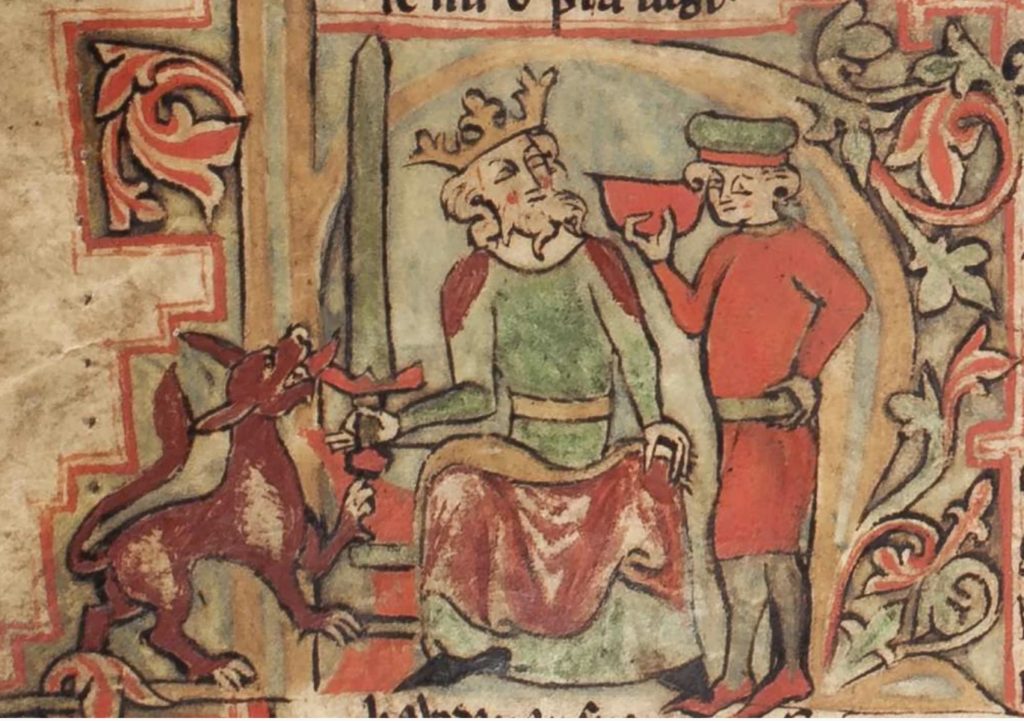
Miniature of Olaf Tryggvason in Flateyjarbók (1387).

Archaic diction, especially medieval English terms and compounds, adorn the epic poetic retelling of the saga, such as the line “Through weald, they say, and through wold,” which include two alliterating terms “weald” [a forest] and “wold” [a wooded hill], both deriving from the Old English word wold meaning “wilderness,” and this embeds archaism into the poem.

In the previous blog, I included the opening stanza of the epic poem, “The Challenge of Thor” which Olaf then answers:

“And King Olaf heard the cry,
Saw the red light in the sky,
  Laid his hand upon his sword,

There he stood as one who dreamed;
And the red light glanced and gleamed
  On the armor that he wore;
And he shouted, as the rifted
Streamers o’er him shook and shifted,
  “I accept thy challenge, Thor!”

This initiates the presentation of Olaf as a violent converter and warrior of Christ, which makes him an enemy of indigenous Scandinavian religion.

Religion continuously causes tension in the poem. When Queen Sigrid, whom Olaf pursues as his queen, refuses to convert to Christianity, he beats her in punishment, demonstrating again his use of violent conversion.

“A footstep was heard on the outer stair,
And in strode King Olaf with royal air.

He kissed the Queen’s hand, and he whispered of love,
And swore to be true as the stars are above.

But she smiled with contempt as she answered: “O King,
Will you swear it, as Odin once swore, on the ring?”

And the King: “O speak not of Odin to me,
The wife of King Olaf a Christian must be.”

Looking straight at the King, with her level brows,
She said, “I keep true to my faith and my vows.”

Then the face of King Olaf was darkened with gloom,
He rose in his anger and strode through the room.

“Why, then, should I care to have thee?” he said,–
“A faded old woman, a heathenish jade!

His zeal was stronger than fear or love,
And he struck the Queen in the face with his glove.“

This section, surely designed to demonstrate Olaf’s Christian zeal, reveals to Sigurd how abusive a husband he would be, and her decision not to wed him, while couched in fidelity to her indigenous beliefs, could have just as much to do with the violence he displays toward her as a result of her assertion of her voice and her commitment to her beliefs.

Olaf’s violence persists as he converts the pagans—frequently called warlocks and witches—but Longfellow seems to applaud the deliverance of his enemies for “thus the sorcerers were christened!”

Held up as validation of his conversionary conquests, Olaf finds the ghost of Odin, and proclaims the Allfather dead:

“King Olaf crossed himself and said:
“I know that Odin the Great is dead;
Sure is the triumph of our Faith,
The one-eyed stranger was his wraith.”

Longfellow’s narrative takes this a step further later in the poem,

“All the old gods are dead,
All the wild warlocks fled;
But the White Christ lives and reigns,
And throughout my wide domains
His Gospel shall be spread!”
On the Evangelists
Thus swore King Olaf. 

Olaf Tryggvason in the late fourteenth-century Icelandic manuscript Flateyjarbok (1387). This image has been sourced from Handrit.is.

When it comes to human sacrifice, Olaf threatens that if the pagan practice continues, then it will be the upper not the lower class offered as sacrifices to the gods, and in making this threat of violence against the aristocracy, convinces them to give up the practice.

“Such sacrifices shalt thou bring;
    To Odin and to Thor, O King,
As other kings have done in their devotion!”

    King Olaf answered: “I command
    This land to be a Christian land;
Here is my Bishop who the folk baptizes!

    “But if you ask me to restore
    Your sacrifices, stained with gore,
Then will I offer human sacrifices!

    “Not slaves and peasants shall they be,
    But men of note and high degree,
Such men as Orm of Lyra and Kar of Gryting!”

   Then to their Temple strode he in,
   And loud behind him heard the din
Of his men-at-arms and the peasants fiercely fighting.

    There in the Temple, carved in wood,
    The image of great Odin stood,
And other gods, with Thor supreme among them.

    King Olaf smote them with the blade
    Of his huge war-axe, gold inlaid,
And downward shattered to the pavement flung them.

    At the same moment rose without,
    From the contending crowd, a shout,
A mingled sound of triumph and of wailing.

    And there upon the trampled plain
    The farmer Iron-Beard lay slain,
Midway between the assailed and the assailing.

    King Olaf from the doorway spoke.
    “Choose ye between two things, my folk,
To be baptized or given up to slaughter!”

    And seeing their leader stark and dead,
    The people with a murmur said,
“O King, baptize us with thy holy water.” 

Even the notoriously unruly Thangbrand, described repeatedly as “Olaf’s Priest” and credited with Christianizing Iceland through violence, is praised for his efforts and paralleled with Olaf’s missionizing work:

All the prayers he knew by rote,
  He could preach like Chrysostome,
From the Fathers he could quote,
  He had even been at Rome,
    A learned clerk,
    A man of mark,
Was this Thangbrand, Olaf’s Priest.

He was quarrelsome and loud,
  And impatient of control,
Boisterous in the market crowd,
  Boisterous at the wassail-bowl,
    Everywhere
    Would drink and swear,
Swaggering Thangbrand, Olaf’s Priest

In his house this malcontent
  Could the King no longer bear,
So to Iceland he was sent
  To convert the heathen there,
    And away
    One summer day
Sailed this Thangbrand, Olaf’s Priest. 

Of course, when met with resistance from those still adhering to indigenous cultural practice, Thrangbrand resorts to violence, in accordance with his benefactor:

Hardly knowing what he did,
  Then he smote them might and main,
Thorvald Veile and Veterlid
  Lay there in the alehouse slain.
    “To-day we are gold,
    To-morrow mould!”
Muttered Thangbrand, Olaf’s Priest. 

Much in fear of axe and rope,
  Back to Norway sailed he then.
“O King Olaf! little hope
  Is there of these Iceland men!”
    Meekly said,
    With bending head,
Pious Thangbrand, Olaf’s Priest

The final line of this stanza is repeated twice in the poem, communicating the violent nature of Olaf’s mission and emphasizing the brutality associated with his Christianization of the indigenous cultural practice.

In their temples Thor and Odin
Lay in dust and ashes trodden,
As King Olaf, onward sweeping,
    Preached the Gospel with his sword

Miniature of Olaf Tryggvason in Flateyjarbók (1387).

The ethnonationalist overlay, as well as situating this saga retelling as a tale in colonial America, parallels the violent Christianization of indigenous peoples in North America, extending from the earliest colonial period to the ongoing American “Indian wars,” which the United States government was conducting, and which would not conclude until after the Civil War. “White Man’s Burden” justifications loomed large, and literature such as Longfellow’s “Musician’s Tale” support the continued Christianization and Westernization of indigenous cultures in the United States as around the globe to European colonial powers.

Although primarily revered as a scholar and poet, Longfellow was also an abolitionist who supported the anti-slavery movement in the mid-nineteenth century with both his art and his resources, and in 1842 write Poems on Slavery in an effort to draw attention to the inhumane cruelty of slavery, and he contributed financially to abolitionist organizations and individuals. Additionally, Longfellow was intrigued by indigenous peoples, and Longfellow’s most famous poem, The Song of Hiawatha, tells a fictionalized tale in part inspired by Ojibwe legend, but likely influenced by nationalistic epic projects, such as the Finnish Kalevala. Of course, Longfellow’s goal to include Anishinaabe legend in American literary canon could be viewed as inclusive in that it offers Anishinaabe peoples representation that might help preserve and celebrate their cultural heritage. However, Longfellow’s poem, perhaps unconsciously or subconsciously, reinforces harmful stereotypes and corroborates assimilation attempts by missionaries and government Indian agents to Anglicize indigenous people, which worked to erase cultural practices and identities.

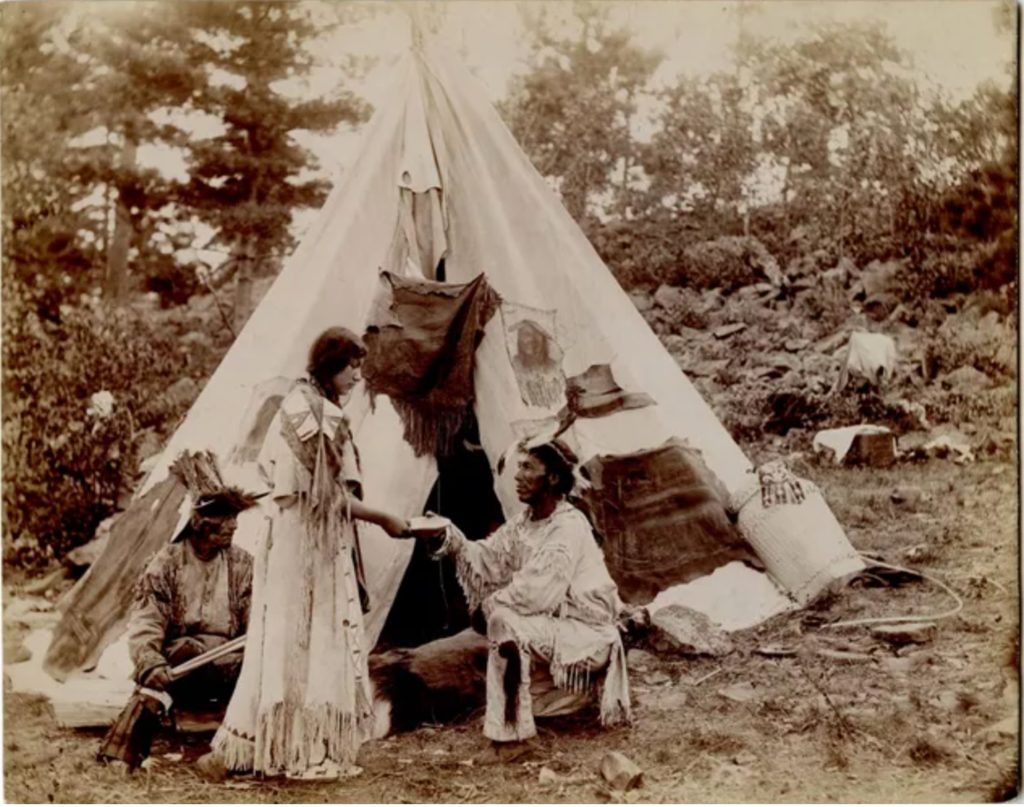
Theatrical portrayal of Hiawatha proposing to Minnehaha, NPS Photo, Longfellow Family Photograph Collection, LONG Collections.

Longfellow’s interest in King Olaf I aligns him with other romantic antiquarians, but the rhetoric that emerges from a retelling of an Old-Norse Icelandic saga as a tale told in the cozy Wayside Inn in colonial Massachusetts creates an ethnonational link with medieval Europe and a religious model for conversion subjugation of indigenous peoples and belief systems by force and through an overt threat of violence. Since the advent of early modern European colonialization, efforts to Westernize indigenous people in North America were part of the same tradition of civilizing heathens through violent missionizing, just as certain early medieval Christianizing kings, such as Olaf I and Charlemagne, practiced conversion by the sword.

Longfellow articulates a melancholy nostalgia and romantic reverence for indigenous people, stating:

“As population advances westward, the plough-share turns up the wasted skeleton; and happy villages arise upon the sites of unknown burial-places. And when our native Indians, who are fast perishing from the earth, shall have left forever the borders of our wide lakes and rivers, and their villages have decayed within the bosom of our western hills, the dim light of tradition will rest upon those places, which have seen the glory of their battles, and heard the voice of heir eloquence;—and our land will become, indeed, a classic ground.”

However, the use of pronouns—us and them—demonstrates Longfellow’s view that the time for the indigenous is over as United States continues expanding west, an idea that remains toxic to the numerous, yet all-too-invisible, indigenous communities who resides in every state in the union.

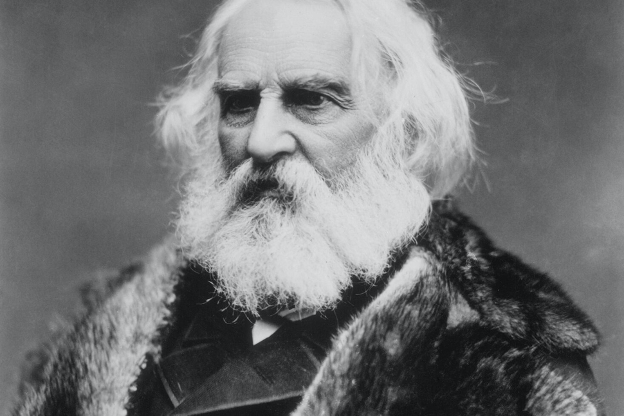
Portrait of Henry Wadsworth Longfellow, Science History Images / Alamy Stock Photo.

Moreover, Longfellow’s medievalism participates in a broader social trend that serves to connect America with Europe through a shared historical and ethnonationalist identity. This rhetorical implication and paralleling create an historical allegory and provides the rationale for acts of genocide perpetrated by the American government and European colonists against indigenous peoples in North America, and the “New World” more broadly. It further reinforces as well, the New World—Old World rhetorical connection. Like many medieval theologians parallel the Old Testament with the New Testament, and at times use the Old Testament as a source of prophecy, Christianization of the indigenous Old World of the pagan North serves as a prophetic roadmap for Manifest Destiny and American westward expansion, which frequently employ violence and committed acts of genocide as a means of Christianizing and Westernizing indigenous peoples.

Richard Fahey, Ph.D.
Medieval Studies
University of Notre Dame