This short research blog focuses on the development of the word ἁμαρτάνω “to sin” from the advent of Christianity to the late Byzantine era. The word, ἁμαρτάνω, is widely used in the Bible as it appears forty-three times. To word’s primary meaning in the Bible was to “err and sin”; however, from time to time, it was also used to signify the action of offending. ἁμαρτάνω occurs in many different forms in the New Testament as we see it in aorist first-person singular active form Ἥμαρτον” eight times, second-person singular indicative middle six times, and second-person indicative active plural form three times.[1] I will trace the different nuances in the meaning of this word in the subsequent periods, especially in the late Byzantine period. My argument is that as several Greek and non-Greek sources indicate, the word ἁμαρτάνω began having a military connotation in this period as it was applied to the Christian military units who had cooperated with the enemy forces, especially the Turks.
In Homeric times, ἁμαρτάνω had no religious connotation. The Theological Dictionary of the New Testament suggests that, initially, the word was used to convey the action of “missing” i.e failure to follow rules and signify a moral deficit or immoral physical undertaking. [2] However, in the later periods (c. 400 BCE), we begin seeing a shift from legal to religious use since ἁμαρτάνω made its way to the Book of Kings in the old testament, meaning “to rebel” against the god and his order in the earth.[3] From a theological standpoint, rebelling against the will of God means to err from the true path and therefore to sin. In this way, those who had intentionally deviated from moral or religious standards came to be defined as αμαρτωλός “the sinful one” in the later Christian religious texts.[4]
ἁμαρτάνω is mostly used to signify the action of “sin” and neglecting the commands of God with an exception of “offending” in the New Testament.[5] In the Book of Romans, for instance, we see the following structure: “γὰρ ἀνόμως ἥμαρτον ἀνόμως καὶ” which means “Indeed without law I sinned without law also[…]”.[6] Here, ἁμαρτάνω was used in the aorist, active, and indicative form. In another example, this time from the Book of Corinthians, the word is used in such a construction: “οὕτως δὲ ἁμαρτάνοντες εἰς τοὺς” meaning “thus moreover sinning against those […]” in the participle, present, active form.[7] Besides the action of sinning, ἁμαρτάνω seems to be used in a different meaning, “to offend”, in the Book of Apostles although a minor disagreement exists between various interpreters. Regarding the following phase: “Καίσαρά τι ἥμαρτον[…]” while New American Standard Bible renders the word as “committing”, the King James version translate the term as “offending”. However, the new international version disagrees with these suggestions, interpreting the whole phrase as “Caesar [in] anything sinned […]”.[8]
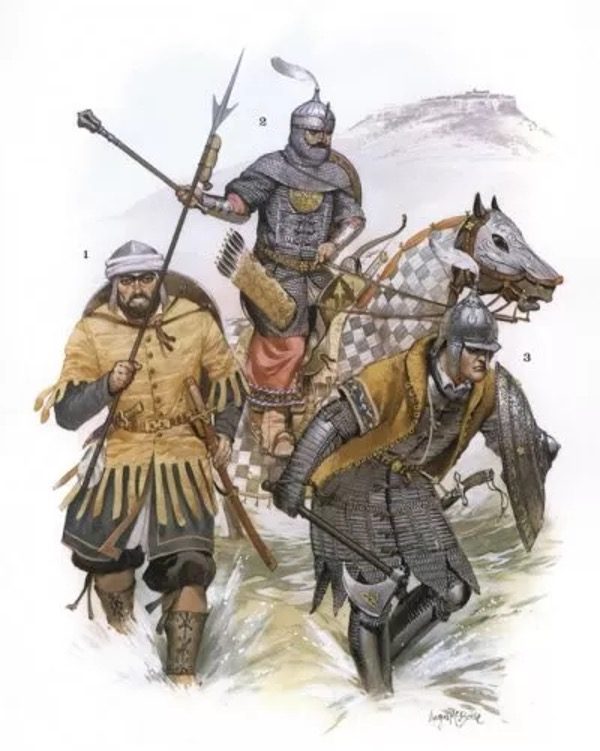
Besides its use in legal and religious spheres, towards the late Byzantine period, we begin seeing the word, ἁμαρτάνω, or its variants in Greek and Turkish texts in the military context. With the Turkish advance towards western Asia Minor and the Balkans in the later 13th and early 14th centuries, the local Greek-speaking people began adjusting to the newly established political reality in their respective territories by means of cooperating with their new rulers. A significant portion of the Greek population in these regions had converted to Islam, while others participated in the Ottoman military system as auxiliary units. As the later Byzantine writer Pachymeres states in his Ιστορία, the Greeks from Anatolia, “ἐπιμιξάντων καὶ Ῥωμαíων ἐξ ἀνατολῆς”, had occasionally joined the Turkish forces to raid the Byzantine territories in the hopes of acquiring material gain.[9] Besides Pachymeres, Doukas also refers to these Greek collaborators in his historical work, calling them “μιξοβαρβαροι” meaning half-Greek and half-Turks.[10] Although these authors shunned using the word, ἁμαρτωλός, several Turkish authors borrow this term from their Greek correspondents. An early Ottoman called Aşıkpaşazade reports that the founder of the Ottoman principality, Osman Gazi, had a “martolos” ( مارتلوس) by the name of Artun who acted as a spy in the Byzantine territories for the Ottomans.[11] After the Ottoman conquests in the Balkans, as the land surveys indicate, the Ottomans had given landed estates to several Christian military units who were also called “martolos”.[12]
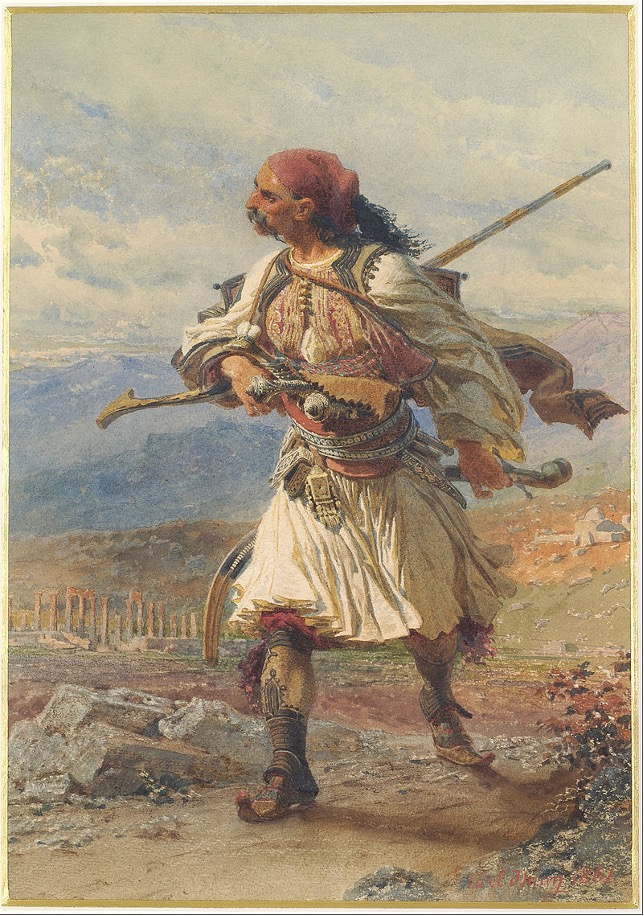
Lastly, after the mid-fourteenth century, the Ottomans also formed provincial forces in mainland Greece named “armatolos” which had a clear phonetic resemblance with the word “amartolos”. Although several scholars argued that this term had derived from a medieval loan word from Latin arma “weapon” via Greek αρματολός it is also within the boundaries of possibility that the development of that word might have originated from αμαρτωλός since the use of the latter preceded the former. During the Greek War of Independence (1821-1828), these αρματολός units had actively participated in military encounters against the Ottoman forces as we are able to trace their role in Greek folk songs: “συλλογιστείτε το καλά, /ότι (: γιατί) σας καίμε τα χωριά· / γρήγορα τ’ αρματολίκι,/ οτ’ ερχόμαστε σαν λύκοι” “Think well, / that [why] we burn your villages; / quickly the armatoliki, / that we come like wolves”.[13]
In sum, ἁμαρτάνω had no religious implications during Homeric times as it was used to convey the idea of “missing” (i.e. “missing the mark”). However, in the later periods, it started appearing in the Bible as the word began to signify the act of transgression against the word of God. In the late Byzantine period, however, a derivation of this word, ἁμαρτωλός, was used for Christians who cooperated with the enemy forces since it was thought that they rebelled against God by aligning themselves with the non-Christian adversaries.
[1] Thesaurus Linguae Graecae. Search for word: ἁμαρτάνω.
[2]Danker, Frederick W. et al., A Greek-English Lexicon of the New Testament and Other Early Christian Literature (Exeter: Eerdmans, 1974) 44.
[3] Ibid. 43.
[4] Oxford Classical Greek Dictionary, ed. James Morwood and John Taylor, (Oxford: Oxford University Press, 2002)
[5] Geoffrey W. Bromiley. Theological Dictionary of the New Testament. Exeter: William Eerdmen Publishing, 1985. 49.
[6] www.biblegateway.com, Romans 2:12-16.
[7] www.biblegateway.com, Corinthians 8-12.
[8] www.biblegateway.com, Acts 25:8.
[9] George Pachymeres, Relations Historiques, ed. Albert Failler, 5 vols (Paris, 1984–2000) 4:643.18.
[10] Doukas, Decline and Fall of Byzantium to the Ottoman Turks by Doukas, ed. Harry Magouilas. Detroit, 1975. 33.
[11] Aşıkpaşazade, Osmanoğulları’nın Tarihi ed. Kemal Yavuz and Yekta Saraç. İstanbul: MAS Matbaacılık, 2003. 324.
[12] Suret-i Defter-i Sancak-ı Tirhala, ed. Melek Delilbasi and Muzaffer Arikan, (Ankara: TTK, 2001) 296-334.
[13] Demetrius Petropoulos, ελληνικα δημοτικα τραγουδια Vol1 (Greek Popular Songs), (Athens: Βασικη βιβλιοθηκη, 1958): 3-65.