Reading the Gay Rodeo Ephemera Collection for Pride Month

by Greg Bond, Sports Archivist and Curator, Joyce Sports Research Collection

In observance of LGBTQ Pride Month, Rare Books and Special Collections is pleased to highlight the recently acquired Gay Rodeo Ephemera Collection (MSSP 10128). Containing programs, posters, fliers, and other printed material, the collection documents the history of rodeo organizations and rodeo events by and for LGBTQ people.
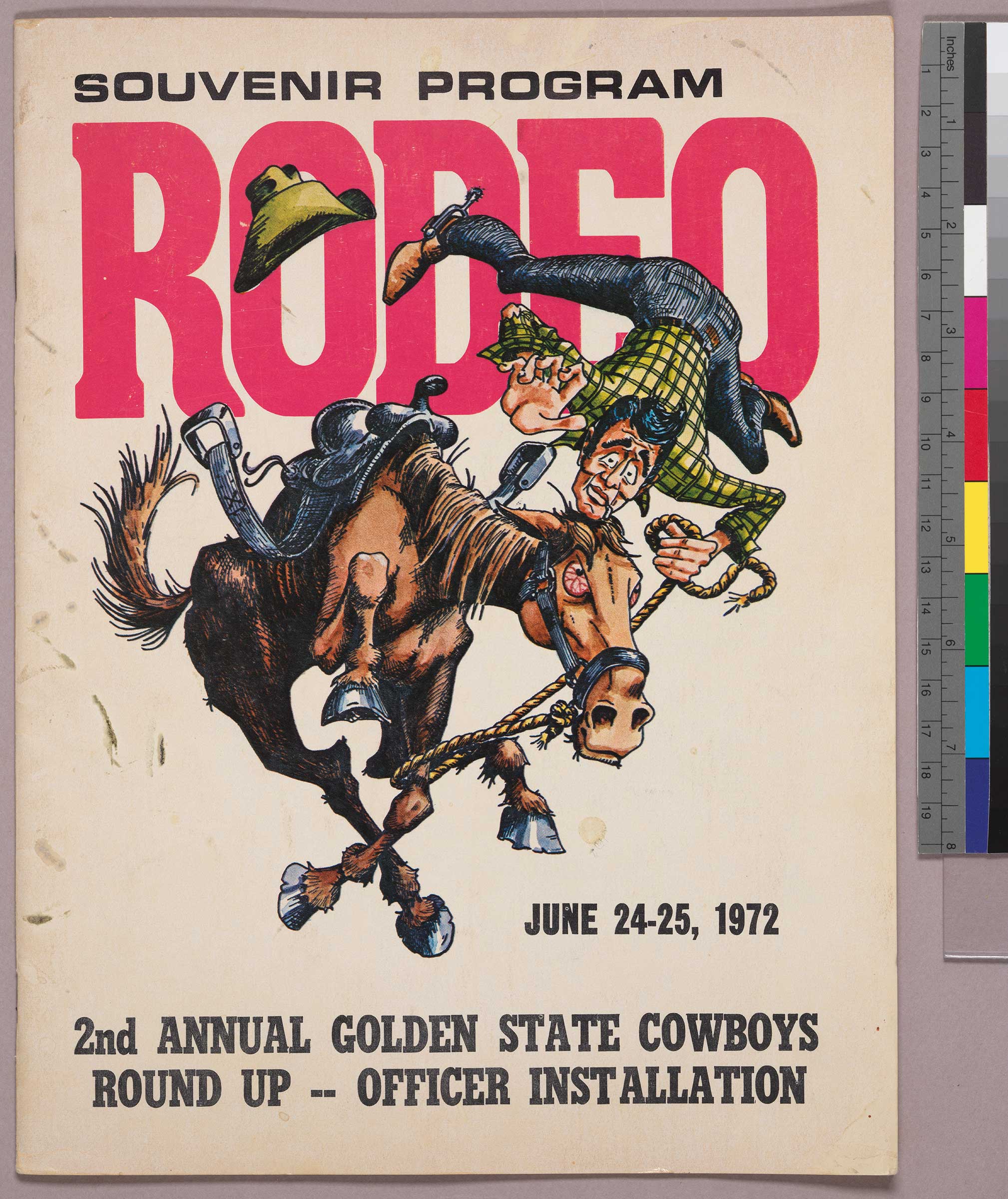
Souvenir Program, 2nd Annual Golden State Cowboys Round Up.

One of the earliest organized groups of gay rodeo enthusiasts was the California-based Golden State Cowboys (GSC) founded in 1969. In the introduction to the 1972 Souvenir Rodeo Program for the 2nd Annual Golden State Cowboys Round Up (MSSP 10128-01), GSC President Ernie Wilbanks described the group’s early history and explained the organization’s mission:

“Admittedly, we have had problems and growing pains but we have never lost our self respect and hopefully can become an even greater source of community pride. Without a goal no race is ever won and we believe the same criteria can apply to an organization without a purpose. Our purpose is one of friendship in performing those facets of service to our community that promote the honor and acceptance of our fellow man.”

Images of social events and activities from the Golden State Cowboys 1972 program.

A relatively small social organization for fans of rodeo and rodeo culture, the Golden State Cowboys folded by about 1976. Other organizations soon sprung up in the late 1970s and early 1980s—particularly in Nevada, California, and Colorado—that sponsored some of the first rodeos that explicitly featured and celebrated LGBTQ rodeo participants.

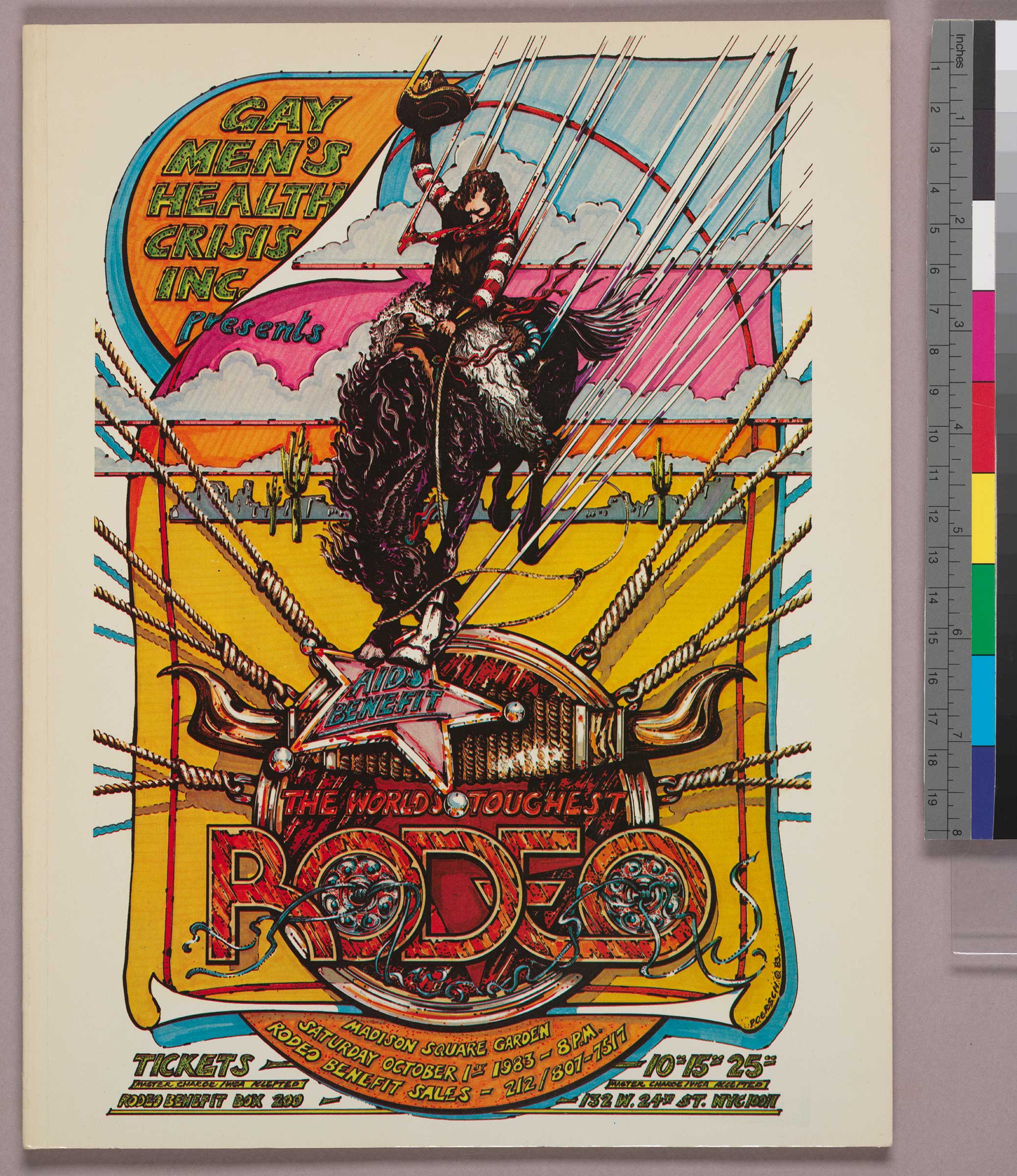
Although originating in the Western United States, organized gay rodeos slowly spread around the country. One of the earlier significant gay rodeos was held in New York City in Madison Square Garden on Saturday, October 1, 1983. Sponsored by the pioneering gay rights organization, Gay Men’s Health Crisis, Inc., the “World’s Toughest Rodeo” was an AIDS Benefit fundraiser (MSSP 10128-002).
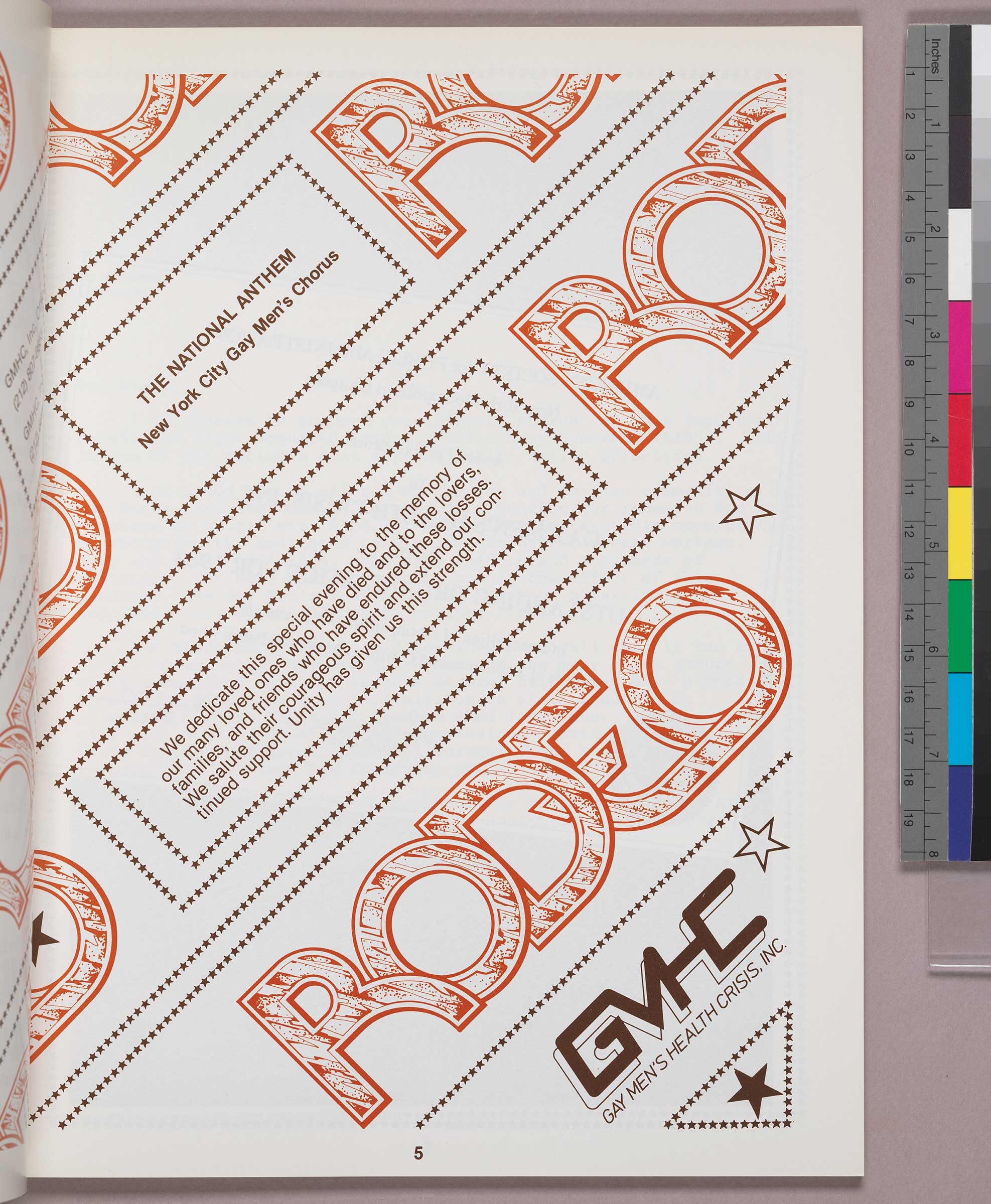
Paul Popham, the President of Gay Men’s Health Crisis, Inc., described the purpose of community-building activities like the “World’s Toughest Rodeo” in the program for the event:

“What emerged as a horrifying disease that sapped our physical strength has resulted in newly-found strength in other areas. We have discovered communal strength, spiritual strength, and political strength. We find that we are truly more powerful than we had ever dreamed. By transcending the various social boundaries that kept us apart as strangers, we find that we are not only a nation, but an entire world of brothers, sisters, and friends.

A battle it has been and continues to be. But as we march, in greater numbers, and with greater courage, love, and hope, our victory seems more possible with every step.”

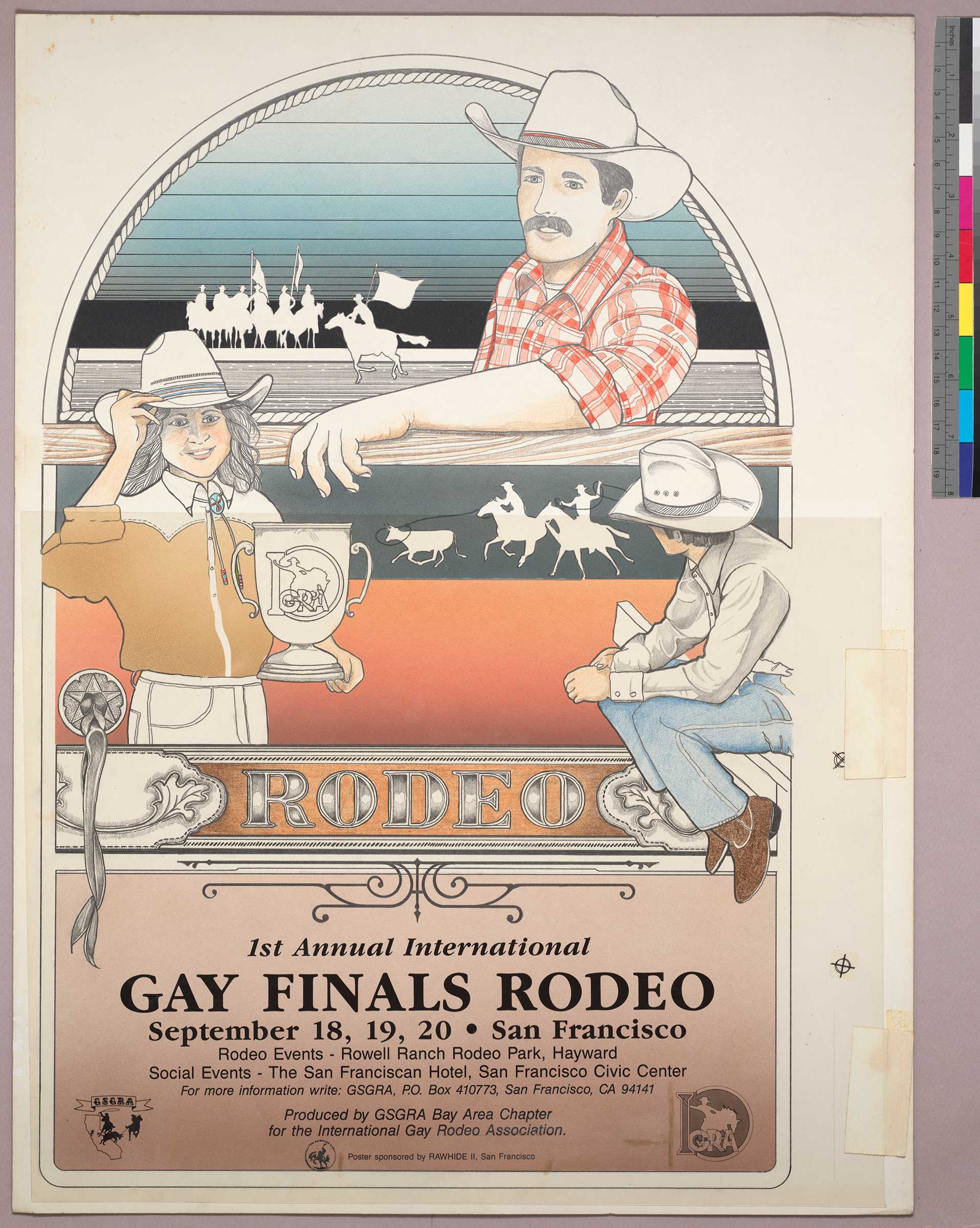
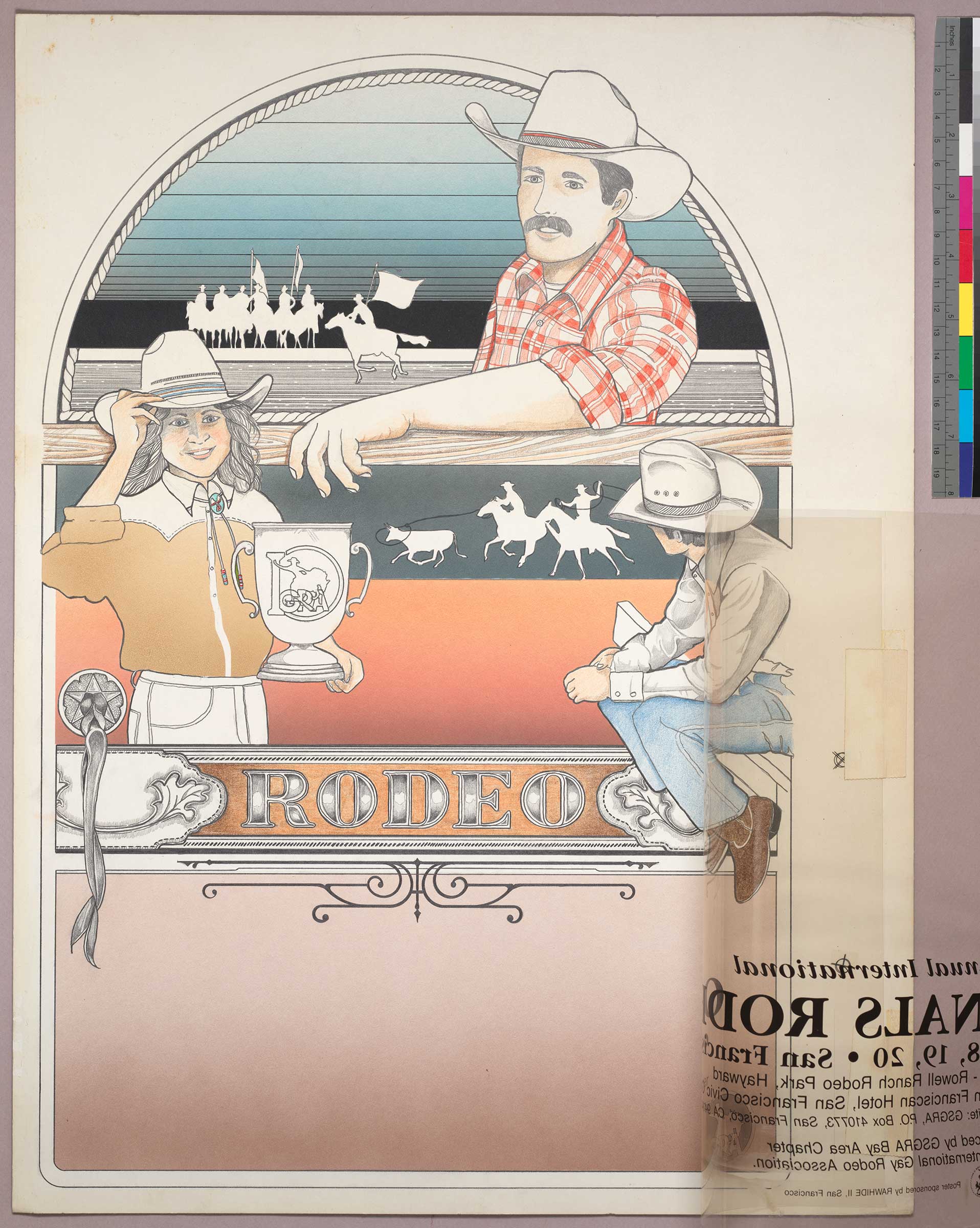
Gay rodeos increased in popularity during the 1980s and 1990s, culminating in the founding of the International Gay Rodeo Association (IGRA) in 1985. The IGRA sponsored the first International Gay Finals Rodeo competition in Hayward, California, in September 1987. RBSC’s Gay Rodeo Ephemera Collection includes a production copy of the poster for the inaugural IGRA championships (MSSP 10128-08-F2).
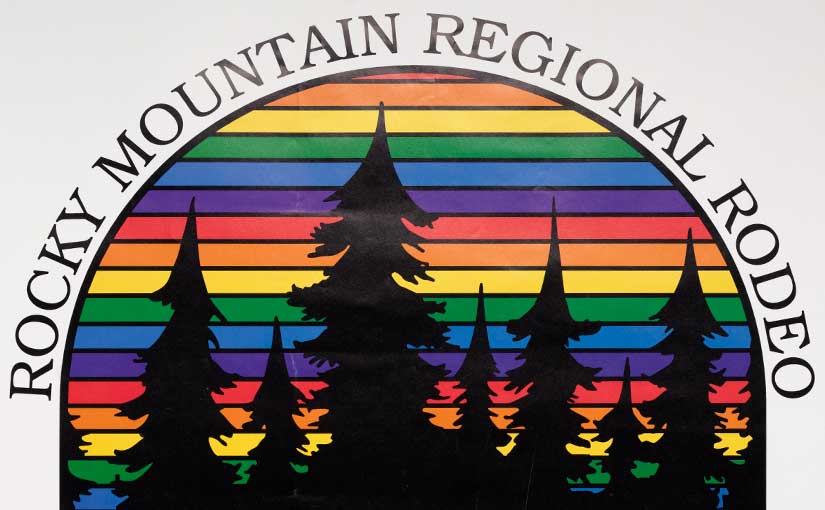
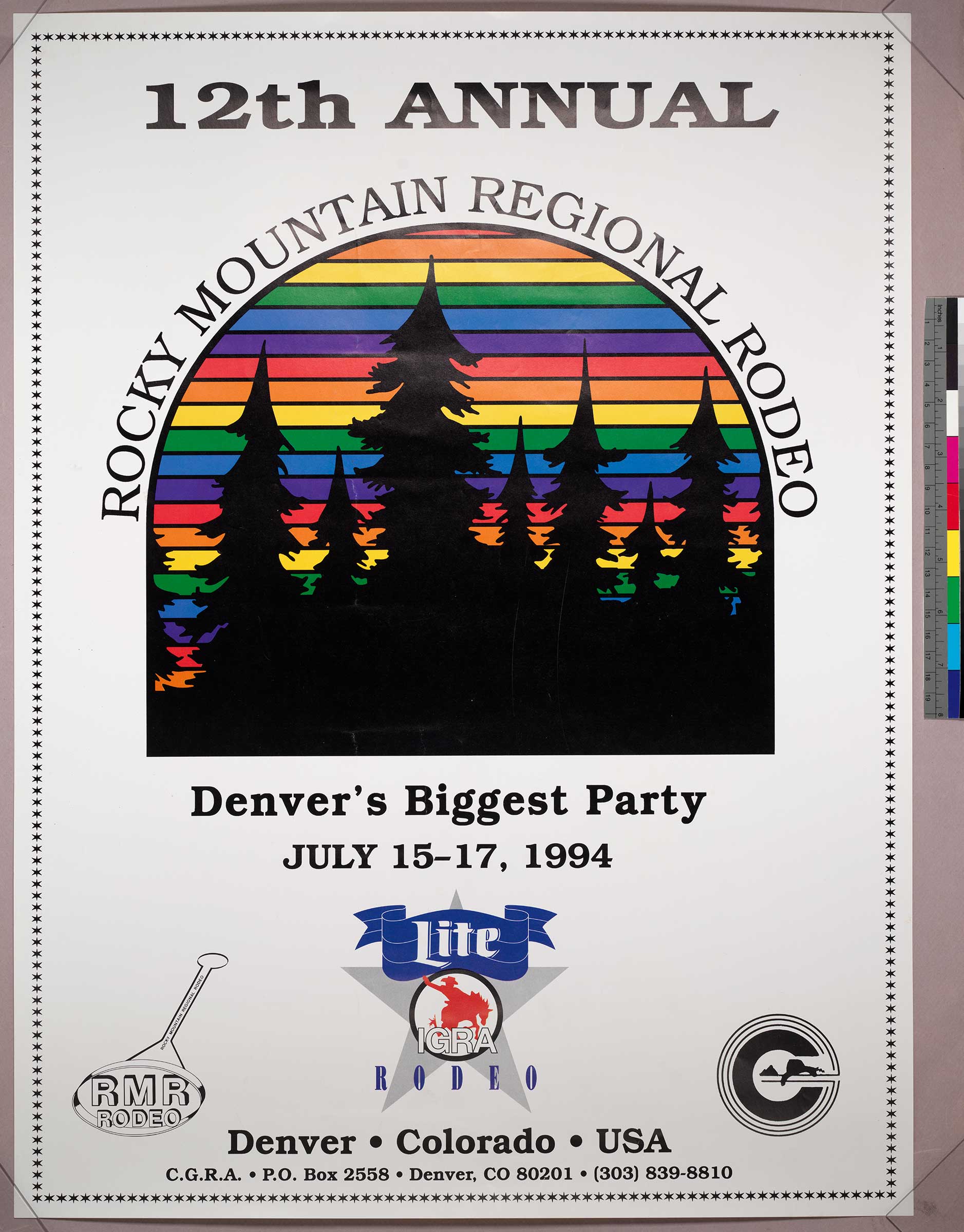
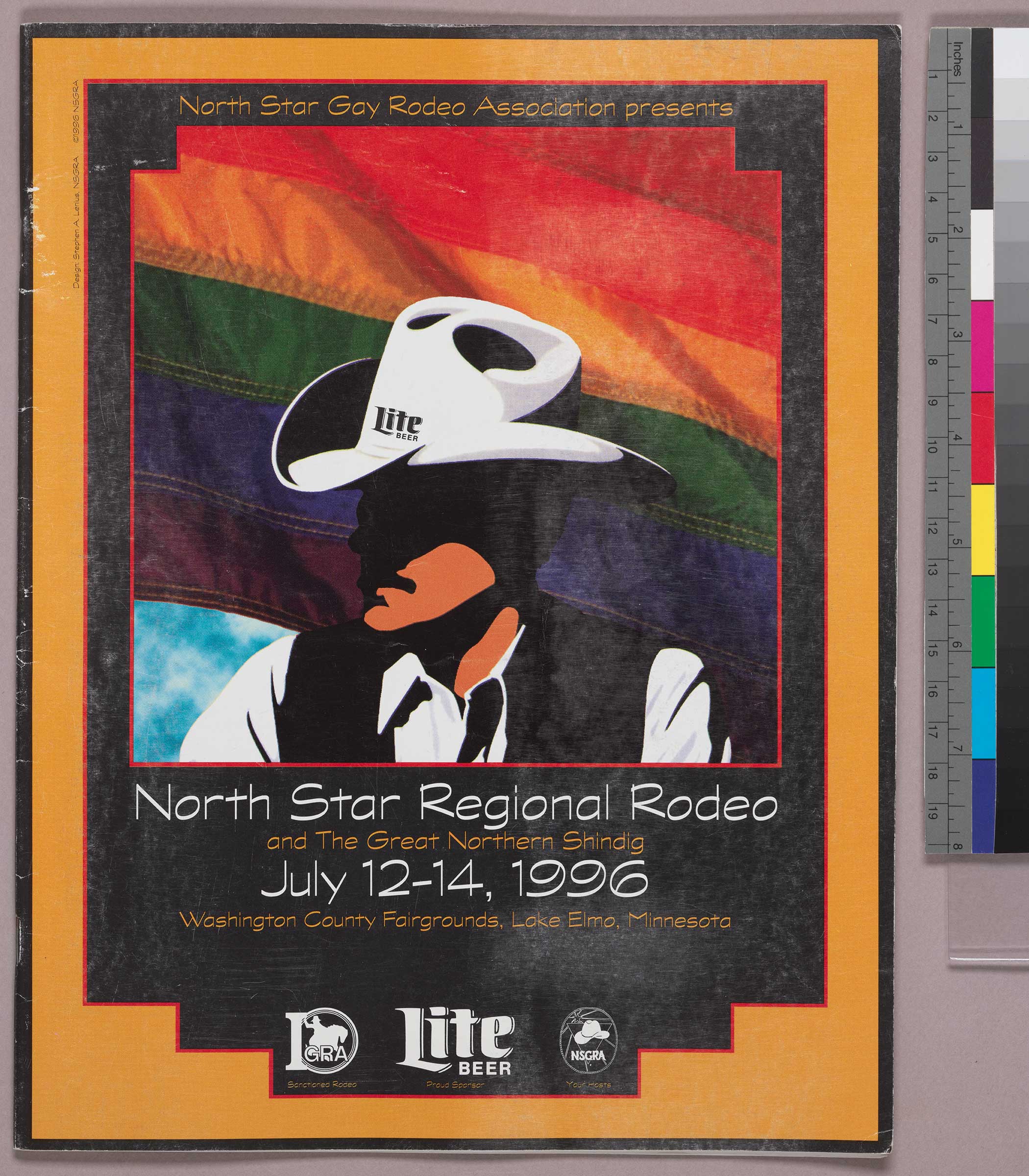
The collection includes other programs, posters, and pieces of ephemera that demonstrate the proliferation of gay rodeos. The holdings include, for example, a poster for the 1994 12th Annual Rocky Mountain Regional Rodeo sponsored by the Colorado Gay Rodeo Association (MSSP 10128-09-F2) and the program for the 1996 North Star Regional Rodeo and Great Northern Shindig in Lake Elmo, Minnesota, sponsored by the North Star Gay Rodeo Association (MSSP 10128-06). As seen on these two items, the newfound popularity of gay rodeos attracted corporate sponsors that helped to fund these events.
The Gay Rodeo Ephemera Collection is open and available to researchers. RBSC welcomes new donations to expand the contents of this important collection.


For further reading:

Nicholas Villanueva, Rainbow Cattle Co: Liberation, Inclusion, and the History of Gay Rodeo (Lincoln: University of Nebraska Press, 2004).

Gay Rodeo History: A Project Of The Gay & Lesbian Rodeo Heritage Foundation [website].

Ars praedicandi: The Materiality of the Medieval Sermon — a spotlight exhibit in Special Collections

by David T. Gura, Ph.D., Curator, Ancient and Medieval Manuscripts

During the Middle Ages, the sermon was the most influential vehicle for religious and moral instruction: virtues, vices, canon law, and living the faith all reached the masses in urban centers through preaching. The term ars praedicandi (art of preaching) describes the literary genre of treatises that provide techniques (artes) and instruction for preaching. In addition to the composition of the sermon, artes praedicandi also address how a preacher should comport himself, what to study, and even how to speak and gesture while preaching. Numerous treatises from the twelfth- and thirteenth-century on the topic survive composed by well-known masters like Alan of Lille, Richard of Thetford, Humbert of Romans, and Ranulf Higden, but many anonymous examples exist.

The June-July spotlight exhibit displays a medieval sermon composed from a variety of preaching aids and sourcebooks, and emphasizes a few of the many items from the Hesburgh Library’s collection of medieval manuscripts created for and used by actual medieval preachers.

During the thirteenth century a new, more thematic type of sermon originated in the medieval universities, particularly the University of Paris: the scholastic sermon (sermo modernus). Likewise, new religious orders focused on preaching were created: namely the Franciscans in 1209 and Dominicans in 1216, who were in need of instruction and books. This resulted, especially in Paris, in an outpouring of different types of manuscripts need for sermon composition and preaching. Pandect Bibles (all biblical books in one volume) became pocket sized and portable, and a host of preaching aids were produced. For example, knowledge was systematized into reference manuals (summae) and textual anthologies (florilegia), both of which were used in composing sermons.

According to Sigfried Wenzel’s method of analysis (2015), a typical scholastic sermon can be outlined like this:

Thema is announced (quote from Scripture that the sermon builds on)
Protheme (prepares audience and capture their good will)
Oratio (prayer for divine assistance, often Hail Mary or Our Father)
Thema is repeated
Bridge passage (adapts the thema to the intention of the sermon)
Introductio thematis (why the thema was a good choice; helped by proverb, simile, quote, story)
Diuisio thematis (thema divided into parts; meaning of the thema unfolded)
Confirmatio (confirmation or proof of divisions; often with sentence from Scripture)
Prosecutio (thema developed with subdivision, subdistinction, elaboration, examples, etc.)
Vnitio (combination of all the parts)
Conclusio (closing formula with a prayer asking for God’s grace)

Some sermon collections enjoyed broad circulation and different traditions of use. For example, ca. 1240 Philip the Chancellor composed 330 scholastic sermons on the Psalms while he was chancellor of the Cathedral of Notre Dame in Paris. These sermons originated within the university milieu, but continued to have a robust afterlife. The fragmentary copy currently in the Hesburgh Library’s collection (cod. Lat. b. 11), once was part of the Servite Library at San Marcello al Corso in Rome ca. 1382–1402, where it was used in the formation of its novices despite being over one hundred forty years old. The Servites added an ownership inscription when the manuscript entered the collection at San Marcello. By 1402 the starving friars were selling books to survive and the library burned down in 1519. A later owner erased the inscription and obscured the medieval provenance of the manuscript, which was later dismembered in Cleveland, Ohio by biblioclast Otto F. Ege. Using ultraviolet light, the erased text can be revealed and for the first time the Servites’s ownership is known.

Bibliography

David T. Gura, A Descriptive Catalogue of the Medieval and Renaissance Manuscripts of the University of Notre Dame and Saint Mary’s College, pp. 204-213. University of Notre Dame Press, 2016.

David T. Gura, “The Medieval Provenance of Otto Ege’s ‘Chain of Psalms’ (FOL 4),” Fragmentology 4 (2021): 94-99.

Sigfried Wenzel, Medieval ‘Artes Praedicandi’, pp. 48, 50-95. University of Toronto Press, 2015.