MS B44 Inferiore of Milan’s Ambrosiana Library is an unstudied aestivial (summer season) homiliary from the thirteenth century. It is an exceptionally large manuscript, measuring approximately 40cm by 30cm. An eighteenth-century librarian of the Ambrosiana marked it as a homiliary of the “Ambrosian rite,” which is not a description meaningful for ascertaining the paradigms on which the homiliary’s structure is based. The invocation of the “Ambrosian rite” does, however, point to peculiarities in the Lombard region’s liturgical calendar which B44 might reflect. The homiliary’s reflection of local liturgical traditions could best be judged through a study of its “sanctorum” portion; this, however, was not the focus of my time with the manuscript. Despite its large size and length, the homiliary only spans the summer part of the liturgical year. Its de tempore section begins with the Easter Vigil and ends with the Feast of the Nativity of the Virgin. The Feast of Mary’s Nativity was locally important since the Milanese Duomo was dedicated, from at least the eleventh century, to the Blessed Virgin’s birth.
To familiarize myself with the manuscript’s structure and homiletic content, I surveyed the sermons it included for the Easter season (1v-52r), noting sermon incipits from Easter until Pentecost. Though for the sanctorale section, there are a wide variety of authors, the Easter de tempore section largely consists of homilies from Sts. Ambrose, Bede, Gregory, and Augustine. The sermon choices are, however, eclectic, and do not match the arrangement of the paradigmatic homiliaries summarized by Réginald Grégoire in his still-unsurpassed Homéliaires Liturgiques Médiévaux. In short, MS Inf. B44’s Easter sermons do not match those included in the Roman and Toledan homiliaries, nor those in the collections of Pseudo-Fulgencius, Paul the Deacon, or Romain d’Agimond. As far as contemporary homiletic developments go, Inf. B44 also is far removed from the pocket-manuscript homiliaries popular among the mobile mendicants; more generally, the patristic collection of Easter homilies here does not reflect high medieval developments in preaching. No “scholastic” sermons based around themae are included, nor is there any trace of the politically and socially-charged “activist” preaching of mendicants like Giordano da Pisa (1255-1311) or Remigio de Girolami (d. 1319). In short, though Inf. B44 compiles an eclectic set of sermons, it is a conservative exemplar of the homiliary genre.
The description of the eighteenth-century Ambrosiana librarian on the manuscript’s first folio also notes that B44 Inf. was acquired for the Ambrosiana in the seventeenth century, when it was removed from Milan’s cathedral. It is unknown if the homiliary had been a possession of the cathedral from the outset, and, if not, why or when it was moved to the cathedral. Judging by the highly moralizing and interior-focused content of the Easter sermons, it is possible that the homiliary had been used by the cathedral canons or a northern Italian monastic community. From its large size, it seems the homiliary likely would have stayed in one place, for use in private mediation or as an aid for the composition of monastic sermons. If we seek a more specific paradigm, it should be noted that B44 Inf. shares basic similarities with high-medieval Cistercian homiliaries copied in northern Italian and Burgundian monasteries, such as the house of Morimondo near Milan. These Cistercian homiliaries were usually fairly large, written in twelfth-century miniscule, and included sermons of Augustine, Bede, Ambrose, and Gregory—all characteristics that B44 Inf. shares.[1] However, further study of the Cistercian homiliaries of northern Italy is necessary to ascertain whether these and our manuscript conform to a common paradigm.
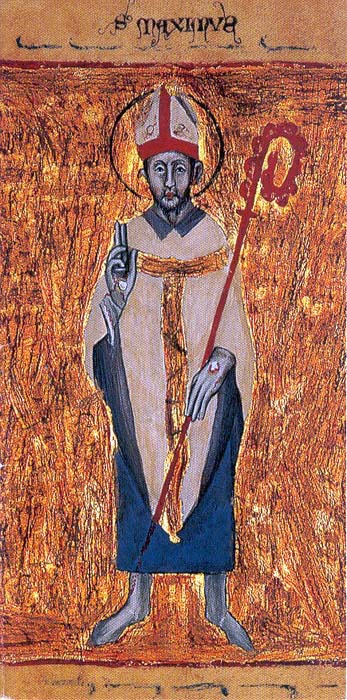
Saint Maximus of Turin, Anonymous (Italian, Piedmontese), Carte Sciolte, n. 390, Archivio Storico della Città, Turin, from Codice degli Statuti di Torino o “Codice della Catena,” 1360.
Particularly interesting among Inf. B44’s Easter sermons is the second entry for the fifth day after Easter, located between ff. 16v and 17v. This homily, misattributed in the manuscript to St. Ambrose (probably as a result of local enthusiasm for that venerable bishop), is actually a probable composition of St. Maximus of Turin, and its main theme—defending oneself from lustful temptations—coheres well with the manuscript’s probable monastic origin. However, how the sermon conveys this theme is in no way typical, as it does so by extended engagement with the story of Ulysses and the Sirens. Though in Late Antiquity, scientific exegesis of Greek mythology was very common in neo-Platonic circles, Christocentric engagement with a mythological text is a rare phenomenon, even within Maximus’ own homiletic corpus.
To provide a brief analysis of the sermon: Maximus begins by recalling the passage of Ulysses’ ship past the isle of the Sirens, whose lusty song is irresistible to the sailors. Because Ulysses knows that the ship will be lost if it is captured by the siren song, he ties himself to the mast. For Maximus, the mast and the ship to which the sailors cling are figures of the cross of Christ, on which all sin is expiated. Maximus soon moves from the example of Ulysses—whose story he calls “fictive and not factual”—to Moses’ healing of his people by means of a snake affixed to a staff. Unlike the Ulysses example, the history of the Jewish people is factual, and so truly prefigures Christ’s sacrifice. It can be argued that Maximus’ Christocentric interpretation of Ulysses’ binding to the mast is inspired by Christian exegesis of the Hebrew Scriptures, the methods of which Maximus then applies to Greek myth. There is, after all, a strong exegetical tradition, beginning already with the second century Christian apologist Justin Martyr, which sees ships—specifically Noah’s ark—as a figure of the cross. From there, the paradigm might be easily transferred even to the ships of Greek myth. But transference is not all that Maximus is doing, notwithstanding his curt dismissal of Ulysses’ story. For later in the sermon Maximus encapsulates salvation-history thus: “Fittingly is he crucified on wood so that, since man was deceived in paradise by the tree of desire, he might now be saved by the same tree of wood; and the matter which was the cause of death might be the remedy of health.” In Maximus’ thought, nature itself—here instantiated in wood—constitutes the means of salvation, providing remedies for the bodily weakness of humankind. Since Ulysses’ salvation came directly through divinely-created nature, his tale is not just some forgettable fable. In this conception, however subtly stated, pagans and non-Christians are not outside the economy of salvation, for they, too, exist within a grace-filled nature which can proffer the remedies for their ailments.
For my transcription, translation and recitations (in Modern English and Latin), see my multimedia edition of Maximus of Turin’s homily for the fifth day after Easter in Ambrosiana MS B44 Inferiore.
Mihow McKenny PhD Candidate in History University of Notre Dame
[1] Mirella Ferrari, “Dopo Bernardo: biblioteche e ‘scriptoria’ cisterciensi dell’Italia settentrionale nel XII secolo,” in Pietro Zerbi, ed., San Bernardo e l’Italia. Milan, 1993, pp. 253-306.
Bibliography
D’Avray, D. L. The Preaching of the Friars: Sermons Diffused from Paris before 1300. Oxford: Clarendon, 1985.
De Lubac, Henri. Medieval Exegesis: The Four Senses of Scripture. 3 volumes. Translated by Mark Sebanc and E. M. Macierowski. Eerdmans, 1998-2009.
Ferrari, Mirella. “Dopo Bernardo: biblioteche e ‘scriptoria’ cisterciensi dell’Italia settentrionale nel XII secolo.” In Pietro Zerbi, ed., San Bernardo e l’Italia. Milan, 1993, pp. 253-306.
Grégoire, Réginald. Homéliaires liturgiques médiévaux : analyse de manuscrits. Spoleto: Centro italiano di studi sull’Alto Medioevo, 1980.
Longère, Jean. La Prédication Médiévale. Paris: Études Augustiniennes, 1983.
Maximus of Turin. Maximi episcopi taurinensis sermones.Edited by A. Mutzenbecher. Corpus Christianorum Series Latina, vol. 23. Turnhout: Brepols, 1962.
Rahner, Hugo, S.J. Greek Myths and Christian Mystery. Translated by Brian Battershaw. New York: Harper and Row, 1963.
When one thinks of modern Christmas, warm images from Christ’s nativity to Santa’s midnight sleigh ride might come to mind. However, Saint Nicholas is not the only thing that goes bump in the night—Yule monsters represent another syncretized and modernized phenomenon, which corresponds to a medieval tradition that presents winter solstice as an ideal setting for monsters to emerge from the darkness of the long night. In celebration of the holiday season, my latest blog in our series on monsters will consider the tradition of Yuletide monsters and discuss some instances of Christmas haunting in vernacular Middle English and Old Norse-Icelandic sources, thereby catching a brief glimpse at a broader medieval tradition of monsters associated with the winter solstice.
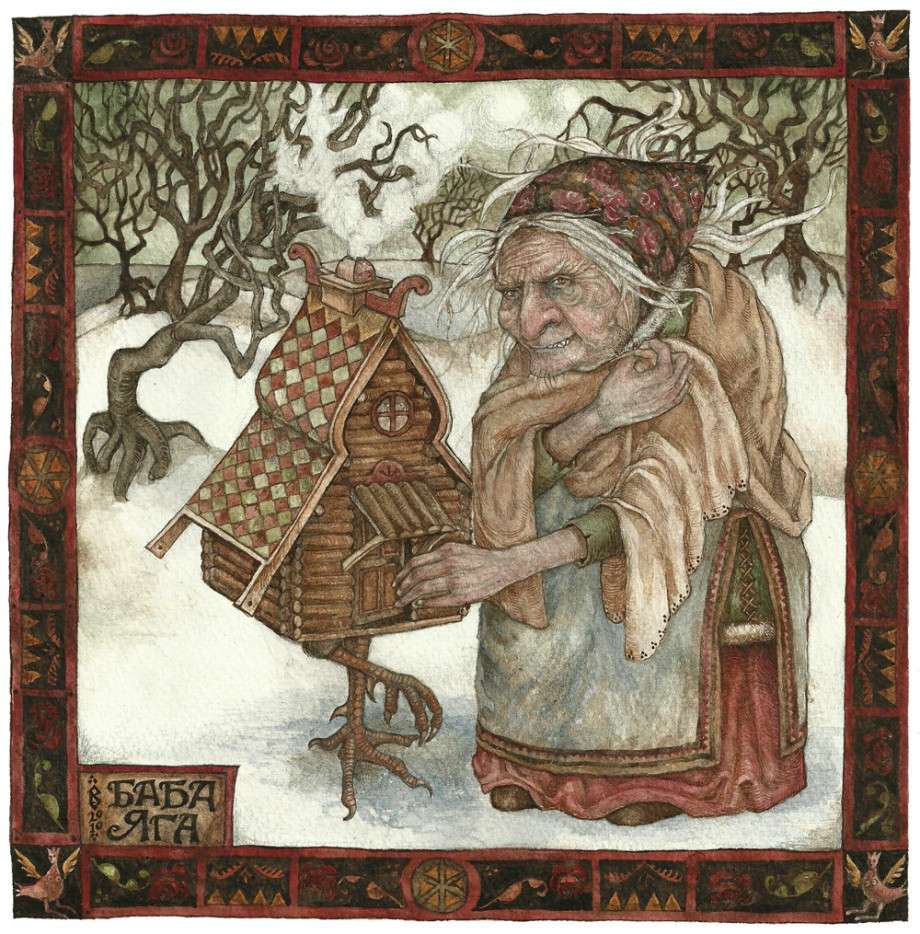
Rima Staines, ‘Baba Yaga’ (2014).
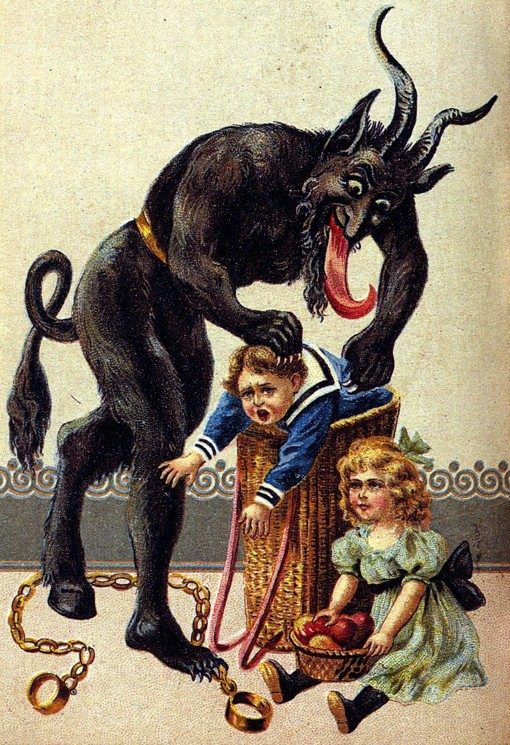
Christmas hauntings have a deep cultural and literary history. One seasonal spook, the Slavic Baba Yaga—a present-stealing witch—is generally remembered today as a holiday monster, though her character has only become associated with Christmas and New Years in modern times. Another, perhaps the most famous Yule monster, is Krampus—the notorious, child-stealing Christmas demon and son of Hel (the Norse goddess of the underworld), who is still popular in modern Germany and increasingly abroad. These modern Christmas hauntings align with a robust medieval tradition of Yuletide monsters that come with the cold and specifically the long night of the winter solstice. Even Grendel in Beowulf, who notoriously terrorizes the hall of Heorot, does so for XII wintra tid “twelve winters’ time” (147) specifically. While this phrase surely refers to the monster’s yearlong assault on Denmark, it also seems to stress the dark and snowy season as the prime time for Grendel’s hauntings.
Gruss vom Krampus, 1900s greeting card reading ‘Greetings from Krampus!’
Today, I will mention three popular medieval texts—one poem and two sagas—which feature Christmas hauntings of all types, including by a green man, an undead revenant, a troll woman and a dragon.
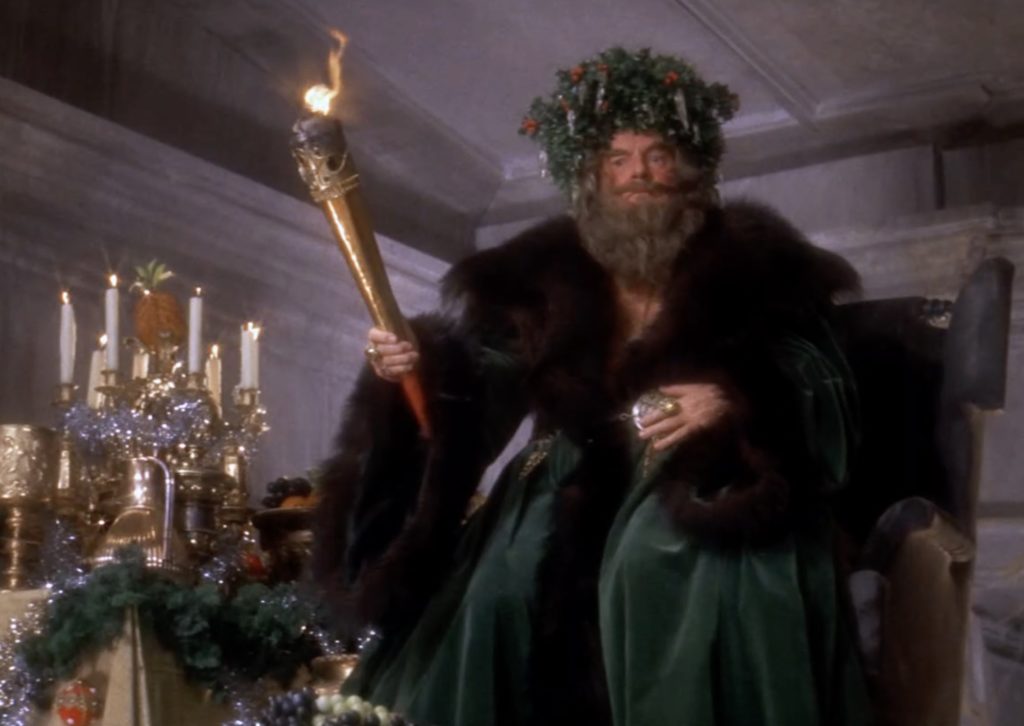
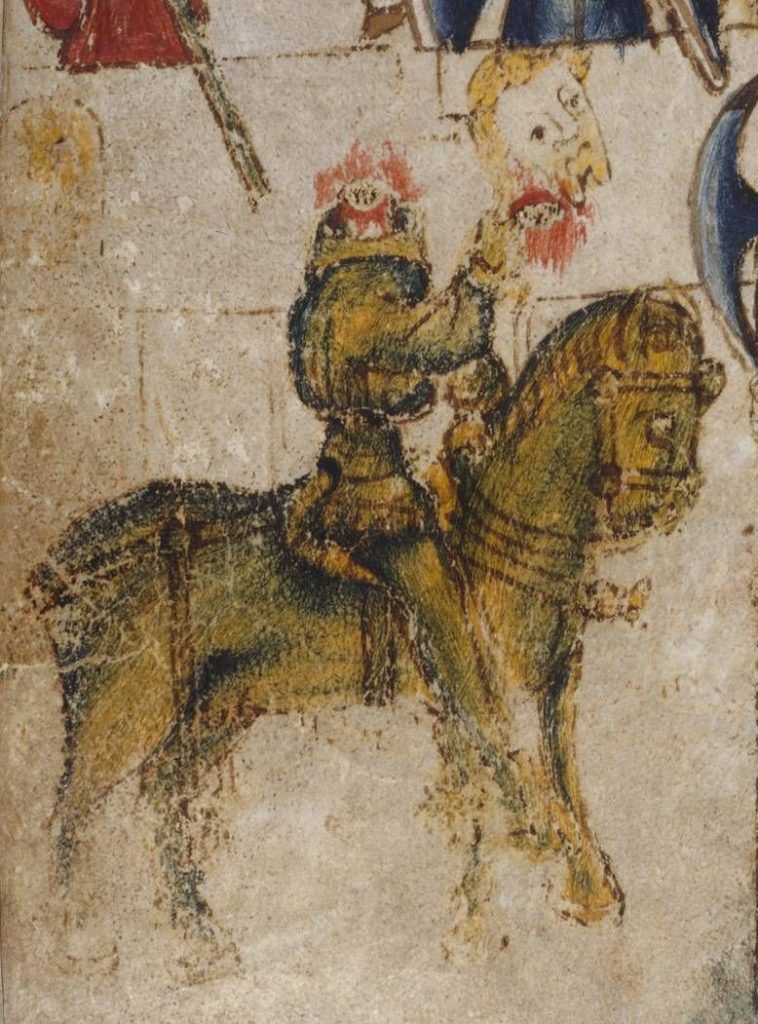
Although most of the Christmas monsters discussed in this blog come from popular Old Norse-Icelandic sagas, the Middle English alliterative poem Sir Gawain and the Green Knightbegins with a mysterious Green Knight, gome gered in grene “a man geared in green” (179), described as half etayn in erde “half-giant on earth” (140) and aluisch mon “elvish man” (681), who appears at Camelot on Christmas riding a green horse and wielding a green axe. Not only does the Green Knight come at Yule (284), he emerges in court wearing a fur-trimmed robe (152-56) and holding a holyn bobbe “holly bundle” (206) in his hand, as if he were the Ghost of Christmas Present from Charles Dickens’ AChristmas Carol.
Ghost of Christmas Present from film ‘Scrooge’ (1970) directed by Ronald Neame.
Moreover, he explicitly wishes to play a Crystemas gomen “Christmas game” (283). The passage describing the Green Knight’s arrival emphasizes his coming for the Christmas festivities, thereby linking him with the tradition of Yuletide monsters. The Green Knight declares that since there is no warrior who can match him in battle:
I craue in þis court a Crystemas gomen, For hit is Ȝol and Nwe Ȝer, and here ar ȝep mony: If any so hardy in þis hous holdez hymseluen, Be so bolde in his blod, brayn in hys hede, Þat dar stifly strike a strok for an oþer, I schal gif hym of my gyft þys giserne ryche, Þis ax, þat is heué innogh, to hondele as hym lykes, And I schal bide þe fyrst bur as bare as I sitte (283-290).
“I desire in this court a Christmas game, for it is Yule and New Year, and you here are many. If any in this house holds himself so hardy, be his blood so bold—his brain in his head—that he dare stiffly strike one stroke for another, I shall give him my gift, this rich gisarme—this axe—that is heavy enough to handle as he likes, and I shall abide the first blow, as bare as I sit.”
Manuscript illustration of the headless Green Knight in British Library, Cotton Nero A.x f.94v.
Christmas stays a prominent theme throughout the poem, and it operates as a metric by which to measure time. Gawain spends the following Christmas with Lord and Lady Bertilak in anticipation of the subsequent Christmas game, when the Green Knight will deliver a return blow. Christmas feasting both begins and concludes this Middle English romance, enveloping the narrative with this holiday theme. Indeed, Christmas is mentioned nine times in the poem, demonstrating its role in framing the narrative. Yule is mentioned twice, and the first reference comes from the Green Knight himself as to the reason for his journey to King Arthur’s court.
The next text in our discussion is the Old Norse-Icelandic Grettis saga, which contains multiple Christmas haunting episodes, each featuring a very different type of Yule monster. In Grettis saga, the holiday of Yule is likewise a repeated fixture and marker of time, and Yule is referenced thirty-three times in the saga.
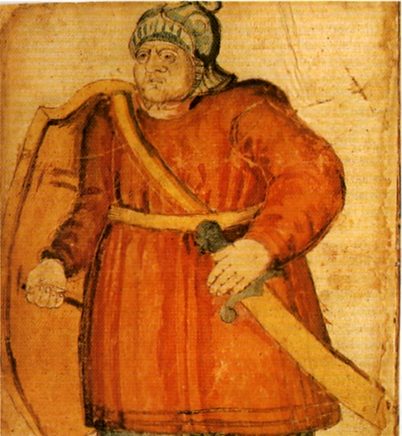
Grettir Ásmundarson as depicted in a 17th-century manuscript illustration, Reykjavík AM 426.
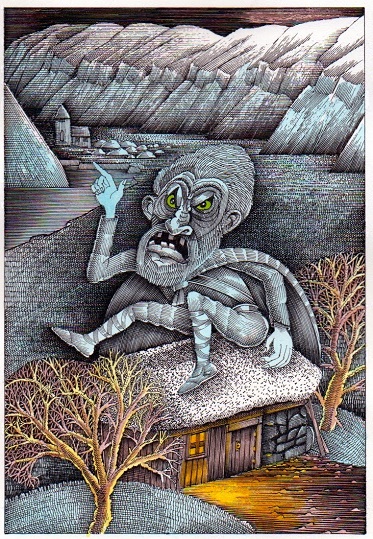
The major and most frequently discussed Yuletide haunting in the saga concerns the undead revenant Glámr, a Swedish herdsman who ignores Christmas traditions:
Nú leið svo þar til er kemr aðfangadagr jóla. Þá stóð Glámr snemma upp ok kallaði til matar síns. Húsfreyja svaraði: “Ekki er það háttr kristinna manna at matast þenna dag því at á morgun er jóladagr hinn fyrsti,” segir hún, “ok er því fyrst skylt at fasta í dag” (chapter 32).
“Now time past there until when comes the eve of Yule. Then Glámr stood up and called for his food. The lady of the house answered: ‘It is not proper that Christian men eat meat on this day, because tomorrow is the first day of Yule,” she says, “and thus they shall first fast today.’”
Glámr’s response marks him as explicitly unchristian, which may serve to foreshadow his untimely demise:
Hann svarar: “Marga hindurvitni hafið þér þá er ek sé til einskis koma. Veit ek eigi at mönnum fari nú betr at heldr en þá er menn fóru ekki með slíkt. Þótti mér þá betri siðr er menn voru heiðnir kallaðir ok vil ek mat minn en öngvar refjar” (32).
“He answers, ‘You have many restrictions, when I see no good come of it. I do not know that men fare better now than when they did not heed such things. It seems to me that the customs of men were better when they were called heathens, and now I want my meat, and no foolishness.”
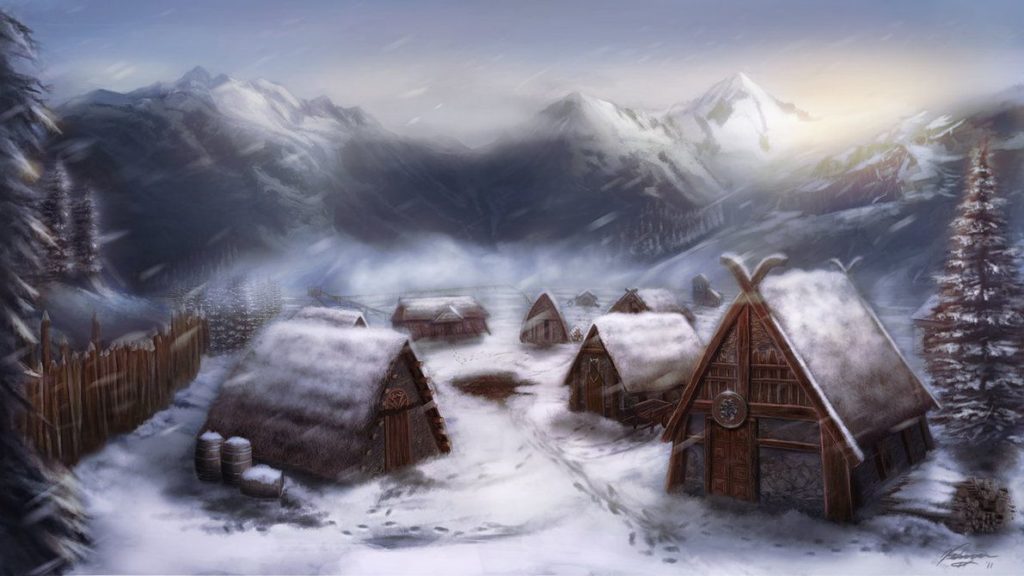
Michael Davini, “Viking Village” (2011).
After his praise for heathenism, spurring caution, Glámr ventures into a known haunted region at Yuletide, and he never returns. We are told that kom hann ekki heim jólanóttina “he came not home on Yule-night” and soon we learn that he has died. After days of searching and a number of attempts to bring Glámr’s body to the church to be buried, eventually the townsfolk give up and bury Glámr where they find him, and Það drógu menn saman at sú meinvættr er áðr hafði þar verið mundi hafa deytt Glám “men drew from this, that the evil spirit which had been there before will have killed Glámr.” However, shortly thereafter, it is the undead Glámr who perpetrates Yuletide hauntings, as the saga reports:
Litlu síðar urðu menn varir við það at Glámr lá eigi kyrr. Varð mönnum at því mikið mein svo at margir féllu í óvit ef sáu hann en sumir héldu eigi vitinu. Þegar eftir jólin þóttust menn sjá hann heima þar á bænum. Urðu menn ákaflega hræddir. Stukku þá margir menn í burt. Því næst tók Glámr at ríða húsum á nætr svo at lá við brotum (32).
“A little time after men were aware that Glámr did not lay quiet. People become so greatly disturbed by this, that many fell into hysteria when they saw him, and some lost their wits. Even after Yule men thought they saw him at home on the farm. People became extremely scared. Many men then fled. Next, Glámr took to riding houses at night, so that he nearly broke them.”
John Vernon Lord, illustration of Glámr riding roofs in ‘Icelandic Sagas’ 2, The Folio Society, 2002.
Grettir famously defeats Glámr, who is frequently associated with the Old Norse-Icelandic draugr, but not until the revenant has cursed Grettir with unceasing fear of the dark, as terrible light from Glámr’s eyes haunts Grettir until the end of his days and he becomes nyctophobic forevermore.
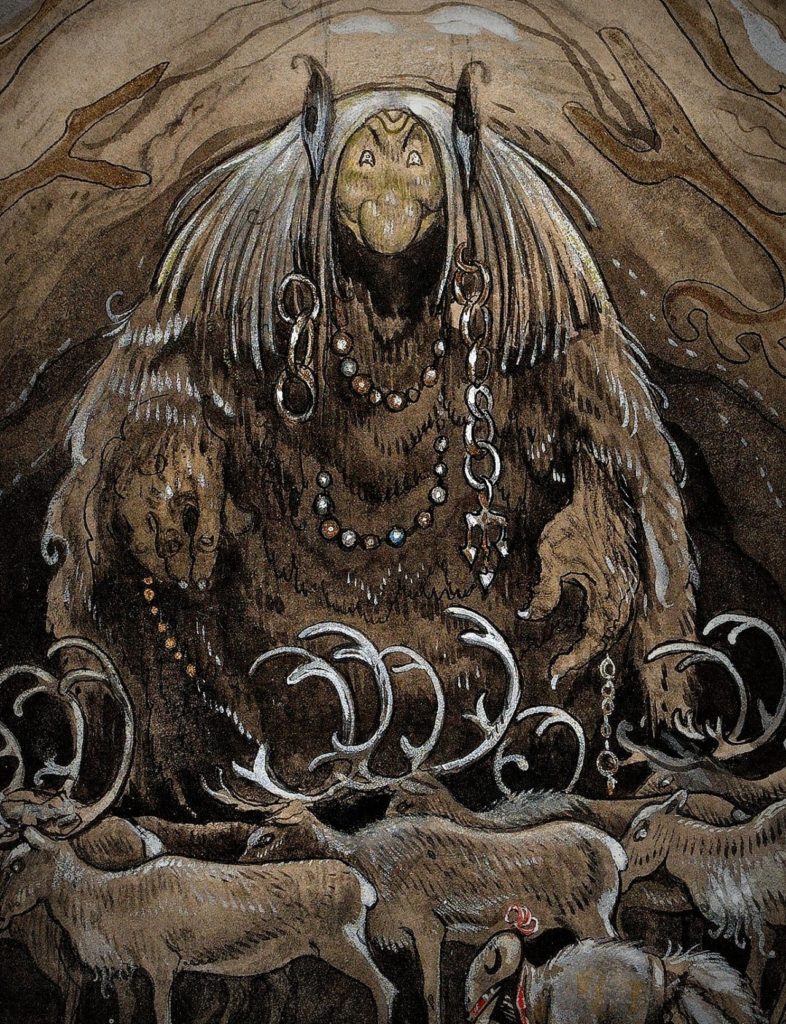
Another Yuletide monster discussed in the saga takes place when Grettir arrives at Sandhaug to investing a trǫllagangr “troll-haunting” (chapter 64), and he encounters a trǫllkona “troll woman” (65). This monster enters the halls of Sandhaug on aðfangadag jóla “Yule-eve” (64), and she plunders the halls during the long night:
Nú er frá Gretti það at segja at þá er dró at miðri nótt heyrði hann út dynr miklar. Því næst kom inn í stofuna trǫllkona mikil. Hún hafði í hendi trog en annarri skálm heldr mikla. Hún litast um er hún kom inn ok sá hvar Gestur lá ok hljóp at honum en hann upp í móti ok réðust á grimmlega ok sóttust lengi í stofunni (65).
“Now it is said of Grettir that when it drew towards midnight, he heard a great din outside. Then a great troll woman came into the hall. She had a trough in one hand, and a blade, rather great, in the other. She looked around when she came in and saw where ‘Guest’ [i.e. Grettir] lay and ran towards him, but he jumped up to meet her, and they wrestled fiercely and struggled together for a long time in the hall.”
John Bauer, ‘Troll Cave with Deer’ (1915).
Eventually, she drags Grettir from the hall, carries him off and tries to escape to her lair ofan til árinnar ok allt fram at gljúfrum “up to the river and all the way to the gorges” (65). Grettir is ultimately able to cut her shoulder, slicing off the troll woman’s arm, a fatal blow which sends her off a cliff and to her death. After recovering from his encounter with the troll woman, Grettir sneaks into her cave and slays her companion, a jǫtunn “giant” (66).
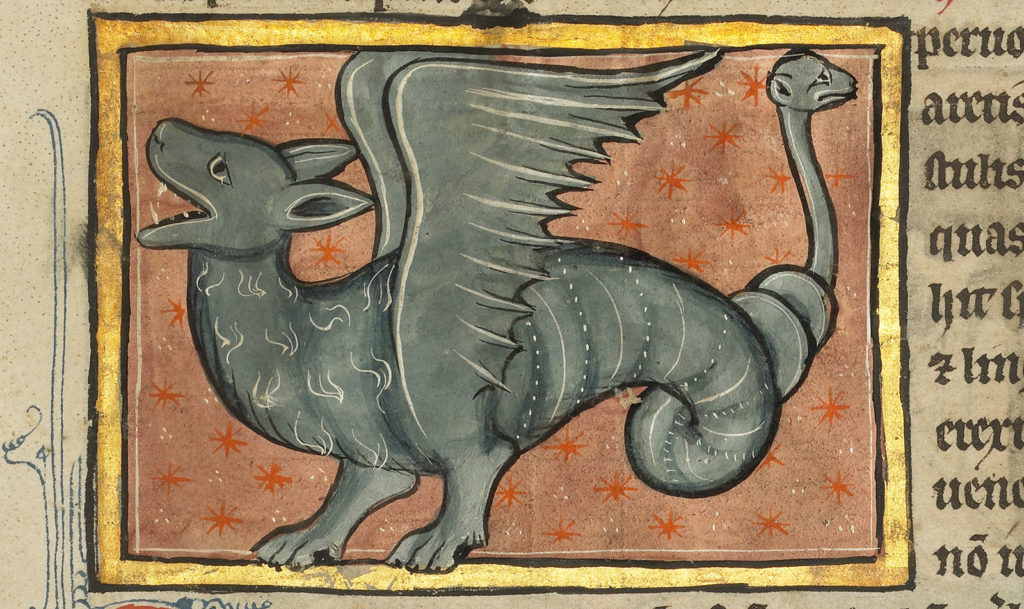
The final Yuletide haunting discussed in this blog comes from Hrólfs saga kraka, when a massive flying dýr “beast” (probably a dragon of some kind) threatens the hall. The cowardly Hǫttr explains how this night-terror returns during Yule to haunt the hall of king Hrólfr:
Ok sem leið at jólum, gerðust menn ókátir. Bǫðvarr spyrr Hǫtt, hverju þetta sætti. Hann segir honum, at dýr eitt hafi þar komit tvá vetr í samt, mikit ok ógurligt, “ok hefir vængi á bakinu, ok flýgr þat jafnan. Tvau haust hefir þat nú hingat vitjat ok gert mikinn skaða. Á þat bíta ekki vápn, en kappar konungs koma ekki heim, þeir sem at eru einna mestir.
Bǫðvarr mælti: “Ekki er hǫllin svá vel skipuð sem ek ætlaði, ef eitt dýr skal hér eyða ríki ok fé konungsins.” Hǫttr sagði: “Þat er ekki dýr, heldr er þat mesta trǫll” (chapter 35).
“And as Yule neared, men became gloomy. Bǫðvarr asked Hǫttr what caused this. He said to him that a beast had come there for two winters in a row, great and monstrous. ‘And it has wings on its back and frequently flies. For two autumns now it has visited and caused great harm. No weapon bites it, and the king’s champions, those who are the greatest, do not come home.’”
Bǫðvarr spoke: ‘the hall is not so well guarded as I thought, if one beast shall here destroy the king’s realm and livestock.’ Hǫttr said: ‘It is not a beast, rather it is the greatest troll.’”
A Winged Dragon in a bestiary, 1278–1300, Franco-Flemish. Tempera colors, pen and ink, gold leaf, and gold paint on parchment. The J. Paul Getty Museum, MS Ludwig XV 4, f.94.
This warning is quickly validated, for when jólaaptann “Yule-eve” arrives, King Hrólfr commands his warriors to stay inside and forbids them from fighting the monster, proclaiming that it is better to lose his livestock than his people. However, Bǫðvarr Bjarki sneaks into the night, dragging Hǫttr behind him, and the hero quickly slays the Yuletide monster terrorizing the kingdom. Then, at Bǫðvarr’s behest, Hǫttr consumes the flesh and blood of the beast, which strengthens and emboldens him, transforming him into a hero (in a way that recalls Sigurðr’s actions after Fáfnir is slain).
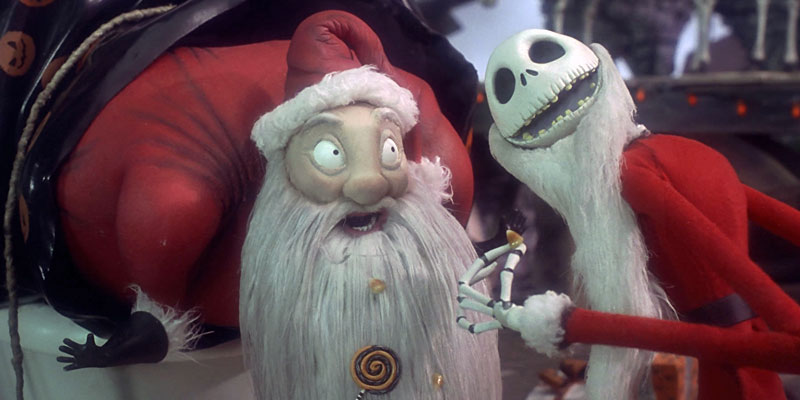
These medieval stories of Yuletide monsters participate in a robust tradition of winter-time (and even Christmas-specific) hauntings, which continued throughout the ages and manifests still today. Dickens’ Christmas Carol is perhaps one of the more memorable, with visitations by four ghosts at the home of the miserly Ebenezer Scrooge on Christmas Eve. Dr. Seuss’s Grinch renders its Scrooge-like antihero in the form of a green Christmas-hating monster bent on stealing Christmas, and Tim Burton’s Nightmare Before Christmas explores the theme of Christmas haunting when the pumpkin king and leader of Halloween Town, Jack Skellington, decides he would rather celebrate Christmas one year instead out of sheer boredom with his own holiday. Jack then proceeds to haunt Christmas transforming cozy festivities into a horror show as if he were a Yule monster of old.
Jack Skellington and Santa Claus from Tim Burton’s ‘Nightmare Before Christmas’ (1993).
More recently, in George R.R. Martin’s Song of Ice and Fire (and HBO’s corresponding TV series Game of Thrones), winter monsters known as the White Walkers (seemingly inspired by Old Norse-Icelandic revenants), led by the fearsome Night King, come with the cold in the long night to terrorize Westeros. Even Netflix’s edgy reboot of Sabrina the Teen-age Witch, appropriately retitled Chilling Adventures of Sabrina (2018), gives a nod to medieval tales of wintertime monsters when during the solstice the Spellmans place a protective candle in the chimney to prevent Yule demons from entering their home; however, this does not stop Grýla—an Icelandic giantess—from visiting during the night when the witches’ protective candle becomes accidentally extinguished.
Night King from season eight of HBO’s ‘Game of Thrones’ TV series (2018).
Yuletide continues to provide a haunting wintry setting for monster visits. Although often balanced by saccharine images of Christmas as a source of light and warmth against the cold dark, what lurks beyond the illumination of society during the long night seems to readily elicit horror in the modern—as well as medieval—imagination.
Richard Fahey PhD in English University of Notre Dame
Carrière, Jean Louise. “Sir Gawain and the Green Knight as a Christmas Poem.” Comitatus: A Journal of Medieval and Renaissance Studies 1.1 (1970): 25-42.
Chadwick, Nora K. “Norse Ghosts (A Study in the Draugr and the Haugúbi).” Folklore 57 (1946): 50–65
—. “Norse Ghosts II (Continued).” Folklore 57 (1946): 106–127
Jakobsson, Ármann and Miriam Mayburd. Paranormal Encounters in Iceland 1150–1400. Kalamazoo, MI: Medieval Institute Publications, 2020.
—. “Vampires and Watchmen: Categorizing the Medieval Undead.” Journal of English and Germanic Philology 110 (2011): 281–300
—. “The Fearless Vampire Killers: A Note about the Icelandic Draugr and Demonic Contamination in Grettis Saga.” Folklore 120 (2009): 307–316.
Kirk, Elizabeth D. “‘Wel Bycommes Such Craft Upon Cristmasse’: the Festive and the Hermeneutic in Sir Gawain and the Green Knight.” Arthuriana 4.2 (1994): 93-137.
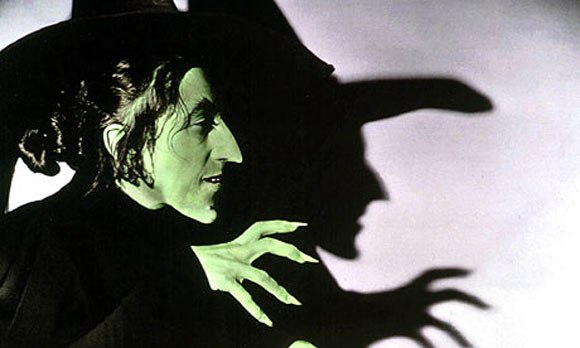
With Witch ranked the most popular costume nationwide, Frightgeist reports, “There’s a frighteningly high chance you will see a Witch costume on Halloween this year” – and these costumes will likely share some similarities. Asked to describe the physical features of a witch, we tend to list tropic characteristics like those returned through a Google search: she is old and ugly with a hooked nose and green or otherwise sallow skin. First and foremost, however, the witch is a woman.
The iconic Wicked Witch of the West, played by Margaret Hamilton in The Wizard of Oz (1939).
The last known execution for witchcraft was recorded in 1782, at which time some 110,000 people had been tried and up to 60,000 had been executed – most of them women.[1] Not quite as well-known as the witch trials themselves, the Malleus maleficarum, or the Hammer of Witches, served not only as an extensive manual for the identification of witches but also advocated for their extermination.
But even before the publication of the Malleus in 1487, there was De secretis mulierum, or On the Secrets of Women, an immensely popular treatise composed in the late-thirteenth or early-fourteenth century that still survives in more than 80 manuscripts. Drawing from medieval medical philosophy, the Secrets branded women as evil based on their biological composition and helped lay the foundation for the figure of the witch, which resulted in the deaths of so many women.
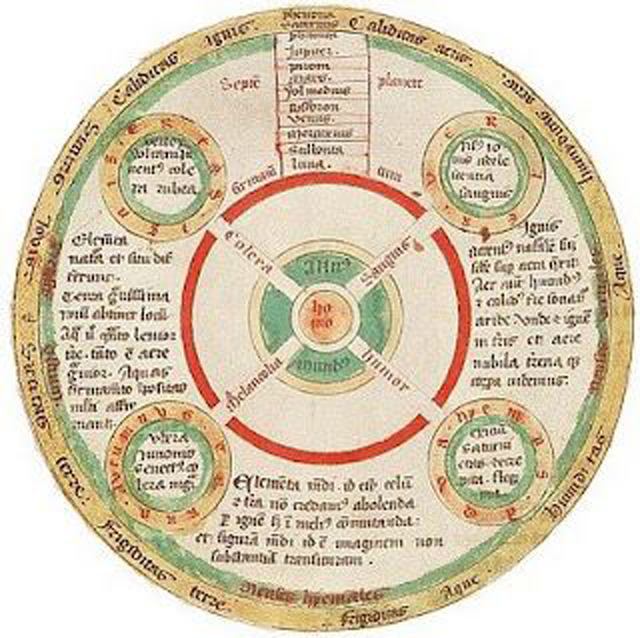
Specifically, the ideas about sexuality solidified through the intersections of medicine and religion situated women not merely as inferior to men but as polluted both physiologically and psychologically, via which they were eventually posited as predisposed to evil. The anatomical traits that distinguished women and men situated the sexes as binary opposites: they were a heterogenous, hierarchical pair. In conjunction with humoral theory, female softness and weakness were attributed to the body’s cool composition, while male strength and hardness were generated by their hot and dry climates.
Diagram illustrating the relationship of the four humors, depicted as radiating diagonally from the center, to the temperaments, planets, and seasons (c. 1450-1475), The Morgan Library & Museum MS B.27.
Menstrual blood and semen, according to medieval physicians, were the defining essences of woman and man and were starkly contrasted in terms of their character. Menstrual blood was seen as an excess and, therefore, as physical evidence of the defectiveness of the female body because “it marked the inability of the body to become warm enough to refine blood.”[2] The blood itself was considered toxic because it was comprised of “unrefined impurities.”[3]
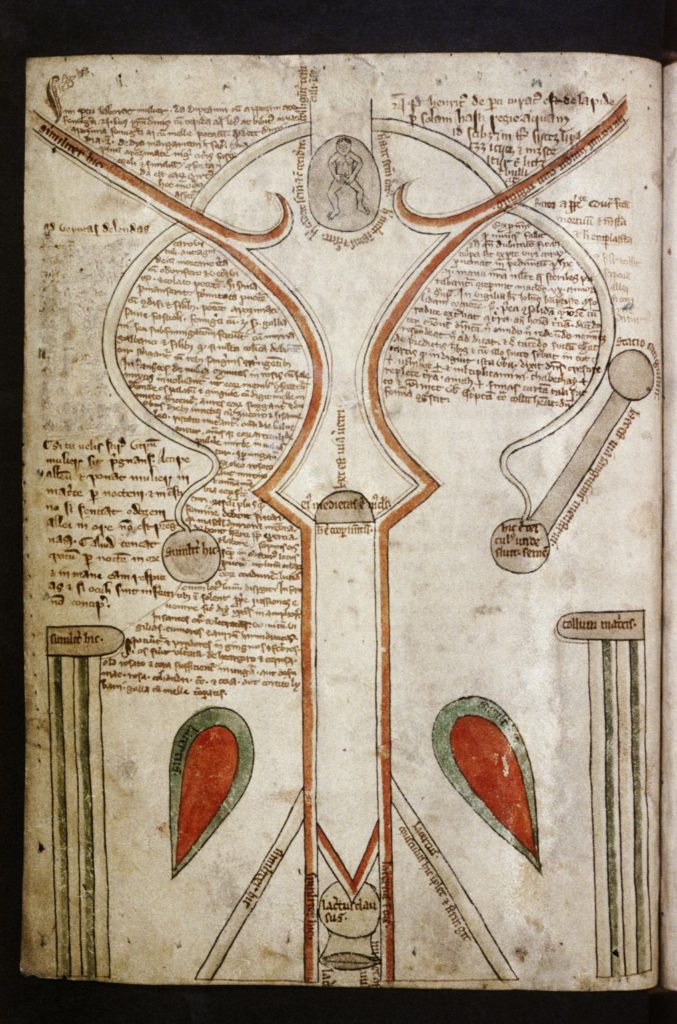
Schematic diagram of a uterus, one of the earliest surviving anatomical drawings from Western Europe (c. 1250-1310), Bodleian MS Ashmole 399, f. 13v.
Although semen was thought to be a form of blood, it was blood that had been transformed into a precious substance within the testicles after traveling down the spinal cord from the brain.[4] Through its direct connection with the brain, male sexuality was associated with cognitive activity and rational, measured behavior. Women’s sexuality was posited as opposite: their bodies were considered passive, but women themselves were considered “profoundly sexual.”[5] The womb was central to the understanding of female anatomy and determined women’s passivity in contrast to men’s activity, as well as her association with the physical body. Moreover, women were characterized as open in relation to their genitalia, which subsequently indicated their openness to sexual activity and informed the idea that women were inherently lustful.[6]
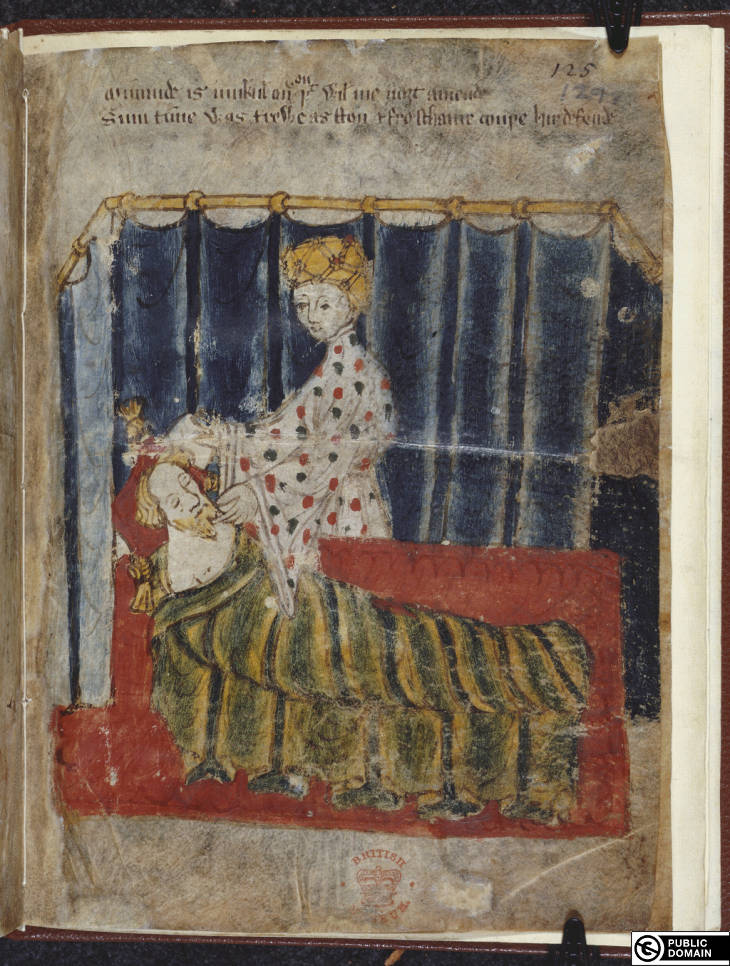
In an image accompanying the first of the seduction scenes in Sir Gawain and the Green Knight (c. 1400), the Lady stands over Gawain while he lies asleep, apparently naked, British Library MS Cotton Nero A.x., f. 125/129r.
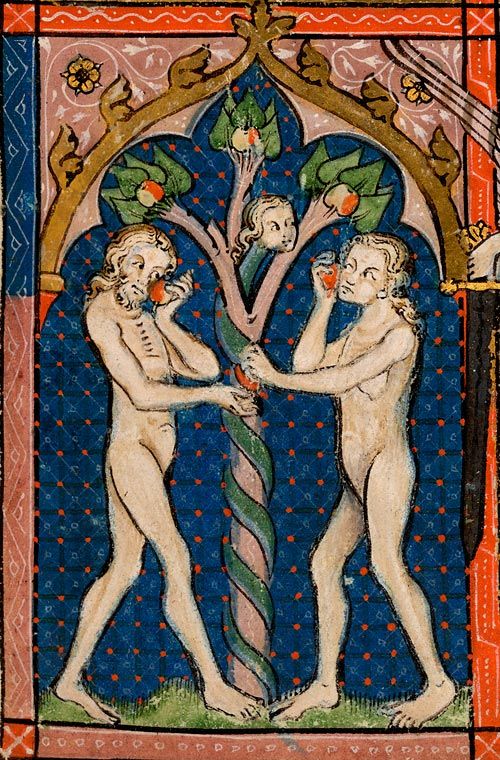
Attitudes toward women’s sexuality were also influenced by Christian beliefs, which associated sex with original sin. As the descendants of Eve, women were deeply connected with desire and consistently constructed as temptresses. In effect, they disproportionately bore responsibility where temptations of the flesh were concerned. Church fathers considered men “strong, rational, and spiritual by nature,” while women were “not only soft, but carnal,” in short, they “embodied sexuality” and continuously reproduced Eve’s initial temptation of Adam.[7]
Illuminated image of The Fall of Man, depicting Adam and Eve holding fruit from the Tree of Knowledge to their mouths and a female-headed serpent entwined around the trunk between them, Ramsey Psalter leaves (c. 1300-1310), The Morgan Library & Museum MS M.302, f. 1r.
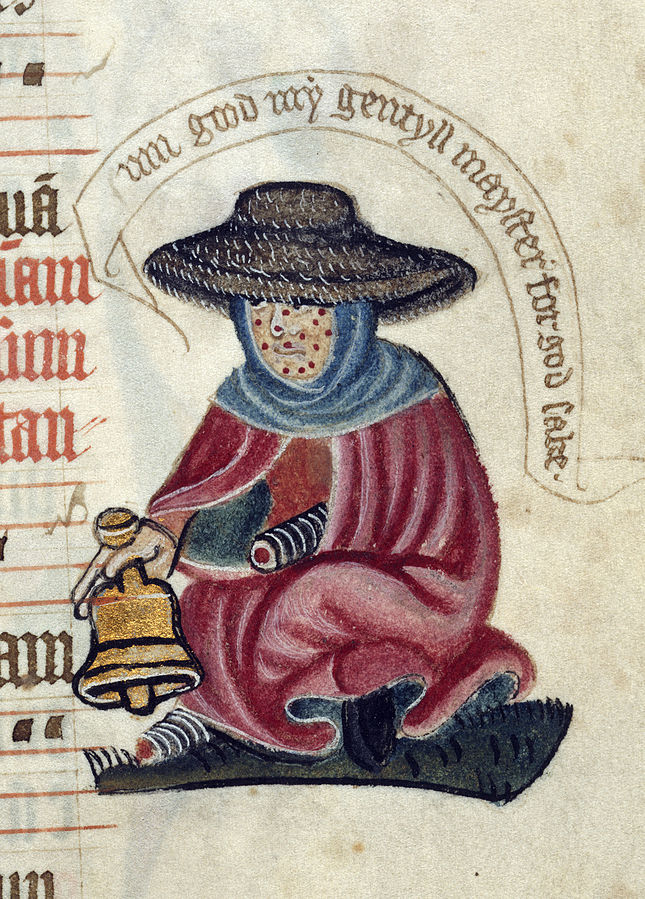
Drawing upon both biology and theology, medieval medicine synthesized the phallocentric understandings of women’s bodies and their perceived proclivity for sex and sin. While intercourse was believed to negatively alter men’s bodily composition, it was considered necessary for women, who were more likely to suffer from a lack of sexual activity. Menstrual blood was considered superfluous and conflated with pollution: its retention harmed the woman whose body failed to purge its humoral excess, and its expulsion threatened to poison others, causing illness and even death. Because their bodies were viewed as toxic, women were considered largely responsible for the transmission of diseases, especially those associated with sexual activity.
Marginal image of a leprous beggar ringing a bell from The Evesham Pontifical (c. 1400), British Library MS Lansdowne 451, f. 127r.
The Secrets then transmuted medical philosophy into overt misogyny and deemed women dangerous explicitly in relation to their sexuality. A particularly poignant passage describes the process by which women, essentially, drained and absorbed men’s life force through sex:
“The more women have sexual intercourse, the stronger they become, because they are made hot from the motion that the man makes during coitus. Further, male sperm is hot because it is of the same nature as air and when it is received by the woman it warms her entire body, so women are strengthened by this heat.”[8]
Describing menstruation as a time during which “many evils” arise, the Secrets cautions against intercourse, warning men that women are prone and prepared to deliberately cause them harm: “For when men have intercourse with these women it sometimes happens that they suffer a large wound and a serious infection of the penis because of iron that has been placed in the vagina.”[9] According to a commentary that often circulated with the manuscript, the man may not even notice that he has been wounded by the iron vindictively concealed within the vagina “because of the exceeding pleasure and sweetness of the vulva,”[10] an ominous addendum that vividly draws together desire, danger, and disease at the site of the female body.
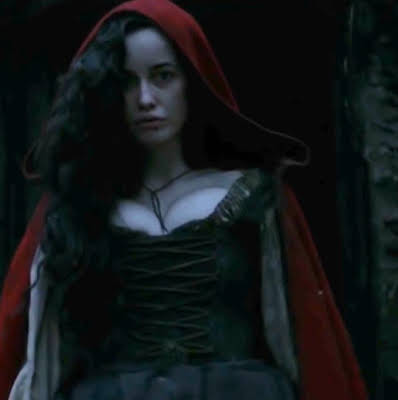
Desire and danger similarly coalesce in Sarah Stephens’ role in The VVitch (2015). Set in Puritan New England in 1630, the film portrays the destruction of a pious family whose fear of witchcraft spreads among them like a disease.
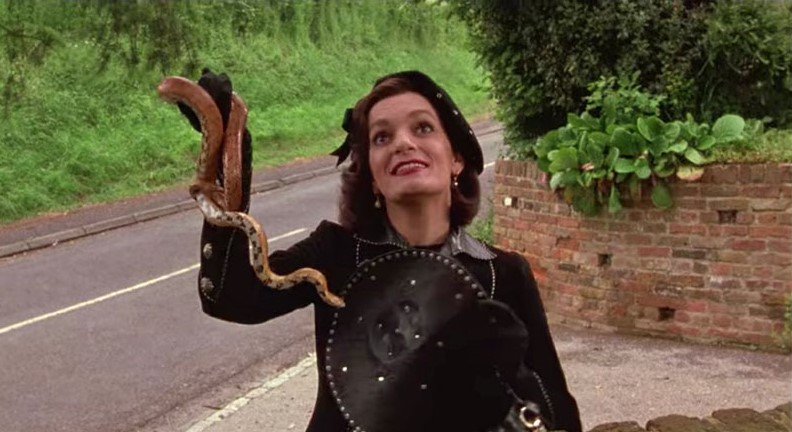
Even body parts not in direct contact with menstrual blood could become infected during menstruation. The Secrets describes the process by which a serpent is generated following the planting of hairs from a menstruating woman,[11] a proposition that viscerally evokes women’s connection with Eve and, more pointedly, with the devil.
A witch attempts to entice the young protagonist with a snake she removes from her handbag in The Witches (1990), based on the novel by Roald Dahl. Moments later, she places its body around her neck and then begins whispering to the creature. The 2020 remake emphasizes the connection between witches and snakes at several points in its revised plot, including the snake-like resemblance of the witches themselves.
Older women were considered especially dangerous when their periods became intermittent, even more so following menopause when they failed to discharge superfluous fluid from their bodies and became increasingly noxious as a result. A passage from the Secrets explains as follows:
“If old women who still have their periods, and certain others who do not have them regularly, look at children lying in the cradle, they transmit to them venom through their glance … One may wonder why old women, who no longer have periods, infect children in this way. It is because the retention of the menses engenders many evil humours, and these women, being old, have almost no natural heat left to consume and control this matter, especially poor women, who live off nothing but coarse meat, which greatly contributes to this phenomenon. These women are more venomous than the others.”[12]
As the passage indicates, women who ceased to menstruate and subsisted on meager means were additionally threatening, a claim that further ostracized those already existing at outer margins of class society.
Located deep in the woods but eschewing its candy coating for far scarier fare, the witch’s house in Gretel and Hansel (2020) distances her from society, a feature that pervades both folkloric and popular culture representations of the witch.
The innate malice of women’s bodies, illustrated so poignantly in the Secrets, was a disparaging ideological assemblage disseminated throughout the late Middle Ages, which became ingrained and interpreted in a way that unequivocally connected women’s sexuality with evil. The treatise emphasizes the wickedness of women’s physiological composition and psychological character and elevates their social stigma to its medieval pinnacle, perfectly epitomized in the text’s avowal that “woman has a greater desire for coitus than a man, for something foul is drawn to the good.”[13] And of course, men were not the only ones at risk; the innocent victims often included children.
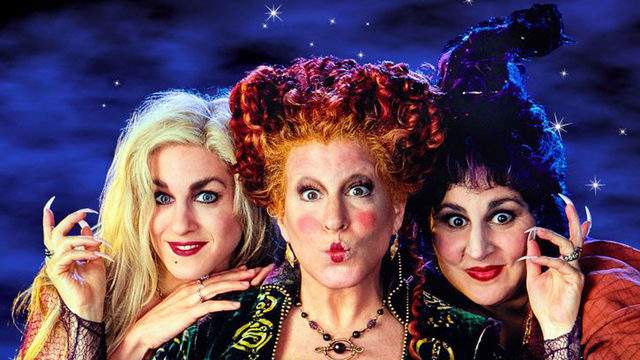
The Sanderson sisters, from Disney’s ‘Hocus Pocus’ (1993), who despite their humorous depiction draw their strength by sapping the life from children.
It is these misogynistic ideas about women’s sexuality that seeded their demonization in the years that followed, as the Secrets served as a direct source for the Malleus maleficarum. Indeed, the most famous statement from the Malleus explicitly connects witchery with ideas about women’s sexuality rooted in the medieval period: “All witchcraft comes from carnal lust, which is in women insatiable.”[14]
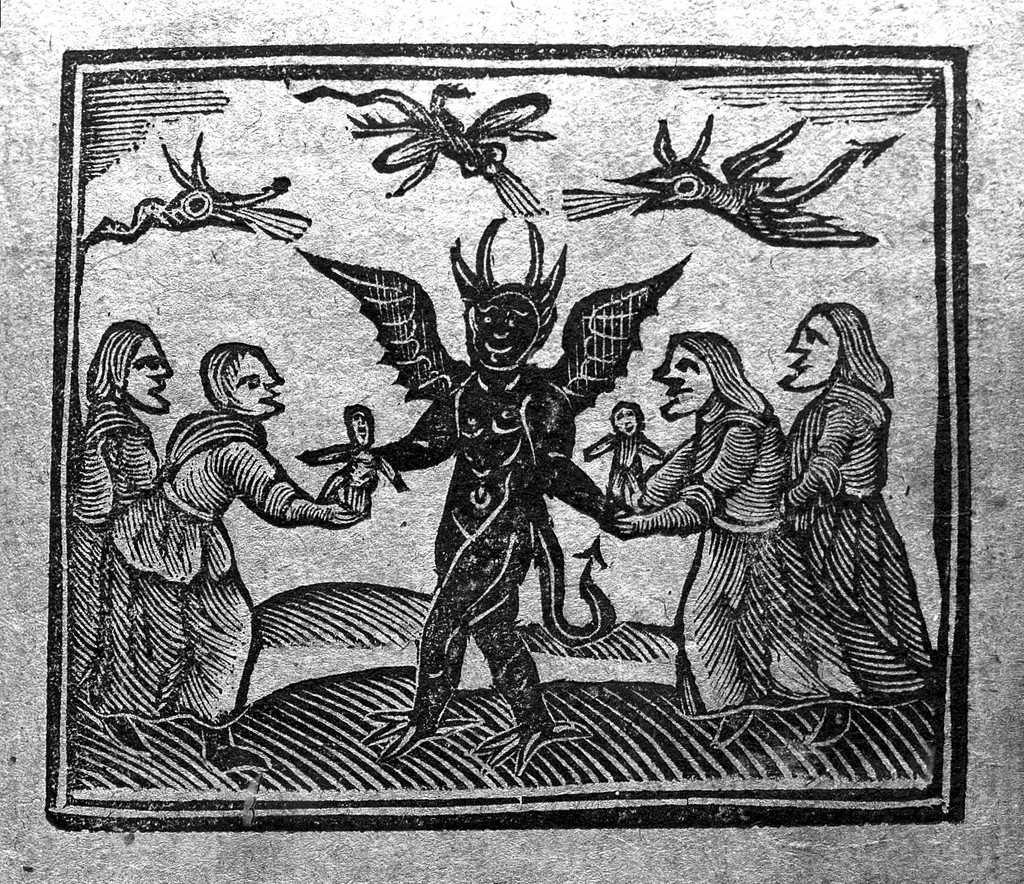
Women giving wax dolls to the devil, The History of Witches and Wizards, 1720, Wellcome Collection, London, U.K.
Emily McLemore Ph.D. Candidate, Department of English University of Notre Dame
[2] Joyce Salisbury, “Gendered Sexuality,” Handbook of Medieval Sexuality, edited by Vern L. Bullough and James A. Brundage, New York and London: Garland Publishing, Inc. (1996): 81-102, at 89.
[4] Danielle Jacquart and Claude Thomasset, Sexuality and Medicine in the Middle Ages, translated by Matthew Adamson, Cambridge: Polity Press (1988), at 13.
[8] Helen Rodnite Lemay, Women’s Secrets: A Translation of Pseudo-Albertus Magnus’ De Secretis Mulierum with Commentaries, Albany: State University of New York Press (1992), at 127.
[12]Les Admirables secrets de magie du Grand Albert et du petit Albert, MS Paris, Bibliothéque nationale, Latin 7148, fol. 2 r. 9 v., translated by Jacquart and Thomasset, Sexuality and Medicine in the Middle Ages, at 75.