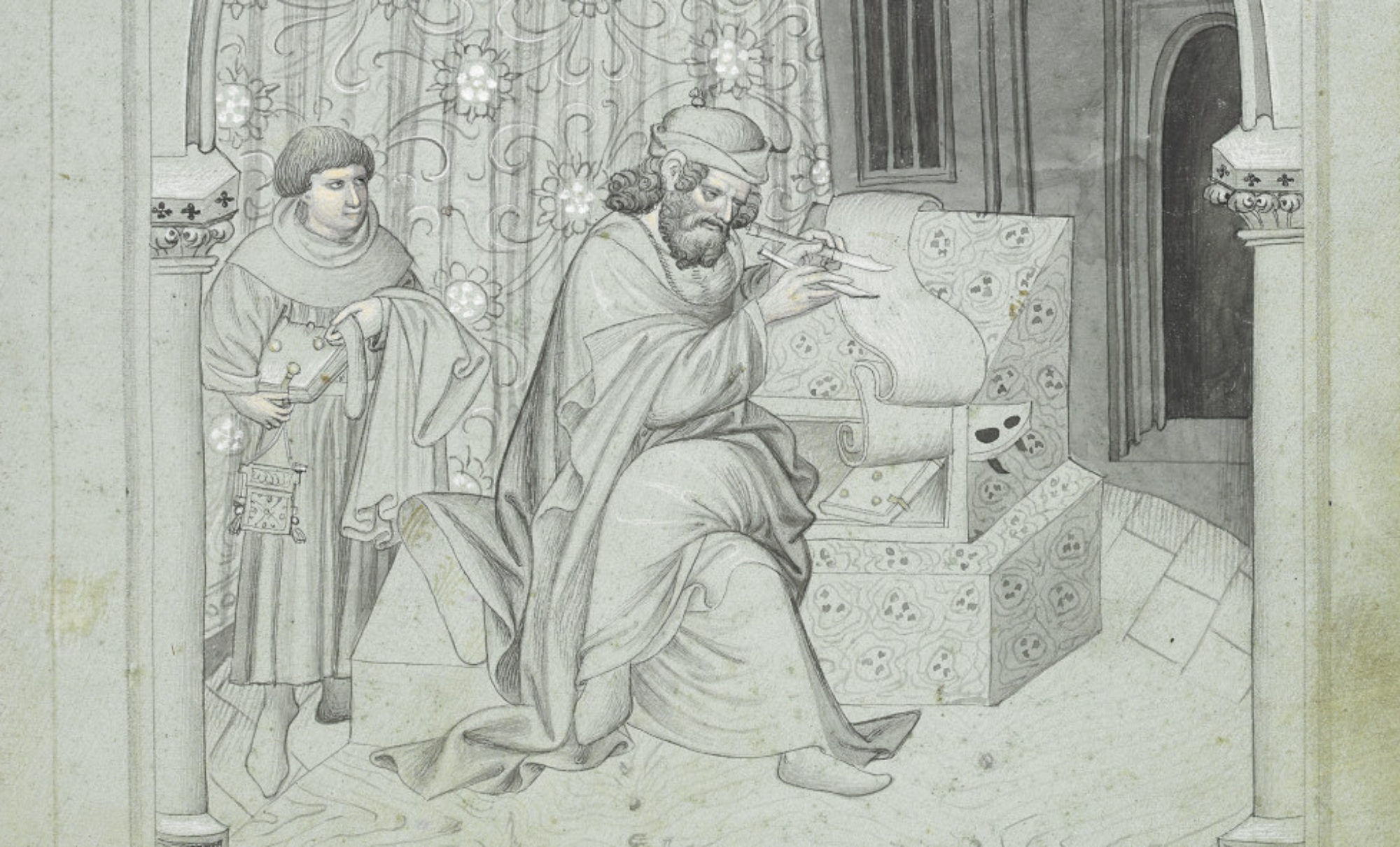
A few months ago, Ben and Will sat down with Dr. Linda Jones, Professor at Pompeu Fabra University in Barcelona, where she teaches medieval history. Dr. Jones is an expert in religious and cultural history of medieval al-Andalus and the Maghreb, especially on topics such as gender dynamics , Islam-Christendom encounters, and oratory practices. She is the author of The Power of Oratory in the Medieval Muslim World (Cambridge University Press, 2012), the first monograph to consider the significance of preaching in the medieval Islamic world.
We typically imagine women as having been entirely subordinated to men in the medieval world, especially in those contexts which were explicitly religious. However, Dr. Jones offers to us a striking counterexample. In the medieval Islamic world, she explains that women were allowed to preach, not in formal contexts, but informally. Even despite the lack of formality, their preaching still carried authoritative weight, one that was often expressed in exhortative form—encouraging listeners to undertake ascetic practices or to pray more fervently.
In addition to fascinating topics of cultural and religious practices in the medieval Islamic world, Ben and Will speak with Dr. Jones about the differences of teaching college students in the US versus Spain, the challenges of interpreting medieval manuscript handwriting, and the enduring importance of the humanities today.
A few months ago, Ben and Will sat down with poet, essayist, and translator, Dana Delibovi, to discuss her life and work. After dropping out of the doctoral program in Philosophy at Columbia University—subsequently earning a terminal master’s at New York University—Delibovi spent 45 years as an advertising copywriter while also working as an adjunct instructor of philosophy at Lindenwood University. In 2019, following the decision to retire, she began translating the poems of St. Teresa of Ávila—a longtime inspiration of hers—and didn’t look back. This culminated in the publication of Sweet Hunter: The Complete Poems of St. Teresa of Ávila (2024).
For St. Teresa, the sharp disciplinary boundaries we draw today between philosophy, theology, spirituality, and poetry were far less rigid. Her work weaves together theological reflection, spiritual practice, and personal experience, so that the search for truth cannot be separated from interior transformation. True knowledge is knowledge of self and of God, which is arrived at not through detached inquiry but through an inward journey—one must venture the soul’s many “mansions.”
It is quite fitting, then, that her poems have found a translator whose encounter with Teresa’s work has itself been inseparable from her own life journey. Delibovi here conveys not only the riches of Teresa’s thought, but does so with the spirit in which Teresa surely would’ve wanted to be read, in a deeply serious and personal way.
In addition to St. Teresa’s work and Delibovi’s own life story, Ben and Will chat with Delibovi about a range of topics, including the art of translation, how we relate to the same texts differently throughout our lives, and more.
Thanks for listening, and be sure to stay tuned for more!
A few weeks ago, Ben and Will sat down with Dr. Thomas Smith, a leading expert on the Crusades, having authored several books on the subject, including, most recently, Rewriting the First Crusade: Epistolary Culture in the Middle Ages (Boydell Press, 2024) and The Egyptian Crusade: Holy War on the Nile, forthcoming with Yale University Press in 2026. Dr. Smith holds the position of Keeper of the Scholars and Head of Oxbridge at Rugby School, one of the UK’s most historic private boarding schools, founded in 1567. He is also an elected Fellow of the Royal Historical Society and the Royal Asiatic Society.
Ben and Will chat with Dr. Smith about how letter-writing was approached in the medieval world and the role it played during the Crusades. Today, letters are typically written—if they are written at all—by a sole author to be read by a sole addressee, in private. However, while we have discrete channels for public and private communication, in the medieval world—where geography placed real limitations on the sharing of information—the two would often intertwine. And so, letters were more communal, even when addressed by a singular author to a singular addressee. For example, a letter sent by a crusade leader to his wife back home would, first of all, likely be written not just by the husband in isolation but dialogically with his scribes, and, second, would be intended to be read not just by the wife in private but aloud to the entire community, to be copied down and shared widely.
The participatory character of the production and reception of letters not only points to an ambiguity between the private and the public, but also between fact and fiction, as the truth of something emerges in its dynamic narration and re-narration across time and space. Dr. Smith thinks that these ambiguities, when taken seriously, challenge certain modern assumptions we hold about the Crusades and the medieval world in general. For example, we are sometimes inclined to imagine the average medieval person as simpler and more credulous than the average modern person. But what if these ambiguities that infuse the medieval world were owing not to a lack of sophistication but, rather, a different kind of sophistication? Dr. Smith thinks that we have every reason to believe the latter, that the medieval person is just as critical and curious about the world around her as the modern person, but is so through different lenses—theological rather than empirical-scientific, for example. That the medieval person was less inclined to divide fact from fiction is thus not owing to a failure of conviction or capacity for truth—quite the opposite.
In addition to discussing his research, Ben and Will also chat with Dr. Smith about the way he balances a heavy teaching load at the Rugby School with his writing and research, of which he is able to accomplish a great deal, even with his limited time. The conversation concludes with a refreshing note on the importance of self-care in academia.
Thanks for listening, and be sure to stay tuned for more!