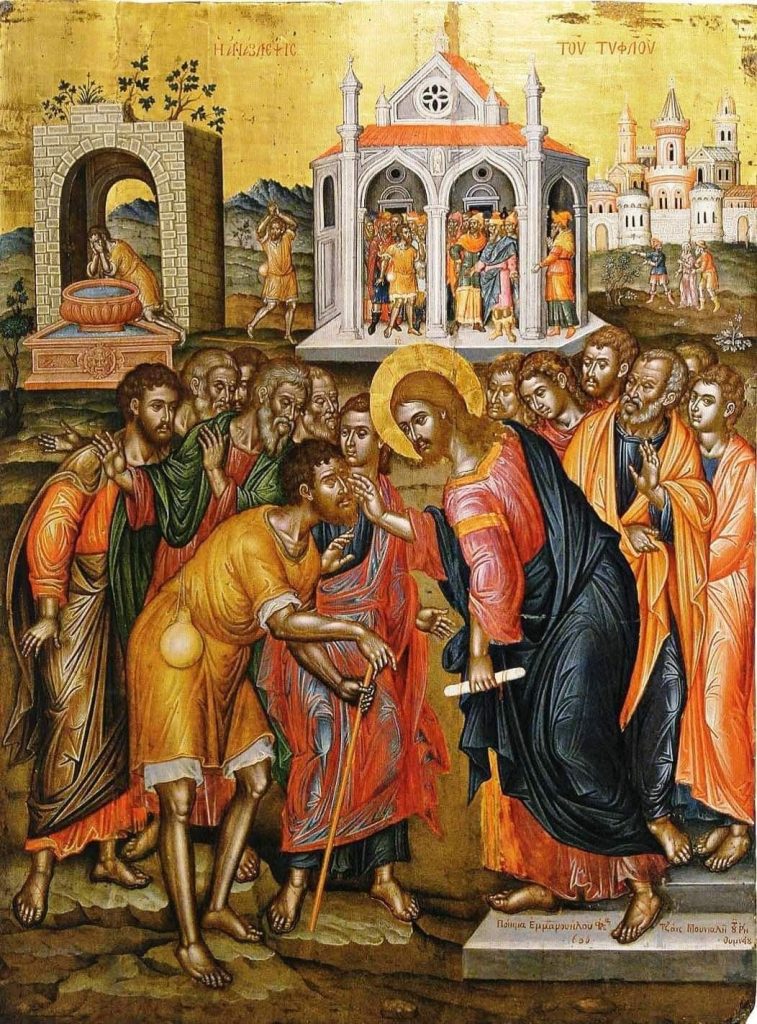
In parallel with a certain popular celebration centered in the city of Punxsutawney, Pennsylvania, the second day of February, in most Christian traditions, also marks the commemoration of the presentation of Christ in the Temple and the ritual purification of Mary. Due to the prominent role played by candles in the liturgical celebrations in the Latin tradition, the feast is commonly referred to as “Candlemas”.

For Ivo of Chartres, whose homilies on Advent and Christmas have short commentaries and translations elsewhere on this blog, his work In Purificatione takes the opportunity to reflect on the details of the liturgical celebration itself as a symbol of the moral imperatives of the Christian life. For him, the wax from which the candles are made represents the flesh of this life, but which also bears a light that illumines the shadows, echoing the Prologue of the Gospel of John. Carrying the candles in procession echoes, in a physical sense, the spiritual carrying of God accomplished through the imitation of Christ.
Interestingly, Ivo cites two short passages from liturgical texts. The first is taken from a version of the Exultet of Good Saturday, in which the celebrant, standing in front of lit candles, commemorates the bee as a symbol of the virginity of Mary. This verse, while it does not exist in the modern Roman rite, can still occasionally be found in use (for example, in this video of the Exultet intoned by a member of the Discalced Carmelites) [1]. The second passage is from a text of the feast of the Purification itself, in which Sion (i.e., the church) is commanded to adorn the bridal chamber in order to receive Christ. This text is well-attested as both a responsory and an antiphon in the manuscript tradition [2]. For Ivo, again, the spiritual meaning is clear: we are to adorn our hearts with virtues that we may have God dwelling within us.
The recourse to liturgical texts, at least for me, lightens the content by focusing more on the act of celebration, rather than emphasizing the grander themes of the economy of salvation and the final judgment found in some of his other homilies. The ultimate effect is almost to encourage a more active personal participation in the ritual on the part of his listeners, a suggestion to meditate on the texts and the actions of the liturgy and to apply the deeper, spiritual meaning in day-to-day life.
The translation and Latin text (Patrologia Latina) of the homily are available here.
Nick Kamas
PhD in Medieval Studies
University of Notre Dame
[1] For the full text of the Preface, categorized as the “Franco-Roman Version”, see Thomas Forrest Kelly, The Exultet in Southern Italy (New York: Oxford University Press, 1996), 38.
[2] See, for example, the list hosted in the Cantus Database: https://cantusdatabase.org/chant-search/?search_bar=Adorna+thalamum+tuum.