National Hispanic Heritage Month 2021

We join the Library of Congress, National Archives and Records Administration, National Endowment for the Humanities, National Gallery of Art, National Park Service, Smithsonian Institution, and United States Holocaust Memorial Museum in celebrating National Hispanic Heritage Month.

Migratory History from a Child’s Point of View

by Erika Hosselkus, Curator, Latin American Collections

In recognition of National Hispanic Heritage Month, we share this Migratory History of La Raza coloring book, printed in 1974 by El Renacimiento, a branch of the Lansing, Michigan publisher Renaissance Publications. Emerging from the city’s vibrant and active Chicano community, the coloring book narrates the history of the U.S. Chicano population in pictures and bilingual text, for Michigan’s Chicano youth. Michigan-based Chicano artist, David Torrez, produced both the history and the drawings included in the title, which is as much textbook and activist statement as coloring book. 

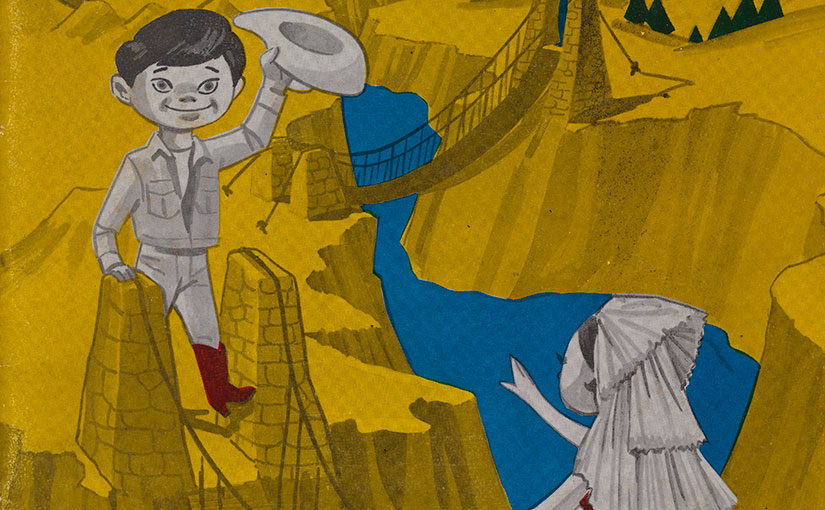
The coloring book’s activist stance and message are evident even from its cover. Printed on glossy cardstock, it features a Chicano boy, dressed in Southwestern clothing, smiling and waving to a young girl who stands on the other side of a river – most certainly the Rio Grande. The young girl is dressed in the traditional clothing and head covering of the Tehuana, a female cultural type associated with the Isthmus of Tehuantepec region of far southern Mexico. Through this image, Torrez links the U.S. Chicano population with residents of Mexico and extends Mexican cultural identity from the country’s border with Guatemala up into the United States – well beyond the country’s political boundaries. Two open and pleasant-looking bridges span the Rio Grand, connecting Mexican Americans and residents of Mexico and advocating friendship and camaraderie between them. 

The Montcalm County Intermediate School District, located in Stanton, Michigan, an agricultural area located north of Lansing and home to significant populations of migrant workers in the 1970s, contributed to the development of the coloring book as part of a migrant education project. The border and two small birds on the title page might appear entirely decorative, but they are an appropriation of symbols of Mexican – even indigenous Mexican – identity. They are Aztec eagles and they frame publication details, including a statement that the book was “Printed in AZTLAN” – the birthplace of the Aztecs. Like many Chicano initiatives of this era, Michigan’s activists found resonance in these Native references that seemed devoid of European influence or content. Through the eagles and references to Aztlan, they harkened back to an idealized indigenous past.   

Page 2 provides the children for whom this coloring book was created a brief, unbiased definition of “migrant child” in English and Spanish. It links the definition specifically to movement between school districts and to agricultural and food-processing industries, but not to race or ethnicity. The statement is a resource, or tool, to help migrant children consider and articulate identity as related to their mobile status.  

The inside of the coloring book recounts Chicano history by dedicating pages to each of the major indigenous groups of Mexico, depicting the events of the Spanish conquest of the Aztecs as well as highlights of modern Mexican history, and pointing to important issues of the day. 
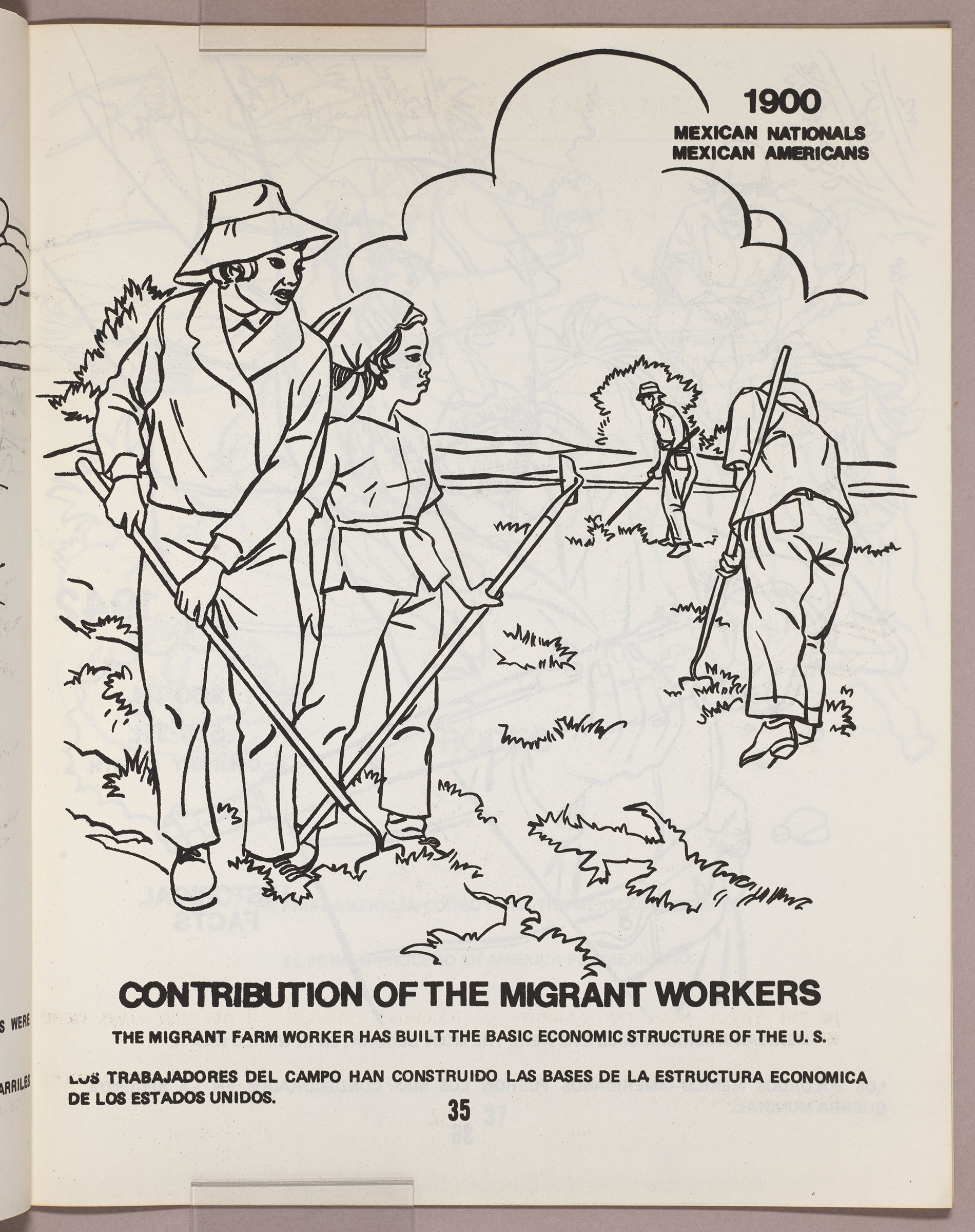
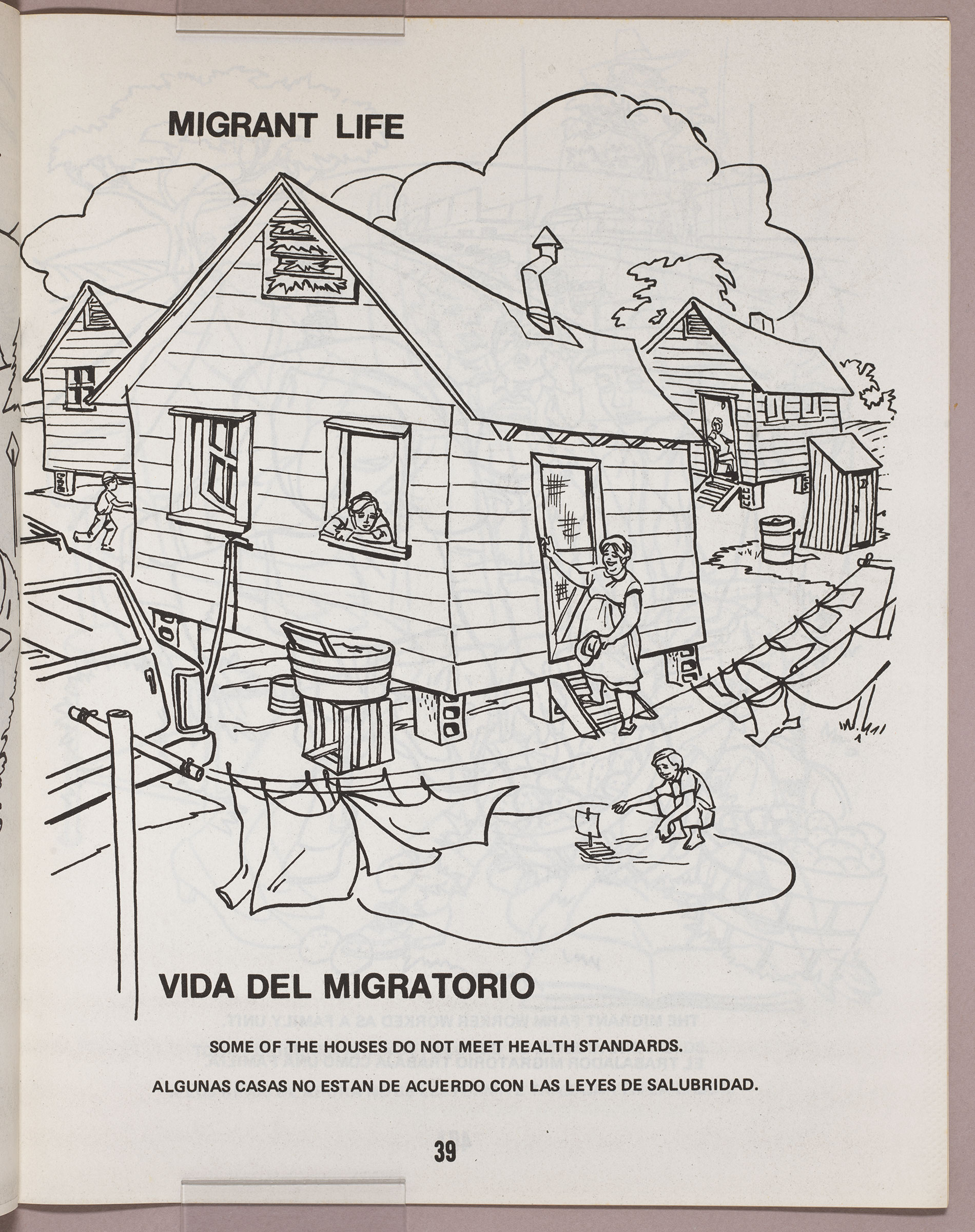
A page entitled “Contribution of the Migrant Workers” argues that, since 1900, migrant farm workers and their labor served as the basis of the U.S. economic structure. “Vida del Migratorio” observes that, despite this contribution, migrant housing is often substandard. This issue received attention from the federal government at the time that the coloring book was issued, though improvements for laborers were often slow and uneven.   

Along with this source geared toward children, El Renacimiento produced a newspaper of the same name that focused on the Chicano Rights movement and was published in Lansing from the 1970s through 1990s. David Torrez and Edmundo Georgi, both contributors to this coloring book also work on the newspaper, El Renacimento, which can be consulted on microfilm here in the Hesburgh Libraries.

Related Previous Blog Posts:

Chinese women in post-Cultural Revolution posters

by Hye-jin Juhn, East Asian Studies and Metadata Librarian

These newly acquired Chinese posters include images that conform with, and defy the norms of the ideal Chinese women in the People’s Republic China.

Wang Dawei’s Fu nü neng ding ban bian tian guan jiao shan he huan xin yan 妇女能顶半边天 管教山河换新颜 (Women hold up half the sky, dare to change the mountains and rivers, 1975) depicts a female construction worker, seemingly strong as men, mentally and physically.

Two of the posters depict female characters from Cao Xueqin’s Qing novel, The Story of Stone.

Gao Jingbo’s Yi lu chun feng 一路春风 (2019 print of the 1980 original painting) depicts contemporary women of various social backgrounds. The relationship between the woman in urban clothing, and those in typical peasant clothing seems ambiguous. Are the rural women the followers of the city woman? Or are they sending the urban woman off with their best wishes?

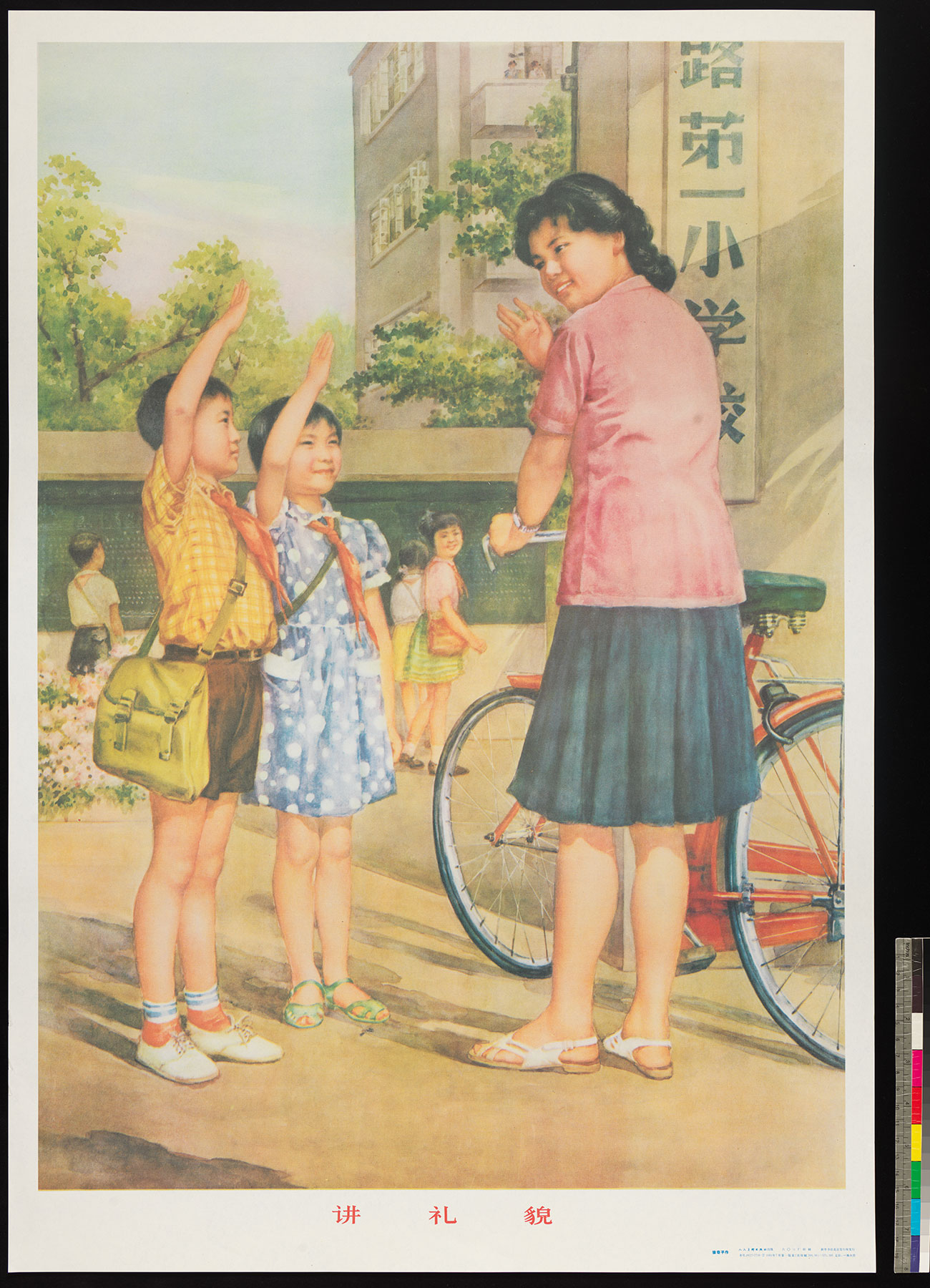
In Wei le sheng huo geng mei hao 为了生活更美好 (1980), and in Jiang li mao 讲礼貌 (1981), we see images of contemporary Chinese women in rural and urban environments. One is a mother, content with a child on her back; the other is a teacher, who upon arriving at her work place on her bicycle, is respectfully greeted by a boy and a girl.   

Medieval Manuscripts from the Ferrell Collection on Exhibit

by David T. Gura, Ph.D., Curator, Ancient and Medieval Manuscripts

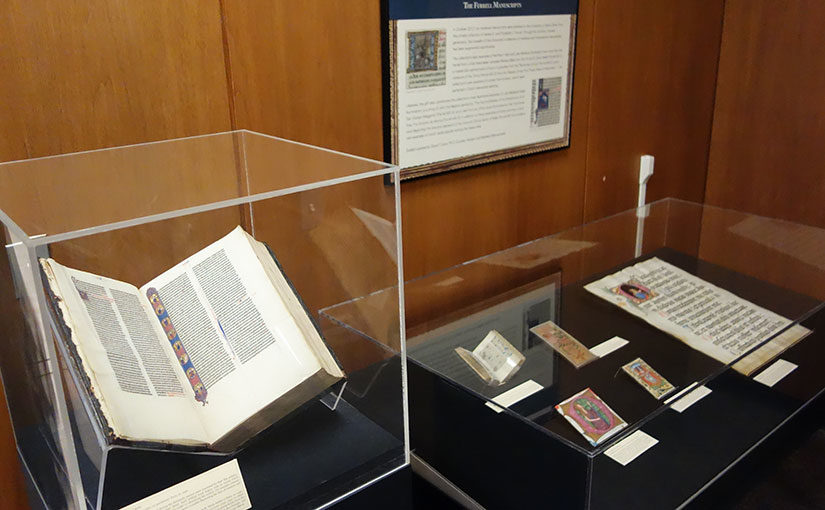
In October 2017, six medieval manuscripts were donated to the University of Notre Dame from the private collection of James E. and Elizabeth J. Ferrell. The manuscripts have been accessioned into their own fond: “Ferrell Manuscripts.” Through Mr. and Mrs. Ferrell’s generosity, the breadth of the University’s collection of medieval and renaissance manuscripts has been augmented significantly.

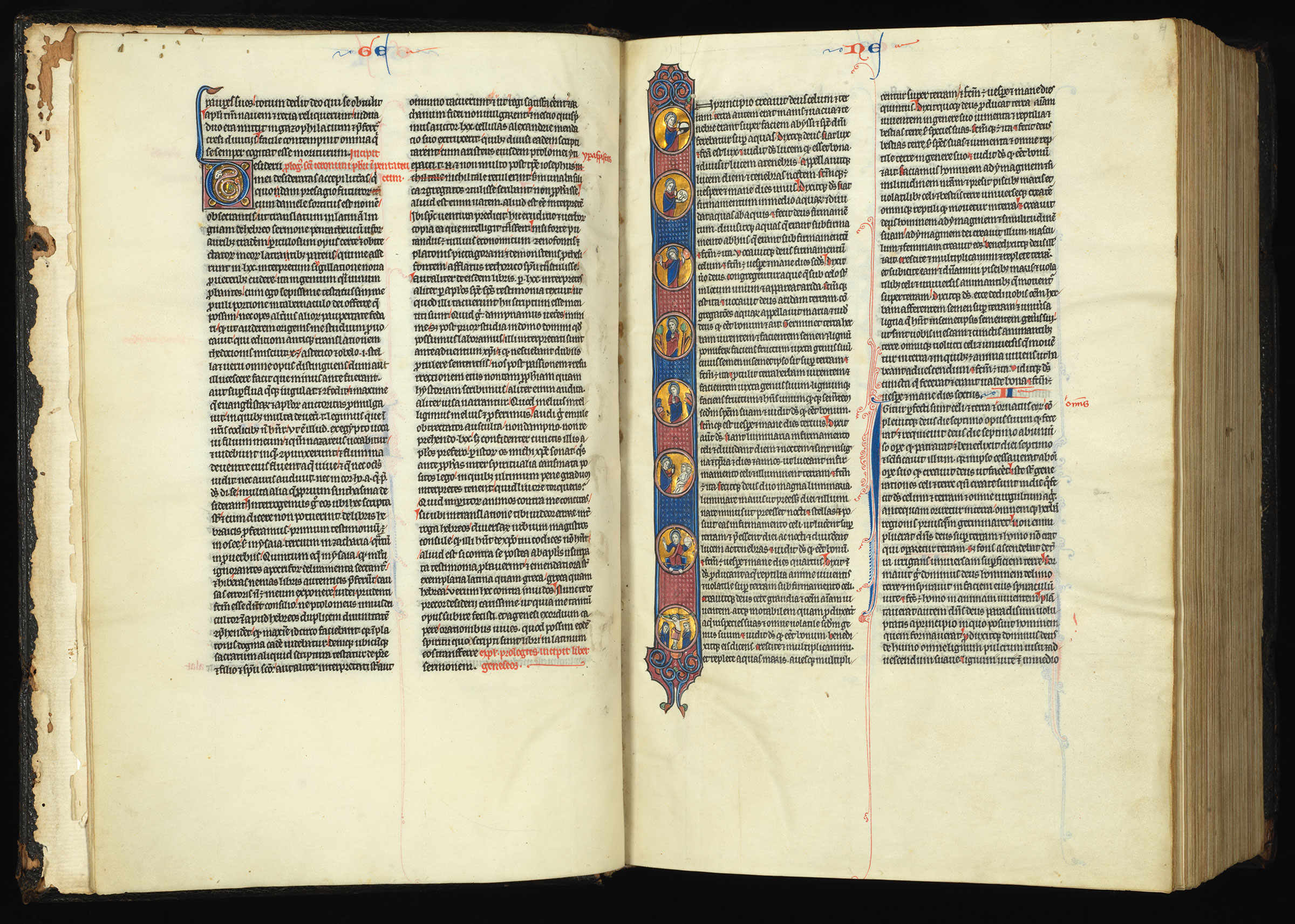
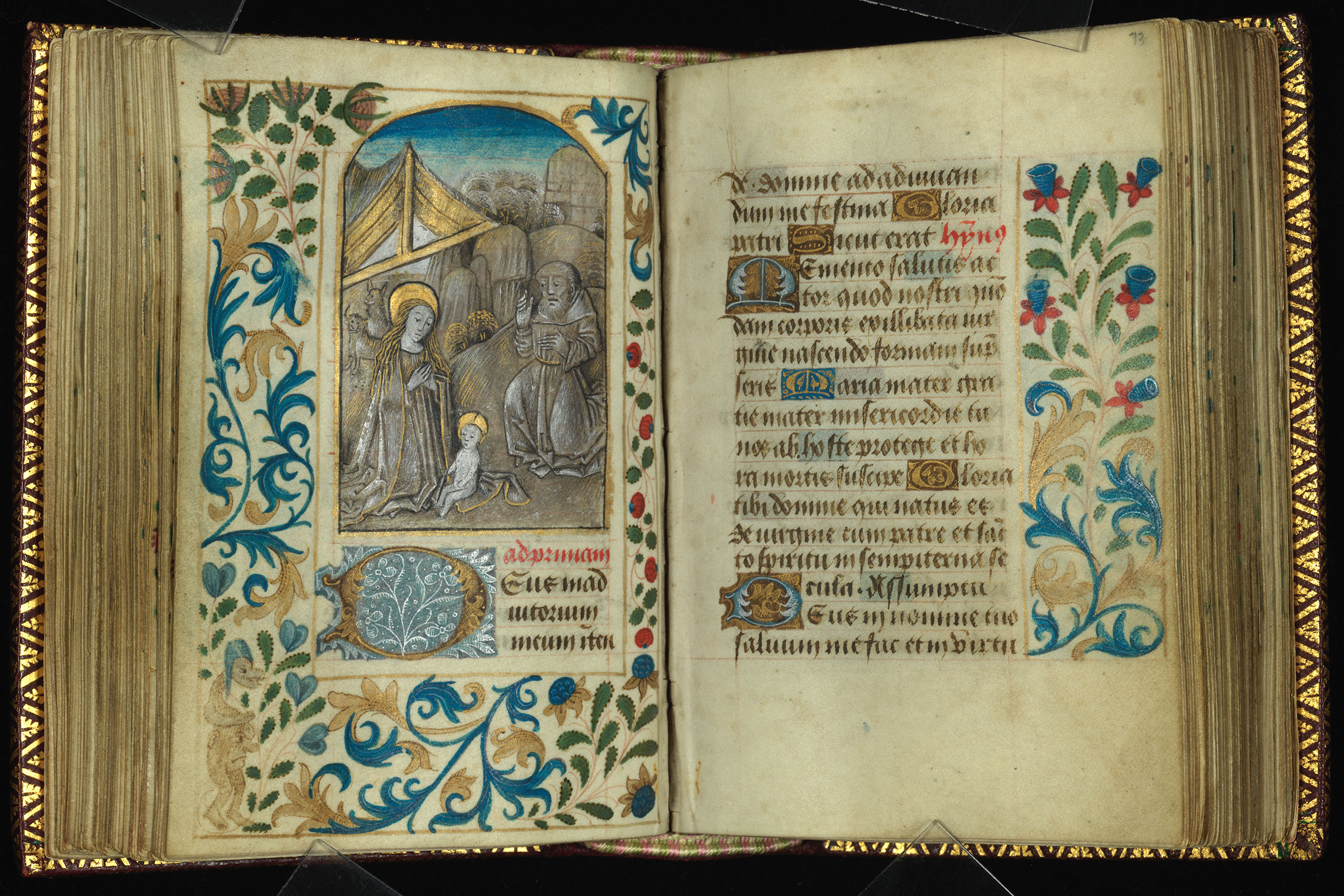
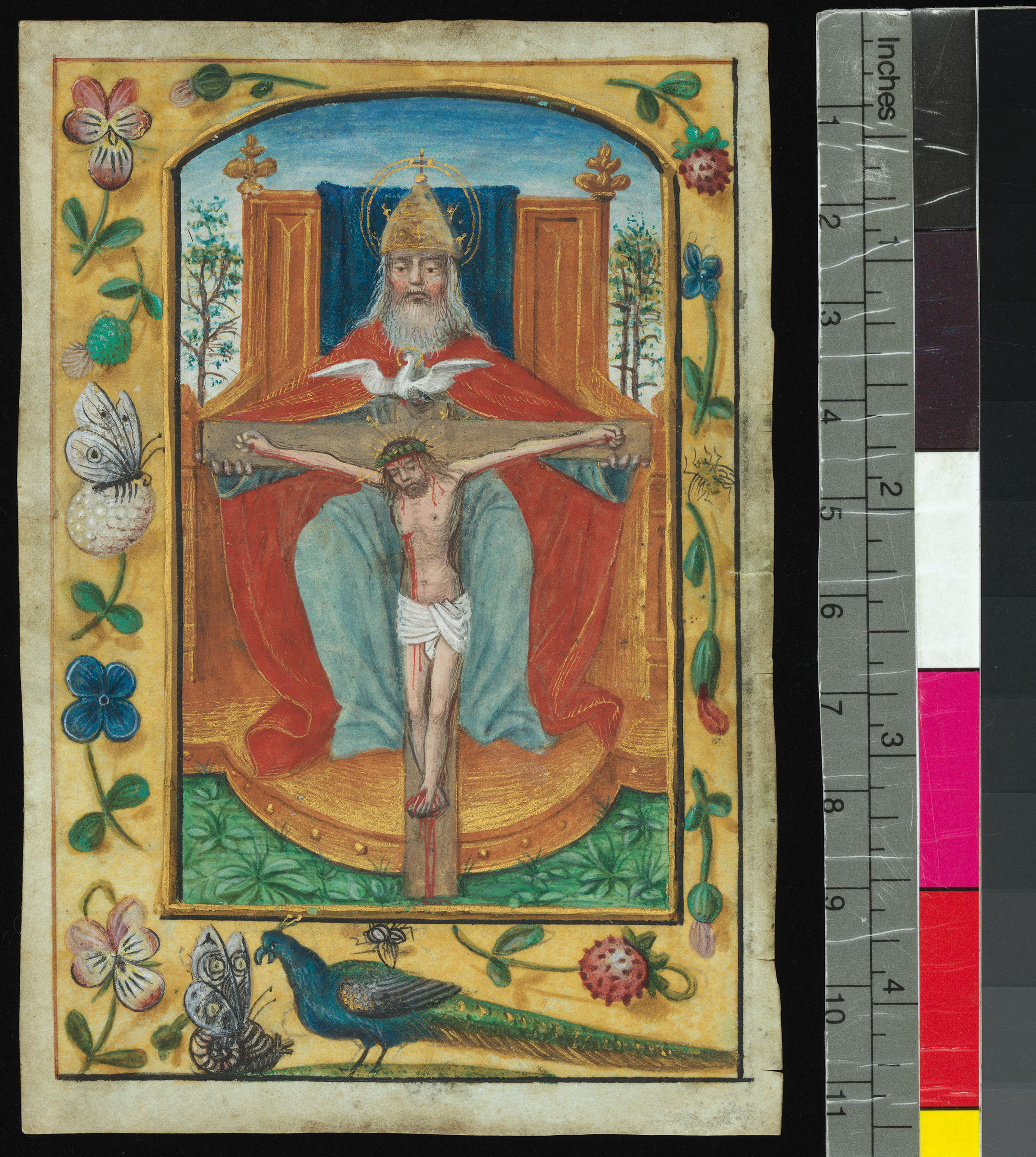
The collection’s best examples of Northern High and Late Medieval illumination now come from the Ferrell fond: a fully historiated, complete Parisian Bible from the Vie de St. Denis Atelier (Ferrell MS 1),  a masterfully painted Book of hours in Grisailles from the “Betremieu Group” (Ferrell MS 2), and a miniature of the Trinity (Ferrell MS 3) from the “Master of the First Prayer Book of Maximilian”—the collection’s sole example of trompe l’oeil  borders, which were perfected in Dutch manuscript painting.

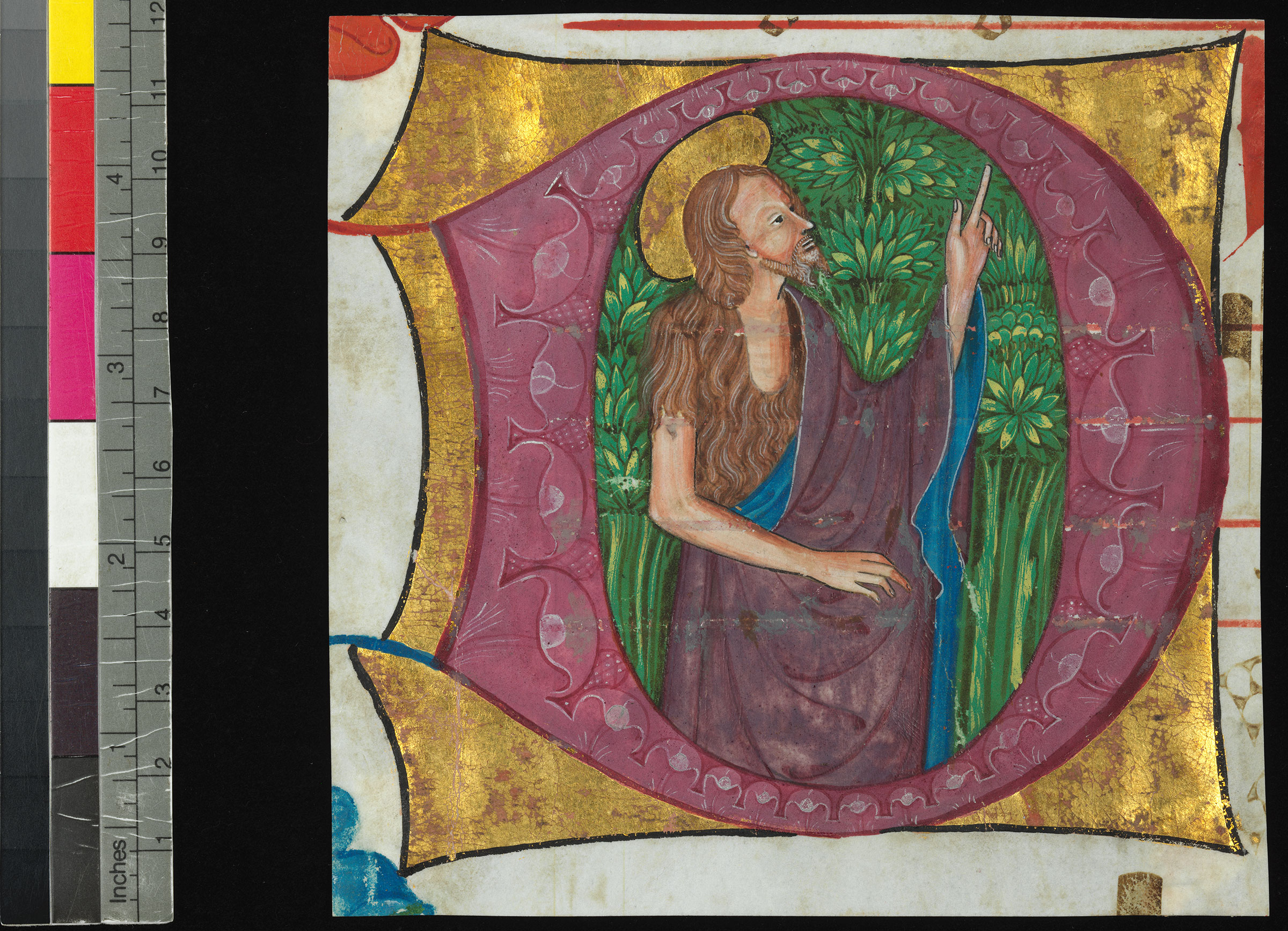
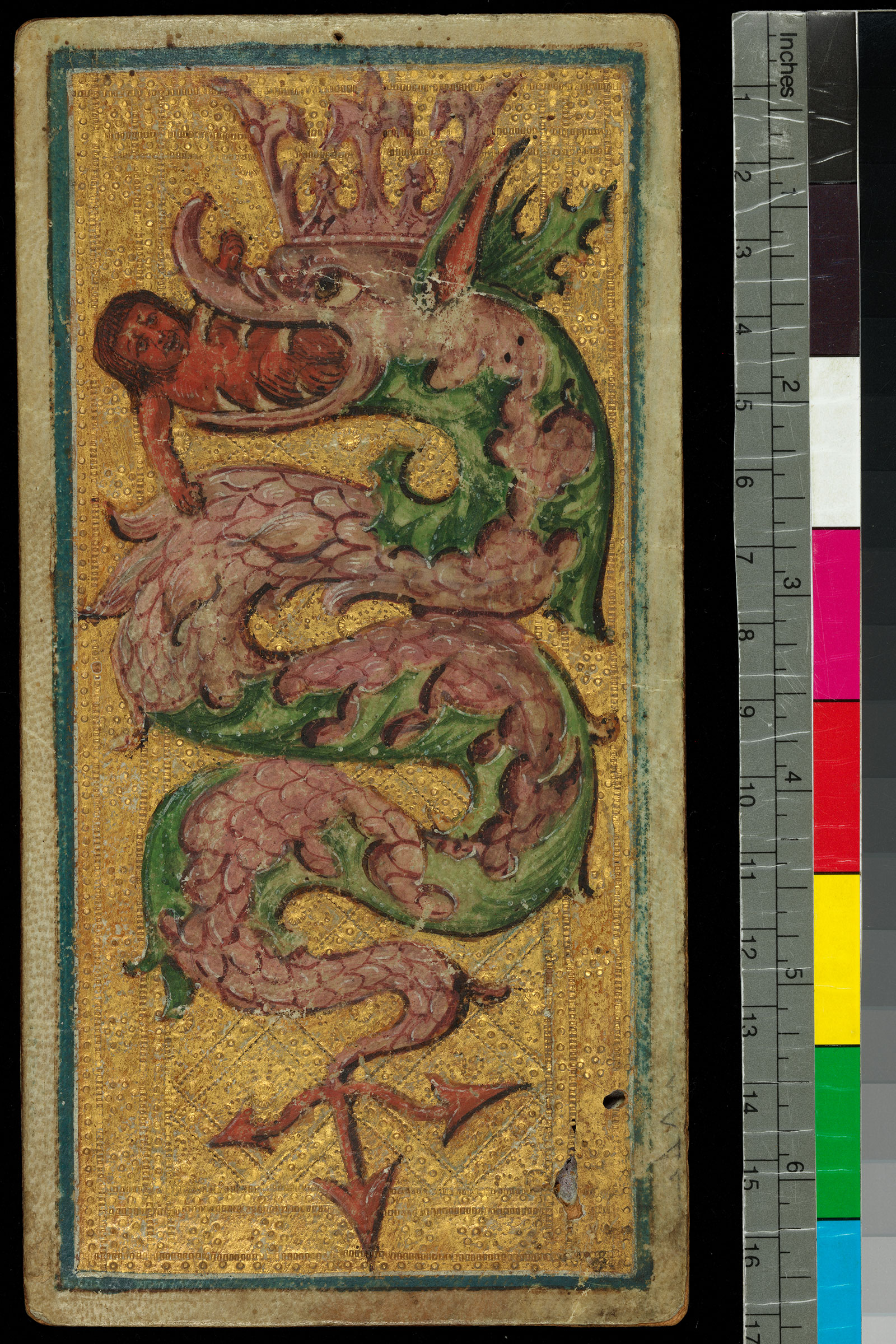
Likewise, the gift also constitutes the collection’s most illustrative examples of Late Medieval Italian illumination: a cutting of John the Baptist painted by “The Second Master of the Antiphonary M of San Giorgio Maggiore” (Ferrell MS 4), and a leaf from an Office Book illuminated by the Franciscan friar, Fra Antonio da Monza (Ferrell MS 6). In addition to these examples of Italian painting, a tarot card depicting the biscione (serpent) of  the Visconti-Sforza family of Milan (Ferrell MS 5) provides a rare example of Trionfi cards popular among the Italian elite. 

The Ferrell Collection is on exhibit for the Fall Semester 2021 in Rare Books and Special Collections and is also available digitally.

The Ferrell Bible (Ferrell MS 1)
The Ferrell Bible was illuminated by the artisans of the Vie de St. Denis Atelier in Paris, ca. 1240. The Vie de St. Denis Atelier was among the most active paintshops from 1230–1250, to which over forty different manuscripts have been attributed. The atelier painted small and large Bibles, liturgical and devotional manuscripts, civil and canon law books, and institutional volumes such as the privileges of St.-Martin des Champs and the Libellus of St.-Denis. A diverse clientele acquired books from the atelier, which included local patrons like the cathedral, St.-Denis, St.-Martin des Champs, St.-Maur de Fossés, and a Carthusian house in Paris. Regionally, clients from Copmiègne, Rouen, Sens, and Châlon-sur-Marne also visited the atelier for books.

View the entire Ferrell Bible.

The Ferrell Hours (Ferrell MS 2)
The Ferrell Hours was produced in French Flanders in the later fifteenth century. The manuscript forms part of the “Betremieu” Group, a small group of books of hours which were made in Hainaut ca. 1460-1470. All miniatures in the Ferrell Hours were painted using the Grisaille technique. Quite rare and luxurious, the Grisaille technique uses only hues of gray.

View the complete Ferrell Hours.

Miniature of the Holy Trinity (Ferrell MS 3)
This miniature of the Trinity belongs to a group of manuscripts associated with the “Master of the First Prayer Book of Maximilian,” who was active ca. 1475-1515. The recto side was originally blank as the miniature was painted on the verso and imported–one of the hallmarks of Flemish origin. The borders are extremely well executed examples of the trompe l’oeil technique, which was perfected in Dutch manuscript painting. Ferrell MS 3 is Notre Dame’s only example of trompe l’oeil in a medieval manuscript.
Cutting from a choirbook (Ferrell MS 4)
The painter of this historiated initial featuring John the Baptist is known as “The Second Master of the Antiphonary M of San Giorgio Maggiore.” The long sobriquet derives from an antiphonary illuminated for San Giorgio Maggiore by Belbella da Pavia c. 1467–1470, to which our painter contributed four initials. “The Second Master of the Antiphonary M of San Giorgio Maggiore” was active in the Veneto and also contributed paintings to a well-known set of choirbooks for the Benedictine Abbey of San Sisto in Piacenza. 
Visconti-Sforza Tarot Card (Ferrell MS 5)
This tarot card depicts the biscione—a heraldic crowned serpent shown consuming a human child. The biscione was first associated with the Visconti of Milan (1277–1477). The motif became emblematic of the Duchy of Milan, and was then used in the heraldry of the Sforza family. The Sforzas ruled the Duchy of Milan (1450–1535) after the Visconti family.
Fragment of an Office Book illuminated by Fra Antonio da Monza (Ferrell MS 6)
Fra Antonio da Monza was a Franciscan friar and manuscript illuminator who was active in Italy ca. 1480-1505. Several liturgical books and miniatures have been attributed to him since he was identified, including this manuscript which had previously been attributed to Giovan Pietro Birago (ca. 1480-1490).

Upcoming Events: September and early October

Please join us for the following events being hosted in Rare Books and Special Collections:

Thursday, October 7 at 4:30pm | Dante in America, Session V: Dante, Jazz, and American Modernism” by Joseph Rosenberg (University of Notre Dame), and “‘Was Then Your Image Like the Image I See Now?’ Dante’s Face in America” by Kathleen Verduin (Hope College).

The Dante in America lectures are sponsored by the Center for Italian Studies and the Devers Family Program in Dante Studies.

The fall exhibit “Bound up with love…” The extraordinary legacy of Father John Zahm’s Dante Collection is now open and will run through the end of the semester.

The current spotlight exhibits are The Ferrell Manuscripts (August – December 2021) and A Limited Edition Photo Album of the Sistine Chapel (August – September 2021).


RBSC is closed Monday, September 6th,
for Labor Day.