
We are all familiar with sunburns and sunscreen. From our first day playing outside, we are taught to put on sunscreen to protect our skin. But why? Why do we need to protect our skin from the sun? And how does sunscreen, if at all, protect us?
Continue reading “Sunscreen’s Secrets: How Is It Really Helping?”Month: October 2025
Vibration and Perception: Your Bike’s Buzz Might Trick Your Brain to Push Harder

Today I rode my bike through the widespread green prairie of South Quad here at Notre Dame. The expanse of thin and evenly tall blades of grass is sliced by strips of smooth concrete, which streak across its surface. Except, of course, that concrete is not really smooth. If you’ve ever (1) reached and dragged your hand across concrete paths or (2) crashed and dragged your body across the concrete, then you intrinsically know that even seemingly smooth paths have texture.

And when you ride over any textured terrain, your tire experiences consecutive minute vertical displacements–aka vibrations–and then your frame experiences these vibrations, and then your handlebars experience these vibrations, and then YOU experience these vibrations in your hands and feet. Advanced riders agree on two things about vibrations: they help you “feel” the texture of the trail, which improves control and confidence, and severe vibrations punish your forearms with lactic acid buildup, which increases fatigue. But how do vibrations affect the average rider on sidewalks and paths? How do they affect your muscular fatigue and performance in your extremities (arms/legs)? Because every time you ride a bike, you’re experiencing vibrations.
Continue reading “Vibration and Perception: Your Bike’s Buzz Might Trick Your Brain to Push Harder”Goldilocks of Weight Training: The Balance between High-Volume and Low-Volume

While many introductions start with sharing your name and where you’re from, for the average gym-goer, the most common icebreaker is, “What’s your split?”. “Split” simply refers to your workout routine, typically by which body parts are being worked out weekly. Some of the most common splits are Push-Pull-Legs (PPL) or an “Arnold Split.” Push means any muscles that “Push” things like the triceps, shoulders, and chest, and pull similarly any muscles that “pull” things like the biceps and back. While the Arnold Split involves working out opposing muscle groups together, it utilizes a chest and back day, a shoulders, triceps, and biceps day, and a leg day. Within these splits are a variety of exercises with several sets and repetitions. The question is: What combination of sets per week are enough to build muscle?
Continue reading “Goldilocks of Weight Training: The Balance between High-Volume and Low-Volume”Tap out before your ligaments do: The mechanics of Jiu Jitsu joint submissions

Take a look at one of your limbs and straighten it as much as you can. Notice that your elbows and knees each have a clearly defined limit of rotation – these are called “joint limits”. While you might not think about them much, Brazilian Jiu Jitsu fighters see our joint limits as exploitable weaknesses. Martial artists have been inventing and refining ways to hyperextend their opponents’ joints for hundreds (if not thousands) of years. These “joint submissions” are executed by acting as human levers or torque wrenches, trying to rotate joints past their limits.
Continue reading “Tap out before your ligaments do: The mechanics of Jiu Jitsu joint submissions”Arch Rivals: How the Biomechanics of Arched and Flat Feet Impact Athletics

Though all designed for the same essential function, human feet vary significantly in their structure between individuals. The most significant difference in foot structure is the arch, referring to the curve between the ball of your foot and the pad on your heel. The foot arch can range from a very high visible arch all the way to what is considered flat feet, with no visible arch and almost the entire sole of the foot making contact with the ground. This difference in structure changes the biomechanics of the foot, in turn changing the way we walk, run, jump, and complete any athletic feat. So how exactly do our arches play into athletic performance?
Continue reading “Arch Rivals: How the Biomechanics of Arched and Flat Feet Impact Athletics”Running and Dancing: What Our Achilles Tendons Can Handle

Imagine trying to withstand a force 12 times your own body weight. Sounds impossible, yet that’s what your Achilles tendon (AT) does during something as simple as running. As the strongest tendon in the body, it’s essential for every movement. But the same repetitive motions that strengthen this tendon can also lead to injury. Achilles tendinopathy, pain and swelling along the tendon, is one of the most common overuse injuries in both runners and dancers. So how can similar motions account for both AT strength and damage?
Continue reading “Running and Dancing: What Our Achilles Tendons Can Handle”Spatial Disorientation in Military Pilots: How does aerodynamic forces lead to pilot error?

Icarus, the prisoner that dared to touch the heavens; his story of flight captivated humanity with the dream of flight for centuries. With the coming of the first powered and controlled flight in 1903 by the Wright brothers, to fifth-generation fighter aircraft, this ancient dream became reality. Yet, as Icarus ignored his father’s warnings and fell from the sky, modern pilots too can be deceived, not by the sun, but by their own senses.
But how does this deception happen?
Flight & Spatial Disorientation
Unlike birds who have been flying for around 150 million years, the human body has evolved to move on solid ground, meaning in a two-dimensional space. Not through a three-dimensional space where one can experience differing flight maneuvers, or acceleration at multiple gravitational forces (G-force), that make orientation difficult to maintain. Naval Pilots rely not only on their flight instruments, but also their visual, and vestibular senses to navigate in the skies. Any variation in these senses causes spatial disorientation (SD); which according to a study done in 2014, 20% of all plane accidents are related to the pilot’s optical illusions. There are three classifications to SD:
Type 1: Unrecognized
- These SD’s are unrecognized by the pilot.
Type 2: Recognized
- The Pilot recognizes the SD, and can attempt to correct it.
Type 3: Incapacitating
- The pilot is incapacitated and cannot save himself nor recover the aircraft
The Lying Senses

Within the inner ear lies the vestibular system acting as our built-in balance sensor, and gyroscope; with its main goal being that we are oriented upright, straight, and level. There’s two parts to the vestibular system: the semicircular canals that detect angular/rotational movement, and the otolith organs that detect linear acceleration. But, like any man-made sensor, it has limits. The vestibular system is sensitive to G-force, and prolonged maneuvers, creating illusions that fall into two categories: somatogyral for spinning illusions, and somatogravic, for acceleration illusions.
Imagine you’re flying through the clouds in an F-35C, no visible terrain, and the horizon is obstructed. You bank into a turn, the fluid in your semicircular canals start moving, but after a while your brain no longer recognizes that you’re still in a bank as the fluid in your ear has reached equilibrium within the canal wall. Then you exit the clouds and level out, your eyes and instruments may say your level, but the fluid in your inner ear is still moving, giving pilots the urge to bank the aircraft into an attitude to correct this feeling; a situation called “the leans,” a somatogyral illusion.
Vision isn’t the savior
During flight, vision is the most important sense needed not just for flying, but to achieve accurate spatial orientation. But, vision can betray you in the sky. Your eyes and brain work together in order to decipher how light reflects off things, this “vision” allows pilots to see their surroundings and help navigate through the skies. However, if a pilot is in an maneuver where their exposed to high G-Forces, they can be “G-Locked,” or have an G-induced loss of consciousness that can negatively effect their vision as it constricts blood flow to the brain causing pilots to lose sharpness in their vision. 3-4 G’s is whenever a pilot without adequate G-force protection can expect gray vision (blurred central vision), with the pilot blacking out between 5-7 G’s.
Bringing it Home
Aerospace technology is only continuing to get better, and the understanding of the human physiology, and the biomechanics of Spatial Disorientation remain a constant. Pilots must not only learn to master their aircraft, whether it be for a commercial purpose to protect the lives of the passengers, or a military purpose to fulfill the mission, but they must also understand their own biology as well. This understanding of the human body’s limitation is the only way to prevent and counteract spatial disorientation. After all, as Icarus learned long ago, the sky may be beautiful, but it is not forgiving.
Featured Image from USN
Further Reading:
Steaks and Strains: Biomechanics in Cultivated Meat

Scientists are starting to grow meat the way farmers grow fruits. For thousands of years, people have raised animals for protein, but animal farming uses huge amounts of land and water and raises ethical questions about slaughter. To address these problems, researchers came up with a new idea: cultivated meat, which means growing muscle or fat cells from an animal until they form mature tissue.
Continue reading “Steaks and Strains: Biomechanics in Cultivated Meat”Well, if the Boot Fits! The Effect of Ice Skating Boots on Overuse Injuries in Competitive Figure Skaters

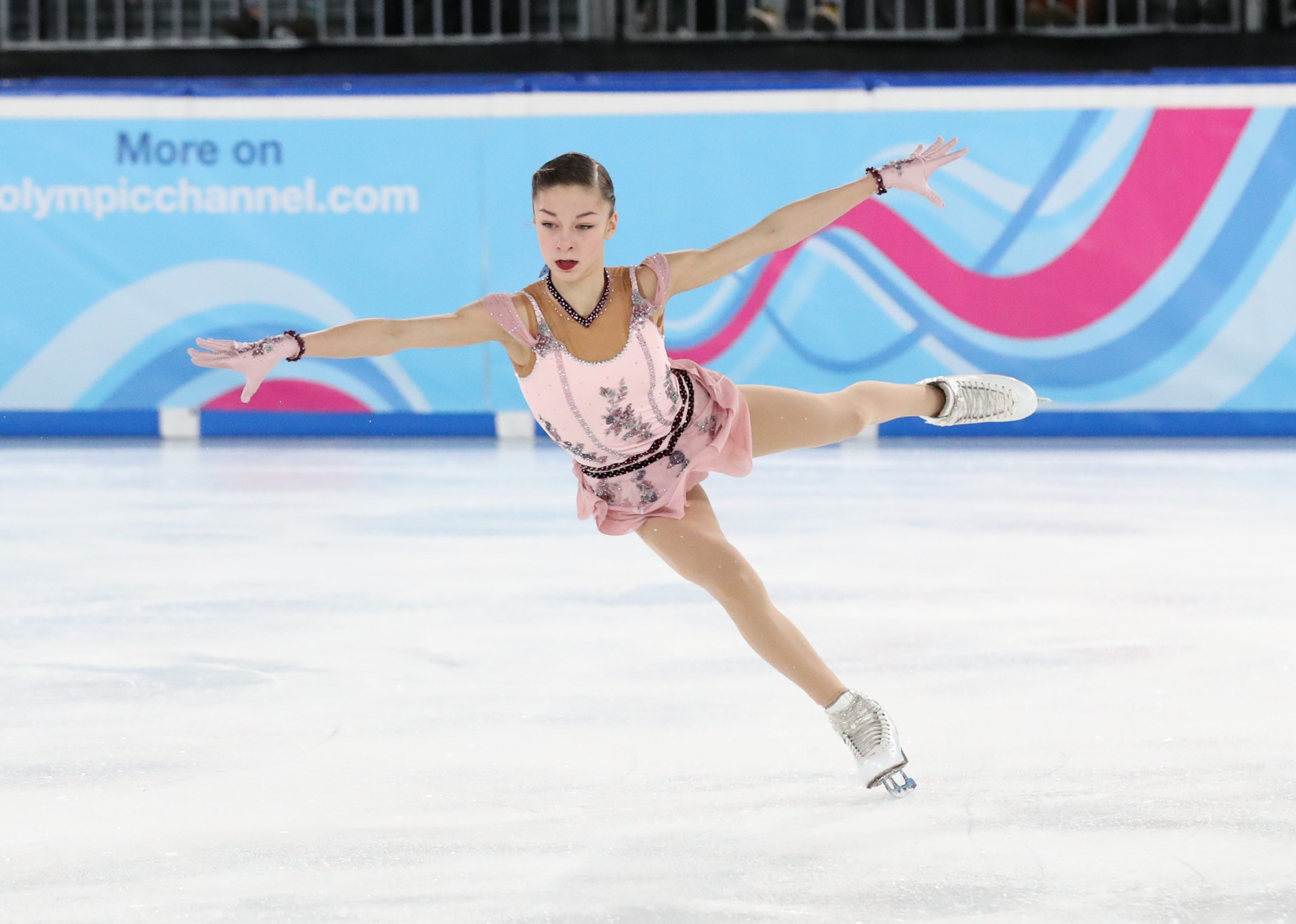
Every 4 years, viewers around the world tune into the Winter Olympics to watch the world’s best athletes compete in events like figure skating. With each passing Olympics, skaters push the limits of what is possible on the ice, always attempting jumps with more revolutions than ever before to impress judges and amaze viewers. However, these high-revolution jumps pose serious risks to the skaters who perform them, mainly in overuse injuries resulting from countless hours of practicing these jumps to perfect them for competition.
Read more: Well, if the Boot Fits! The Effect of Ice Skating Boots on Overuse Injuries in Competitive Figure SkatersWhen landing these jumps, skaters’ lower bodies are subjected to large impacts on their joints and bones due to the dissipation of kinetic energy resulting from their rapid rotations while in the air. As the number of jump revolutions increases, so too does the kinetic energy required to successfully perform them as skaters must rotate faster while in the air.
Additionally, high-rotation jumps place skaters’ completion of rotations closer to the ice, as skaters have less time to complete rotations while in the air. This results in a collision-type impact between the skaters’ landing foot and the ice that shortens how long skaters have to absorb forces from landing their jumps and further increases the impact on their joints and bones. Combined with the sheer number of jumps that skaters perform daily to perfect their skills, these high-revolution jumps greatly increase the risk of overuse injury development in skaters’ lower bodies.
To better preserve skaters’ joint and bone health, researchers have studied how ice skating boots impact skaters’ performance. These boots, which are worn by all skaters regardless of skill level, rise high on skaters’ ankles and are tied like shoelaces around metal hooks mounted on the boot. Tying the laces around these hooks provides extra stability to skaters’ ankles and ensures a secure fit of the boot around a skaters’ foot. A stiff platform runs under the boot and slightly raises the boot’s heel. Finally, a thin metal blade with a jagged pick at the toe of the boot and a rounded edge at the heel is mounted to the underside of this platform.

The most important feature of these boots is their stiffness around skaters’ feet and ankles to serve as braces that protect their ankles from wobbling and losing balance when landing jumps. However, this boot stiffness limits the ability of skaters’ feet and ankles to absorb the impact experienced upon landing jumps. This results in landing forces traveling up the skaters’ lower bodies and mainly impacting their knees, hips, and lower backs.
Therefore, boot models must strike a balance between structural stability and joint mobility, and researchers aim to identify this balance by observing how boot stiffness and fit around skaters’ feet impact their range of motion. Ankle and foot range of motion is important for skaters because it controls which joints are impacted most in skaters’ lower bodies. Studies have found that boots with angled forms and raised heels result in increased ankle range of motion and thus improved force dissipation in skaters’ feet and ankles rather than transferring more of these loads upwards to their knees, hips, and lower backs. Additionally, lightweight boots made of materials like fiberglass, plastic, and soft memory foam absorb a greater amount of the landing force impact than boots made of heavier materials like leather and wood. With these findings, skaters can make educated choices for their ice skating boots that prioritize their long-term joint and bone health, protecting themselves from overuse injuries to prolong their skating careers and get the most benefit out of their daily training.
Featured image by Sandro Halank from Wikimedia Commons.
Does Boxing Headgear Prevent Concussions?


In boxing, behind every punch connecting and glove pushing into a face, there is a complex collection of engineering principles at play that can vibrate a human skull and cause serious neurological damage. The impact of a punch can jolt the brain, causing it to move across the cerebrospinal fluid that it sits in and putting the person at risk. The rotation and rebound of the brain inside the skull from the rapid force applied is what produces concussions in the sport. Theoretically, headgear will reduce the likelihood of a concussion by softening the blows.
Continue reading “Does Boxing Headgear Prevent Concussions?”