Collection highlights, acquisition news, events, exhibits, and behind-the-scenes looks at the work and services of Rare Books & Special Collections (RBSC) at Notre Dame.
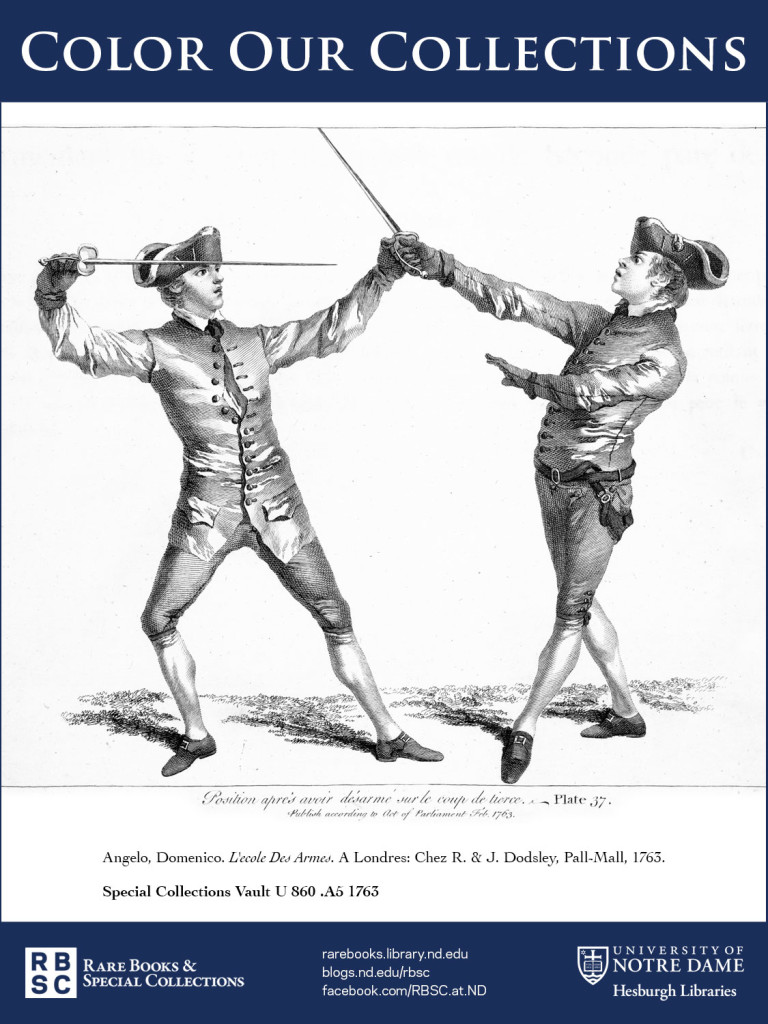
The double-sided banner outside of Special Collections invites passersby to pop in and check out the new exhibit, Ingenious Exercises: Sports and the Printed Book in Early Modern Europe, 1500-1800. For the curious who take a moment to stop, they find Domenico Angelo’s L’Ecole des armes (School of Fencing) opened to two fencers demonstrating the proper form to parry against an outside thrust under the wrist, known as a quinte thrust. Angelo’s book is accompanied by other early editions from the Joyce Sports Collection, highlighting various aspects of sports and physical culture including swimming, hunting, wrestling, and football.
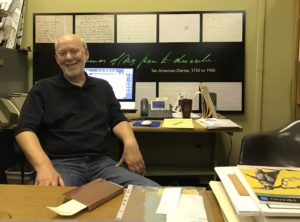
Behind the design of Ingenious Exercises is George Rugg, the curator for Americana and the Joyce Sports collections. As curator, George is responsible for the acquisition, care, and interpretation of collections related to the history and cultural heritage of the United States as well as sports and physical culture. He identifies and acquires materials available on the market or from private collectors that relate to existing collection strengths in Special Collections. Once these materials arrive, George ensures that all of the documentation is complete for the library to take physical and intellectual control of the materials. He assesses the condition and works with Hesburgh Library’s conservation staff to determine if treatment is needed to prevent deterioration and to address any special needs to protect the materials. George also researches and interprets the collections in order to help students and visitors understand the significance of the materials, show relationships between them, or contextualize them within our cultural heritage. The main ways he shares this knowledge with students and the public are through teaching classes and by designing exhibits.
Also on current display is a spotlight exhibit featuring an important journal George recently acquired that enhances the Colonial Manuscript collection. The Nathaniel Rogers Sermon Notebook contains the sermon notes of Nathaniel Rogers (1598-1655), a Puritan minister who emigrated from England to Massachusetts in 1636. George offers visitors an opportunity to view this rare work while sharing his research on and curatorial concerns for the book. He includes Cotton Mather’s providential history of 17th century New England, the Magnalia Christi Americana (1702), opened to the beginning of Mather’s eulogy of Rogers which provides what little information is known about the minister’s life. George also describes the original condition of the sermon book and the treatments performed by Hesburgh Libraries Preservation to stabilize the notebook so that researchers may safely use it.
For each of these exhibits, George selects materials from Special Collections’ holdings that not only have significance but also capture the imagination. Selected items might represent important works in a bibliographic tradition such as Nicolaes Petter’s Klare Onderrichtinge der voortreffelijcke Worstel-konst (1674). This work is an illustrated self-defense manual that represents one of the finest examples in the tradition of illustrated martial arts manuals, a tradition traceable to a German fencing manual from the 1320s. In the case of the business records of the Birmingham Black Barons, the records provide a look into the history of American baseball in the era of segregation. They document financial transactions between the team and its players during the years when the Black Barons were full members of the Negro National League and before financial pressures generated by the Great Depression forced the team to return to the Negro Southern League in 1931.
George’s current exhibits, Ingenious Exercises andThe Nathaniel Rogers Sermon Book, will be on display through December 2016. He will also be giving public tours of Ingenious Exercises on Wednesdays at noon during October and November.
ETA: George Rugg retired from Special Collections in the summer of 2019. Greg Bondis the current Sports Archivist and Curator.
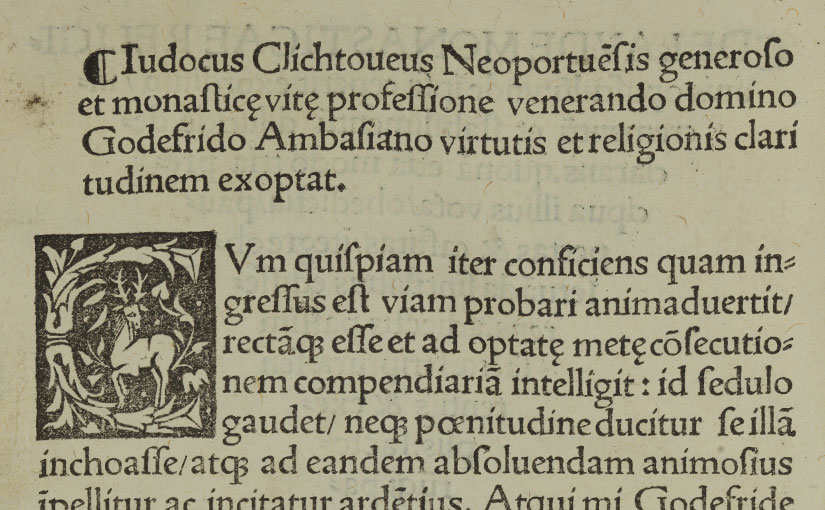
Hesburgh Libraries has just acquired the first (and only) edition of De laude monasticae religionis opusculum (Paris, 1513) by the Flemish theologian Josse Clichtove (1472?-1543). This prolific Catholic apologist of the Reformation era wrote a spirited defense of monasticism. In this work, he attacked the anti-monastic views of the famed Christian humanist, Desiderius Erasmus (1466-1536), although Erasmus is not mentioned by name in the text. This would be the first of numerous polemical exchanges between the two.
In addition to Notre Dame’s copy, there are only six other North American holdings of this title.
Monday, Oct. 10 at 4:00pm | Native Voices: Native Peoples’ Concepts of Health and Illness special event: “Shaping or Shaped by the Land: Native American Ecology” — Dr. Gary Belovsky (Department of Biological Sciences and Gillen Director of the University of Notre Dame Environmental Research Center).
Ingenious Exercises: Sports and the Printed Book in Early Modern Europe, 1500-1800 | What was the nature of sports in the early modern era, before the widespread preoccupation with rules, records, and Reeboks? And what kinds of books did people write about them? “Ingenious Exercises: Sports and the Printed Book in Early Modern Europe, 1500-1800,” addresses precisely these questions. This exhibit of volumes from the Joyce Sports Collection is open to visitors 9am-5pm, Monday through Friday.
Spotlight Exhibits: Plumb Crazy: Dante and Music and The Nathaniel Rogers Sermon Notebook, ca. 1634-1645
Special Collections will be open regular hours during the Notre Dame fall break.
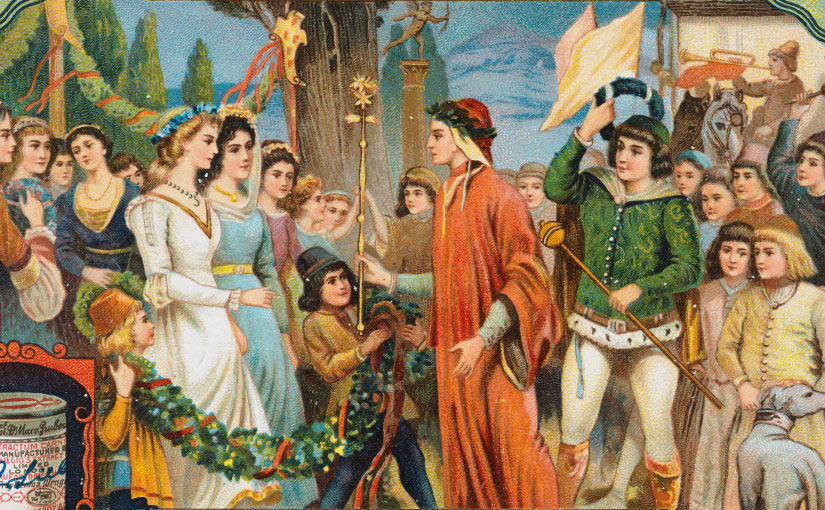
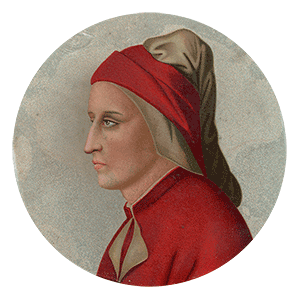
This small exhibit highlights selections from the Hesburgh Libraries’ collections of musical adaptations of Dante’s works. On view are historical examples of compositions relating to Dante’s Divina Commedia and Vita Nuova. While Dante witnessed musical adaptations of his texts composed already in his own lifetime, they hit a high point in the mid-19th century when the author’s popularity surged in both Italian and translation readership.
This spotlight exhibit will be visible from October 3-28 in Rare Books & Special Collections on the ground floor of Hesburgh Library. The exhibit is presented in conjunction with Journeying La Divina Commedia: Desert, Discovery, Song, an interdisciplinary musical project, which will be performed at the DeBartolo Performing Arts Center on the campus of the University of Notre Dame on October 8-9, 2016.
Today’s coloring sheet comes from our recently installed exhibit, Ingenious Exercises: Sports and the Printed Book in Early Modern Europe, 1500-1800. The exhibit presents a selection of books on sports and physical culture published in Western Europe in the 16th, 17th, and 18th centuries and is curated by George Rugg (Joyce Sports Collection).
The exhibit is open to the public through December 16, 2016.
Notre Dame Special Collections holds approximately 132,000 volumes of rare books and periodicals. In the collection, there are really old books and really new books; books that have high monetary value and books that don’t; books with paper covers and books with hard covers; books that look like books and books that look like art. What is a rare book then? Why is one book in the rare book collection and not another? And exactly what kinds of rare books does ND Special Collections have?
The mixture of old and new and varying monetary values and formats points to the fact that it’s hard to define precisely what a rare book is. Perhaps the question isn’t so much, “What is a rare book?” but rather, “What makes a book rare?” Supply and demand play a large role. If there are only a couple of copies of a particular book, it seems logical to believe that that book is rare; however, if no one is interested in acquiring that book, then the book isn’t necessarily rare. If there is greater demand than the number of books available to meet demand, then a book may be said to be rare. High demand, though, is only one part of the equation in determining whether a book is rare.
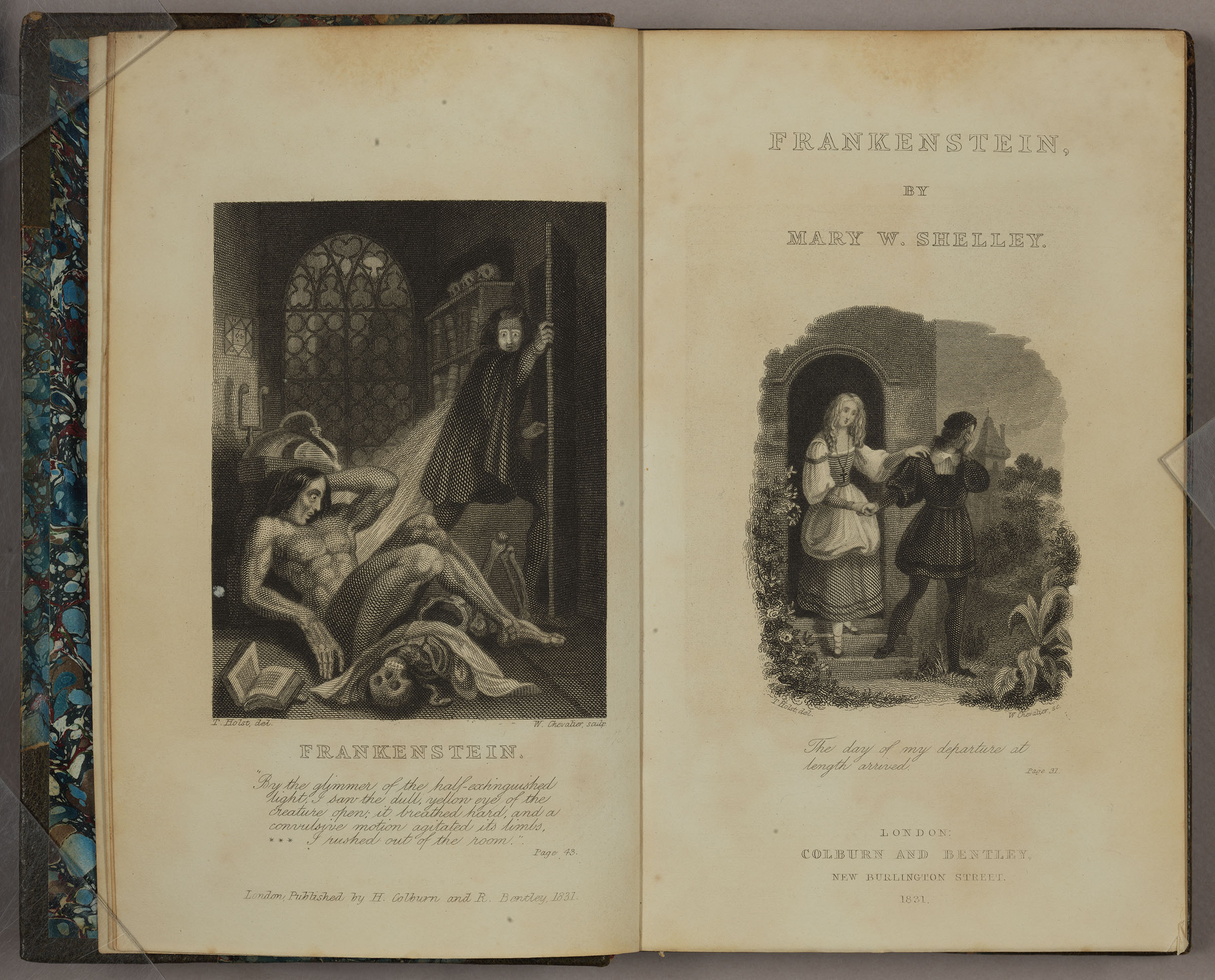
Above and beyond supply and demand, a book must have some sort of intrinsic value or importance. That is, what importance does a book have in the field of study to which it belongs? More simply put, does the book have research value? For example, Mary Wollstonecraft Shelley’s Frankenstein, or, The Modern Prometheus, first published in 1818, is quite popular and readily available whether in your local library or through any of a number of bookstores and online booksellers. But editions of this book are found in special collections. Both the original 1818 edition and the 1831 revised edition published in a single volume by Henry Colburn and Richard Bentley have intrinsic value for literary studies. The first presents Shelley’s ideas in 1818 before she suffered from multiple personal tragedies—the deaths of her son, daughter, and husband, of her friend, George Gordon (Lord Byron), and being betrayed by her friend, Jane Williams. The third edition, considerably revised by the author, reflects the change in her philosophical ideas. After suffering these tragedies Shelley revised the text to exemplify her belief that human events are not decided by free will but by material forces beyond human control.
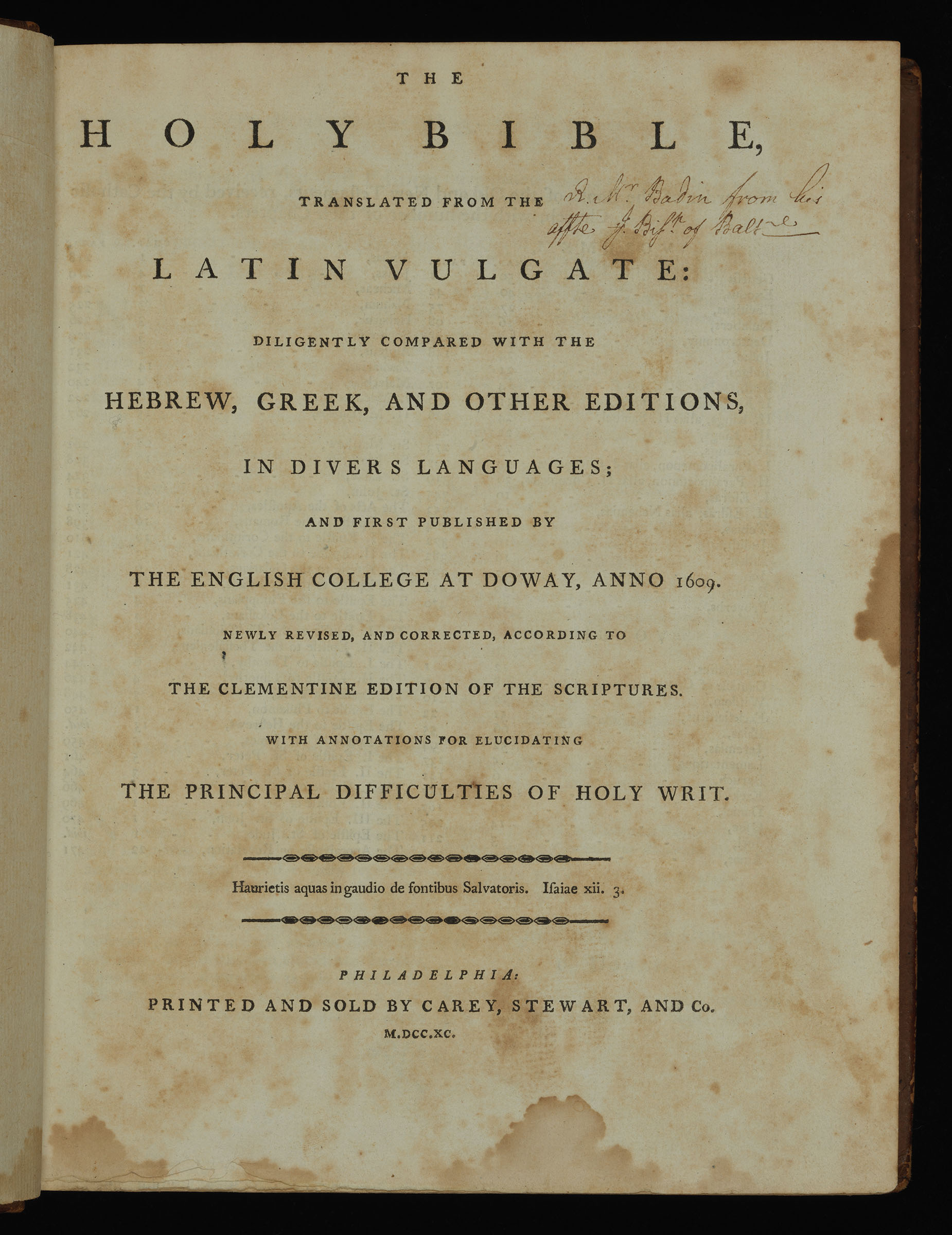
A book might be considered rare if it is the first printing, has particular historical importance, or has specific significance to a particular collection, institution, or other setting. The Holy Bible printed by Matthew Carey in 1790 is one example of all three of these considerations. The Carey Bible represents the printing of the first Catholic Bible in the United States, known also as the Douay-Rheims version. The specific copy of this Bible held in ND Special Collections has further significance to the campus. Locally referred to as “The Badin Bible,” the three volumes comprising this copy were given to Father Stephen Badin (1768-1853) by Bishop John Carroll (1735-1815), the first bishop appointed in the U.S. Father Badin founded a school and church for the Potawatomi Indians, the site of which is now part of Notre Dame’s campus. He also purchased land and gifted it to the Diocese of Vincennes; this land was the parcel upon which the Notre Dame campus was built. ND’s copy of this Bible contains a handwritten dedication to Badin and the ex libris bookplate of Stephen T. Badin.
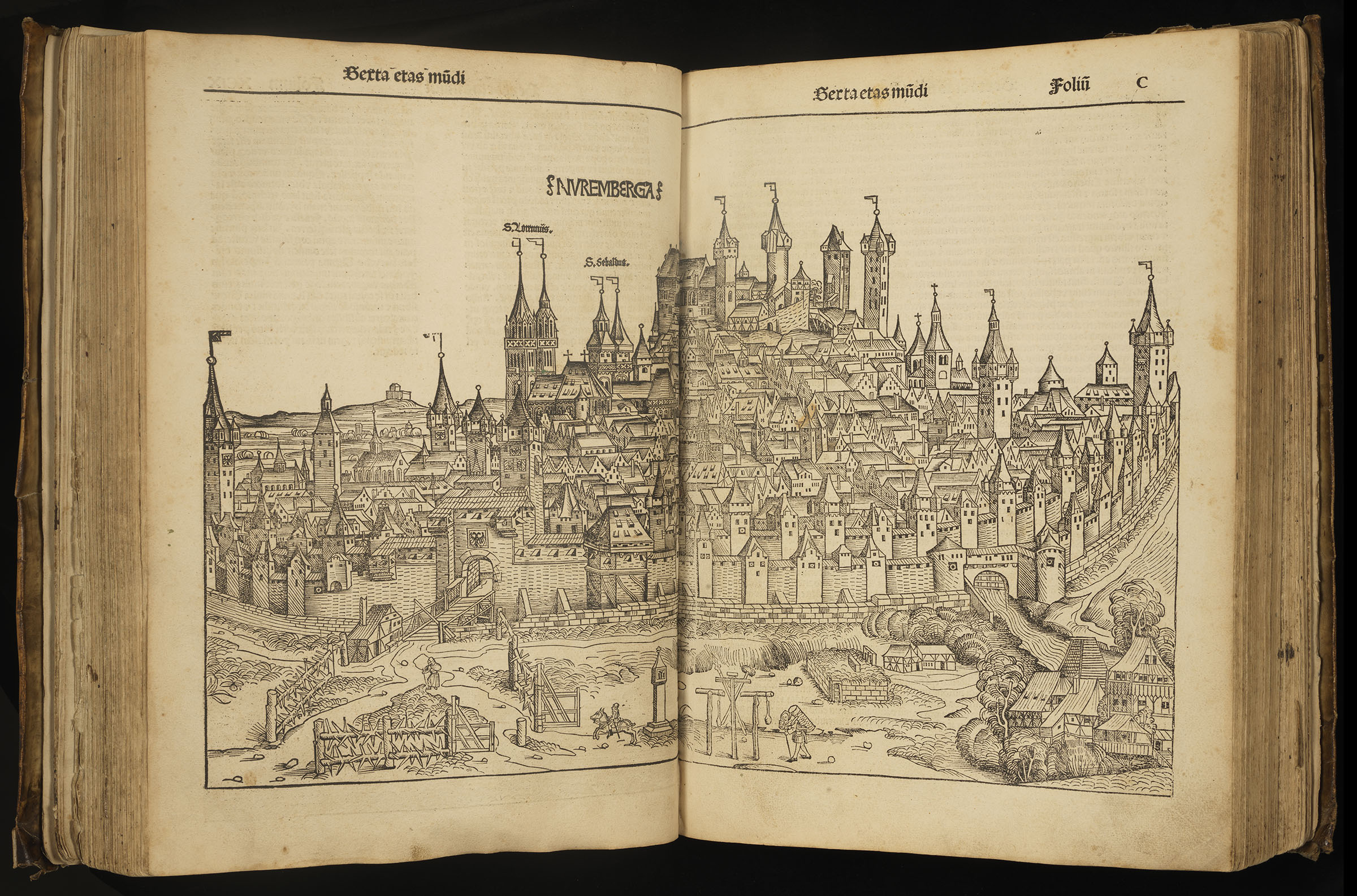
A book that has survived the ravages of time might be a good candidate to be considered rare. For printed books in the western world, a book printed in 1493 and sitting on a shelf today is old—but is it rare? If it has intrinsic importance and if demand outstrips supply, then it most likely is rare. Take RBSC’s copy of the Liber cronicarum by the Nuremberg doctor and scholar, Hartmann Schedel (1440-1514), an incunable—a book printed during the first fifty years of printing in the West (1450-1500)—is a landmark in book design and the history of printing. More commonly known in English as the Nuremberg Chronicle because of its magnificent 2-page woodcut of the city of Nuremberg, this book integrates over 1800 images with the printed text, using the images to explain or clarify the content. The Chronicle also contains woodcuts that provide the first images ever printed of some of Germany’s cities. Though over 1200 copies are known to exist today in libraries throughout the world, the demand for this phenomenal book remains high.
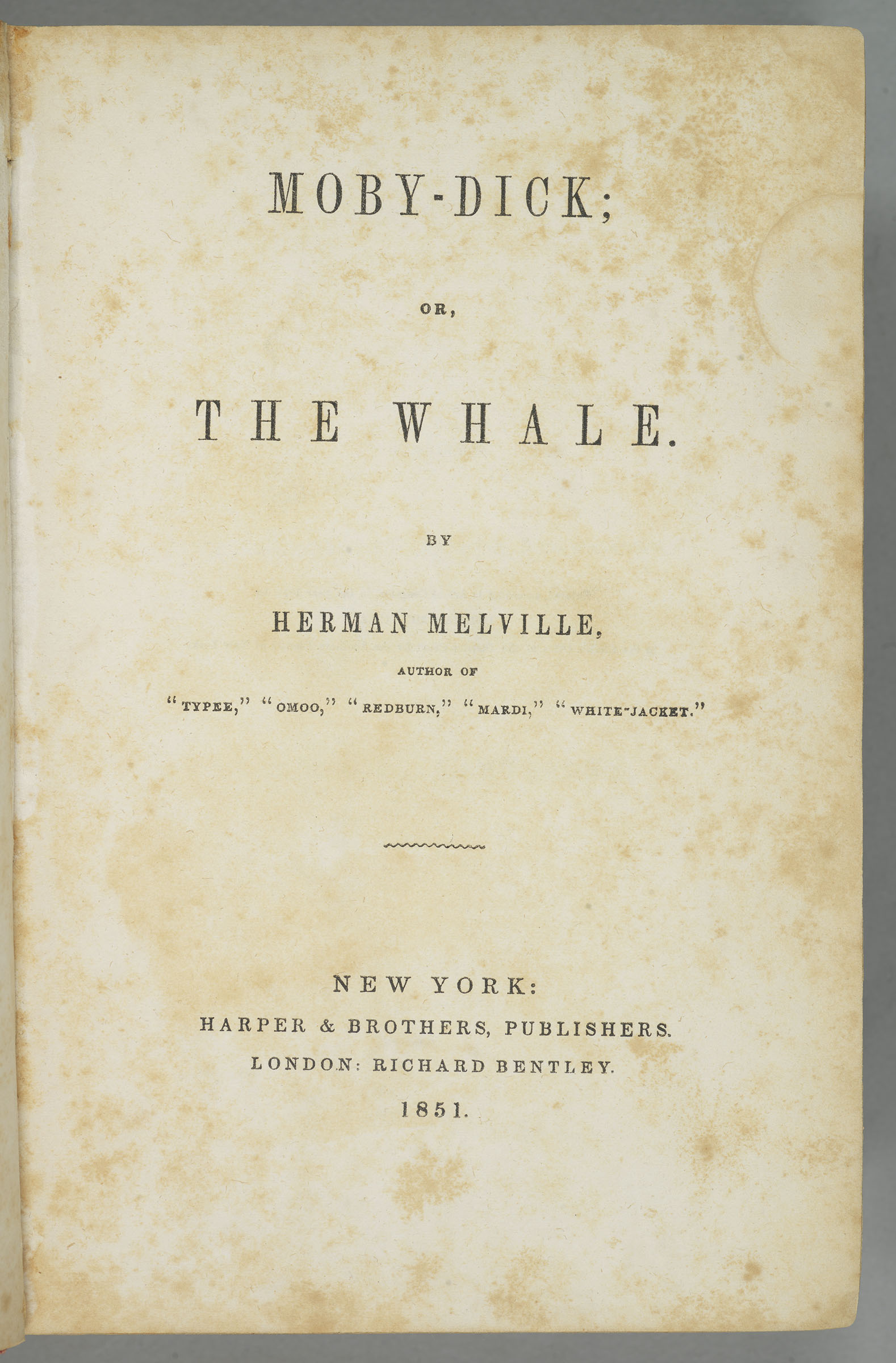
Often, books that are first editions are assumed to be rare books because they are thought to be more valuable. Sometimes that is true, but most books only come out in one edition, making them by default first editions. In the case of books that come out in multiple editions, there are instances when the first edition can add value to the book. For example, Moby Dick by the American author Herman Melville (1819-1891) was published first in October 1851 in London by Richard Bentley as a three-volume set in an edition of 500 copies. 200 copies were bound in spectacular fashion, with seafoam green cloth covers and cream cloth spines adorned with a whale in gilt. Today, locating a copy in this original binding is almost impossible; the supply practically does not exist, yet there is demand for this elegant book. The first American edition was printed a month later by Harper and Brothers. This edition corrected the changes in language and spelling and restored passages that had been excised by Bentley in the London edition, making the first American edition of extreme importance for the history of this book.
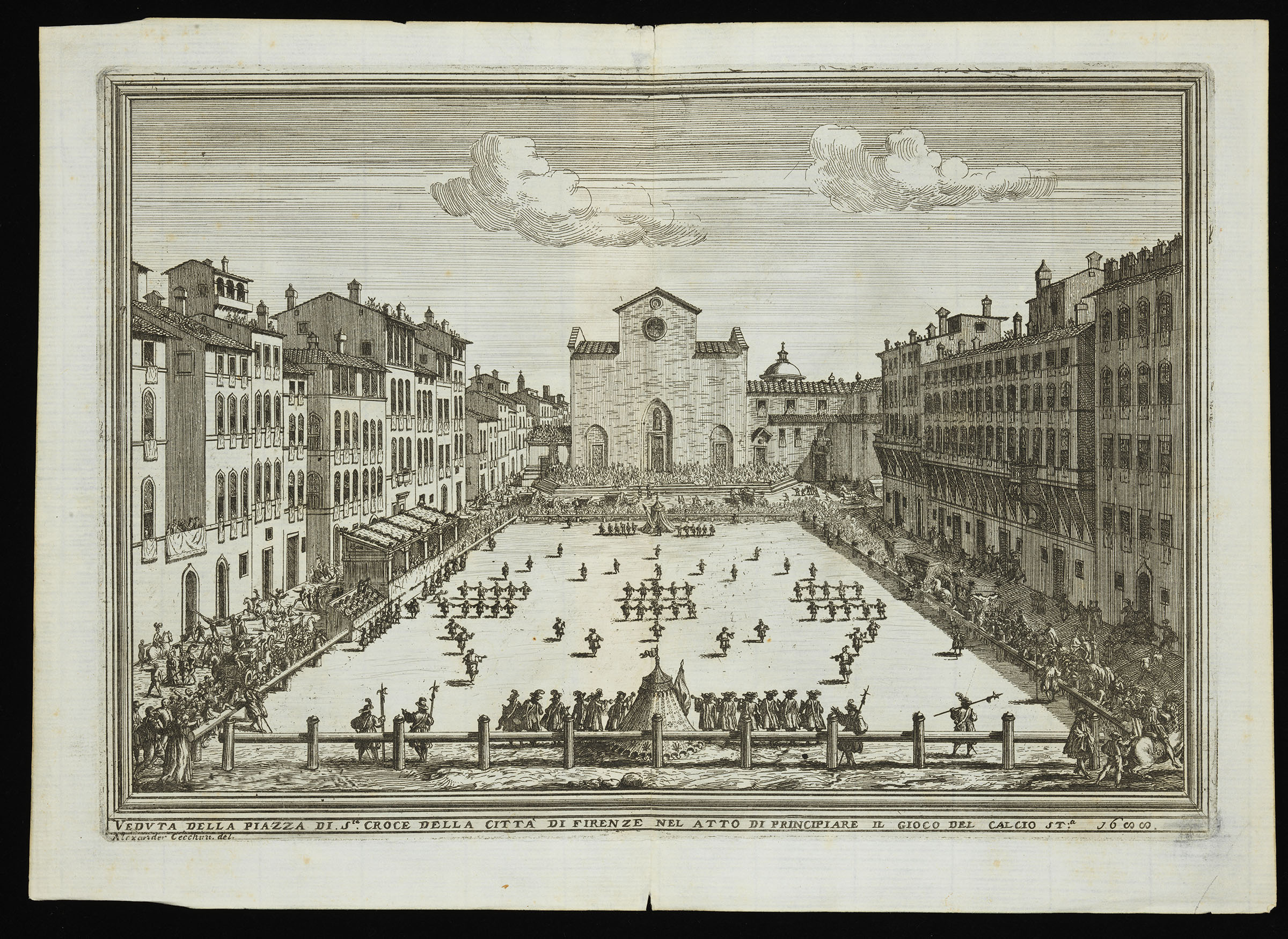
An edition of a book—the set of copies of a book printed from the same setting of type—other than the first edition may have important value for researchers as well. In 1580, Discorso sopra il giuoco del calcio fiorentino by the Florentine Giovanni de Bardi (1534-1612) was first published. The text was edited three times with the new editions printed in 1615, 1673, and 1688; the last printing of the text was in 1766. Discorso was the first book that described calcio, an early form of football that originated in sixteenth-century Italy; it detailed the rules, how the game was played, and what players were expected to wear. The first three editions contained no more than one plate; however, a fourth edition appeared in 1688. Retitled Memorie del calcio Fiorentino Tratte da diverse Scrittute, this edition had been published to coincide with the marriage of Ferdinand de Medici and Violante Beatrice of Bavaria. Memorie contains additional engraved plates, the original Discorso, a lengthy essay on calcio’s antecedants, a poem in Greek on the sport, and notices and records of the games played. The second edition also contains a description of the calcio match played at the wedding. Part of the Joyce Sports Research Collection, both the 1615 printing of Discorso and the 1688 Memorie provide researchers with valuable resources for studying the sport, printing history, and cultural history.
Books that are found in special collections might also be part of a collection that, as a whole, has intrinsic value even if some of the books within that collection are quite common. Many special collections libraries will collect the works of a particular author or field of study. ND Special Collections has a number of these including the Edmund Burke Collection, the Zahm Dante Collection, and the Edward Lee Greene Collection. The core of the Burke Collection is comprised of the personal library of William B. Todd, author of the authoritative descriptive bibliography of Burke’s works. Included are early editions of Burke and his contemporaries including Thomas Paine. Addition volumes have been added to the original collection to comprise a substantial research collection.
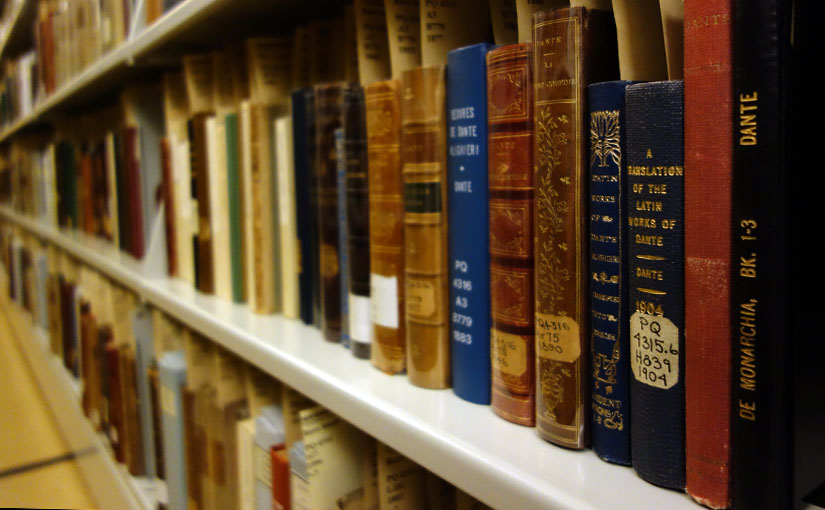
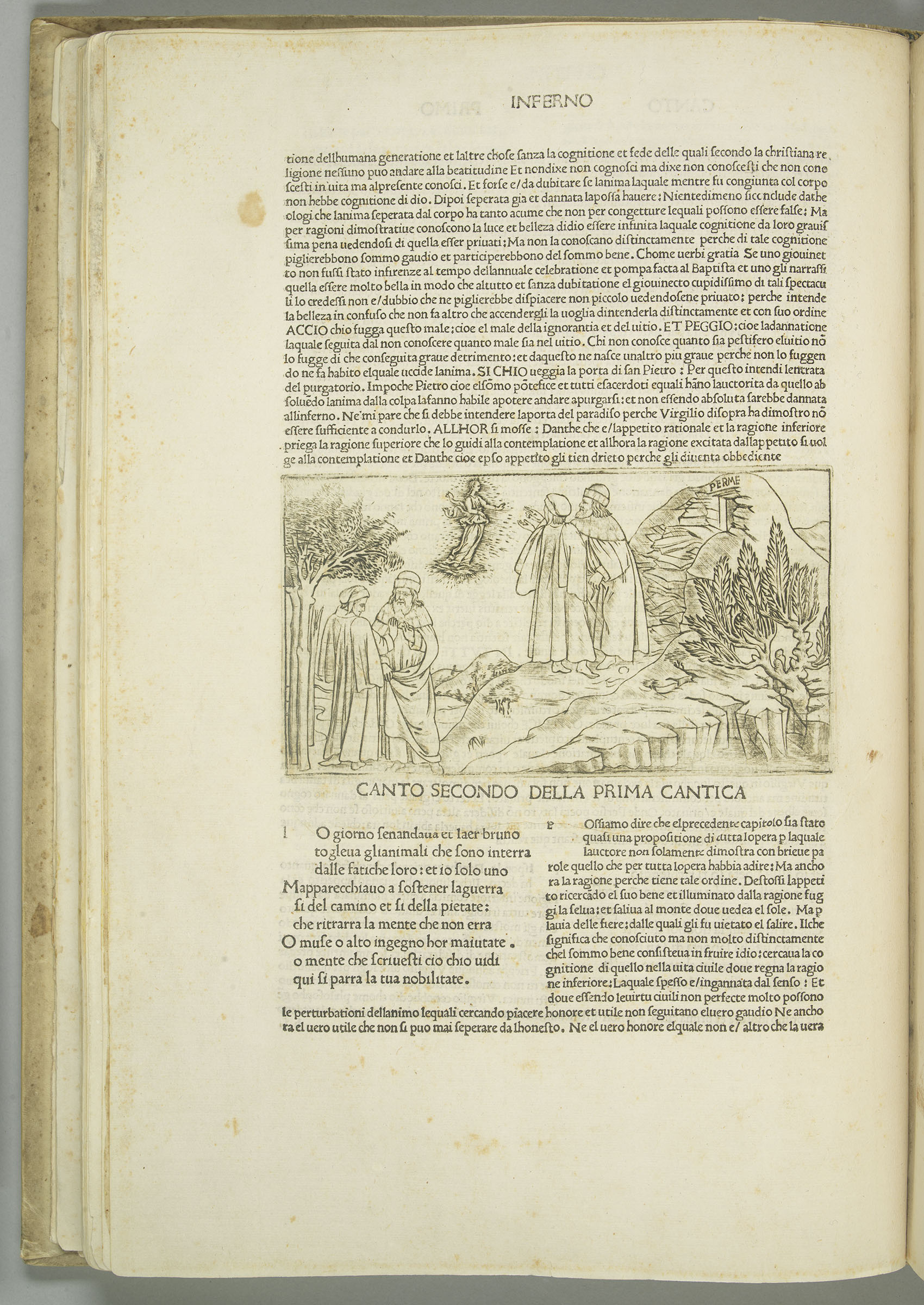
Similar to the Burke Collection is the Zahm Dante Collection of over 3,500 volumes that include incunables, sixteenth-century editions, and important modern works that demonstrate the popularity and impact Dante had on contemporary culture. Represented in this collection are works of fundamental importance in the Dante bibliography, including the 1481 edition of Cristoforo Landino’s commentary and the 1502 Aldine printing of Dante’s Comedia as well as the modern adaptation of Inferno, Purgatorio, and Paradiso by Sandow Birk, which translates the text into contemporary, American English and sets the three works in urban America. The Zahm Dante Collection forms part of the Italian Literature Collection, the most significant Italian literature collection in the United States, containing the works of Petrarch, Boccaccio, Baldassare, Castiglione, Ariosto, Bembo, and Tasso.
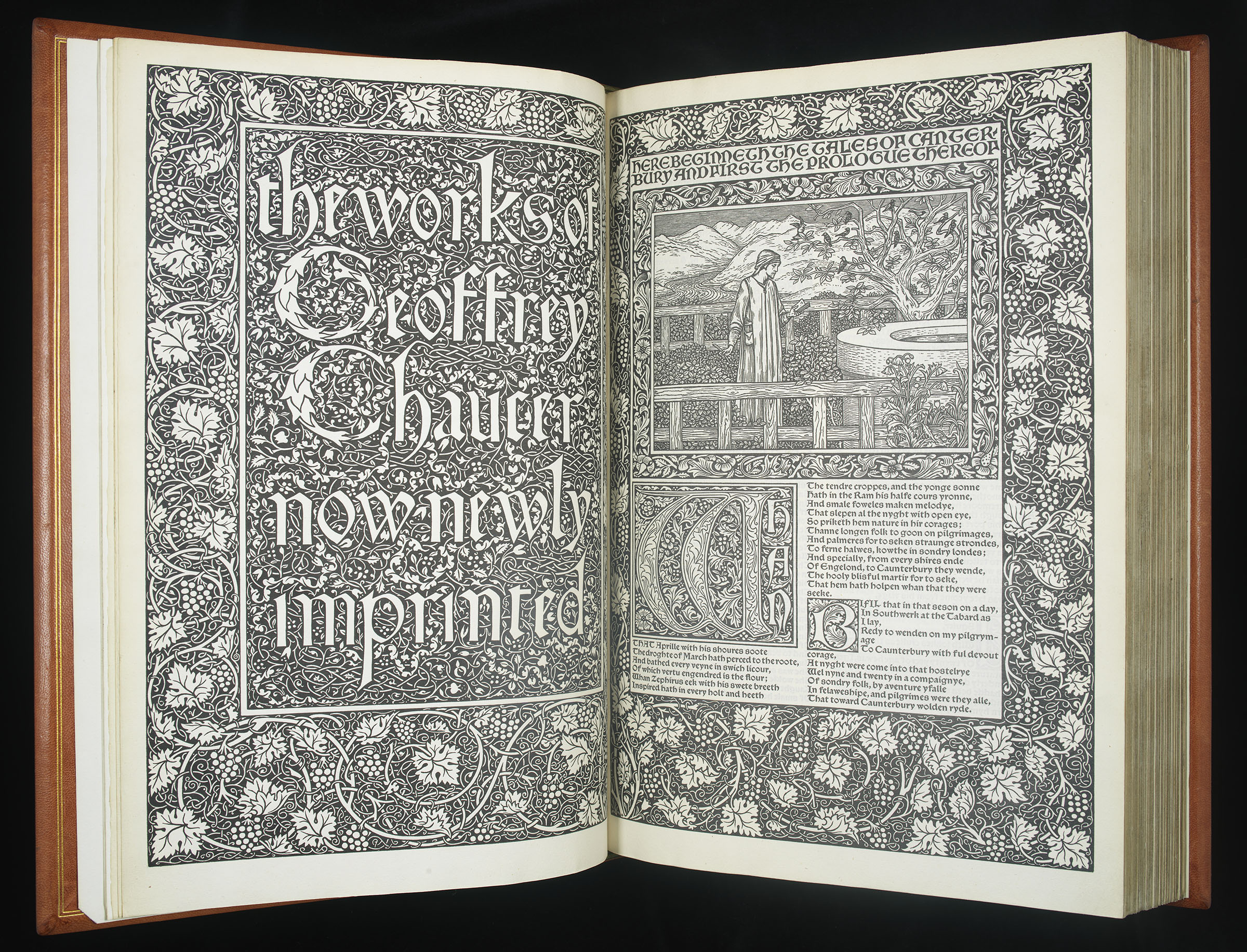
In addition to building collections that center around authors and content, ND Special Collections also collects books that are about the book itself. These include books issued from fine presses and books that push the boundaries of our general understanding of a book. The revival of fine press books can be traced to William Morris (1834-1896) and the press he founded, the Kelmscott Press, which printed books from 1890 to 1896. Morris was one of the leaders in the Arts and Craft Movement which developed in Britain and spread internationally between the mid eighteenth century and the early twentieth century. In reaction to the ill effects industrialization and capitalism had on printed books, Morris set forth to produce books that reclaimed the beauty and craftsmanship associated with the fifteenth century. He used only the finest materials–handmade paper, specially formulated ink, high-quality vellum–and the iron handpress to print limited editions of only a few hundred copies of the finest quality. Of the fifty-three works the press printed, the most celebrated and generally regarded as the finest work printed from a fine press is Morris’ The Works of Geoffrey Chaucer, Now Newly Imprinted (1896). In addition to this fine work, ND Special Collections holds eleven other works issued from the Kelmscott Press.
Morris inspired others to establish fine presses. This trend spread across Britain, Europe, the United States, and continues today. Established in 1920 by Harold Midgley Taylor and taken over in 1924 by Robert Gibbings, the Golden Cockerel Press produced works printed to the highest of standards and was noted for its woodcuts designed by notable artists such as Eric Gill. As Morris’ Chaucer was the Kelmscott’s finest work, Eric Gill’s Four Gospels (1931), part of the ND Special Collections Gill Collection, was the Golden Cockerel Press’ finest. In addition to works published by the Kelmscott Press and Golden Cockerell Press, ND Special Collections has collections from other notable fine presses including the Cuala Press, Stanbrook Abbey Press, Overbrook Press, Perishable Press, and St. Dominick’s Press.
Related to fine presses that produced limited editions of printed books using techniques that industrial presses could not produce is the development of artists books. What defines artists books is still in flux. To a large extent, they represent a work that is inspired by the function or structure of a traditional book; in some cases, the works resemble the common book with pages bound together and encased in a cover; in other cases, artists books look more like a sculpture or other work of art with very few characteristics of a traditional book. Artists books is a growing collection area for ND Special Collections. Our most extensive collection are works of the Ediciones Vigía in Matanzas, Cuba, founded in 1985, featuring handcrafted books of writers, musicians, and composers including Gabriela Mistral, Bob Marley, Jorge Luis Borges, and Gabriel García Márquez and designed by artists including Rolando Estévez. Artists books from the Ediciones Vigía are noted for their elaborate constructions with foldouts, jewelry, and shapes. Also in ND Special Collections is a collection of sixty-seven works from the Indiana University School of Fine Arts individual pieces from current books artists including Julie Chen, Karen Hanmer, Jean-Pierre Hebert, Bill Kelly, among many others.
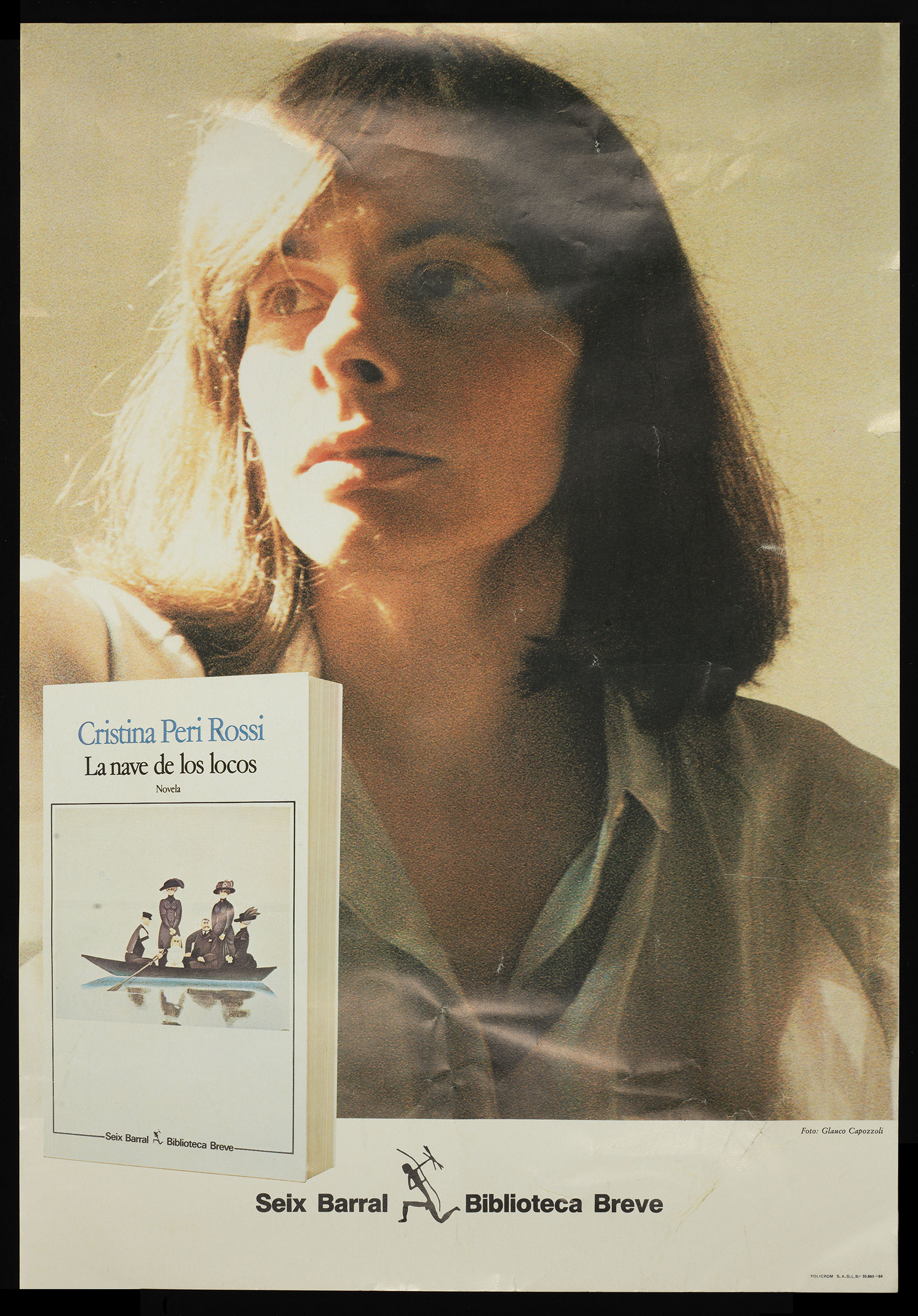
Poster promoting publication of Peri Rossi’s novel, La nave de los locos.
by David Dressing, Latin American and Iberian Studies Librarian, and Erika Hosselkus, Curator, Latin American Collections
Since the late 1960s, Uruguayan writer Cristina Peri Rossi has written 5 novels, 10 collections of short stories, 18 books of poetry, 4 books of essays, and innumerable cultural articles published in major European newspapers. Her works have garnered critical praise and won her many international awards over the years.
In the early 1970s, Peri Rossi was exiled from Uruguay to Spain as the country came under control of a military regime. The political violence endemic in Uruguay and the broader Southern Cone during the 1970s and 1980s is allegorized in many of her works. This violence and censorship affected an entire generation of authors and intellectuals from Uruguay, Argentina, and Chile and influenced their work. In recent critical studies, these authors have been recognized as the “Generation of ’72,” with Peri Rossi often being identified as the leading voice of this group.
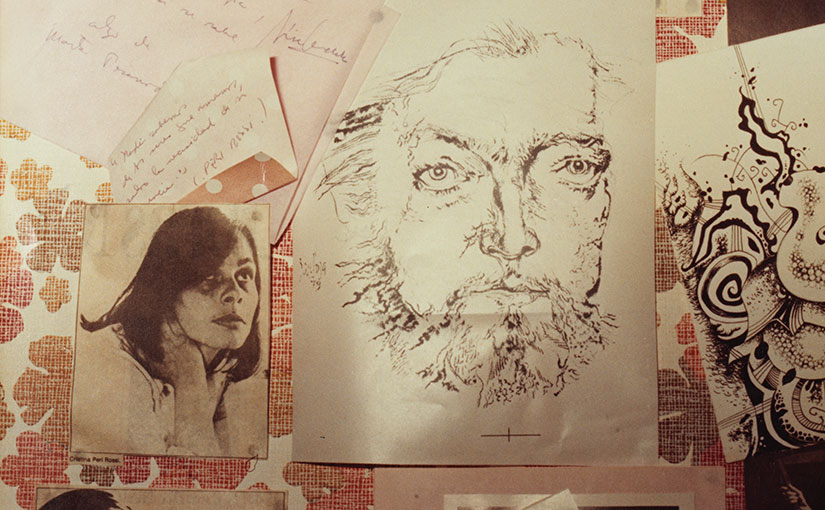
The Cristina Peri Rossi Papers at Notre Dame include manuscript drafts of her published novels as well as unpublished poems and short stories, handwritten diaries, photographs, recorded interviews, and correspondence with family, friends, and other major Latin American and Spanish authors and intellectuals.
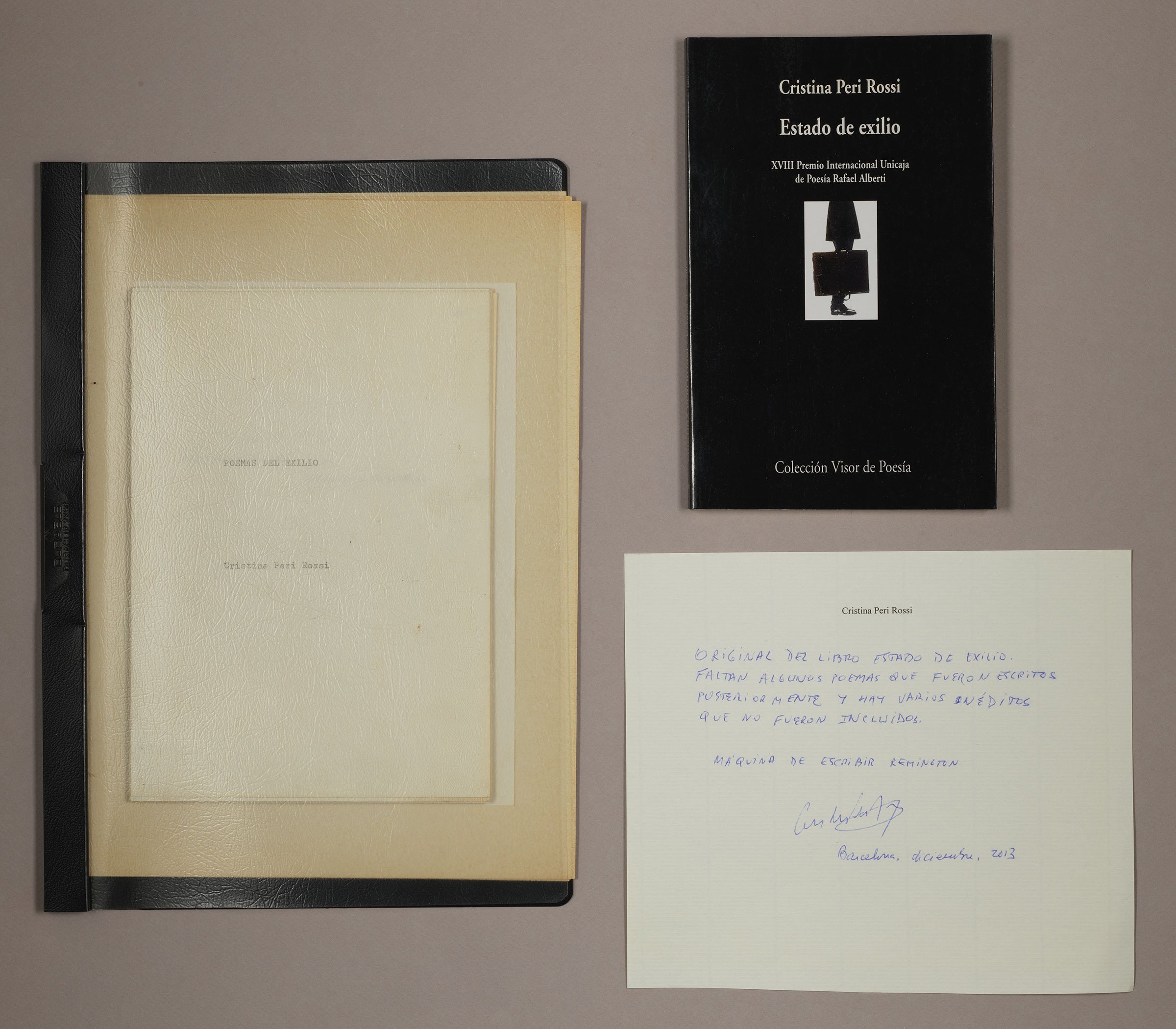
Draft of Peri Rossi’s poetry collection, Estado de exilio, with note signed by the author and the book, published in 2003, by Colección Visor de Poesía. The collection won the XVIII Premio Internacional Unicaja de Poesía Rafael Alberti. City Lights Publishers produced a bilingual (Spanish/English) edition of the book in 2008.
Top photo: Peri Rossi with Julio Cortázar and two friends, Barcelona, 1974. Bottom photo: Peri Rossi with publisher and poet, Carlos Barral, Barcelona, 1989.
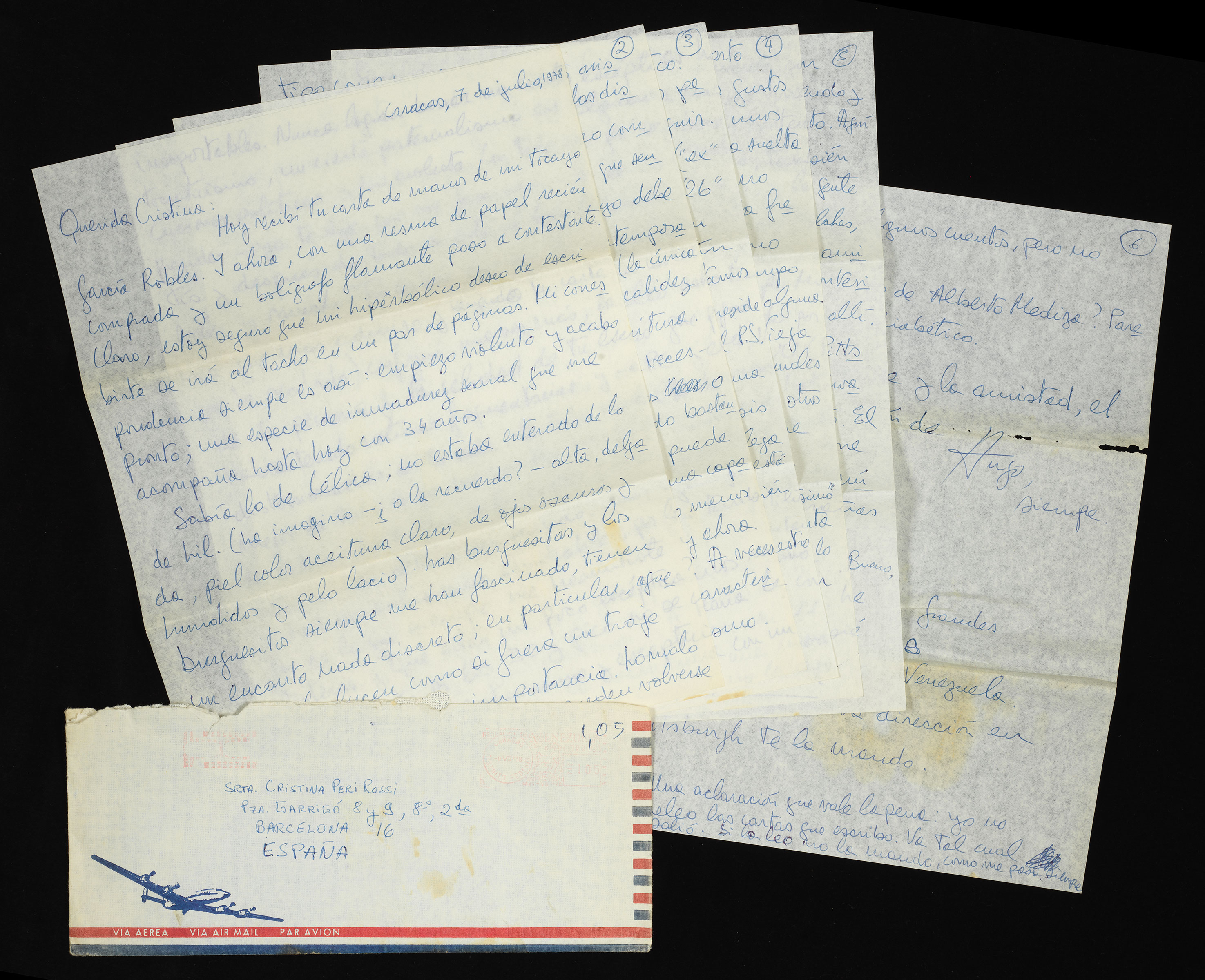
Letter to Peri Rossi from Uruguayan poet, essayist, and critic Hugo Achúgar.
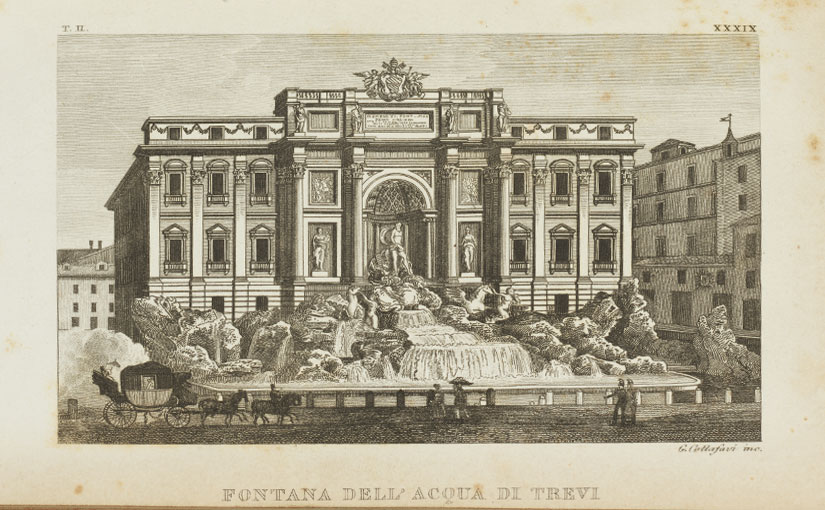
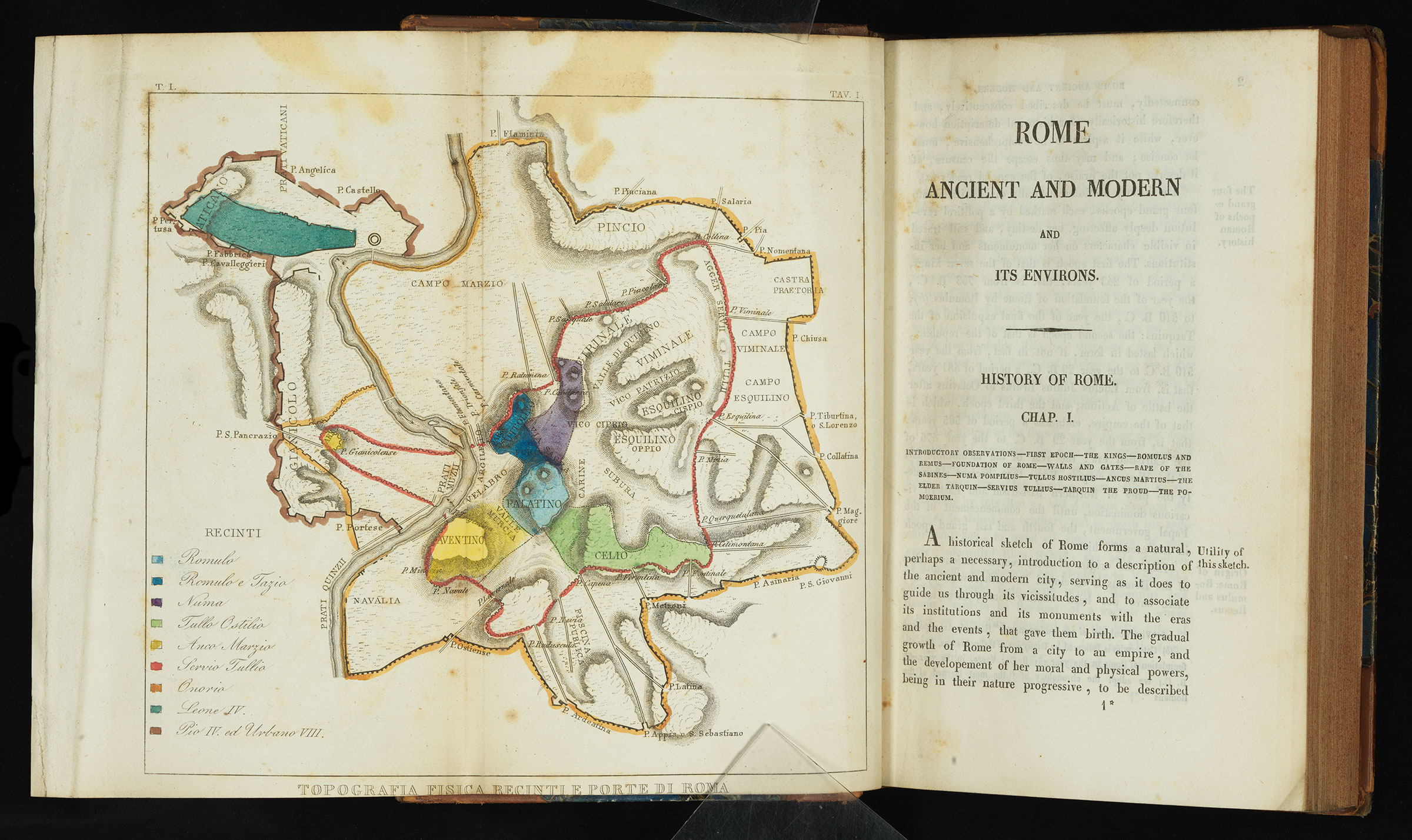
The Very Rev. Jeremiah Donovan, D.D., professor of Rhetoric at Maynooth College, travelled to Rome in the 1830s and resided there for nine years. He documented his observations and recounted his impressions in his four-volume Rome, Ancient and Modern and Its Environs, printed privately by Crispino Puccinelli in 1842-44. Enhancing the text are 62 copperplate engravings by Roman artist, Gaetano Cottafavi.
The preface delineates the text’s arrangement as a “rapid historical sketch . . . with notices geological, statistical, political and religious,” followed by an admirably detailed description of the modern city’s “churches, palaces, museums, galleries, charitable institutions, hospitals, prisons, schools, colleges, universities, and other public establishments.” The work continues with “the antiquities ranged for the most part in chronological order” and “conducts the stranger through the environs of Rome” before concluding with a “copious and accurate index.”
Donovan emphasized his “personal observation and methodical description” and does not spare his subjects “unflinching but impartial criticism” even in light of Rome’s “transcendent and peculiar charms.”
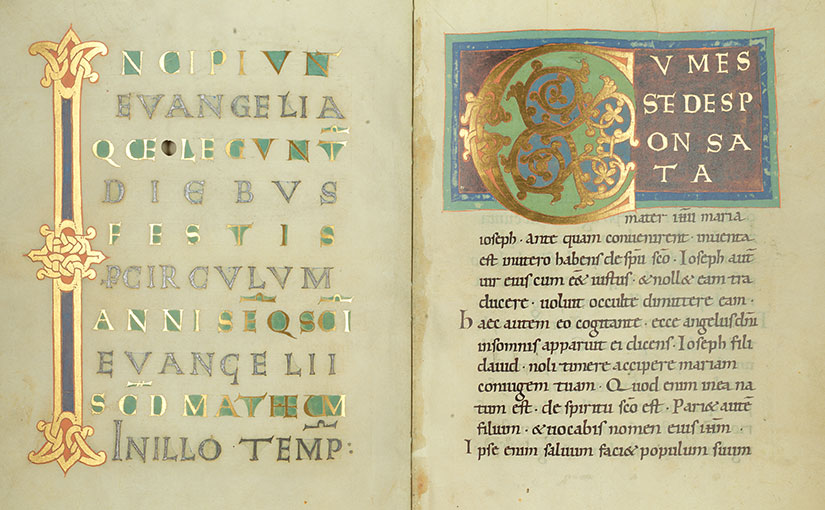
The Bamberg Apocalypse facsimile is an original-format copy of a manuscript commissioned by Otto III (980-1002 AD). After his untimely death, the manuscript was left unfinished in the scriptorium of the Benedictine Abbey of Reichenau in Southern Germany. His successor, Henry II (973-1024 AD) ordered it finished. Thus, the manuscript dates to 1000-1020.
Containing 106 leaves in total, the first fifty-seven leaves of the Bamberg Apocalypse (Bamberg, Staatsbibliothek, Msc. Bibl. 140) contain the text and images of the Apocalypse of St. John from the Bible (a.k.a., Revelation). The remaining leaves of the manuscript include gospel pericopes (extracted readings) for specific feasts. There are a hundred decorated initials throughout the manuscript along with fifty-seven images, or miniatures, forty-nine of which provide striking visual interpretations of the prophecies contained in the Apocalypse concerning the end of the world and the final judgment, all with significant gold decoration.
The image shown above, described in the facing text, depicts Apocalypse 12:1-5. The woman, who has brought forth a man child, is clothed with the sun and has the moon under her feet. The great dragon with its seven heads and ten horns looks on in the foreground. Though the text describes a red dragon, the image features a multi-colored dragon—red, gold, and purple. Standing in the background is the Church that houses the Ark of the Covenant.
There were many ornate apocalypses and apocalypse commentaries produced during the Middle Ages, and, while we do not own the manuscripts, Hesburgh Libraries’ Rare Books and Special Collections houses facsimiles of several in addition to this recently acquired version. Be sure to search “apocalypse” in our database of facsimiles for more information on these fascinating, illustrated manuscript facsimiles.
In other news, the July spotlight exhibit featuring a recently acquired Piranesi volume will soon be changed out for the August spotlight exhibit highlighting the Elisabeth Markstein Archive.
The spring and summer exhibit Vestigia Vaticana will remain on display through August 15. After that, the fall exhibit will be installed: Ingenious Exercises: Print and Physical Culture in Early Modern Europe, 1500-1800.
Watch for news about a new Fall semester spotlight exhibit soon!